Spain’s largest old town: it occupies nearly 4 km² (and it’s one of Europe’s most extensive)
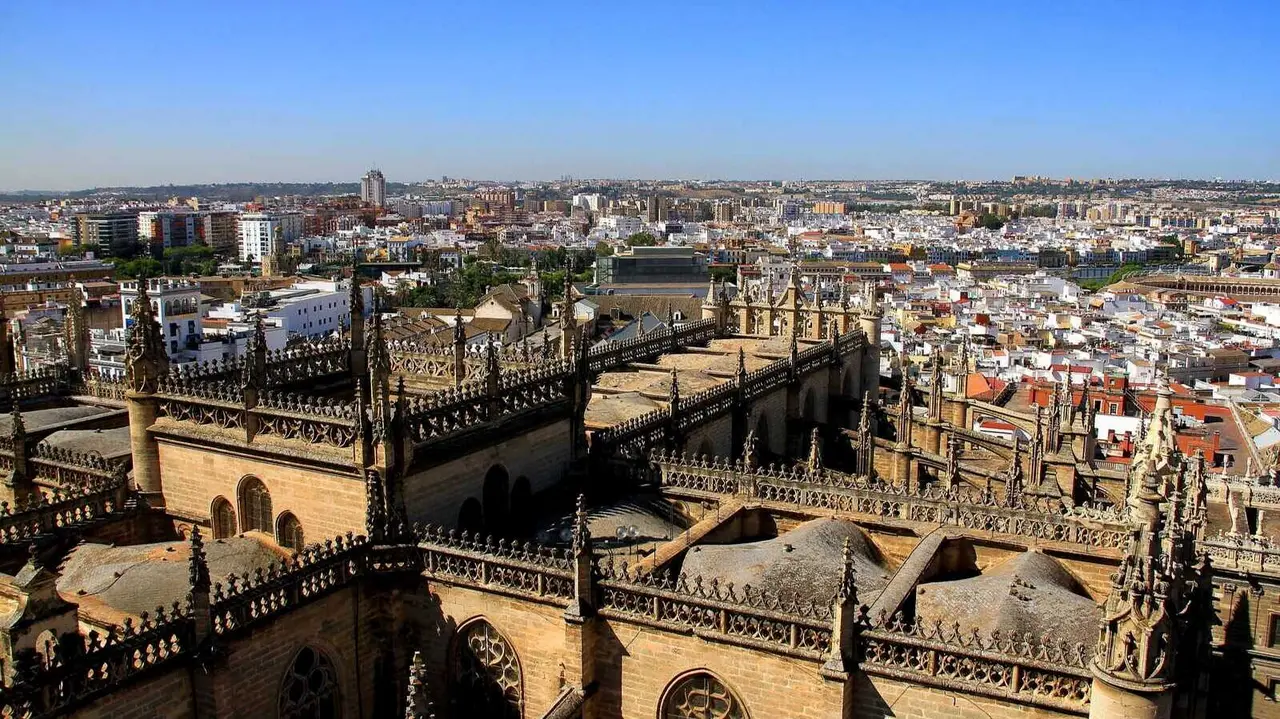
Covering almost four square kilometres, Seville’s old town is Spain’s largest and one of the most extensive in Europe. Twelve neighbourhoods surrounded by the old Almohad town wall, remains of which still survive, comprise the old quarter. The hustle and bustle of the quarter’s squares and its labyrinth of cobblestone streets are a treasure trove of architectural heritage.

Past and present in Spain’s largest old quarter
From its origins to the reign of al-Andalus
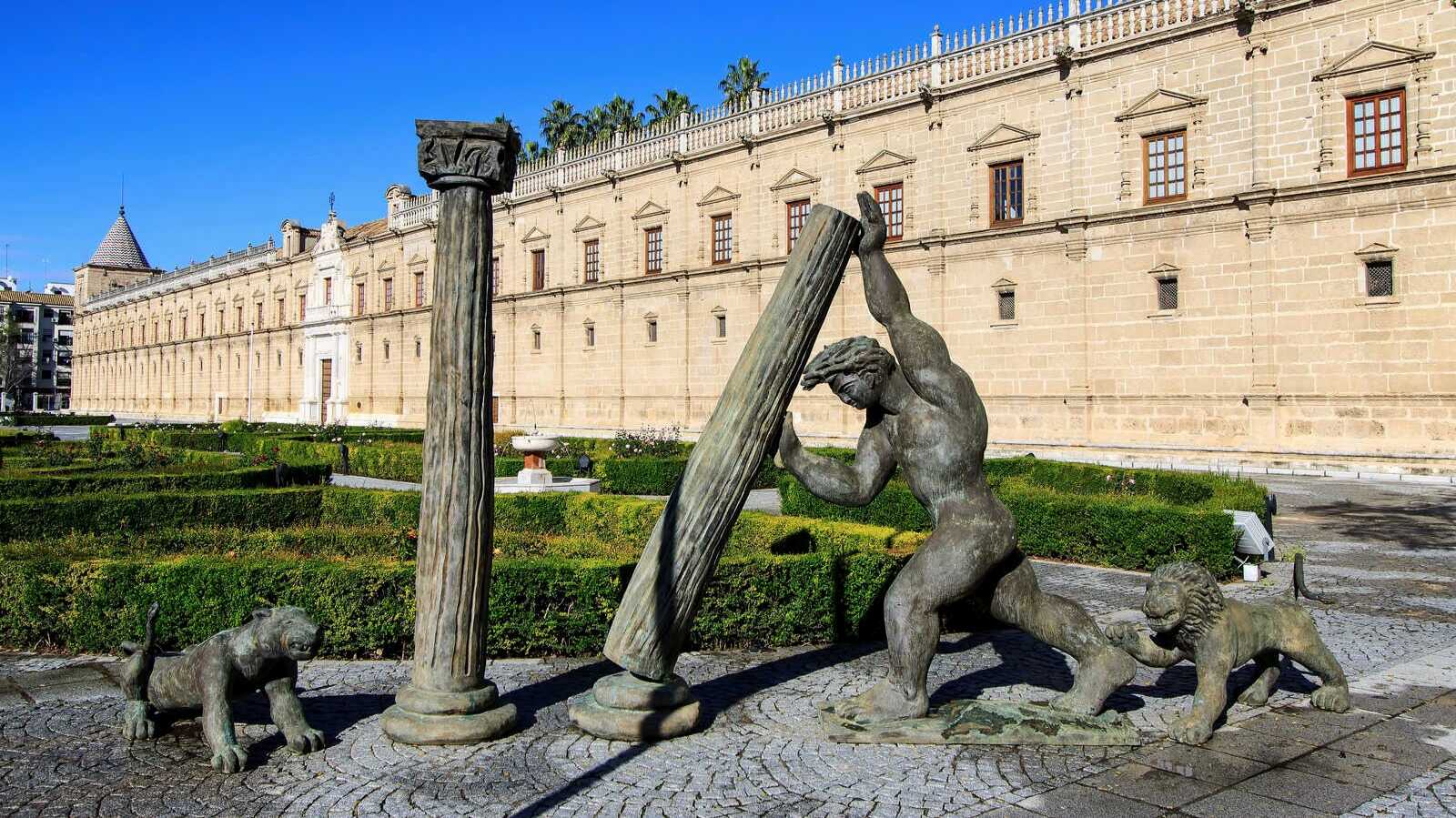
The Phoenicians' arrival to the site of present-day Seville dates to around 1000 BCE. Melkart, sailor and mythical source of Hercules, crossed the precarious Strait of Gibraltar and settled along the coast, reaching the Guadalquivir River to the Tartessos settlement of Ispal. During the Punic Wars, the settlement was eventually conquered by the Romans. Julius Caesar later renamed the site Romula Hispalis and the city went on to become one of the Roman Empire’s most important cities on the Iberian Peninsula.
The Muslims conquered the city in 712 and changed its name to Isbiliyya, from which the present name of Seville derives. The Jewish community complemented the melting pot of cultures that gave rise to the Santa Cruz district in the heart of the old quarter.
From the Almohads to the Christian conquest
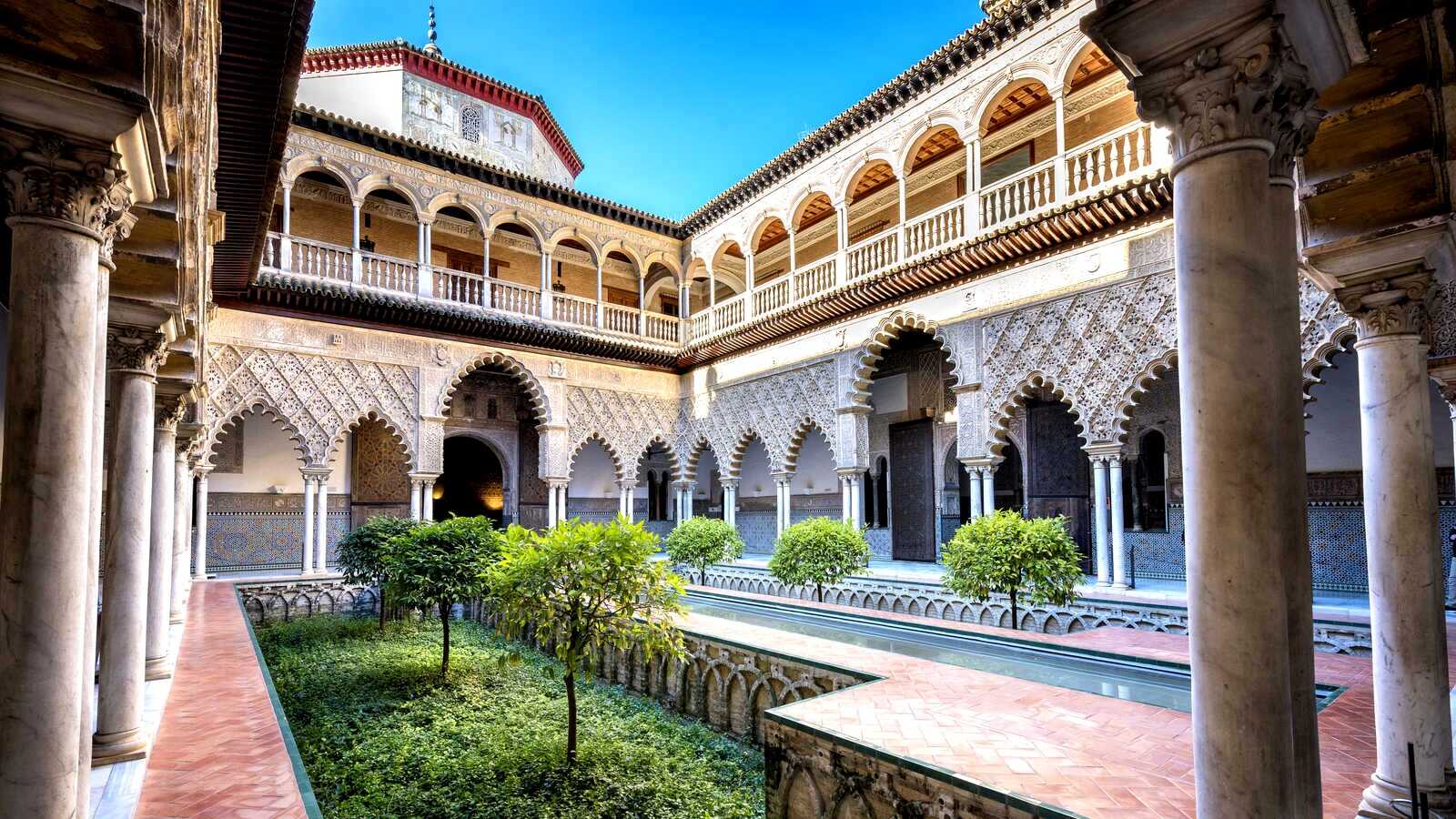
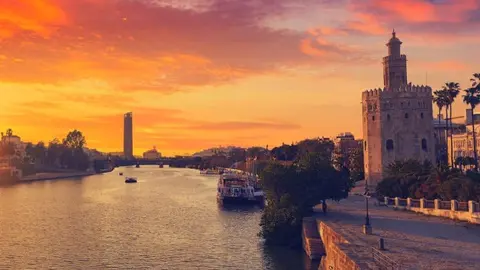
Isbiliyya reached its maximum splendour under the Almohad dynasty, leaving its indelible architectonic mark on such cultural masterpieces as the Torre del Oro and the Royal Alcázar, a palatial complex combining Almohad, Gothic and Renaissance styles with ceramics found throughout the Triana district.
The Christian conquest of Seville arrived in the form of King Fernando III, who turned the city into a regional seat of the Kingdom of Castile. Subsequently, the Santa María Cathedral, a jewel of Spanish Gothic architecture, was built over the Almohad grand mosque.
From the original mosque remains the minaret, today called the Giralda and a symbol of Seville. Once called the Red Tower, the construction melds Roman stone blocks with an Almohad red-brick façade. Later, a Renaissance-styled bell tower and weathervane were added as symbolic triumph of the Christian faith over Islam, and whose name, Giralda, derives from the spinning (giro in Spanish) of the weathervane.
From the 15th century to the Ibero-American Exposition
The present-day Archivo de Indias was originally commissioned by King Felipe II as a merchants’ guildhall. Two centuries later, all documents and maps regarding overseas territories would be stored there. At that time, King Carlos III ordered the construction of the first Plateresque-styled building in Spain, becoming Seville City Hall, which served as a wedge between civil and religious powers in the city. The historic quarter is also home to such Baroque architectural masterpieces as the San Telmo Palace and one of the country’s most beautiful churches, San Luis de los Franceses.
The Royal Tobacco Factory, the first such construction in Europe and once the economic powerhouse of Spain, is also noteworthy. At one point, more than 6,000 women working there, known as cigarreras (cigar makers), fought for better labour conditions. The events that occurred at the factory were captured by painter Gonzalo Bilbao Martínez, whose works are now on display at the Museum of Fine Arts of Seville. Today, the building is the seat of the University of Seville and remains a symbol of working-class struggle.
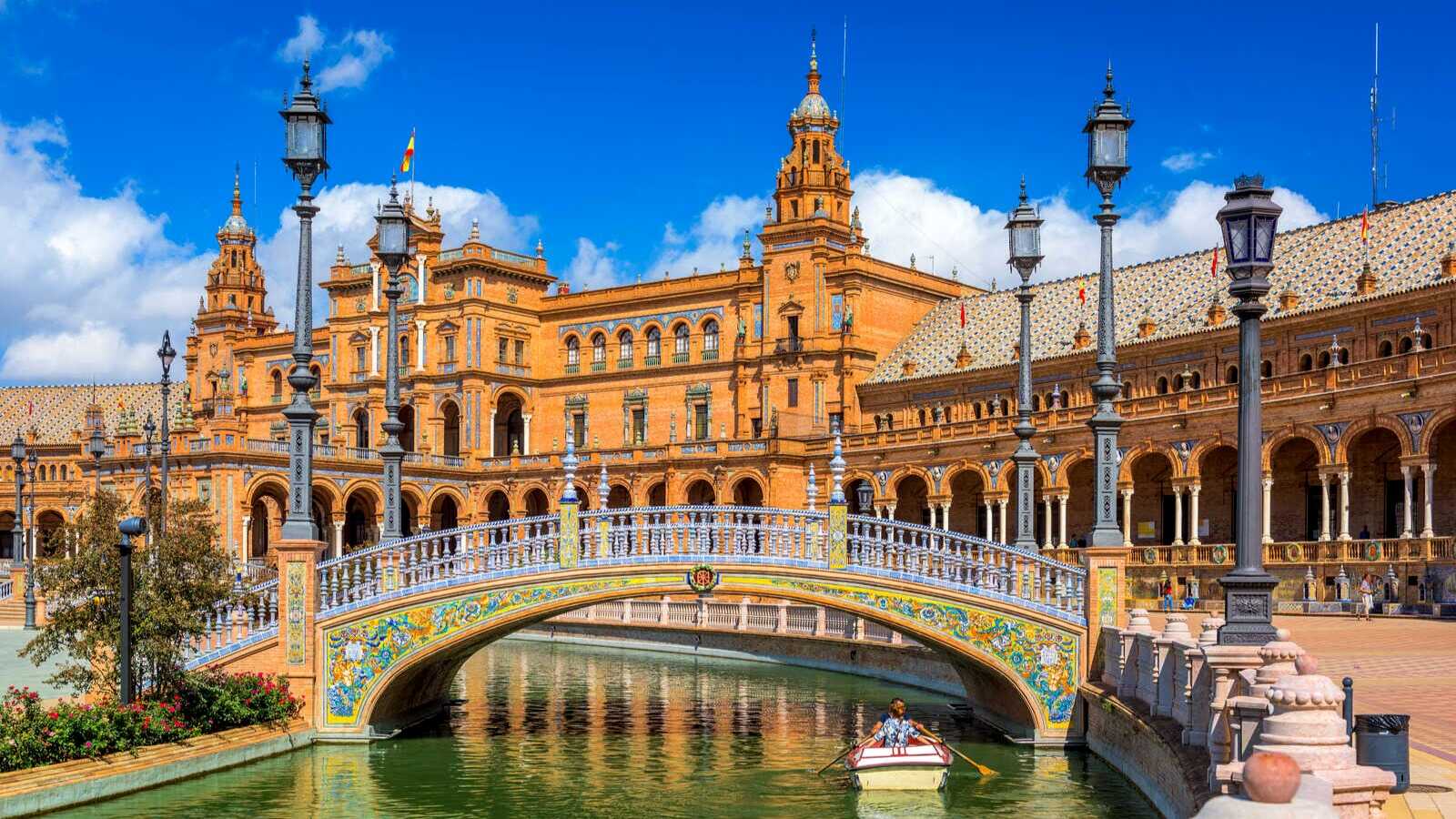
At the end of the nineteenth century, Infanta María Luisa of Spain donated the grounds of the San Telmo Palace to the city, which became present-day María Luisa Park, and later would host the main pavilions of the 1929 Ibero-American Exposition. The works were carried out by architect Aníbal González, creator of the Andalusian Regionalism style of melding red brick, white Roman marble, ceramics and metal forging. Relishing the incalculable artistic excellence of the architecture found in both Plaza de España and Plaza de América is an ideal culmination of a tour through Spain’s largest old town.
You can also read this article in Spanish and French.
Follow us on Facebook to discover more fascinating places in Spain!