The most beautiful walls in Spain

Spain’s walls have been silent witnesses to many epic moments. Its walls have survived attacks and watched both victories and defeats. Some of them couldn’t beat the worst enemy, that one that cannot be seen but always attacks mercilessly: the passing of time. Meanwhile, others stand still with pride. Crossing them or walking along their paths are experiences that take us back in time and allow us to live their most glorious ages.

Walls that have witnessed Spain’s belligerent past
Walls of Ávila

The walls of Ávila have witnessed a millennium undauntedly. Throughout this long period of time, they have charmed the hearts of those who look at them for the first time. Imagining the time when this city was impregnable is easy when you’re looking at the best preserved medieval walls in Europe.
It has 90 towers and 9 entries scattered throughout its more than 2.5 kilometres of perimeter. Seeing the complex from a distance or walking around it is not enough. You can walk along most of its allure, enjoying the breathtaking views of a city that is declared a World Heritage Site and the beautiful Amblés valley.
Walls of Lugo

These sturdy walls of rough appearance are the only Roman walls that remain practically intact. For this reason, they are a monument of exceptional value. The city of Lugo, Lucus Augusti in the Roman Empire, is surrounded by these 2-kilometre walls. It has 71 defensive towers and 10 entrances.
Its solid walls have an average width of more than 4 metres, but they can double this number in certain areas. Its chemin de ronde has transformed into a spectacular elevated path that offers the best views of the city. A treasure declared a World Heritage Site that everyone can enjoy since its wide allure has an elevator.
Walls of Albarracín
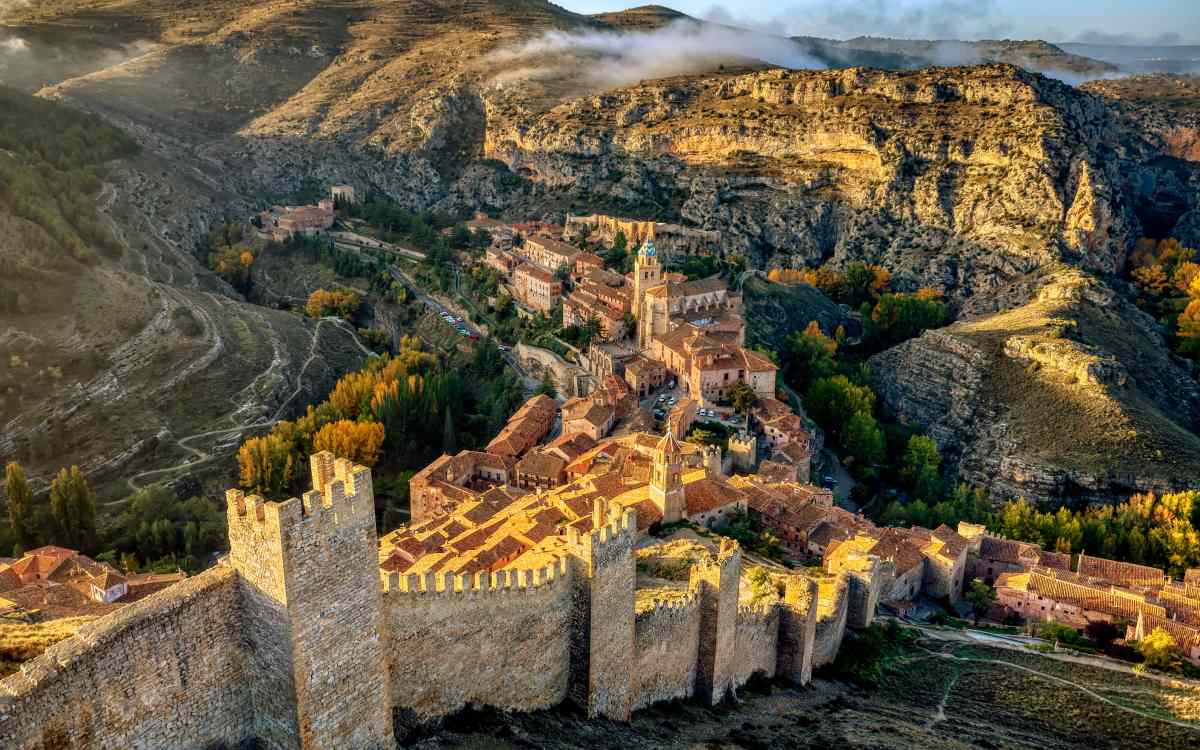
The walled town of Albarracín, in Teruel, seems to wind through complex terrain to adapt to it. This landscape is dominated by a deep meander of the Guadalaviar River. Its origins date back to the days of Arab occupation, in the 10th century. However, the primitive wall was enlarged and modified throughout the years.
A triangular shape is created by this wall, which is more than one and a half kilometres long. This is one of the most spectacular defensive areas in Aragón. Reaching its highest spot requires some effort, but the panoramic view that awaits you there is unforgettable.
Walls of Tossa de Mar
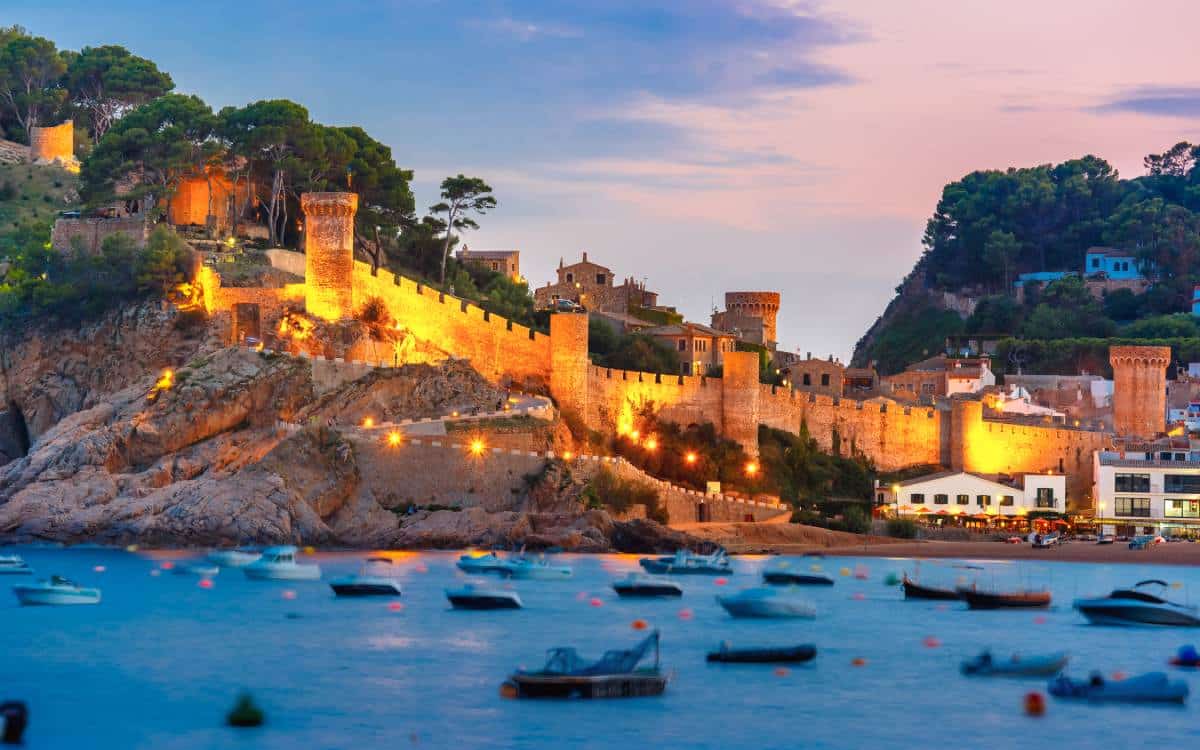
The walls of Tossa de Mar are one of the most idyllic postcards of the Costa Brava. It sits on a rocky promontory, riddled by two elegant cylindrical towers facing the sea.
At some point in history, this walled enclosure was used for protection against pirates and corsairs, who attacked the Mediterranean coasts ruthlessly. Most of its layout is preserved and hugs the Vila Vella, the locality’s town centre. There was also a castle, but we can only imagine it since there is nothing left of it.
Walls of Buitrago del Lozoya
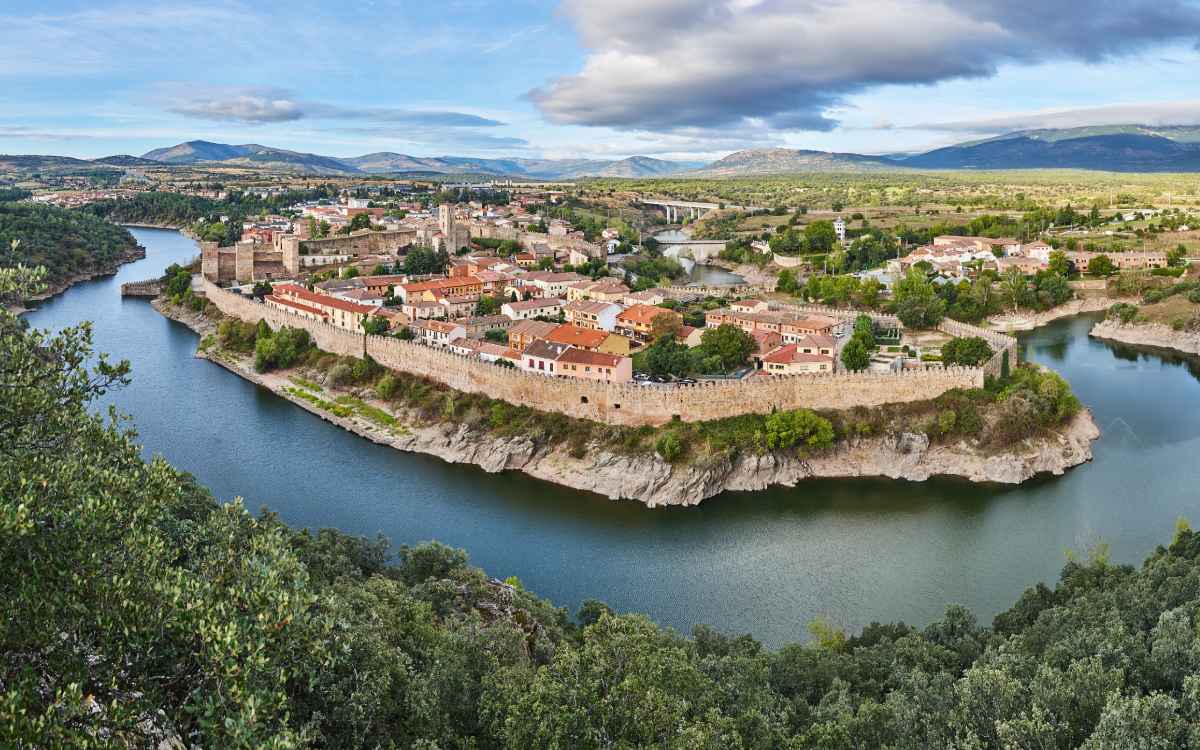
At the foot of the Sierra de Guadarrama, Buitrago del Lozoya reminds us that the Community of Madrid has a medieval past too. Its wall dates back to the Arab civilisation, but it was expanded under the reign of the Crown of Castile.
Its triangular layout adapts to a meander drawn by the Lozoya River. The low-height walls facing the river and the taller walls of other areas complete a walled perimeter of 800 metres. If you walk along its allure, which you can cover almost completely, you will see one of the most beautiful postcards in the Sierra de Madrid.
Walls of Peñíscola
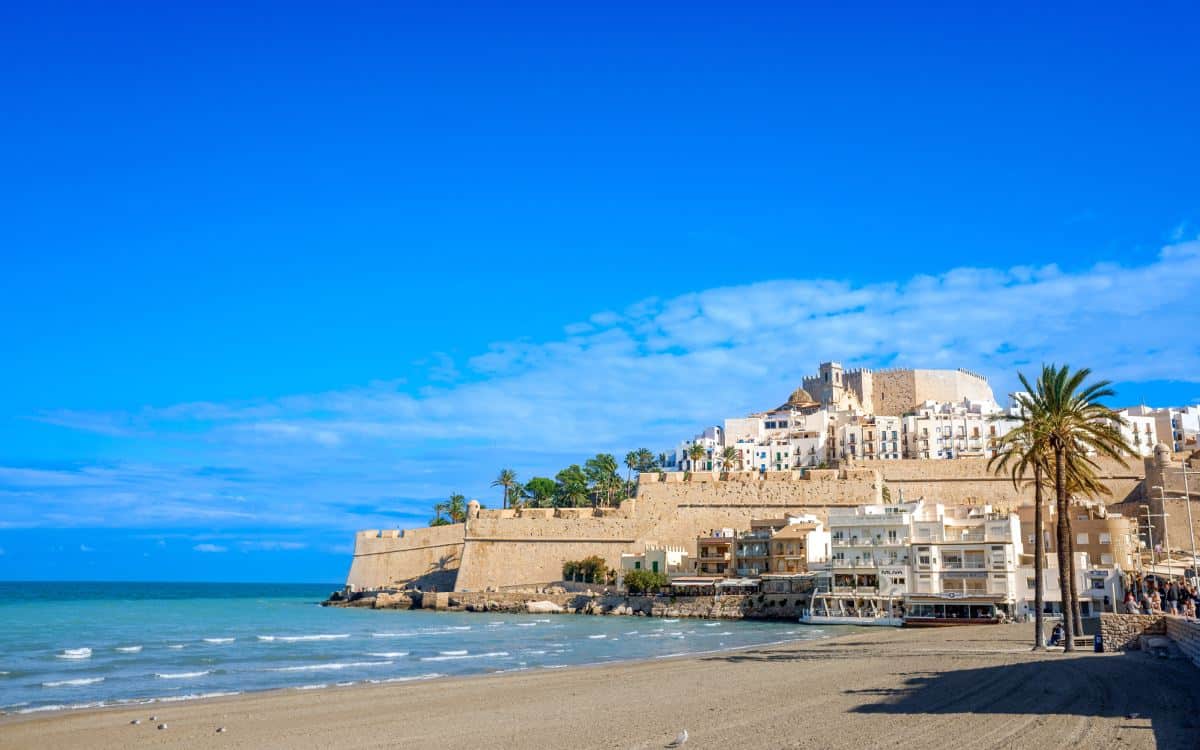
Peñíscola’s past is captured in each of its walls, in those of the old Templar castle that once was home to the Pope Luna and in those of one of the most beautiful and singular walls in the Levante. Its winding trace, sometimes abrupt, catches every eye in its most visible areas, thanks to its Renaissance style. Instead of high towers and battlements, it is scattered with bastions. Some of its entries are worth a mention too, such as the Portal of Philip II, the monarch who commissioned its construction, or the Portal of Pope Luna, which dates back to the Middle Ages.
Walls of Granadilla
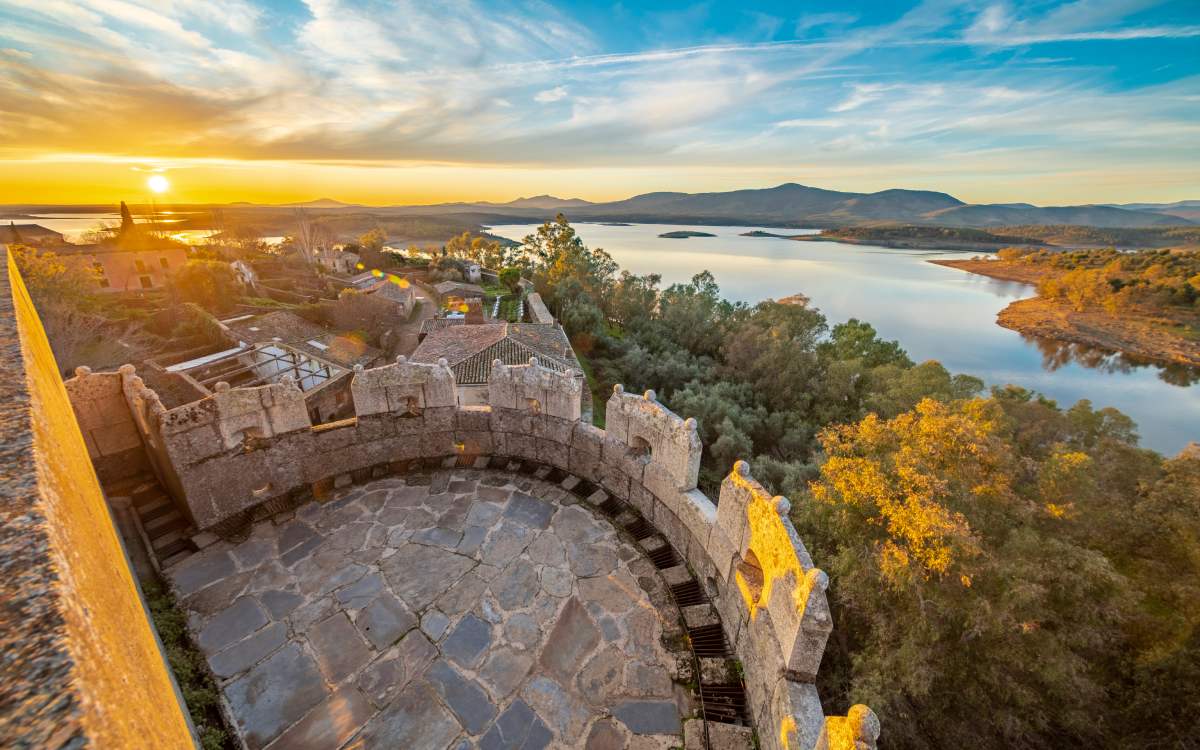
Its modest design might be the reason why this isn’t one of the most popular walls in Spain, but it is still special. Of Arab origins, it surrounds a locality condemned to disappear under reservoir waters.
Its people had to leave their homes and Granadilla turned into a ghost village. However, that wall never stopped performing its task, keeping that enemy in the form of a liquid element under its vigilant stare—an enemy that never got to reach it. For this reason, the walled enclosure of Granadilla offers one of the most idyllic postcards in the province of Cáceres.
Walls of Morella
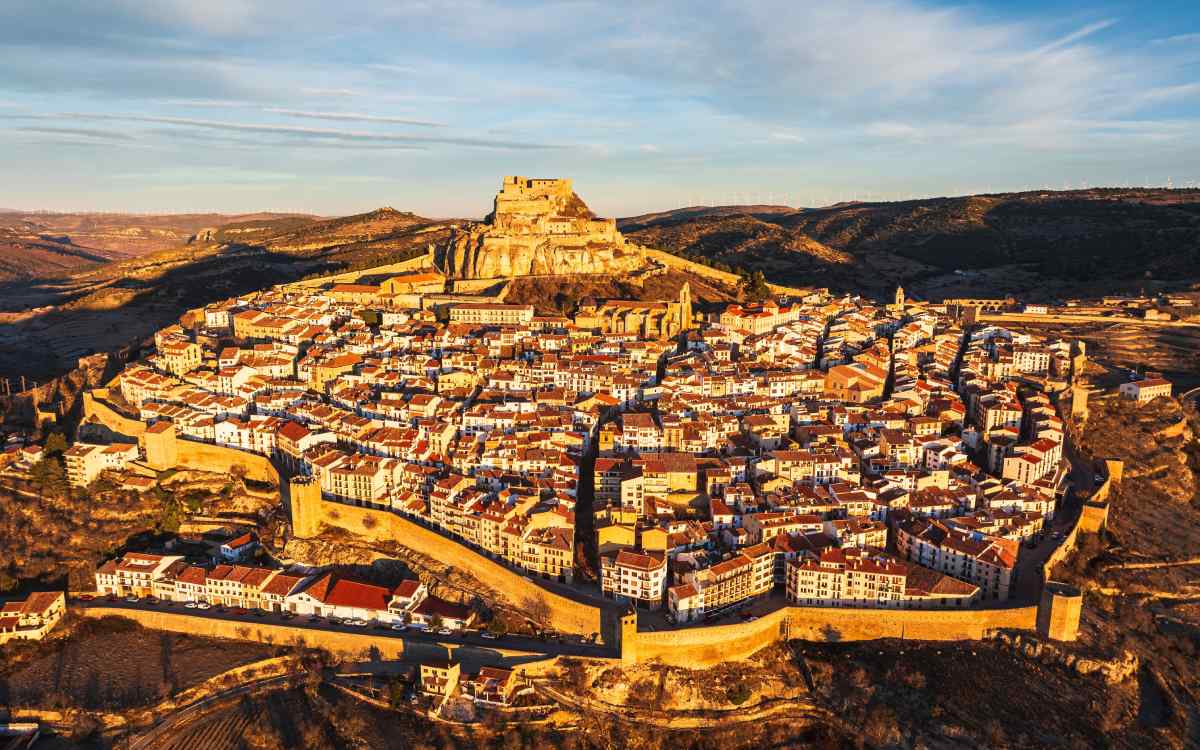
The walls of Morella, as well as its castle, are the best testimony to this locality’s past. Morella used to have a significant strategic importance in the Middle Ages. This city witnessed historical events of great importance and El Cid’s journey in the area.
To investigate the origins of these walls, we need to look back to the 11th century. However, the ones we can visit today were built some time later, in the 14th century. 10 towers and 7 entries are scattered throughout its 2 kilometres of length, protecting one of the most beautiful villages in Castellón.
Cerco de Artajona
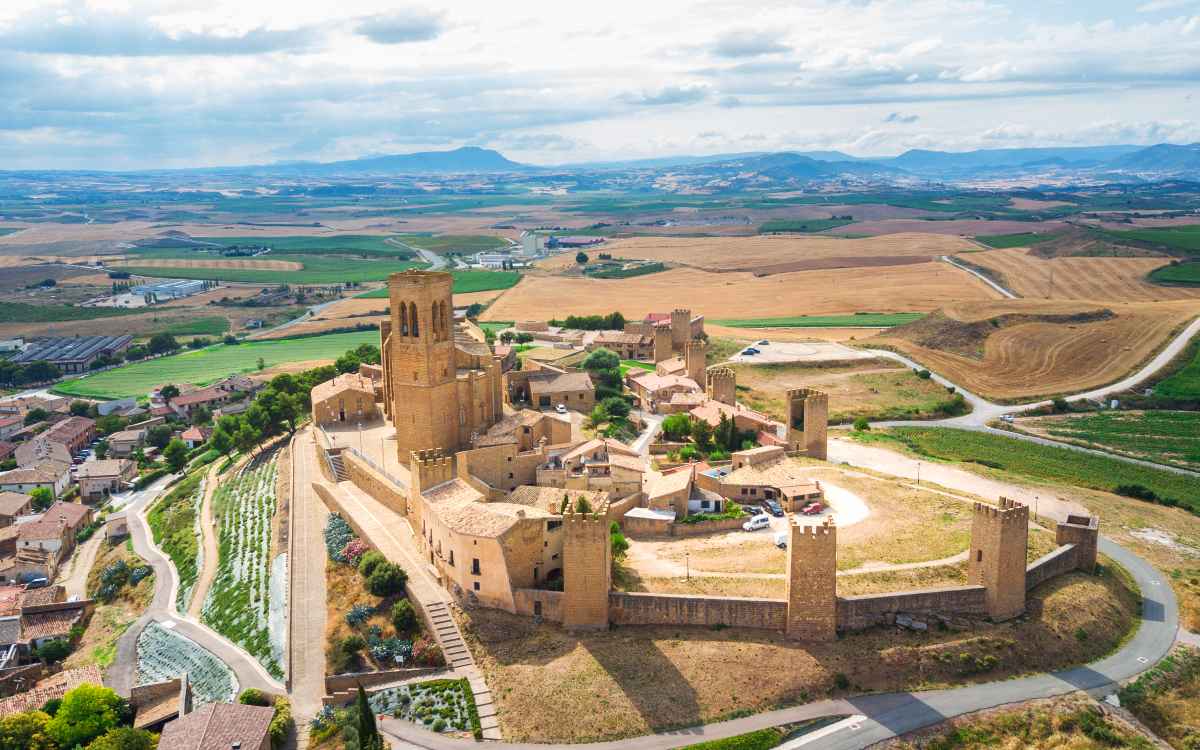
These walls were raised near Pamplona to protect the capital of a kingdom independent of Navarra. It was ephemeral, but its fortified enclosure wasn't, and it is a great example of medieval military architecture.
The Cerco de Atajona sits on top of a small promontory. It covers a length of 700 metres. Dozens of kilometres around could be controlled from its towers. Everything about it was meant to endure long sieges. The roof of its church proves this fact, since it allows for the channelling of rainwater to a subterranean aljibe.
Murallas Reales de Ceuta
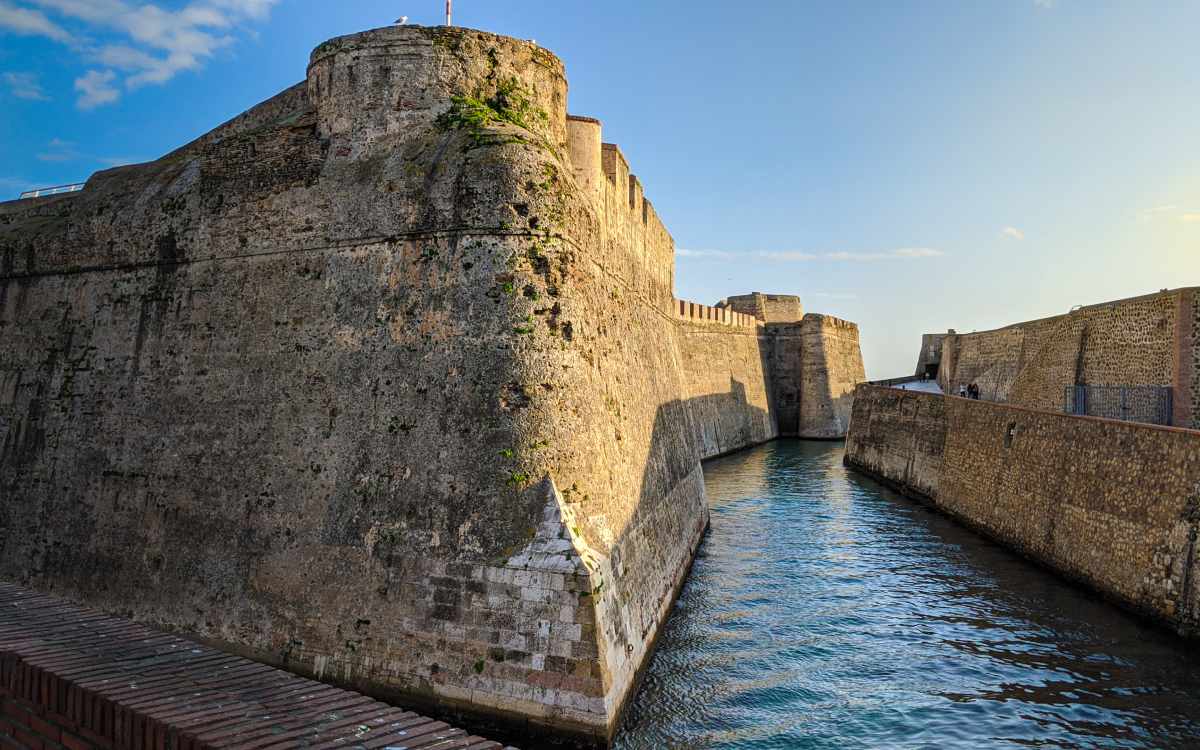
Most castles or walled enclosures were surrounded by moats. The 300-metre-long moat around the walls of Ceuta is navigable and the only one in Spain to have these features. The defensive walled enclosure was composed of many defence lines, and some of them have disappeared. But it has preserved its imposing appearance thanks to its bastions, jetties, and two drawbridges that could isolate the fortress completely.
You can also read this article in Spanish here.
Follow us on Facebook!