
The most beautiful churches in Spain
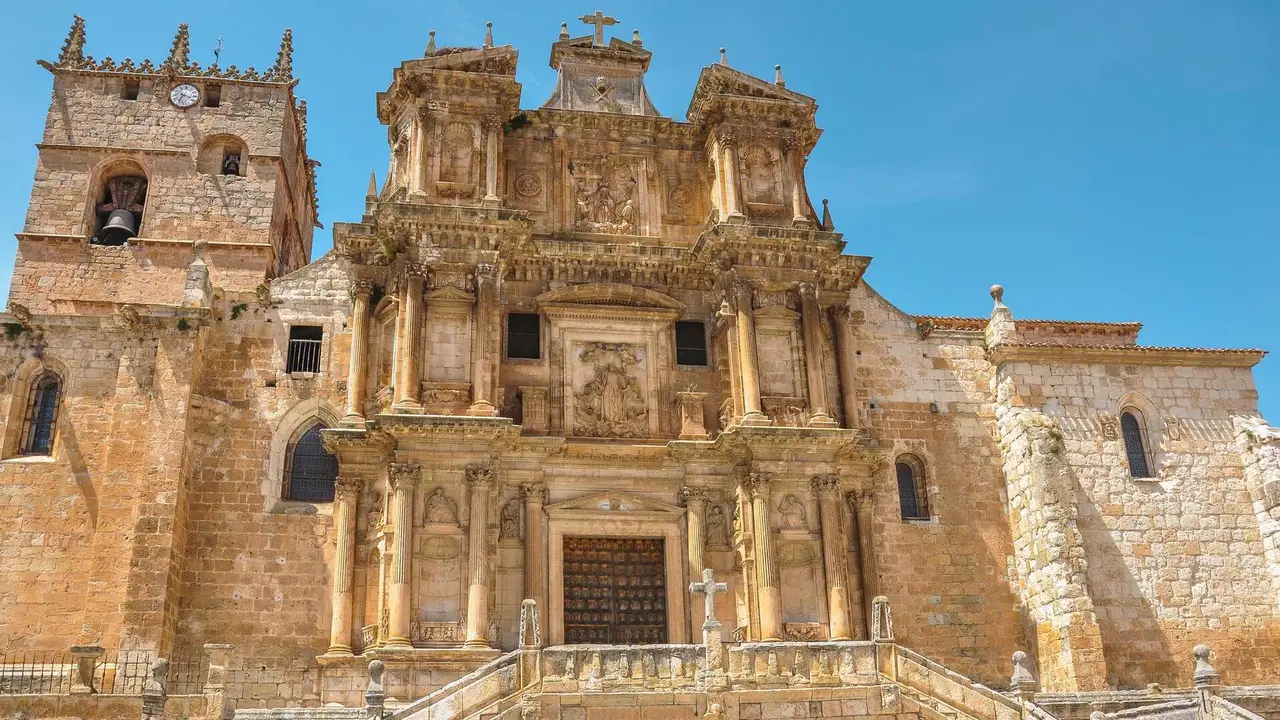
The importance of religious life in Spain throughout the centuries has left a fascinating treasures scattered throughout the country in the form of churches of every size and style. All Christian temples were inspired by a common model, the Roman basilicas. However, they evolved into diverse forms that have left their mark in the country. Let’s dive into Spain’s history and architecture through some of its most beautiful churches.

The most special and beautiful churches in Spain
Every age has left its unmistakable mark that can be perceived both in tiny hermitages and in elegant urban cathedrals. Churches usually portray the best elements of the local artistic heritage, but some of them stand out for different reasons. The following are some of the best examples of those incomparable churches.
San Antonio de los Alemanes
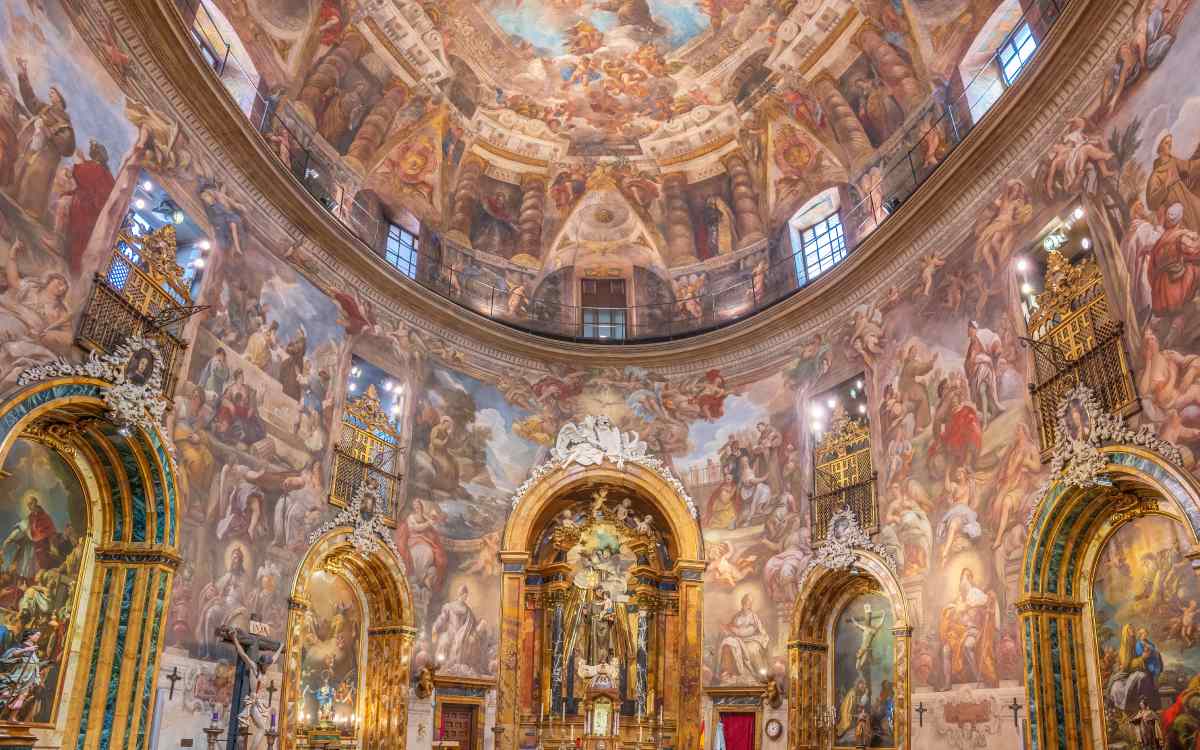
Let us begin with a truly exceptional church: San Antonio de los Alemanes, in the Malasaña district of Madrid. Although the exterior of this building is quite simple, it already introduces its singularity because this is the only church in Madrid with an ellipsoidal layout.
But the real surprise lies on the inside. This church is completely painted al fresco, which makes it one of the few ‘Sistine Chapels’ in Spain. Inside, you can’t help but look at the infinite figures portrayed in the curved walls, rising carefully to the apotheosis of colours and beauty that crowns the cupola.
Church of San Pedro

No one does Mudéjar art like Teruel. This style introduced elegant Arab influences into the medieval Christian styles. The Church of San Pedro was built in the 14th century and it’s one of the most representative examples of Teruel's traditional architecture designated as a World Heritage Site.
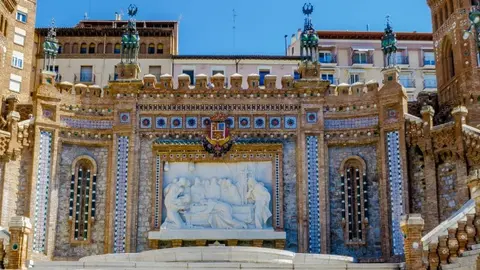
Its bell tower is the oldest of this ostentatious style, but what awaits you behind its door is even more impressive. The vault resembles a starry night and charms every heart when combined with the golden shade of the archery. This place’s exceptional value goes even further. Its lovely cloister is worth a mention, just like the interesting archaeological site it lies in, which is home to a medieval necropolis.
Santa María del Naranco
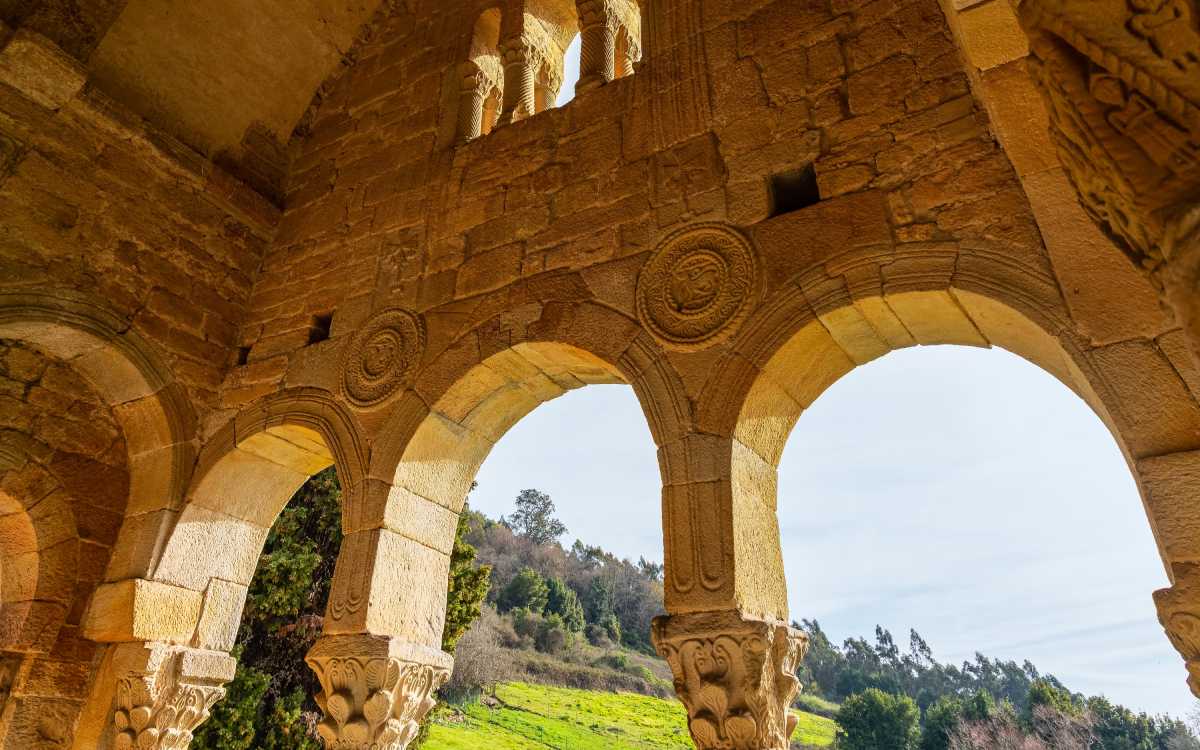
Everything about this church is fascinating. For instance, its architectural style was one that defined the Kingdom of Asturias in the 9th century. Therefore, it is the oldest temple in this ranking. Besides, Santa María del Naranco was a royal palace at first, but became a church in the 13th century.
This might be the reason behind its singularity, so different from the others: a very vertical building, incredibly decorated, and of beautiful proportions, just like if it were hugging itself. If that wasn’t enough, it sits in a beautiful settlement on the outskirts of the capital of Asturias, surrounded by grass and gorgeous views. To walk into this church is to enter a fairytale, a seemingly legendary age.
Sacra Capilla del Salvador
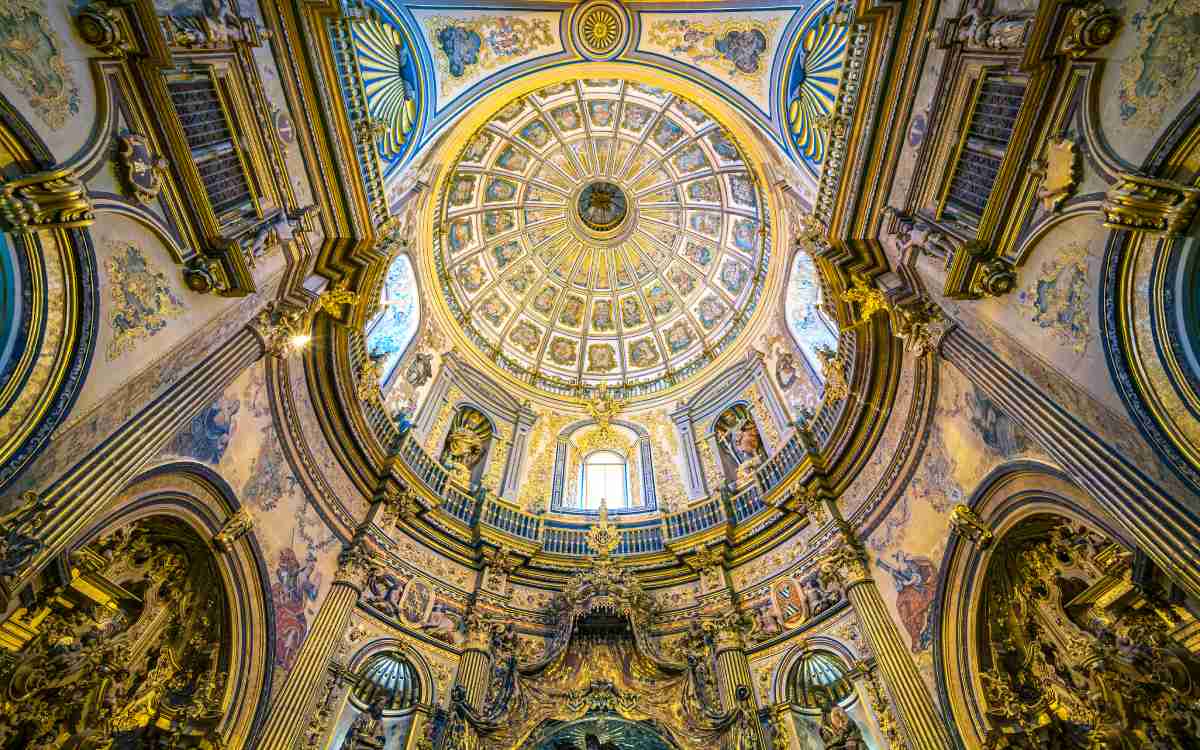
If you dive into Úbeda and Baeza, you will discover the splendour of the Spanish Renaissance. These two cities in the province of Jaén are famous for their monumental complexes from this era, declared World Heritage Sites.
The Sacra Capilla del Salvador is one of the most beautiful and pure examples of the Renaissance in Spain. It houses exquisite sculptures of gods, caryatides, atlantes and other creatures that bring elaborate symbolism to a temple that is, in fact, a pantheon. The main retable, a work by Alonso Berruguete, and the breathtaking rotunda painted al fresco, reserved for the novelty. No matter where you look, you will find surprising details.
Church of Santa María

The small village of Gumiel de Izán, in Burgos, seemed to be forgotten until the beauty of its parish church brought it back to life. Its similarities with The Treasury of Petra have earned it the name of the ‘Spanish Petra’.
The façade of this church is a great example of Baroque architecture. Its balanced ornamentation is hard to resist. Although its interior is beautiful too, it is inspired by other architectural styles, such as the Gothic naves and the excellent sixteenth-century retable. This building is proof that even the most modest village can hide a brilliant past.
Sant Paul del Camp
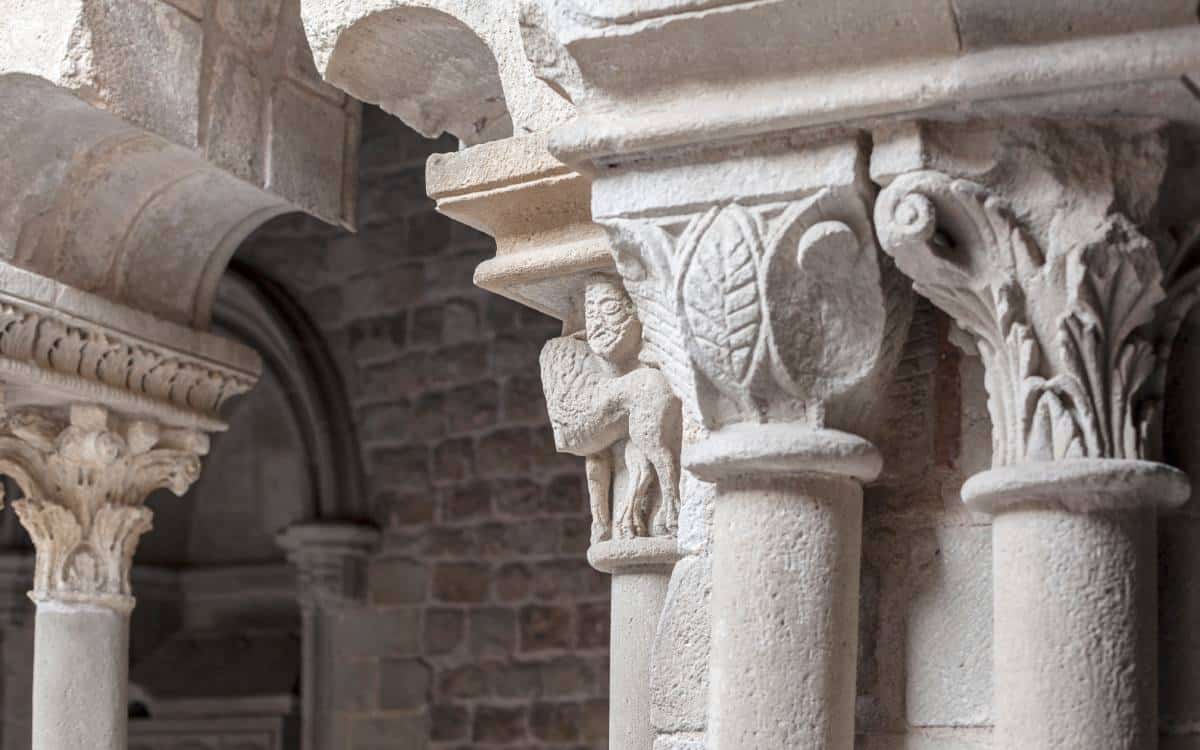
It is well known that Barcelona’s majestic churches attract thousands of visitors, but Sant Paul del Camp’s charm portrays the opposite case: a tiny Romanesque church with a beautiful cloister most people don’t know about.
Its discreet dimensions, the harmony of its lines, and the simplicity of its beauty make this church, which used to be part of an old monastery, a tiny miracle. An exceptional sample of Romanesque is located in the most unexpected corner of Barcelona: the Raval district. The church itself has the robust essence of its age, but the luminous cloister and the charming outdoors create an indescribable joy.
San Luis de los Franceses
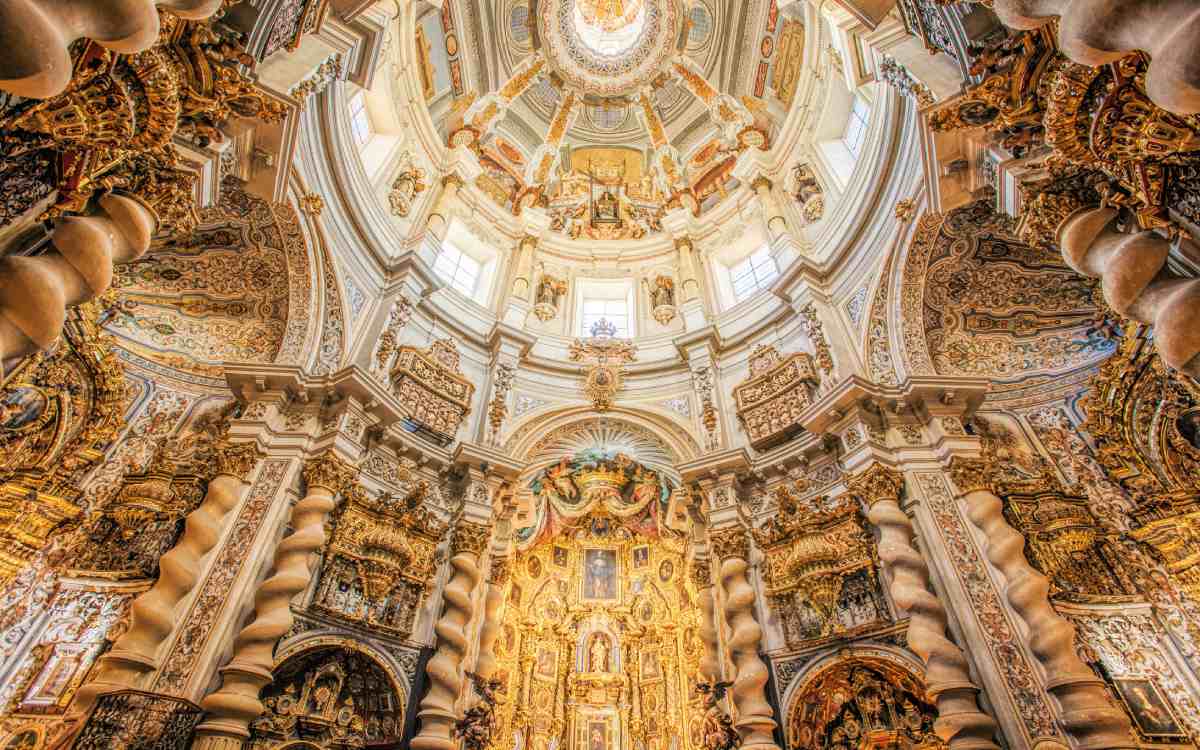
One of the most beautiful churches in Spain and one of the most spectacular examples of Baroque architecture lies in Sevilla, a gorgeous complex composed of a church and a Jesuit Novitiate. Precisely, the complex symbology of this temple was chosen by Jesuit intellectuals and the architect Leonardo de Figueroa. The construction was finished in 1731.
From its salomonic columns and its retable-like façade to the great beauty of its vaults, everything in this church is opulent and excessive. The combination of white and golden shades behind its doors is hard to forget. And we should mention its exquisite retables, in particular the one of the Capilla Doméstica, a breathtaking splurge of gold, volutes and saints.
You can also read this article in Spanish here.
Follow us on Facebook!