
The gulleys and cave dwellings of Marchal: a geological getaway
Erosion has sculpted the landscape of the Guadix Valley whilst its people shape its living history.
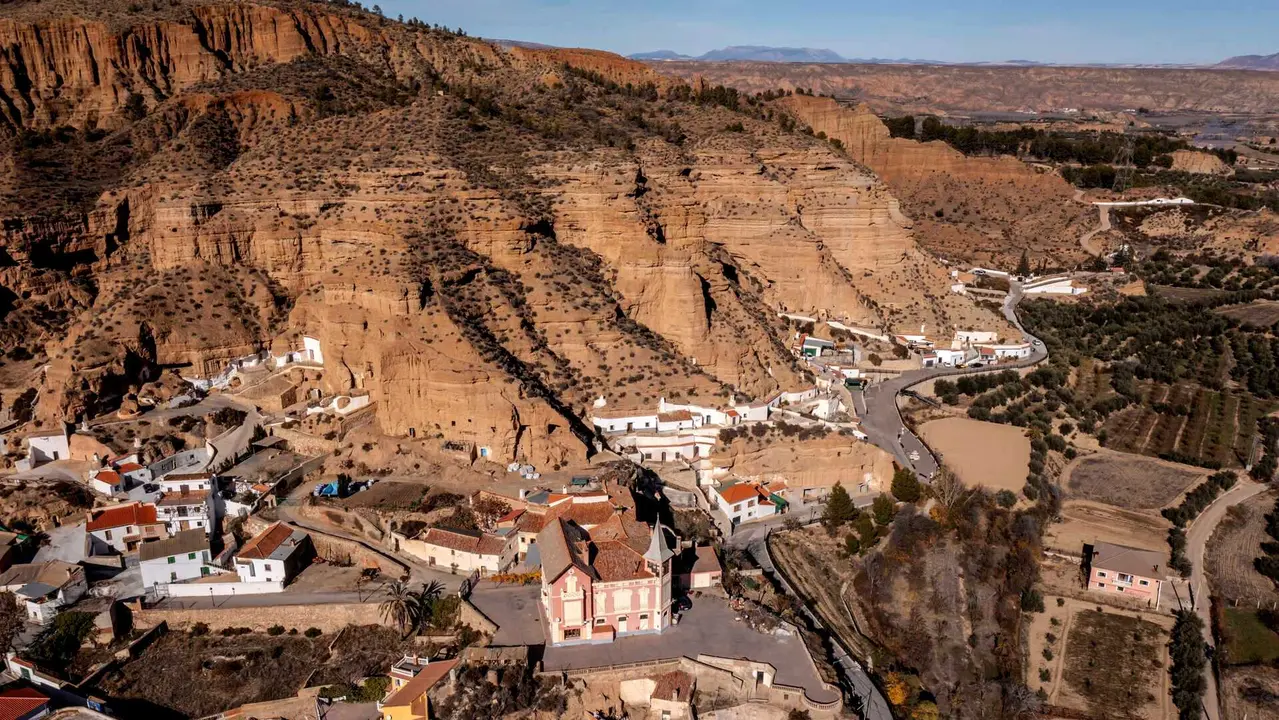
Erosion has sculpted the landscape of the Guadix Valley whilst its people shape its living history.
Between the Guadix Valley and the clay hillsides of the village of Marchal in Granada Province, erosion has sculpted an otherworldly landscape of deep furrows and peaks. The Gulleys of Marchal, a designated Natural Monument of Andalusia since 2003, offers extraordinary perspectives, ranging from elevated vantage points to the village of Marchal itself. And it is in the village where the geology reveals previous inhabitation.

TOPOGRAPHICAL ORIGINS
The gulleys origins date back some 25 million years ago. The current landscape is explained by aeons of layered soft sediment and continuous erosion. Tectonic movements also provoked sinkholes leaving behind deep trenches. Millennia of wind and rain on a scantily vegetated terrain shaped a panorama marked by ravines, water channels and occasional peaks. Nature itself has crafted the massif known today as the Gulleys of Marchal.
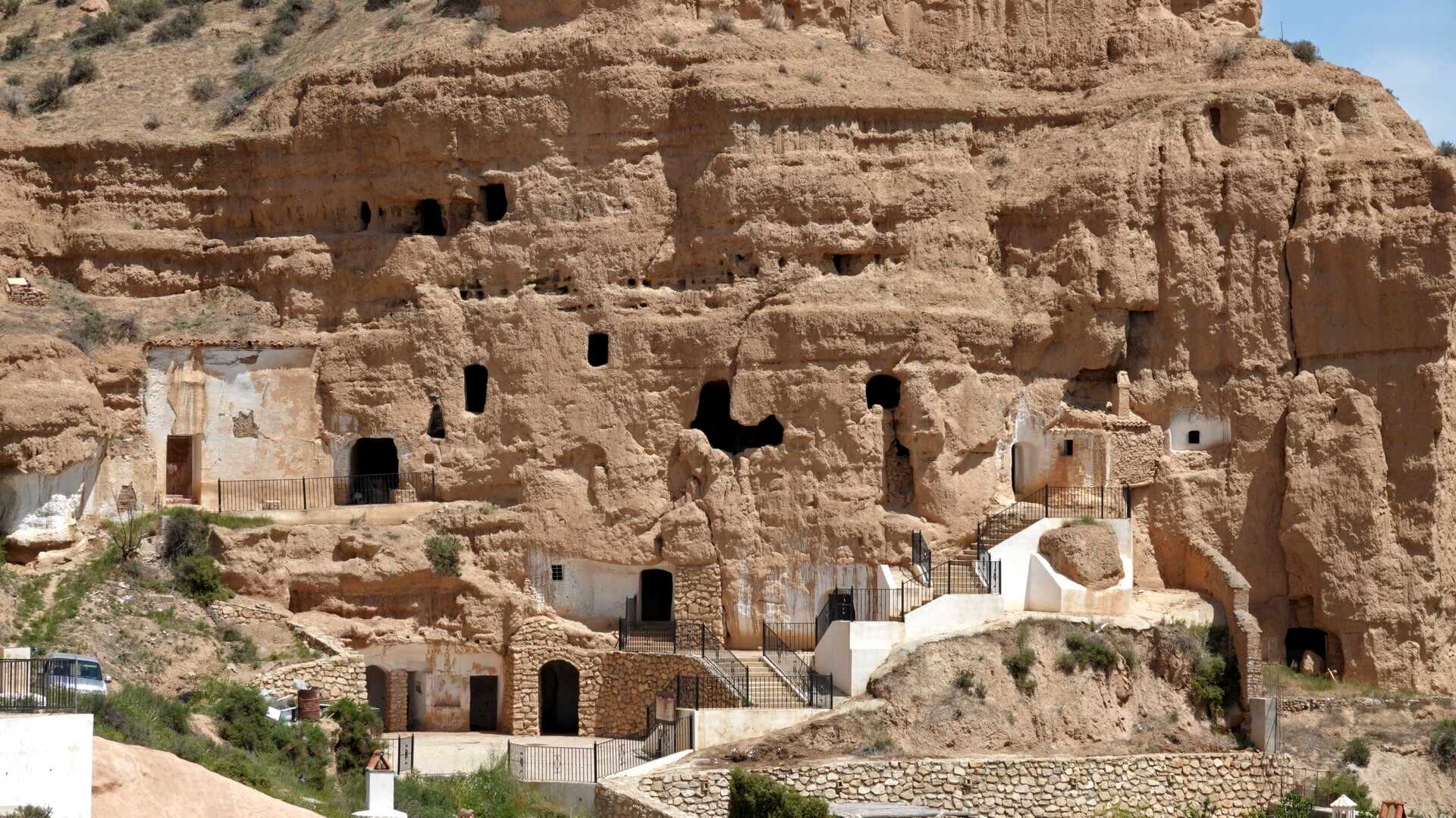
The gulleys of the Guadix Valley, consisting mostly of clay and silt, are susceptible to erosion. Likewise, this same ductile terrain spurred human settlement, where the ease of excavation and the caves natural insulation were utilised as shelter, dwellings and communal living. The terrain served to maintain stable temperatures in the living quarters, whilst entrance ways and tiny windows were used to ventilate interiors.
Although these caves may have been inhabited at one time, the surrounding landscape of brownish ochre hues and scarce vegetation was inadequate for intensive farming. The limited agricultural performance of these ravines has earned it the title of Granada’s badlands.
Cave abodes were eventually abandoned in exchange for modern accommodation in what is now the village of Marchal, a settlement of just over 400 residents. Situated in a unique geological setting, Marcal’s panorama of grottoes and snowcapped summits in the distance fashions a quintessential image of the province of Granada.
TWO PERSPECTIVES ON MARCHAL
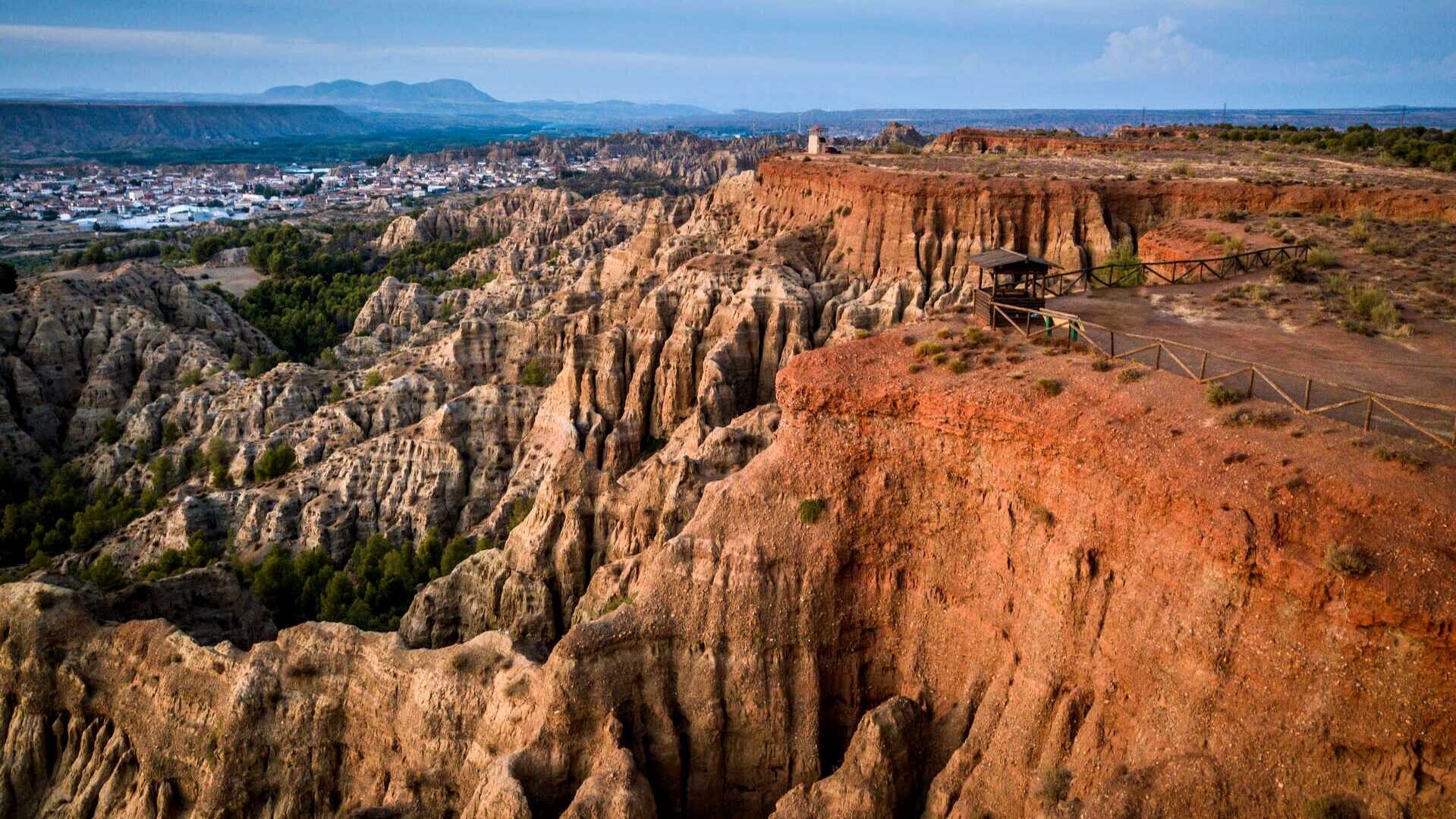
Visitors to the Gulleys of Marchal have an array of fascinating viewpoints to enjoy the landscape. One noteworthy perspective is from the village, where the true scale of the slopes and caves can be appreciated. Another spectacular vista is from the Gulleys of Marchal official lookout point, an ideal place to survey the entire scene and behold the pattern of furrows and gorges.
The caves at Marchal are located within the Granada Geopark, where Our Lady of the Annunciation Church, notable for its invaluable historic heritage, and the Gallardos’ Palace are both must-see sites to visit.
Marchal defies the notion of a static landscape. Instead, these lands prove to be a work in progress, comprising the village, its once-inhabited grottoes and the slowly evolving escarpments of the surrounding countryside. These weatherworn badlands offer not only serene panoramas, but insights into the history and ingenuity of its people.
You can also read this article in Spanish here.