The most curious hermitages in Spain
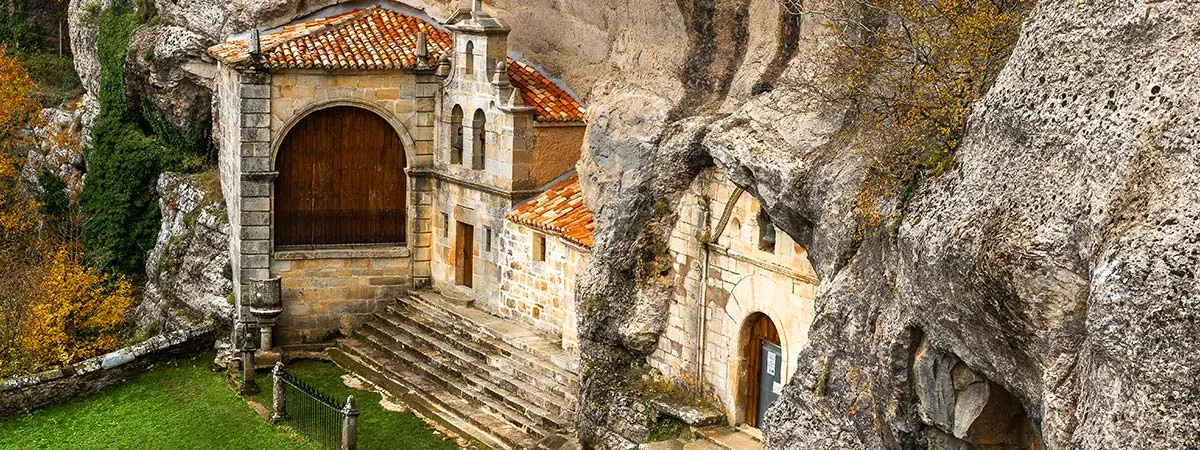
Many of the most curious hermitages in Spain are great unknown. Some are remembered for their beauty; forgetting some of the singular elements in their architecture or the traditions around which they are surrounded. Without a doubt, visiting the most curious Hermitage is an adventure suitable for those who enjoy the stories and legends, the impressive landscapes and the architectural rarities. Will your vision of any of these most curious hermitages change?

San Bartolomé Hermitage, Soria
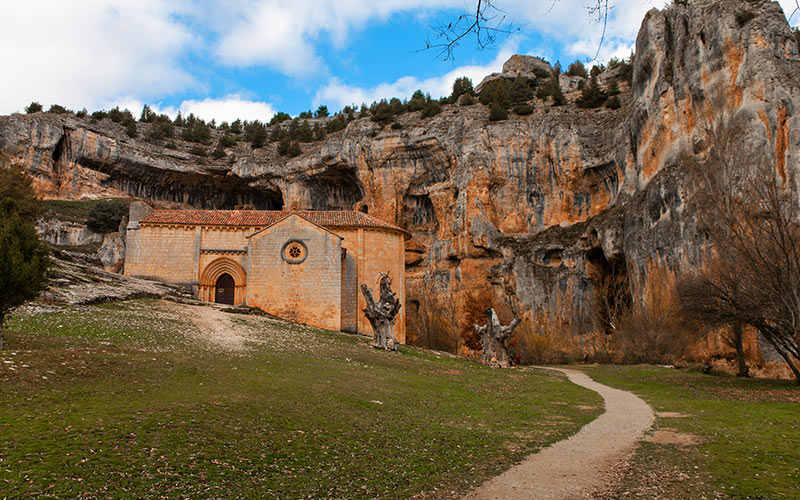
For many it is even a magical place; considered to be the centre of the world for the Knights Templar order. Thus, the distance from the hermitage to Cap de Creus in Girona and Cap de Toruiñán or Finisterre in A Coruña is equidistant. To this we must add that by drawing a vertical line from north to south, crossed at this point, the peninsula is divided into two halves. The drawing shown is a Templar cross.
San Bernabé Hermitage, Burgos
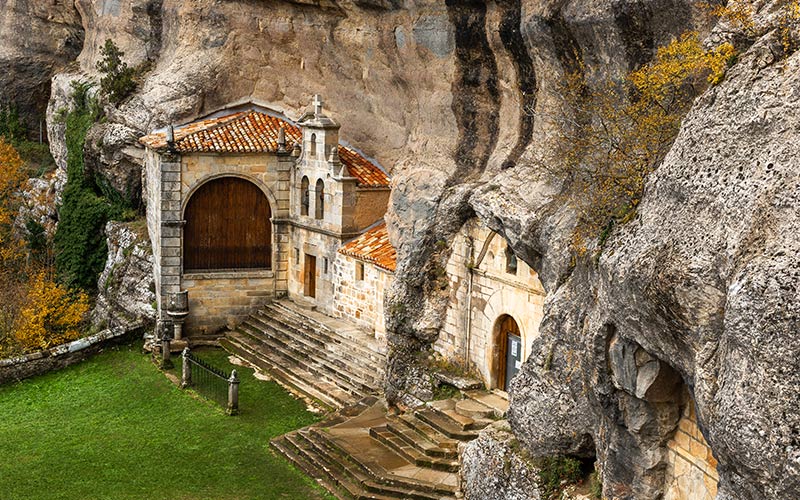
The hermitage of San Tirso and San Bernabé in Burgos is located in a cave, but not just any cave. It is located at the entrance of Ojo Guareña, one of the most outstanding karstic complexes in the world, formed by more than 110 kilometres of galleries. Various archaeological findings maintain that these cave systems were already in use in the Middle Palaeolithic. With a total of 400 cavities, the main network is made up of 14 caves connected to each other. One of the most important is the cave and hermitage of San Bernabé.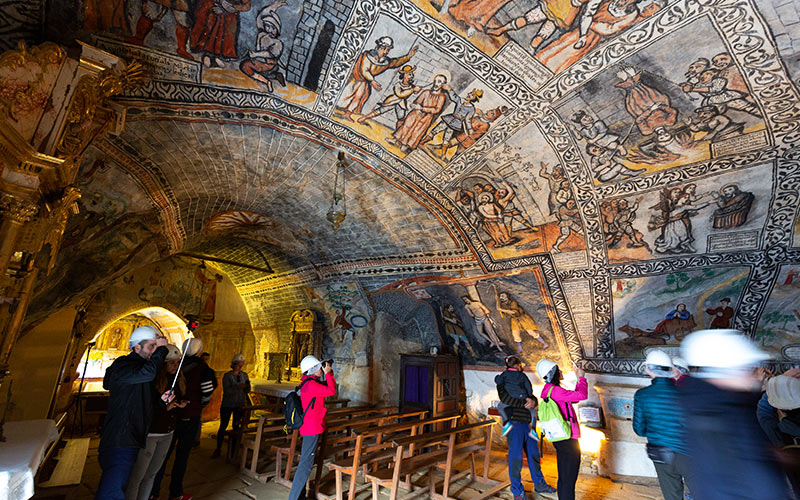
La Toja Hermitage, Pontevedra
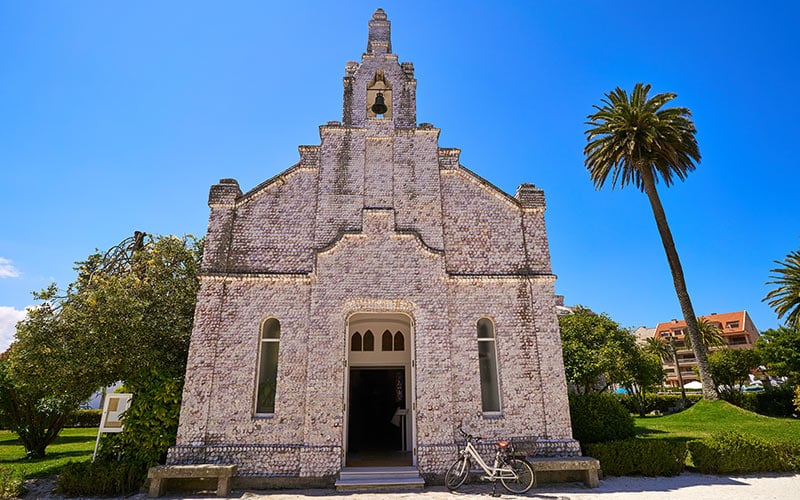
It is also known as the Chapel of San Caralampio, to whom it is entrusted; or as the Chapel of San Sebastián.
Santa Catalina Hermitage, Bizkaia
San Pantaleón de Losa Hermitage, Burgos
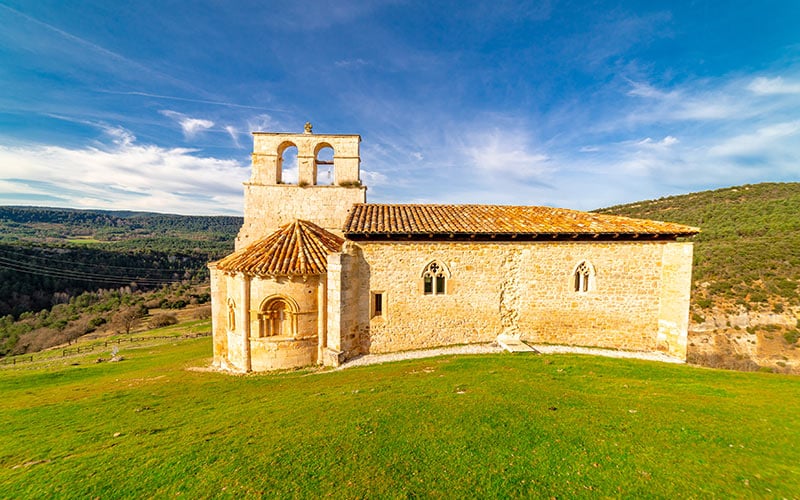
The hermitage is associated with the legend of the Holy Grail; due to the coincidence of names of places near it. There, names of villages, mountains and sanctuaries resemble names that appear in the legend of the Holy Grail. For example, less than ten minutes away by car is the village of Criales; which is reminiscent of the plural of the word Grail. According to one of the literary works around the Holy Grail, the castle where it was kept was called Montsalvat. The mountains near the Hermitage of San Pantaleón de Losa belong to the Sierra Salvada, a name that resembles it.
According to legend, the Templars protected this castle, and this can also be related to the hermitage. Thus, added to the Romanesque factory was the Casa Priorazgo de la Encomienda de Vallejo of the Order of St. John of Jerusalem. This order is said to have inherited many Templar holdings.
San Antón Hermitage, Navarre
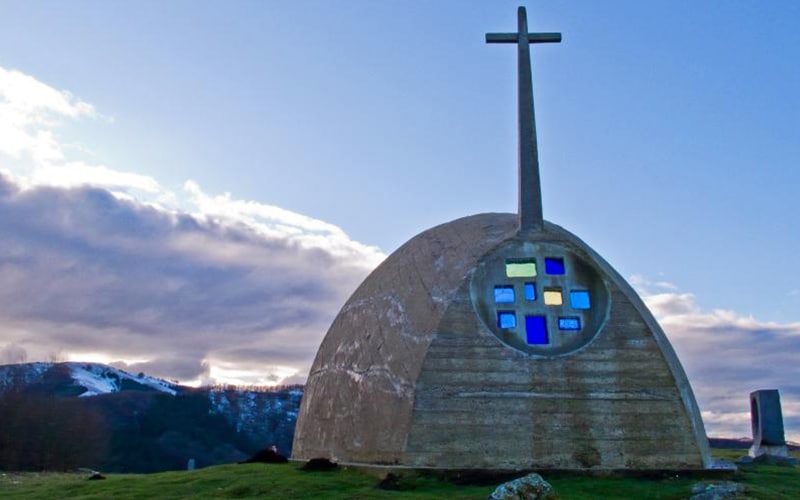
San Úrbez Hermitage, Huesca
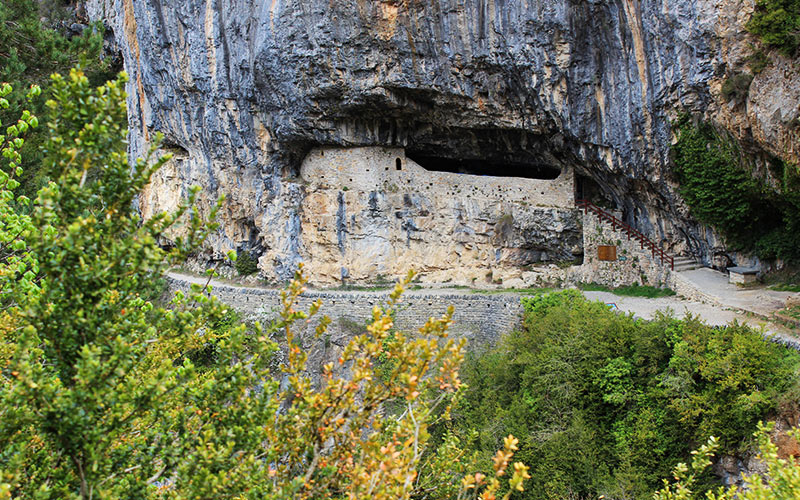
One of the most curious hermitages in Spain and also one of the most unknown is the Hermitage of San Úrbez, in the Vió Valley, whose capital is Fanlo, Huesca. This cave chapel is located on the edge of the Ordesa y Monte Perdido National Park at the entrance to the Añisclo Canyon. Specifically, the Hermitage of San Úrbez is located in the hollow distinguished as the Cave of Sestral; on the convergence of the rivers Bellós and Aso. It is a place that imposes just for its location, because you do not expect to find a hermitage here.
It is a cave hermitage where the stories of the area tell that the shepherd San Urbez lived. Tradition also places its foundation in the 8th century; although there are elements in it that date back to the 12th century. It is said that Saint Urbez lived in the Valley of Vió, where he worked as a shepherd. He sometimes slept in the Sestral cave when he went out with the cattle. This is where the temple stands. People have attributed magical elements to his figure.