
9 fascinating natural landscapes in Spain you need to discover

There are thousands of spectacular natural landscapes in Spain, many of them located in natural parks. However, there are many natural areas that are unknown to many people but which, although they receive a large number of visitors, have not yet become so popular. These unknown natural areas will amaze anyone with their beauty and magnificence.

Torcal de Antequera, Málaga
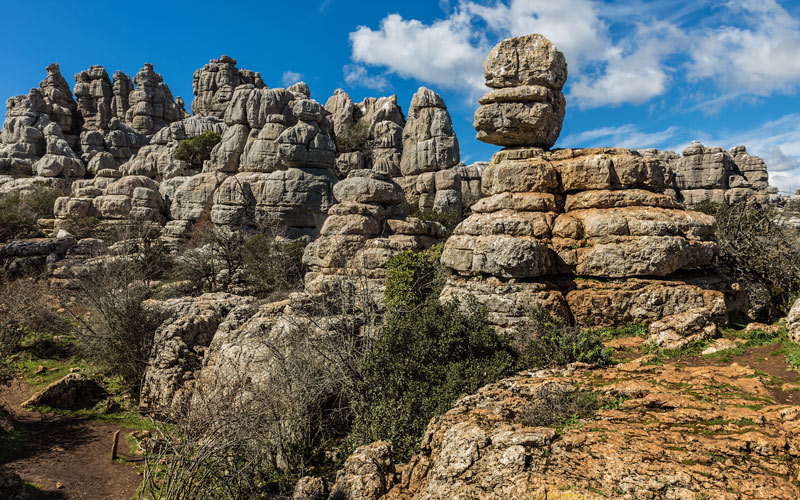
The complex is made up of Torcal de Antequera natural park, Peña de los Enamorados and Dólmenes de Antequera archaeological site. In July 2016 the complex was declared a World Heritage Site by UNESCO.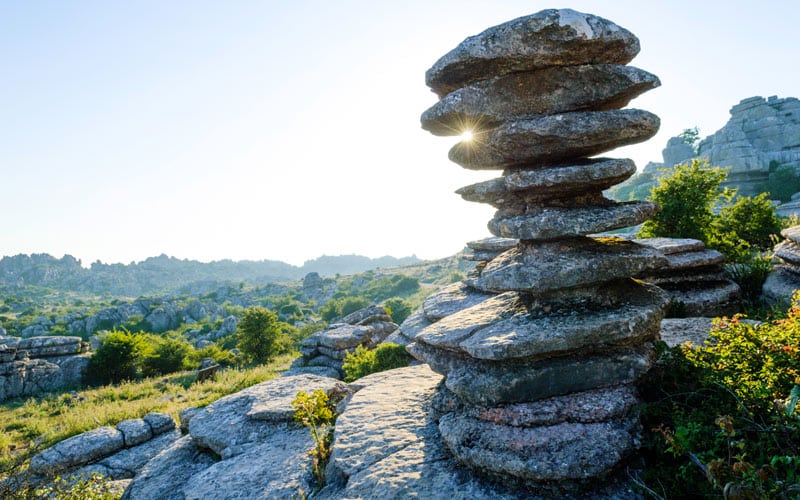
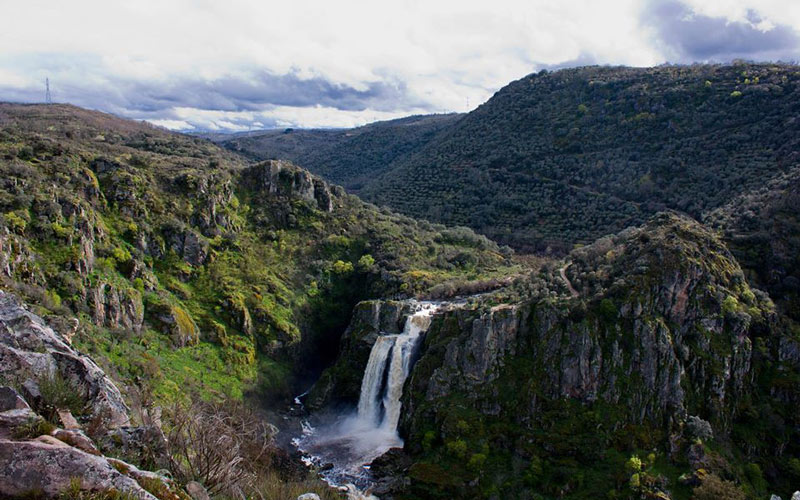
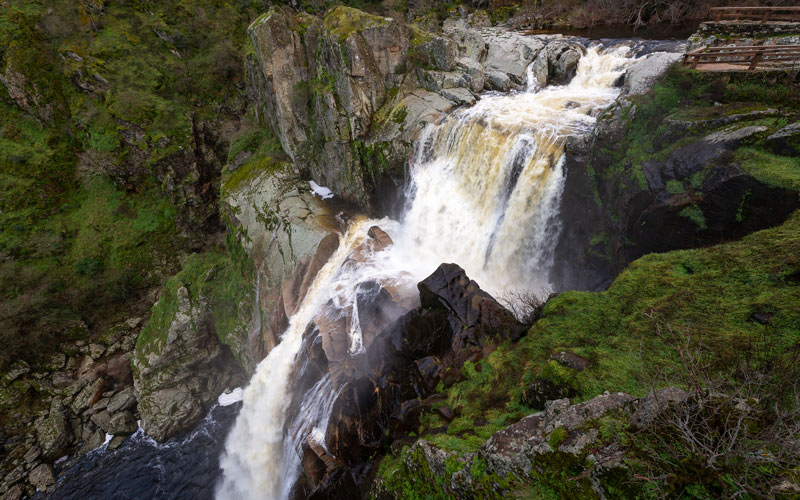
Pozo de los Humos, Salamanca
Rambla de Barrachina, Teruel
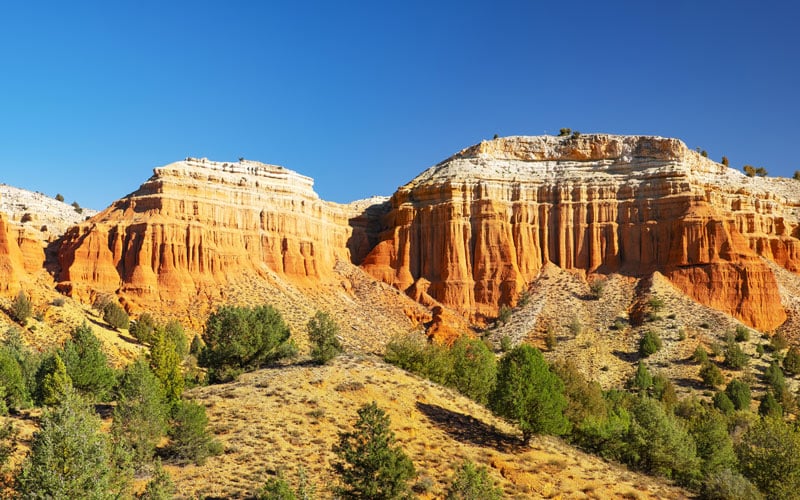
La Rambla de Barrachina in the province of Teruel is known as "The Grand Canyon of Teruel". As if it were a scene from a movie from the far west, the Rambla de Barrachina is located near Teruel, in the Aragonese region. A hidden landscape that can be crossed through paths facilitated by the enclosure. Depending on the time of day, the sun shines on the clays of the ravine and they change colour, with lighter and darker shades.
Los Órganos, La Gomera
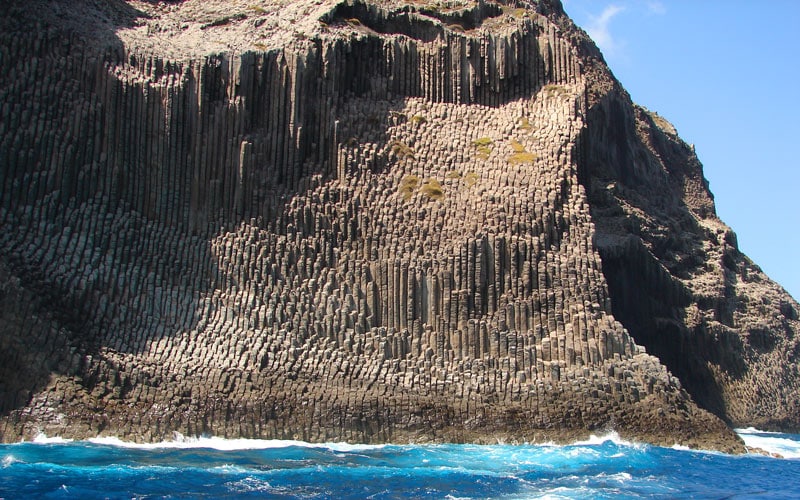
Los Órganos is a natural protected area located in the north of the municipality of Vallehermoso, in La Gomera, one of the eight Canary Islands. This basaltic formation in the middle of the cliffs extends from the sea to 700 meters of altitude. The "pipes" called "órganos" because of their similarity to those in churches are magma that, without coming to the surface, cooled down. The force of the sea sculpted the curious shape they have today. In order to see this natural space from the sea there are sea trips offered by private boats.
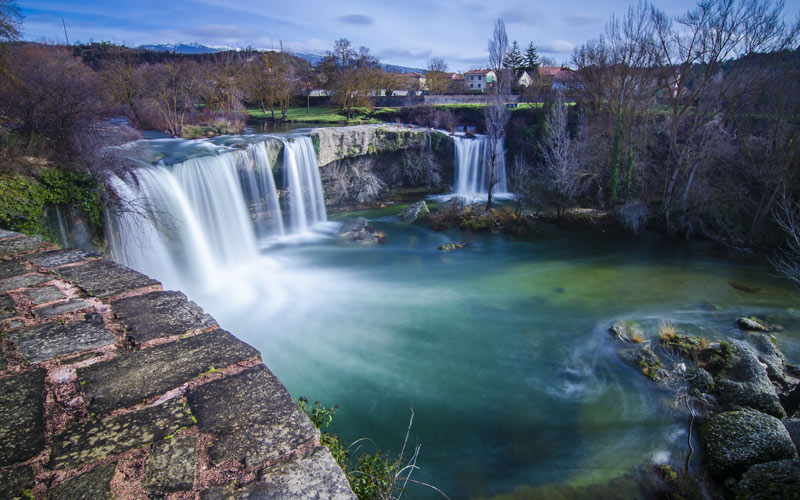
Pedrosa de la Tobalina Waterfall, Burgos
Bufones de Pría, Asturias
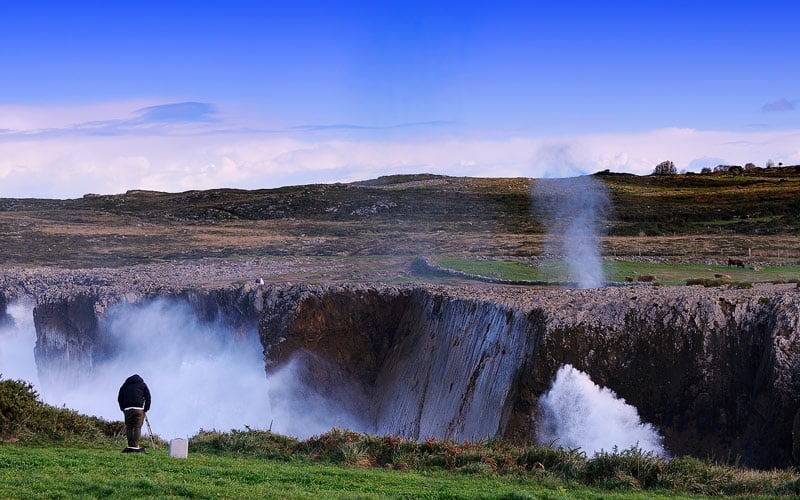
The natural phenomenon of the Bufones de Pría is a visual spectacle. It can be seen in the Asturian town of Llames de Pría. The erosion of the sea and the rain on the rock have caused chimneys and cracks to form; which connect the land with the sea. Normally, the blow of the waves against the cliffs causes the expulsion of compressed air from the galleries. However, when waves are stronger the water and air come out through jets of water with great pressure and height.
You can park your car at Llames de Pría and walk along the cliffs in front of it. When the tide is high, the natural phenomenon that can be seen there can amaze even the most indifferent.
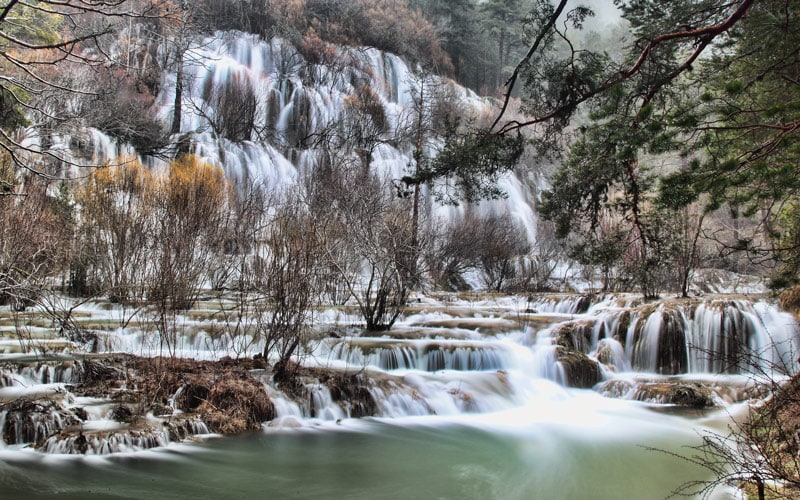
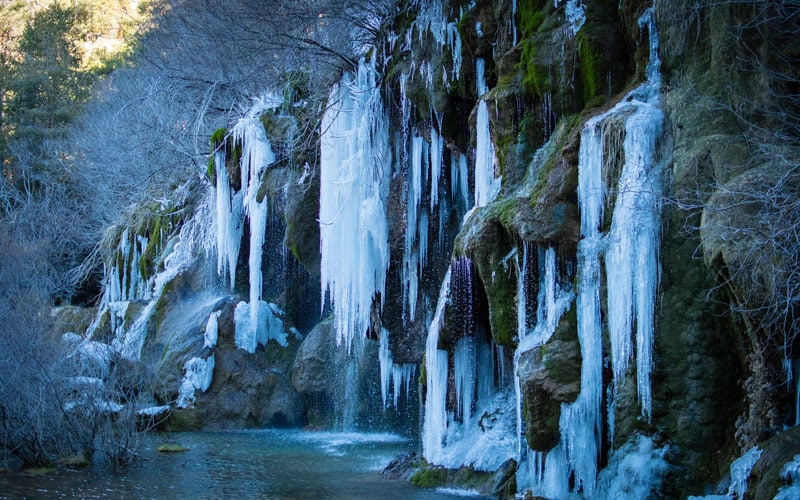
Source of the Cuervo River, Cuenca
Bardenas Reales, Navarre
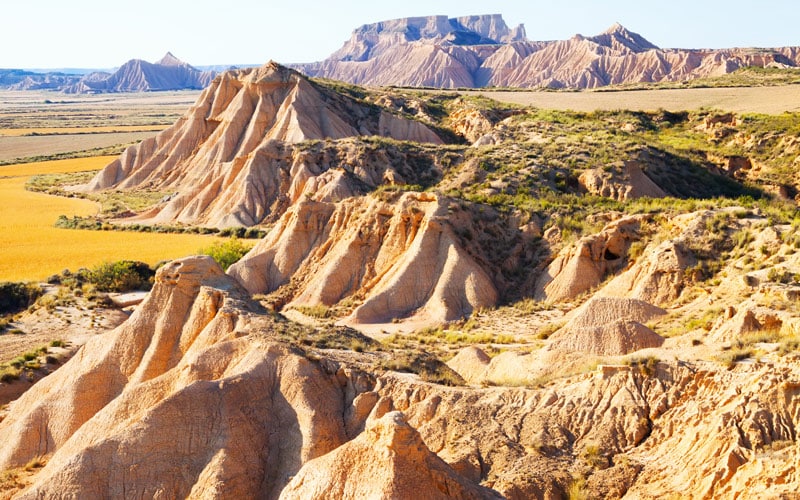
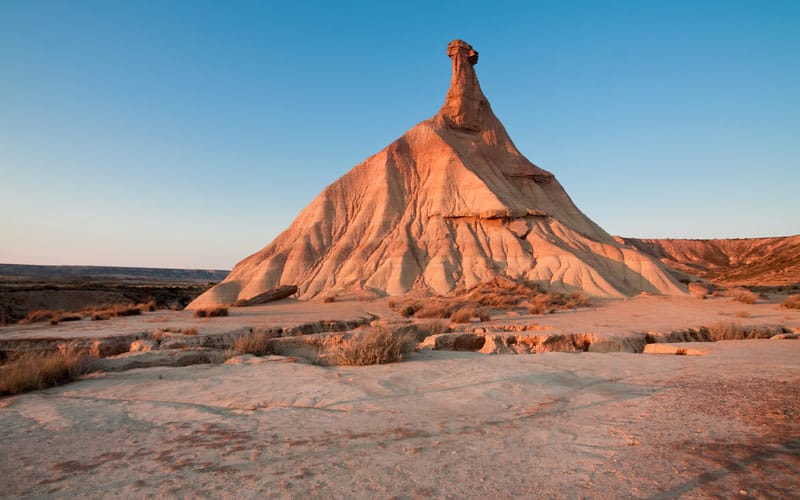
The amazing shapes that are in this park, popularly called Bardenas, have been sculpted after millions of years of continuous erosion. It is currently divided into three areas: the Plano, a farmland with few elevations; the Bardena Blanca, where the popular formations of Pisquerra and Castildetierra are found; and the Bardena Negra, with the largest vegetation cover in the area, including forests of Aleppo pine. For those who love hiking and cycling, there are more than 700 km of mostly signposted paths.
Meandro del Melero, Salamanca

In Castile and Leon, specifically in Salamanca, is the Meandro del Melero, in which the river Alagón makes a turn that causes a postcard image. However, it is from the viewpoint of La Antigua where it is possible to contemplate this incredible natural spot. This viewpoint is located in the town of Riomalo de Abajo, in the province of Cáceres. Thus, the best place in which to contemplate this natural landscape of Salamanca is from this town of Cáceres. A balcony that offers the visitor a beautiful meander, with views of Las Batuecas-Sierra de Francia natural park.
From this location you can visit both the region of Las Hurdes in the northern Cáceres and the southern Salamanca; both sites with many landscapes that offer an unforgettable experience. Thus, in the south of Salamanca is La Alberca, one of the most beautiful villages in Spain. North of Cáceres is the abandoned village of Granadilla, with its magnificent Almohad wall.