
Ojo Guareña cave, more than 100 kilometers of long caves and galleries
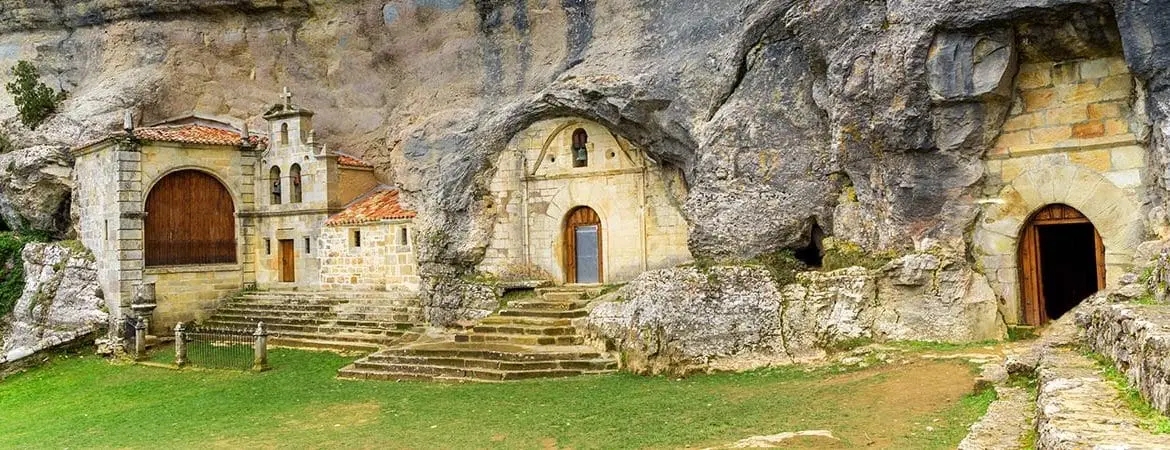
North of the Province of Burgos is located Ojo Guareña, one of the most important karstic monuments worldwide. It is made up of more than 110 kilometres of long galleries. It was declared Natural Monument in 1996 by the government of Castile and León thus. The cave-hermitage of San Bernabé is a must see.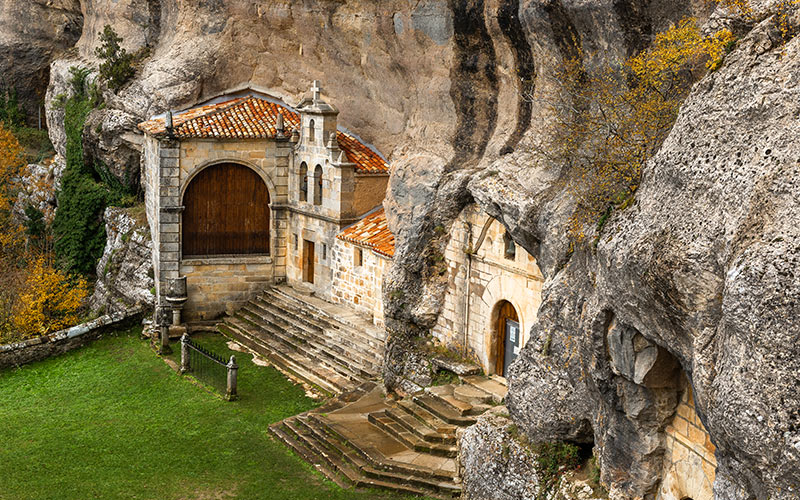

The core network is made up of 14 caves connected with each other in a total of 6 floors or different altitude. Some of the most important are Cornejo cave, Covaneria cave, the Diaclassas, the cave and hermitage of San Bernabé, Sima of Dolencias, Kubía cave, Kaite cave, Sima of Los Huesos, Palomera cave and Moro Cave, among others.
This natural area is located in the province of Burgos. More precisely, on the north of the province, on the southern slope of the Cantabrian Mountains. The municipalities where this natural monument is located are Espinosa de los Monteros, Merindad de Sotoscueva and Merindad de Montija.
Historical background of the Ojo Guareña karst complex
Several archeological finds were discovered in the Ojo Guareña caves. Accroding to them, this network of caves were used between the Middle Paleolithic and Middle Age. Therefore, the presence of humans in this perios has been proved.
The oldest traces that prove human presence in the area were found in the Prado de Vargas cave. This way, after carrying out of an excavation, lithic industry of the Musterian from 70.000 years ago was found.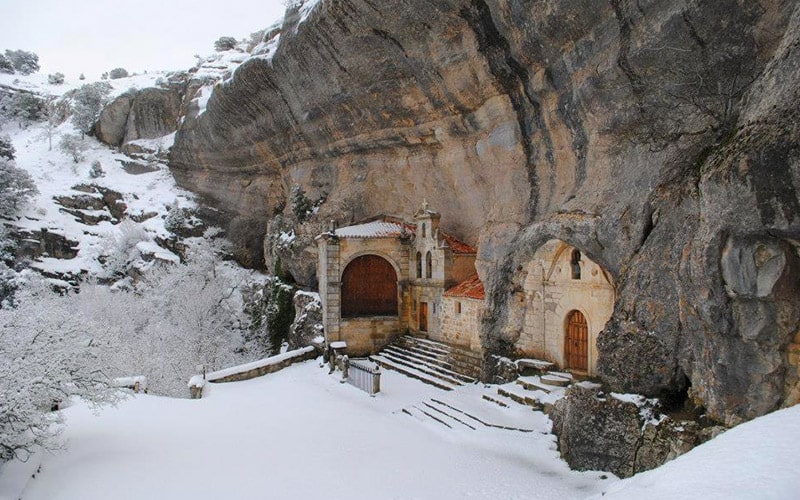
Another of the caves that made up Ojo Guareña is the Kaite cave, where paintings of deer have been found. Note that the Sala de la Fuente has geometric, anthropomorphic and zoomorphic patterns in its walls and in its vault. These patterns correspond to a period which ranges from the Late Neolithic to the beginning of the Bronze Age.
Cave and hermitage of San Bernabé
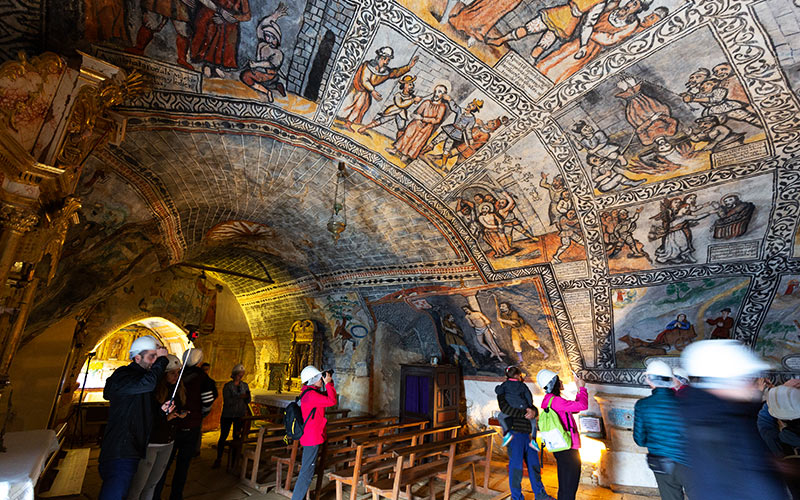
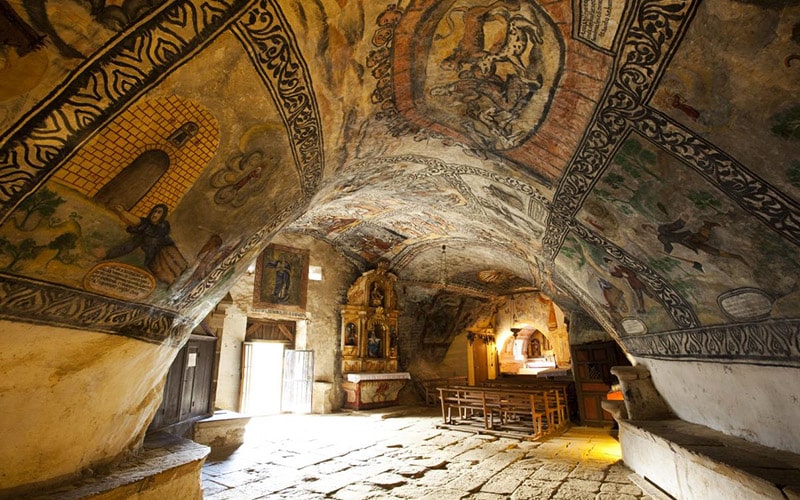
Furthermore, to the right of the entrance is the Sala del Ayuntamiento (City Council room), used as meeting place until 1924. Just very important events such as the Romería de San Bernabé (declared Festival of Regional Tourist Interest) are held in this hermitage nowadays.
In order to visit the hermitage of San Bernabé as well as the Palomera Cave, tickets must be bought in advance.
Palomera cave
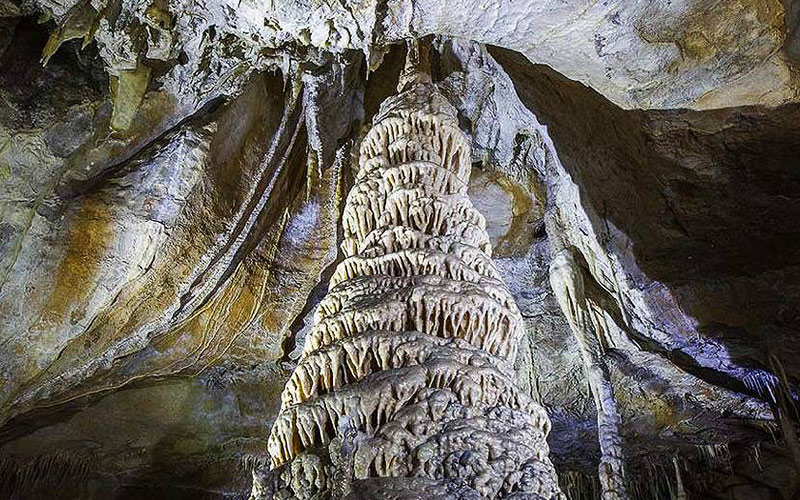
The rivers of the area can be seen in some sections of the tour. A must see is the 54m heigh waterfall that comes from to the stream of Villamartín de Sotocueva and continues through the Sima Dolencias. As you can see, the protagonist of this tour is just the water. Other important elements worth mentioning are the underground rivers of Trema and Guareña. Both have eroded the limestone rock of the galleries.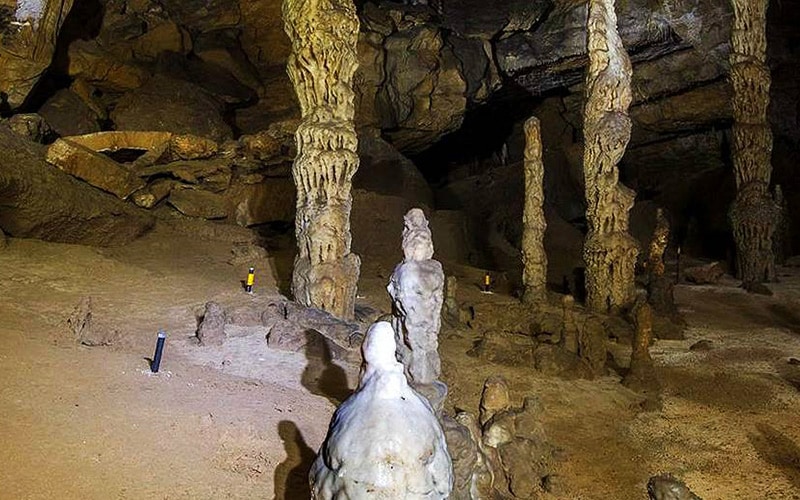
Fauna
This area is characterized by their wide variety of species such as golden eagles, griffon vultures, sparrow hawks and peregrine falcons. As for mammals, wild boars, wild cats, deers or genets. Nevertheless, inside the caves is where most of the fauna is found. There are more than 115 animal species, 16 of which are endemic.