The ultimate guide to Teruel: what to see to understand and enjoy the province of Teruel
Teruel promises endless spots of immense beauty. This unfairly known province preserves a fascinating historical heritage and an admirable natural and landscape abundance. Every corner of this province is a surprise that awakens every sense and moves our emotions. Teruel has many wonders, and those included in this guide are just a few of the Aragonese autonomous community’s many charms.

The wonders of Teruel to experience at least once in life
The Mudéjar architecture, a bridge between cultures
Bricks creating an embroidery wall, an infinity of intertwined geometrical shapes, and colorful glass ceramic that creates magical plays of light and shadow. That is the essence of the Aragonese Mudéjar architecture, a jewel declared World Heritage that reaches its most sublime expression in the city of Teruel.
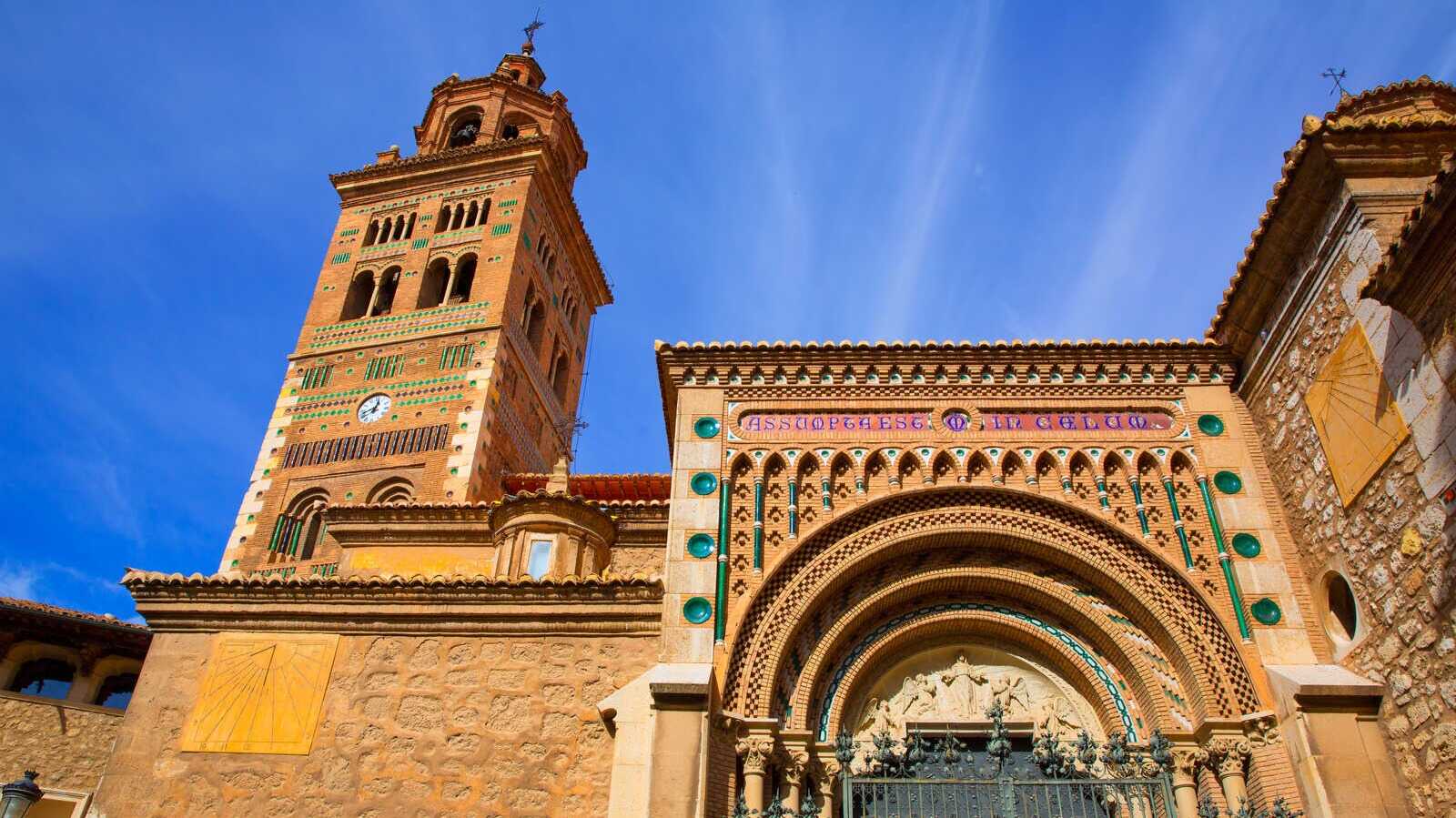
This intricate art form can be particularly appreciated in the tower, the lantern tower and the roof of Teruel’s cathedral. But the towers of the San Pedro, San Martín, and del Salvador churches are magnificent examples as well. The last two are very similar and legend has it that a romantic rivalry was the origin of their construction. Another fascinating spot should be mentioned, although it is quite modern in comparison: the Paseo del Óvalo stairs.
The Peracense castle, the red fortress
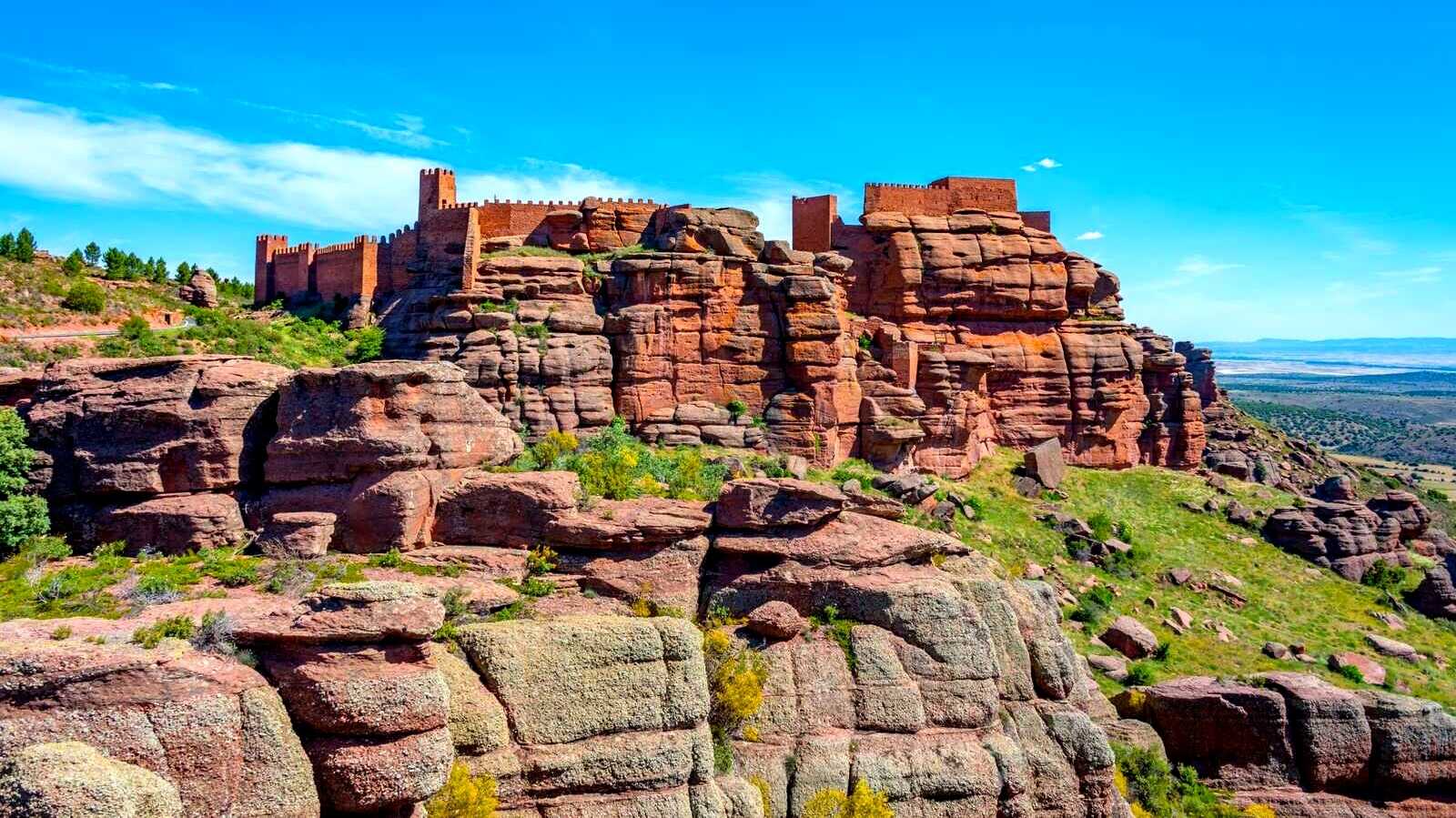
To say that the Peracense castle blends with its surroundings is far from reality still. This 800-year-old fortress truly merges with its environment. They become one, and it can be hard to distinguish the castle's silhouette from afar. This singularity makes it one of the most particular castles in Aragón.
But its simplicity is a mere façade and by coming closer to the castle one will realise what a majestic construction it is. It rises on top of a red rocky promontory, the same rock that would be used to build its three concentric enclosures. The somber castle is also known as ‘Teruel’s red fortress’ thanks to the distinctive red color of this native type of sandstone.
The villages of the ‘Spanish Tuscany’ and Teruel’s Maestrazgo
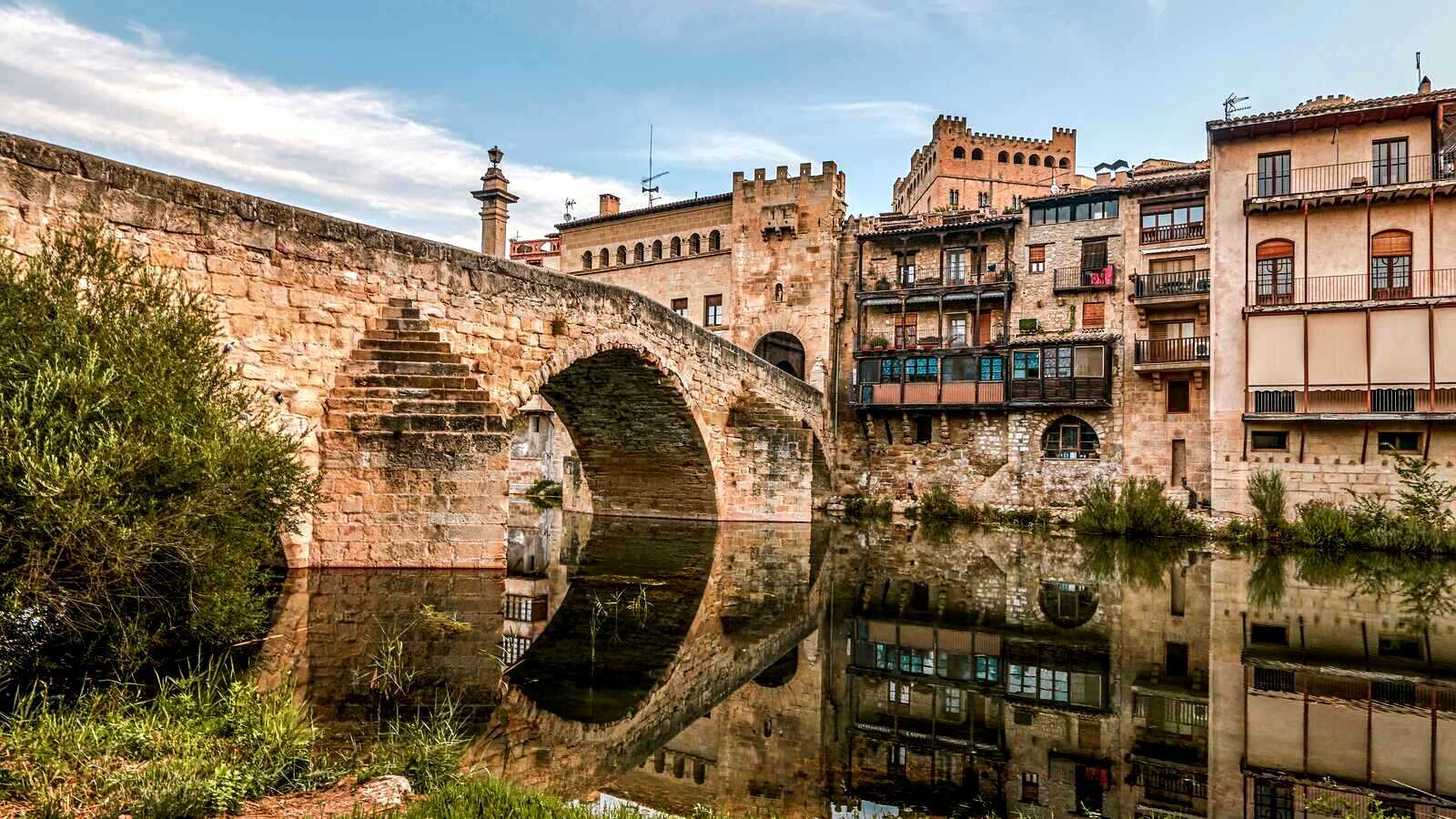
The region of of Matarraña is usually compared to a region that sits miles away, in another country. They both hide idyllic landscapes and charming medieval villages. When talking about this ‘Spanish Tuscany’, Valderrobres, its capital, must be mentioned. Its old stone bridge welcomes visitors to a locality that takes them back in time, with corners that still tell old stories and narrow alleys that drive to the imposing castle that rises above the place. The territory is shared with more modest (but equally charming) localities, such as Calaceite, Cretas, Peñarroya de Tastavins or La Fresneda.
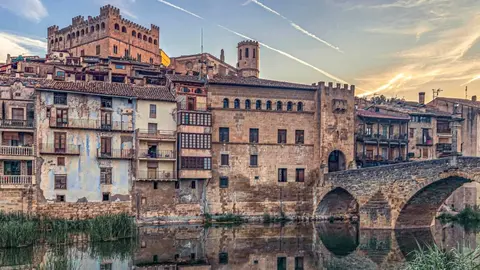
But the list of Teruel’s charming medieval villages goes on. In another region, the Maestrazgo, one can find villages as attractive as Villarluengo, Tronchón, Cantavieja, and Mirambel, or visit the Llovedor hermitage and its exceptional surroundings. In Gúdar - Javalambre await Mora de Rubielos and its antithesis, Rubielos de Mora, as well as the beautiful Camarena de la Sierra and Spain’s highest village, Valdelinares. All of them are Teruel’s wonders, each one in its own way, and they should all be discovered. A great idea to do so is by following El Camino del Cid.
Albarracín, one of Spain’s most beautiful villages
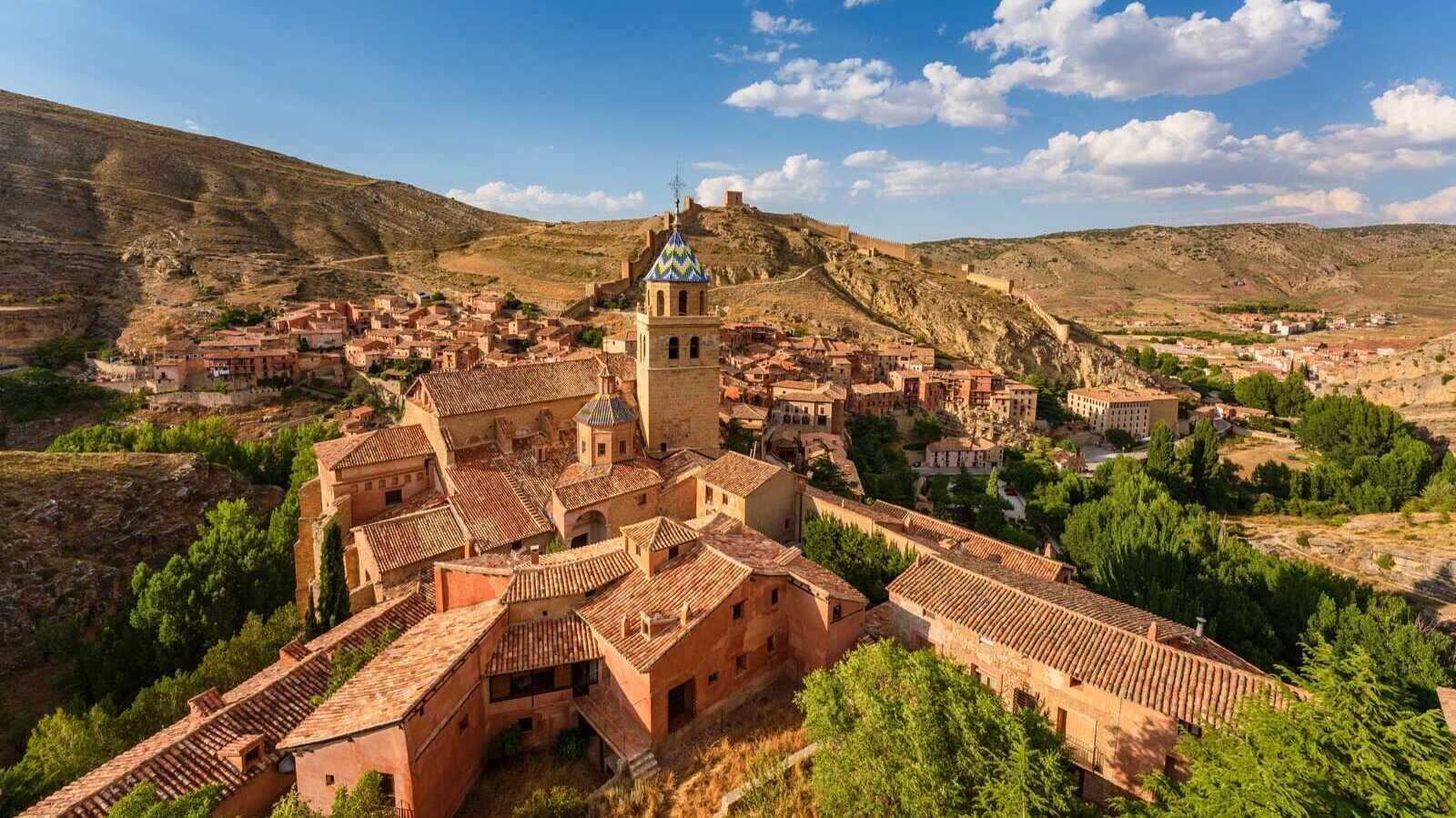
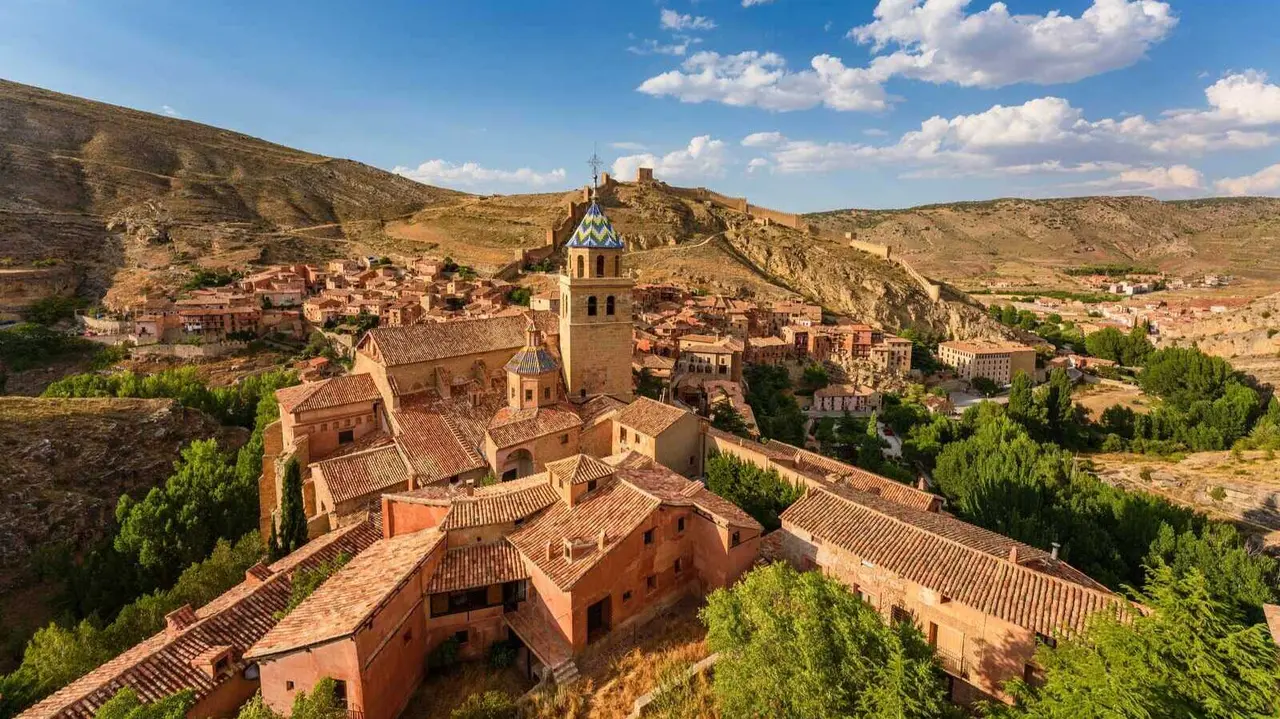
Albarracín enjoys the privilege of being considered Spain’s most beautiful village by many and that is why it deserves its own spot in this list. Its old town is hugged by the Guadalaviar river and by a fascinating, kilometric wall. But one must get lost in its steep, sometimes labyrinthic streets, to discover the true essence of this village that was once the capital of a Taifa kingdom.
Albarracín preserves the modest beauty of popular architecture, with masonry walls and wooden frameworks. Many elements from its splendorous past are still maintained, such as its Plaza Mayor, a few manor houses, the cathedral, and the Episcopal Palace. The walls are not the only remain of those times of battles and conquers, but so is the old alcázar. A complex that shapes one of Aragón’s most beautiful and recognisable scenes.
In the area that surrounds Albarracín, sitting on the mountain range it shares its name with, many other interesting villages await, such as Griegos, considered Spain’s coldest village in the summer (and the second highest in the country), Calomarde and Bronchales, perfect spots for nature lovers.
The villages of Sierra de Albarracín, together with those of Matarraña and the Maestrazgo, offer diverse options of active tourism and are essential for people who enjoy sports and nature.
Geoparque del Maestrazgo, Teruel’s greatest treasure
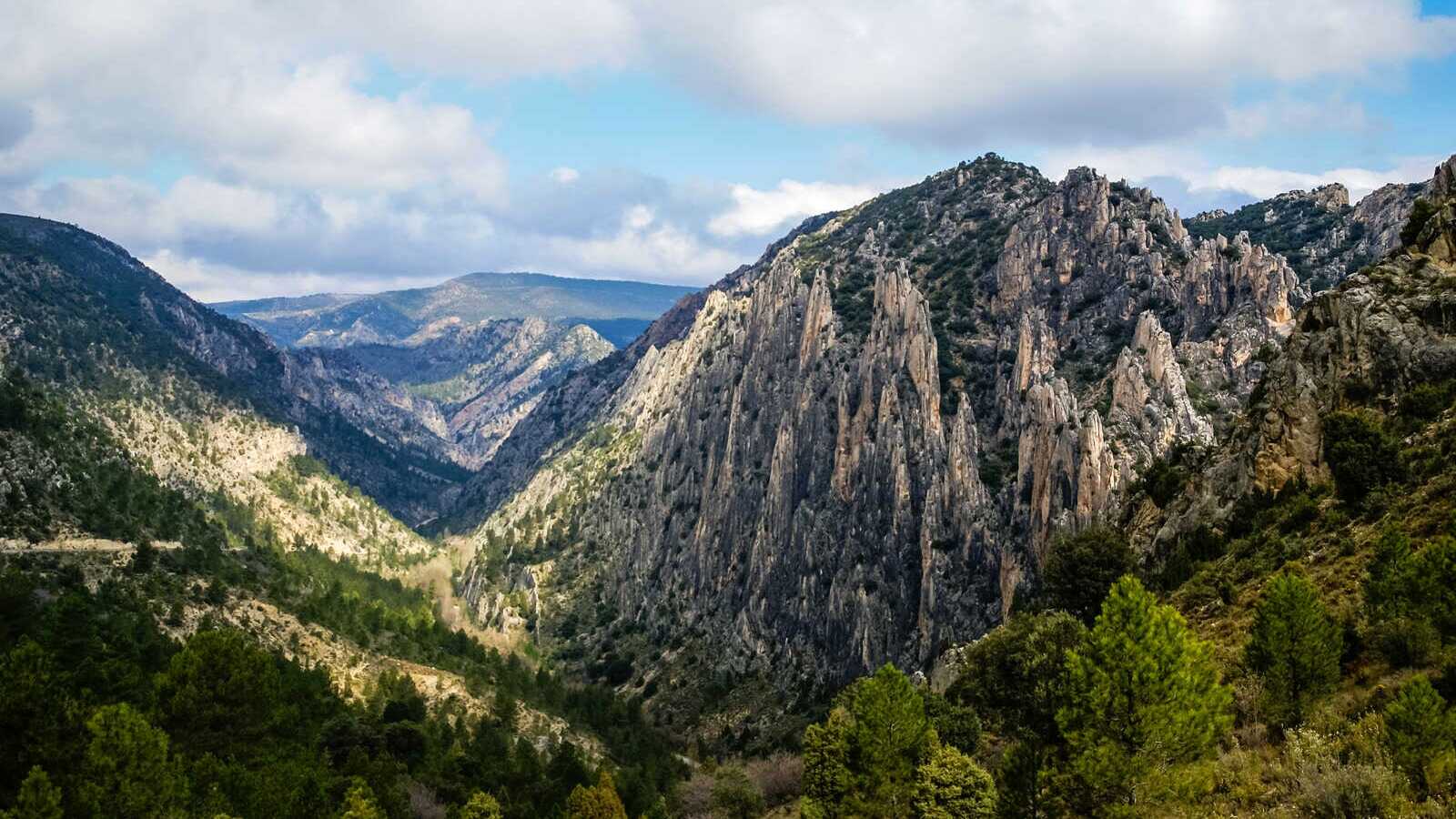
The four natural monuments at Geoparque del Maestrazgo prove its singularity. Here, millions of years of geological history become breathtaking landscapes. Water is one of the main elements here, flowing water that has shaped three of these monuments: the Grutas de Cristal, the Puente de la Fonseca, and the source of Pitarque river. Órganos de Montoro is the fourth monument, a place where rock needles rise to the sky and reach epic proportions.
The geopark preserves more treasures, such as the Parque Geológico de Aliaga, the first one in Spain with these characteristics, and the Parque Paleontológico de Galve, where the prints of dinosaurs that lived here millions of years ago can be followed. But let’s not forget other different prints, the ones left by ancestors in the shape of a marvelous heritage of cave art.
The Rambla de Barrachina, the ‘Aragonese Grand Canyon’
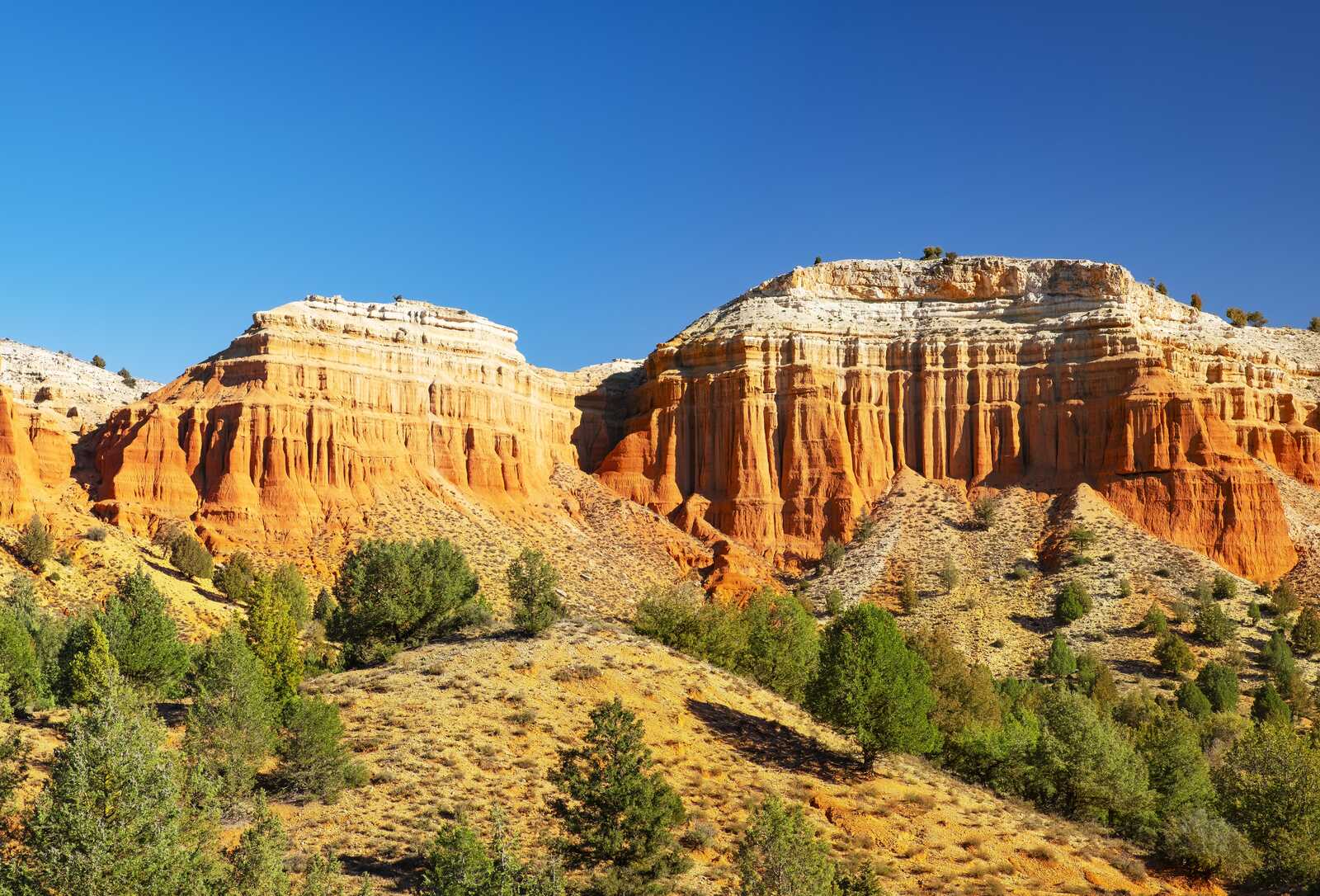
It might seem like a setting out of the Wild West or an alien landscape, but this place is actually in Teruel. The Rambla de Barrachina is a small desert of orange colors, vertical walls and deep gorges. This picture is as unexpected as it is charming, especially when the sun begins to hide in the horizon and the landscape becomes a dreamlike place.
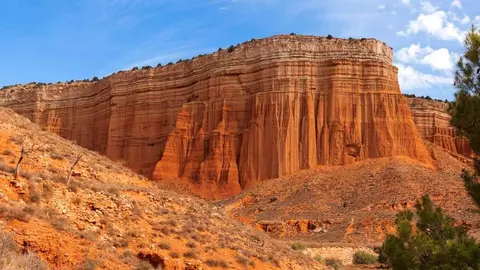
Despite its rare beauty and it being only 5 kilometres from the capital, this is one of those wonders in Teruel that only a few people know. It is possible to enjoy it by walking a circular path with the company of the vultures that nest its steep walls.
The Sima de san Pedro, an endless pit
The Sima de san Pedro, in Oliete, is a treasure of great geological value, but at first glance it might seem a gate to the underworld. This immense depression of the land reaches a diametre of 90 metres at its widest area, with walls that seem cut by a knife and an endless lagoon at its bottom.
The land has been weathered by the water, shaping one of Teruel’s most particular landscapes with infinite patience, bringing life to a seemingly desolate place. This abyss of karstic origins has its own ecosystem with dozens of animals and plants that make it one of the most valuable sinkholes in Europe.
The Salto de La Portellada, an idyllic spot
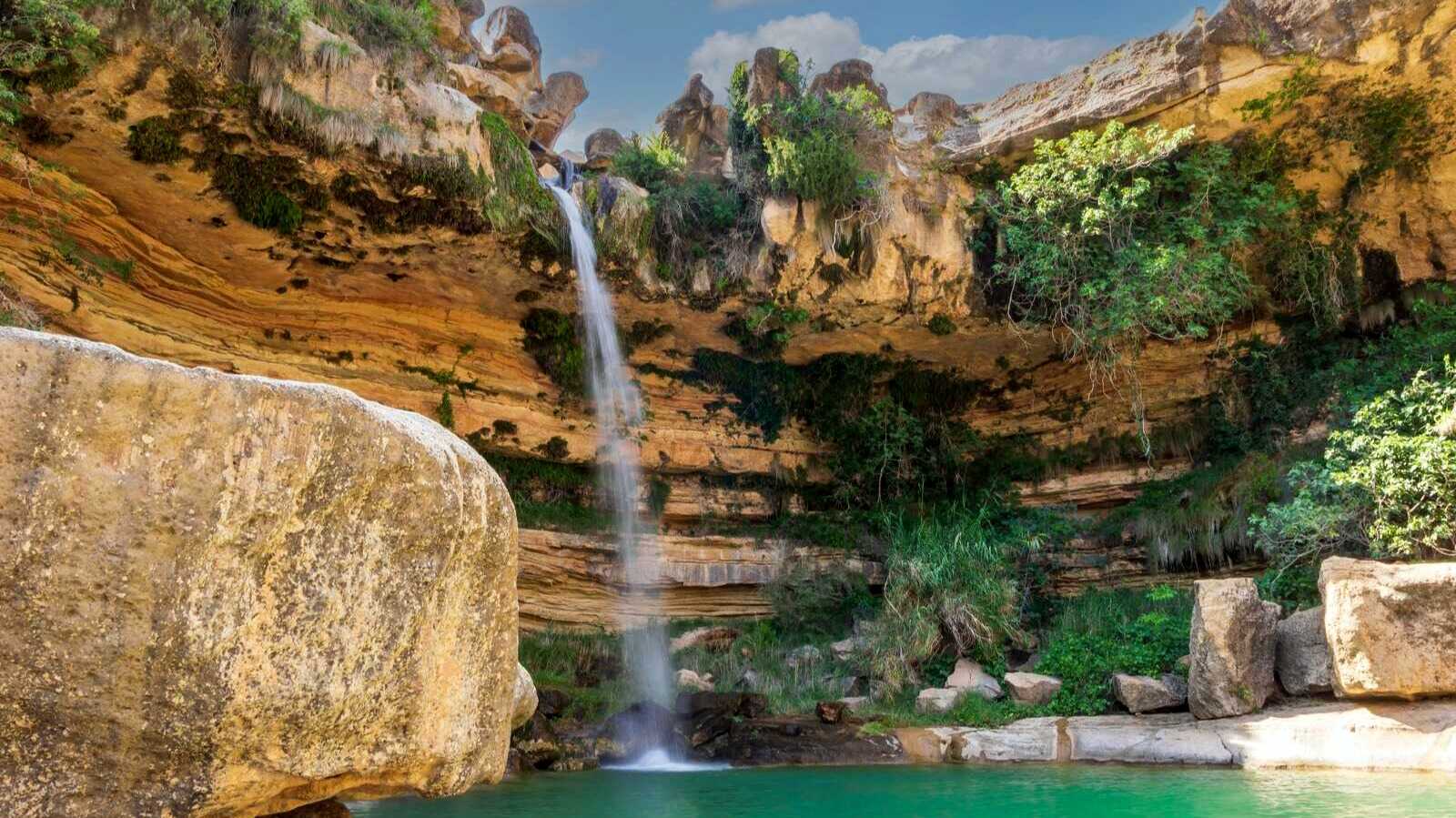
The Tastavins is a small river, a tributary of the Matarraña that falls for 20 metres in the area of La Portellada. The cascade falls into a pond of crystalline waters of a deep turquoise color. This idyllic postcard awakens every sense, and it is possible to dive into its beauty metaphorically and physically with a more than refreshing dive.
Near the waterfall awaits another of Teruel’s wonders, the estrechos of the Ebrón river. Water is also a protagonist in this spot, although now it runs through a gorge. The magic of this path does not only lie in the landscape’s beauty, but also in the fact that part of it consists of walkways that hang over the river, which makes it one of Teruel’s most spectacular natural places.
Teruel’s gastronomy, a must to enjoy the province
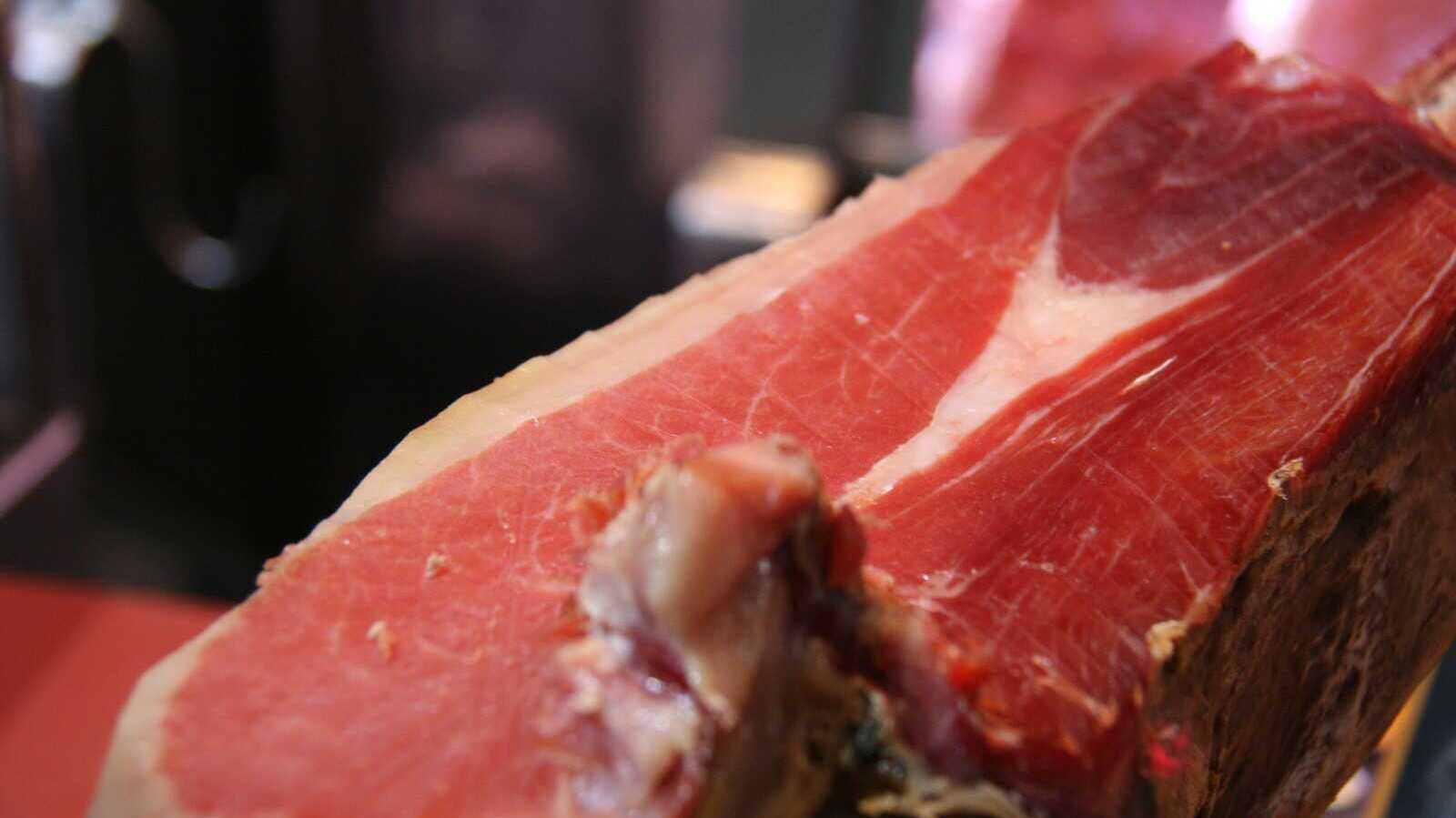
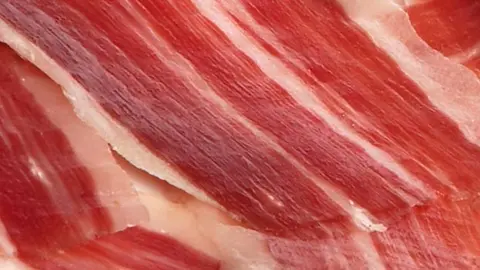
Teruel’s gastronomy is deeply appreciated in Aragón, and it is famous for its simplicity, its authenticity, and the quality of its local products. Its climate and the tradition around livestock farming have led to a cuisine that mainly consists of meat, cold cuts, vegetables, and confectionery. Among its most emblematic products are Teruel’s ham (with denominación de origen), Aragón’s ternasco and game meats such as venison and boar meat, two musts for those who want to enjoy eating in Teruel and enjoy traditional dishes.
Among the most typical recipes are migas, sopa de ajo, gachas, caldereta de pastor and bacalao con tomate, besides dishes cooked with local vegetables such as thistle and borage. Other products of great gastronomical value are truffles, mushrooms, artisan cheeses, and Bajo Aragón oil, equally protected under a denominación de origen. The regañaos, buns with lard and ham or sardines, are also very popular in the province.
.JPG)
Teruel’s sweet touch comes from its popular suspiros, artisan turrón or nougat, almendrados and tortas de nueces, which complete its traditional confectionery. The peaches from Calanda, under a denominación de origen, stand out among the local products. In events such as the bodas de Isabel de Segura, Teruel’s cuisine becomes a main character, reflecting the character and history of a land that invites us to sit at the table and taste the best parts of its tradition.
More recommendations to enjoy Teruel
Where to eat in the province of Teruel
- Eating in Teruel
- Eating in Calanda
- Eating in Albarracín
- Eating in Calaceite
- Eating in Calomarde
- Eating in Alcañiz
- Eating in Pitarque
- Eating in Valderrobres
- Eating in Javalambre
Nature and active tourism in the province of Teruel
You can also read this article in Spanish here.
Follow us on Facebook to discover more fascinating places in Spain!