The most beautiful coastal castles in Spain
The Spanish coastline has been a centuries-long focal point for the peace of mind of its inhabitants. Any number of invaders from distant lands came by sea to plunder or simply to make war. Much like its interior regions, the coastal regions of Spain are dotted with castles and fortresses of distinct styles and purposes, but it is the conspicuous sea that sets these strongholds in a category all their own.

The 5 most striking shoreline castles
Given the amount of real or perceived threats the Spanish coast faced, it is not uncommon today to find abandoned watchtowers or the ruins of some long fallen fortifications. Nevertheless, some of these castles, both urban and further afield, still preserve their past glory and offer the chance for an unforgettable visit. All of these castles are worth exploring.
5. San Felipe or Los Escullos Castle

San Felipe Castle is also known as Los Escullos Castle owing to its location along the coast of Almería in the Níjar region. More specifically, the area of Cabo de Gata Natural Park, one of the Iberian peninsula’s most wonderfully exotic landscapes. This castle’s coastal batteries were erected as part of a refortification of an already existing stronghold in the latter half of the 18th century during the reign of Carlos III.
Garrisons for heavy artillery were located near the sea by necessity and in the case of San Felipe Castle, a mere ten metres from the shore. Like most castles, San Felipe takes advantage of the high ground and clearly catches the eye in this uniquely barren setting. The arid landscape together with the temple-like castle are faintly reminiscent of ancient Egypt.
4. Sohail Castle

The ancient Roman town of Suel –modern-day Fuengirola– was little more than a pile of ruins by the end of the 10th century. That was when the Caliph of Córdoba, Abd al-Rahman III, ordered a citadel constructed to bolster the defenses along the coast of Málaga.
In subsequent years, the Almoravid dynasty would bestow the castle its present look, with its eight curtain walls and watchtowers. Located 38 metres above the sea next to the Fuengirola River, the Moorish citadel includes a rampart outfitted with a barbican and an allure at its northwestern entrance, where a magnificent horseshoe archway leads to the castle’s rooms.
Currently, Sohail Castle hosts a variety of events, including Fuengirola’s Medieval Fair. The castle’s immediate surroundings include a charming river park and the popular Ejido Beach on the Andalusian coast, both highly recommended places to visit.
3. Monterreal Castle in Baiona
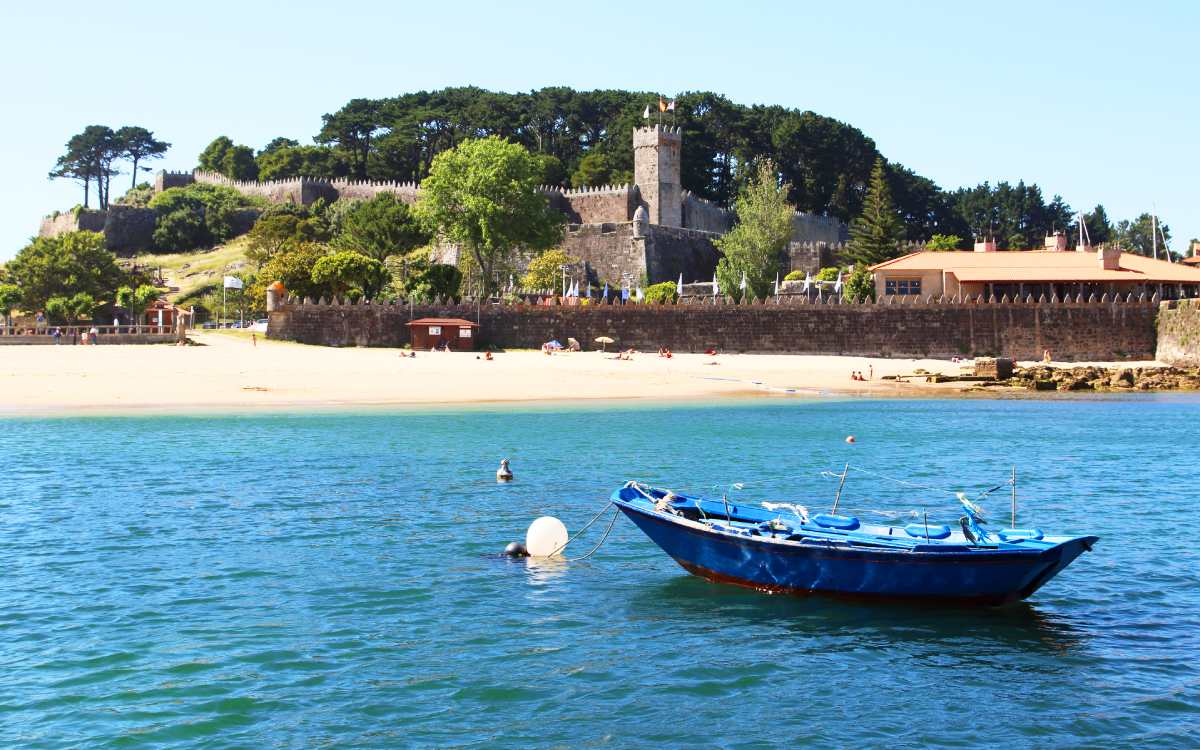
Although the Mediterranean coast has the lion’s share of coastal castles, other fortifications of equal beauty and charm lie on Galicia’s Atlantic coast. Monterreal Castle, popularly known as Monte Boi Fortress, in Baiona (Pontevedra), is definitively one of them.
The town of Baiona enjoys a privileged position lying at the entrance to the Vigo Estuary, though it meant quite a few headaches for the inhabitants of bygone days. The town suffered Norman pirates, English corsairs and even a devastating Portuguese invasion in the 14th century. The latter actually led to the square’s fortification and the town’s subsequent splendour, being granted free port status and other special rights by the crown.
The three-kilometre-long curtain wall and its defensive towers dating from that legendary period still survive today. According to folklore, a Habsburg prince who concealed his face with an iron mask was once imprisoned in one of its towers. Today, the castle is a Parador hotel whose grey walls set in the green hills of Galicia is sure to charm any visitor.
2. Bellver Castle
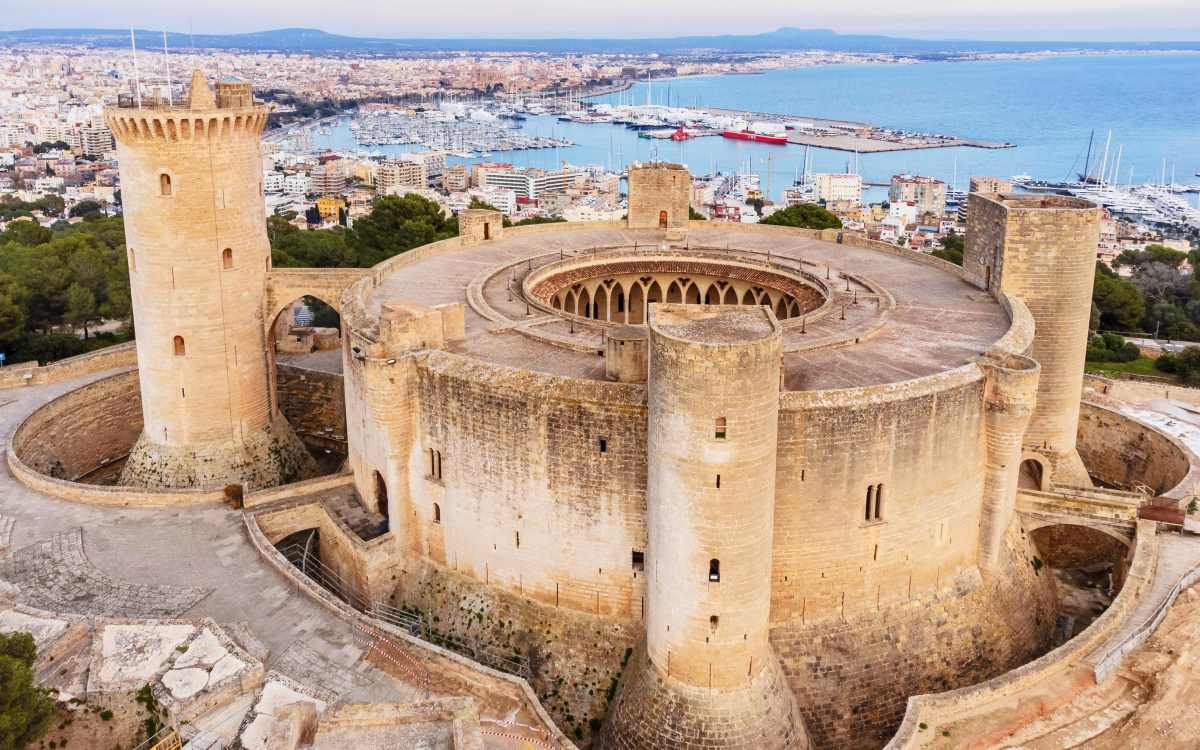
Bellver Castle in Mallorca is one of the few circular castles in all of Europe. The elegant contours of this one-of-a-kind castle in Spain, set in the Bay of Palma is a matchless sight. Upon the orders of Jaime II of Mallorca, Bellver Castle was converted into a dazzling Gothic palace.
This fortified palace was subsequently converted into a prison, whose prisoners included such notables as Enlightenment writer Jovellano. The castle today is surrounded by forest and is one of the Balearic Islands’ most alluring marvels.
1. Peñíscola Castle Palace
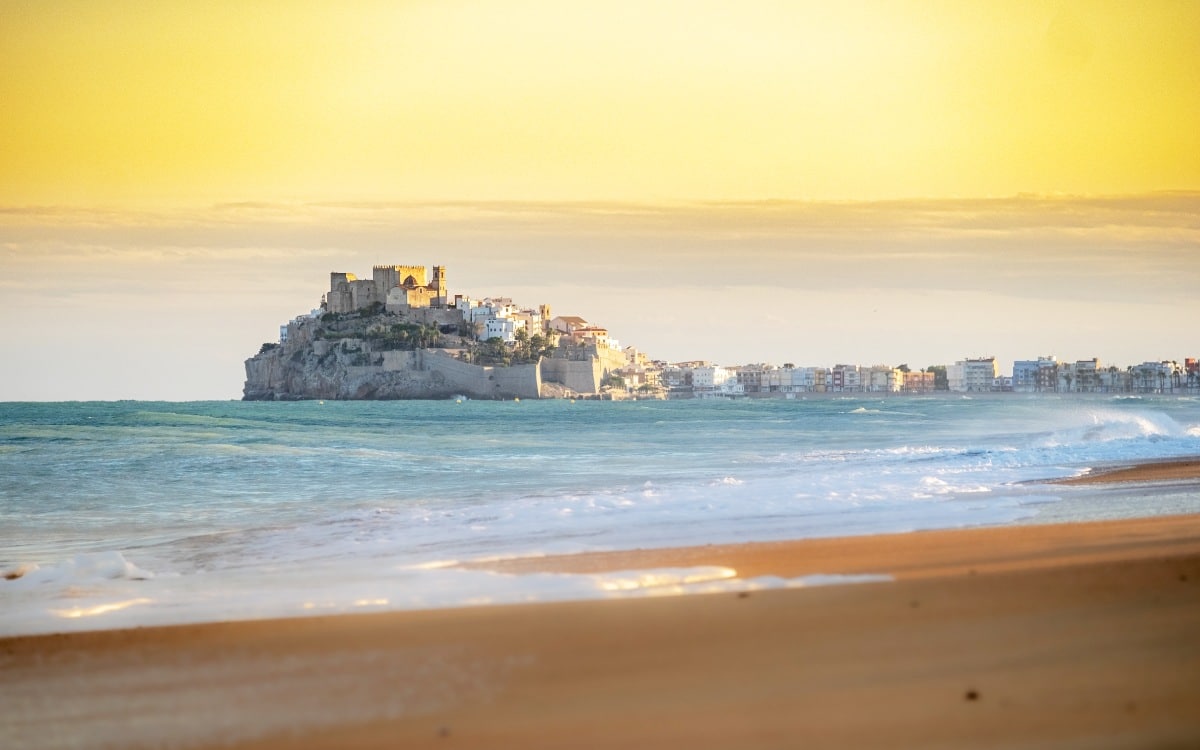
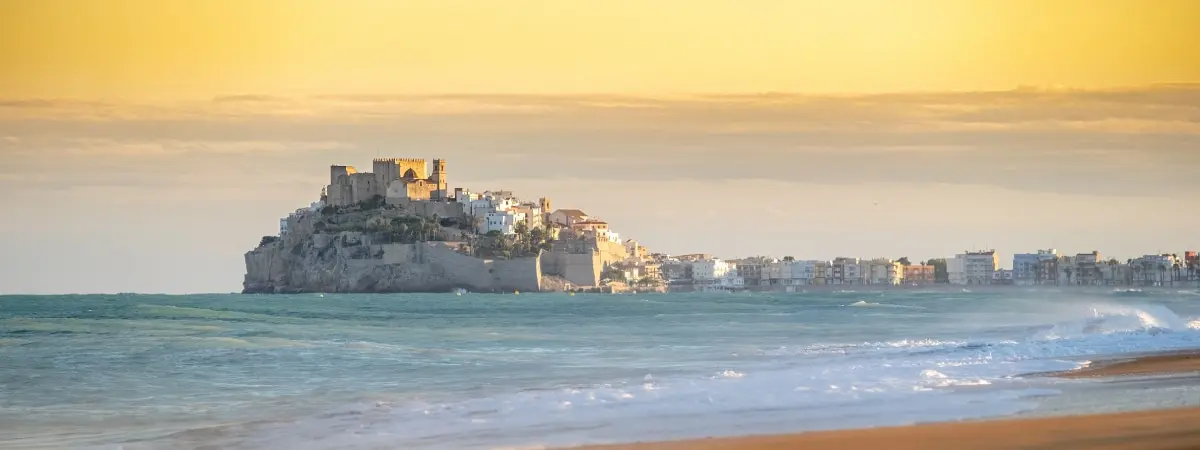
While the Knights Templar may have transformed this Moorish citadel into a Romanesque castle, it was the legendary Antipope Benedict XIII of Avignon, also known as Pope Luna, who made it famous. To this day many still refer to it as the Pope Luna Castle. In 1411, Pedro Martínez Luna, one of the so-called antipopes, made this castle his palace, Holy See and library. Both he and his successor, Antipope Clement VIII, received various embassies and even held conclaves at the castle.
Overlooking the old city quarter 60 metres above the sea, the castle is the emblematic image of Peñíscola. The Knights Templar’s characteristically austere and durable construction, mostly unaffected by Antipope Benedict XIII’s refurbishments, are still prominent. Currently under the stewardship of the Castellón government, Peñíscola Castle offers plenty to see including unique panoramic views of the Mediterranean coast.
You can also read this article in Spanish here.
Follow us on Facebook!