
5 treasures of Mudejar art in Spain
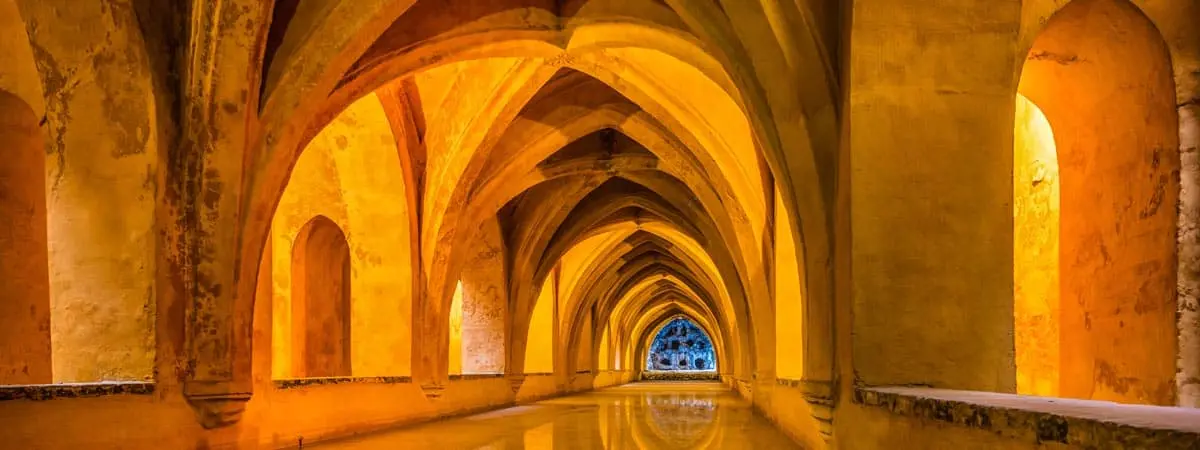
Being one of the most precious and meticulous styles of all those that have appeared throughout our history, Mudejar has left numerous architectural examples in Spain. Its appearance is the result of the mixture of Muslim artistic elements with Christian artistic trends such as Romanesque and Gothic, not so much in terms of constructive solutions as in decoration, giving rise to an intrinsically Hispanic way of building.

However, Mudejar art in Spain did not have a homogeneous style throughout the peninsula, but its peculiarities changed according to the historical characteristics that occurred in each of the territories. The variety of Aragon, declared a World Heritage Site, is one of the best known. Will you join us to learn more about Mudejar art in Spain?
Alcázares of Seville
Palace of Pedro I and the Hall of Ambassadors, a must
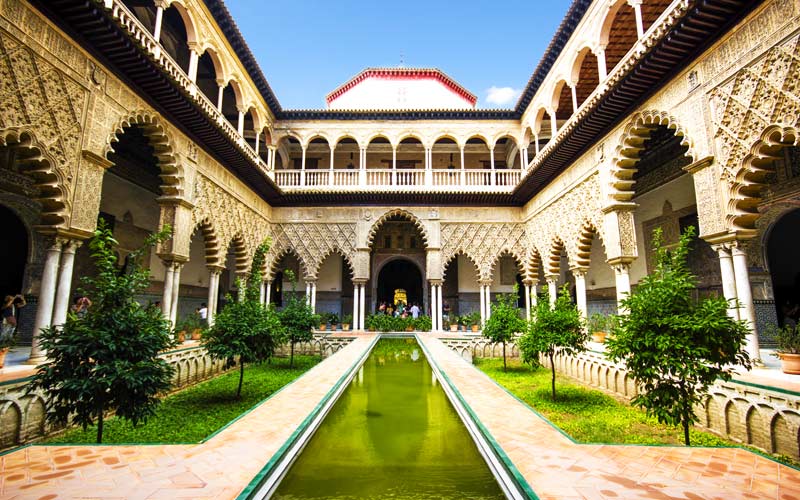
The so-called Salón de Embajadores (Ambassadors' Hall) of this palace is especially noteworthy, as it still preserves the original doors with Arabic inscriptions on the exterior and Castilian ones on the interior, which were carved in wood by Toledan craftsmen. Also striking is the beautiful dome with geometric motifs that covers the room. Do not forget to visit the gardens of this palatial complex, an incredible extension of palm trees, orange trees and fountains that constitute the best refuge from the hustle and bustle of the city that you will find in Seville.
Santa María de Teruel Cathedral
Discover the Sistine Chapel of Mudejar art in Spain
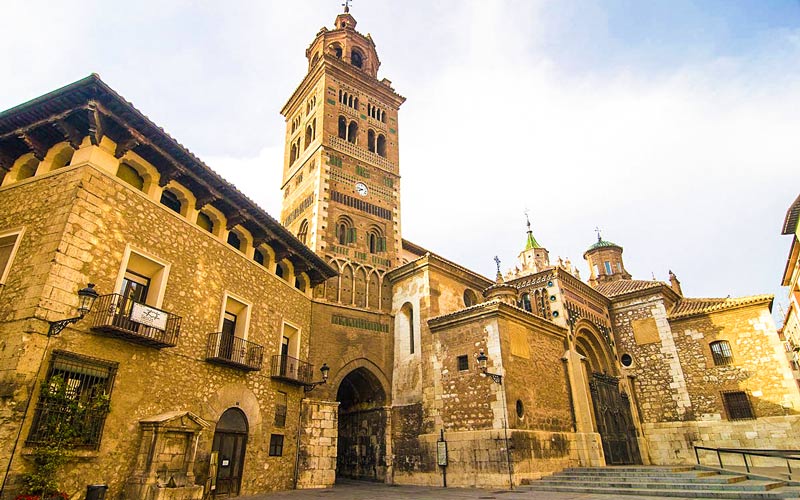
The other great attraction of this temple is its majestic tower, one of the oldest Mudejar towers in Spain. It was from its construction, with a rich decoration of tiles and glazed ceramics, when a reform of the building was undertaken to incorporate elements of this style in all the structure.
Collegiate Church of Santa María de Calatayud
Outstanding example of Mudejar art conservation
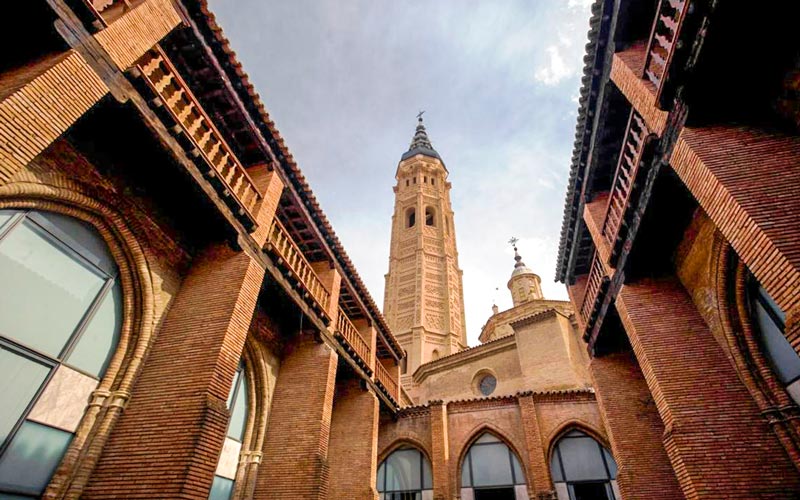
The brick decoration of this series of elements contrasts sharply with the Renaissance elements of which the rest of the collegiate church is composed, in a mixture that gives a unique and surprising character to the decoration.
Synagogue of El Tránsito
A synagogue that defied a ban
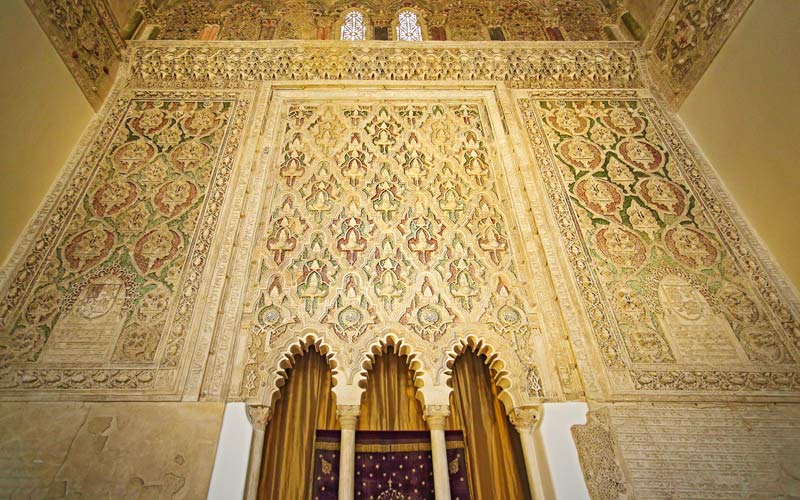
Inside, however, we find a vast decoration that makes use of almost all the resources of Mudejar art. For example, plasterwork, epigraphy, geometric decoration or poly-lobed arches. On its walls you can read inscriptions in Hebrew that praise God and the promoter of the construction. The ostentatious ornamentation reaches its culmination in the coffered ceiling, a fascinating work of craftsmanship made with coniferous wood and ivory inlays. An authentic treasure of Mudejar art in Spain.
Seo of Zaragoza
The unknown temple of Aragon
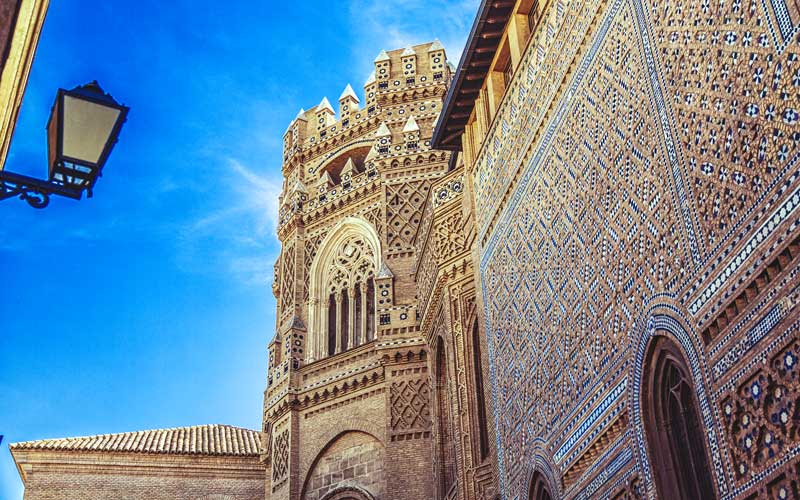
On the exterior walls and in the so-called "parroquieta", destined for the tomb of Lope de Luna, is where you can appreciate the Aragonese Mudejar in its purest form, with brick grids, glazed ceramics and even the use of muqarnas on the roof of the tomb.
All of these are fascinating examples of Mudejar art in Spain.