The world’s longest still-standing Roman bridge: nearly 800 metres long in a Spanish World Heritage Site
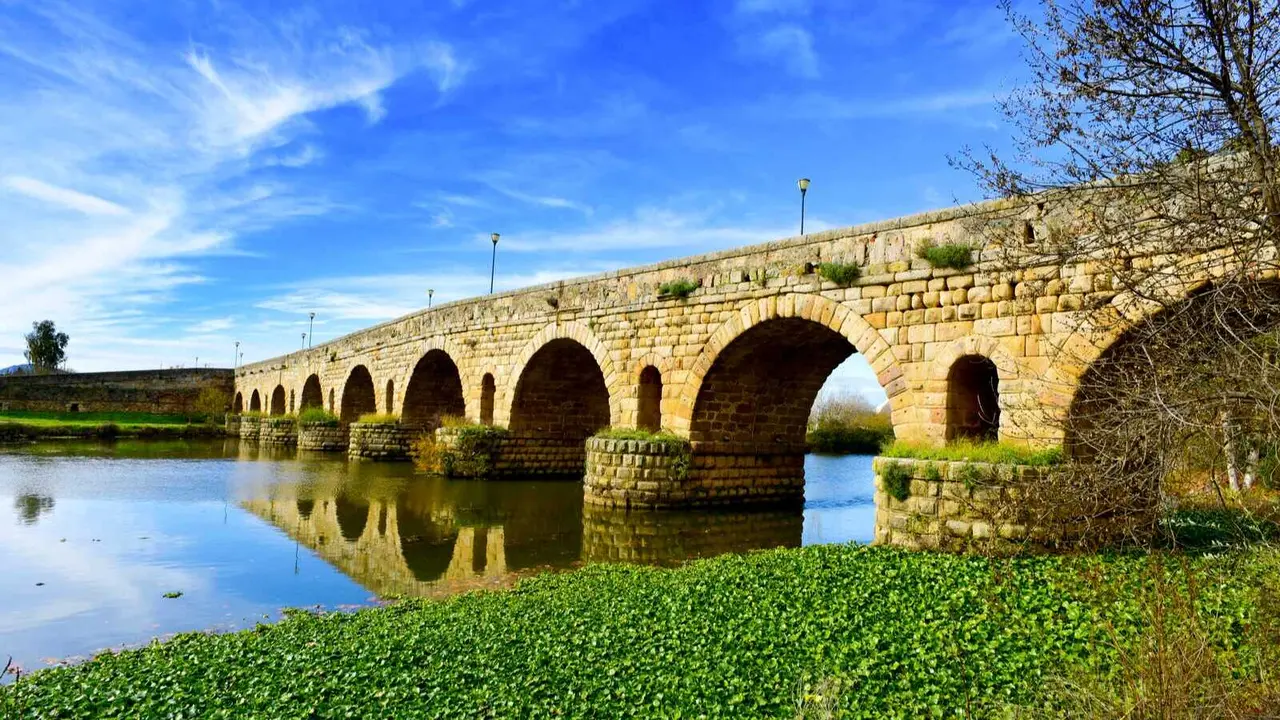
Mérida is more than the mere administrative capital of the region of Extremadura. The archaeological ensemble of Mérida stands out for being a World Heritage Site, and undoubtedly deserves such recognition for its storehouse of exceptional Roman monuments, among which is the world’s longest, still-standing Roman bridge.

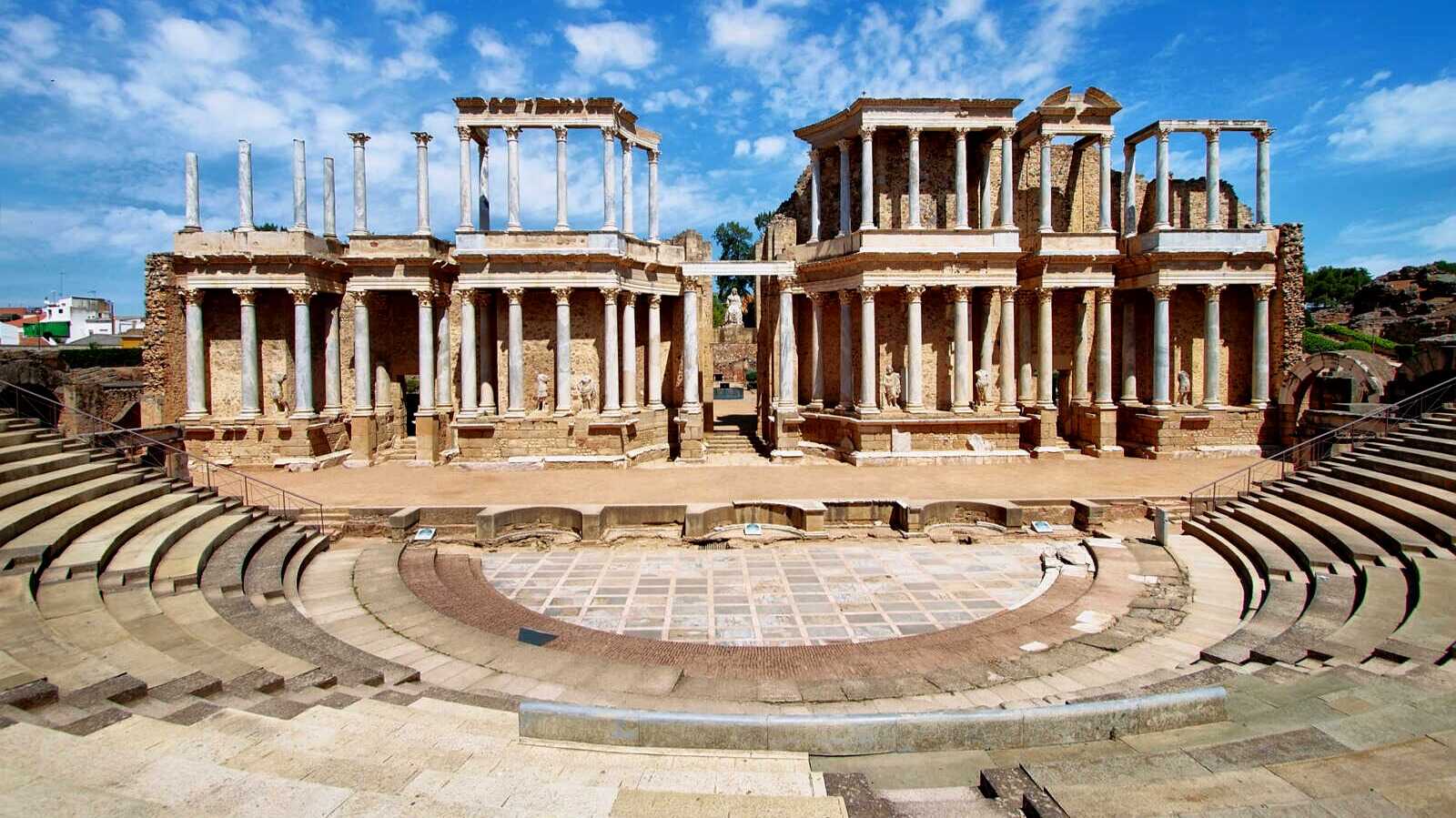
Mérida’s immeasurable Roman heritage includes such archaeological treasures as its theatre, amphitheatre, temples and palatial homes. An ideal tour through history begins by crossing the Roman bridge that has joined both banks of the Guadiana River for the last 2000 years.
The world’s longest Roman bridge
To get an idea of its scale, a few facts will suffice. The Roman Bridge of Mérida extends almost 800 metres and is supported by 60 spans, breaking records for any other surviving Roman bridge from antiquity.
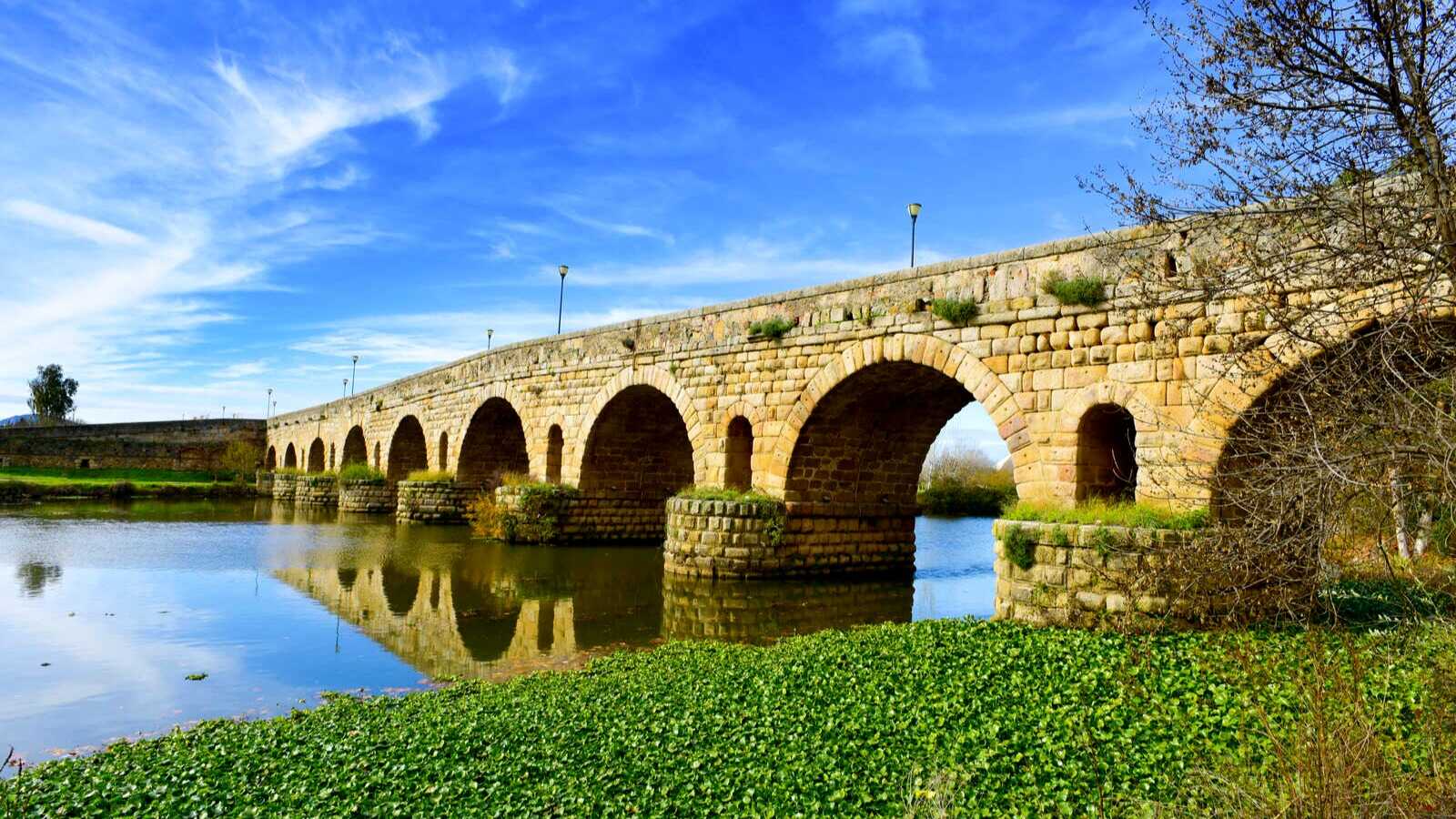
The fact that the bridge at Mérida is still standing is awe-inspiring when taking into account its construction dates to the end of the first century BCE. Erected at the time as key urban infrastructure, the bridge connected Mérida to the Vía de la Plata (the Silver Way) and to other urban centres like Toletum (Toledo) and Caesaraugusta (Zaragoza), on the banks of the Ebro River.
Spain’s other prominent Roman bridges
The quality of Roman imperial architecture is indisputable. In Spain today, ancient Hispania for the Romans, Rome’s magnificent public works can still be viewed two millennia later. Moreover, many of its engineering feats and structures continued to function for centuries.
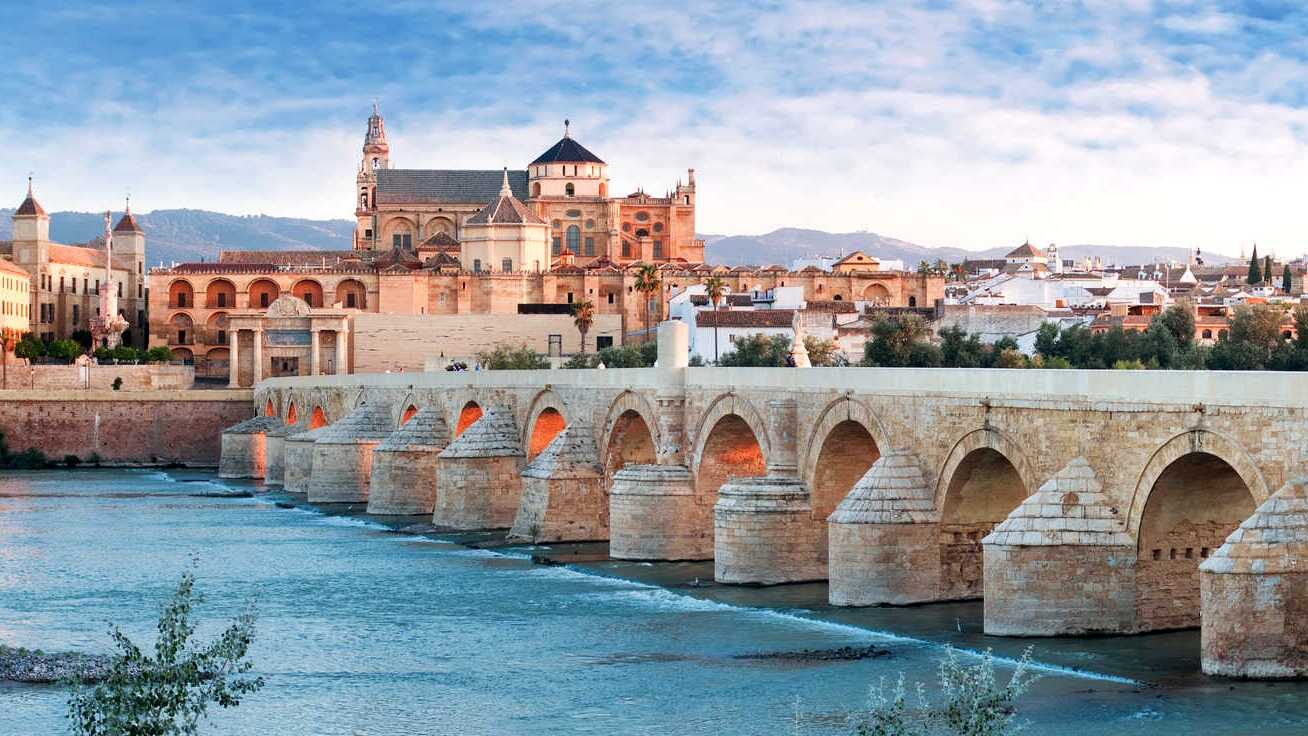
There are examples of Roman works found throughout Spain. Perhaps, the most famous being the Aqueduct of Segovia, though other lesser renowned but equally extraordinary ones still stand such as the Roman dam of Almonacid de la Cuba or the Roman bridges at Córdoba (247 metres long) and Alcántara (181 metres long), the latter crossing the Tajo River. Incidentally, while the Roman Bridge of Mérida may be the longest such bridge, the bridge at Alcántara is the tallest.
More wonders of Emerita Augusta
Emerita Augusta, present day Mérida, is an eponym paying homage to Emperor Caesar Augustus, who founded the city during the first century BCE. Since its inception, this city in the present-day province of Badajoz was planned as an urban centre of capital importance, whose surviving monuments from that epoch bear witness to its splendour and warrant the sobriquet of ‘little Rome’.
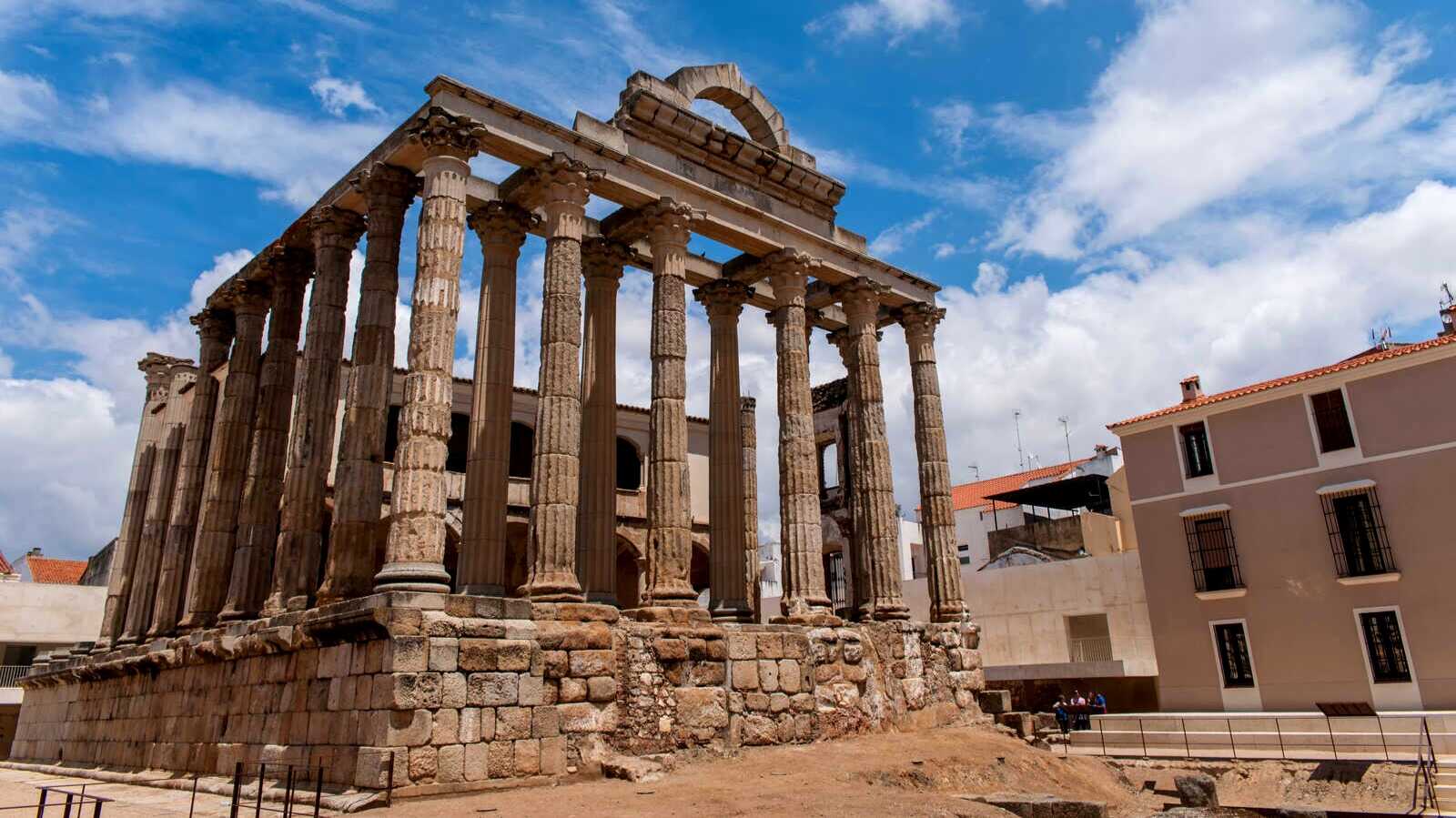
Any archaeology enthusiast will cherish a visit to Mérida, a city with more Roman monuments than any other in Spain. Other treasures can be found at the city’s National Museum of Roman Art, whose building design by Rafael Moneo blends ancient and contemporary architectural styles.
Other Roman architectural jewels include the Temple of Diana, the amphitheatre and the theatre, which is still used to stage productions. Moreover, ruins of its Circus Maximus, aqueduct, forum and thermal baths can also be discovered along with the world’s longest, still-standing Roman bridge.
You can also read this article in Spanish and French.
Follow us on Facebook to discover more fascinating places in Spain!