Peña Cortada, Spain’s longest Roman aqueduct
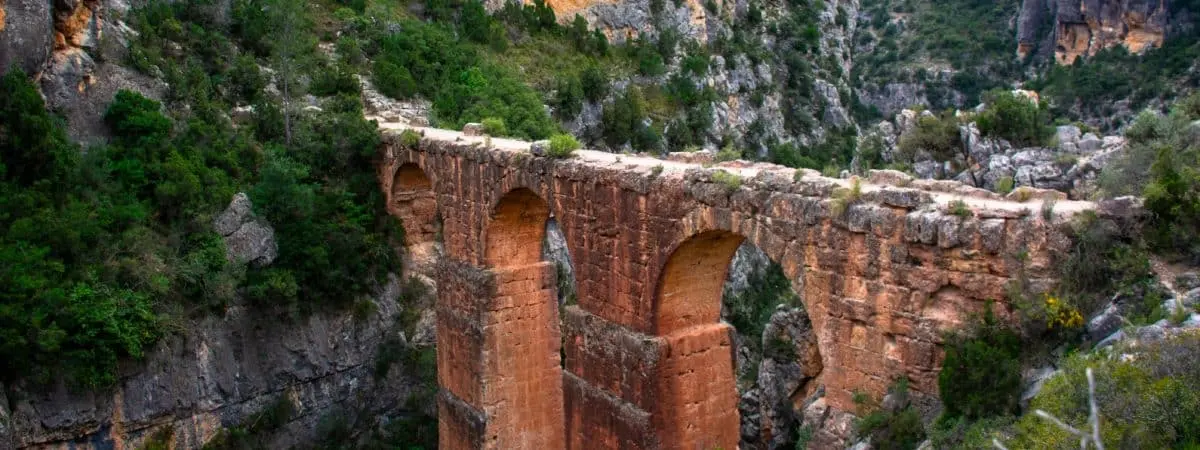
Currently, only the region's locals or true enthusiasts of the Roman Empire know about one of the most impressive feats of ancient engineering in Spain: its longest Roman aqueduct! Nevertheless, it remains almost a secret, well hidden among steep slopes and dense forests. Let’s learn more about it.

A Roman marvel deep in the mountains
One thing that continues to fascinate us about the Romans is their mastery in making the territory habitable. Engineering was almost an art throughout the empire, and the exquisite grandeur of their aqueducts is still clearly visible in many parts of Spain today. However, this aqueduct defies all expectations.
The Peña Cortada aqueduct, monumental engineering
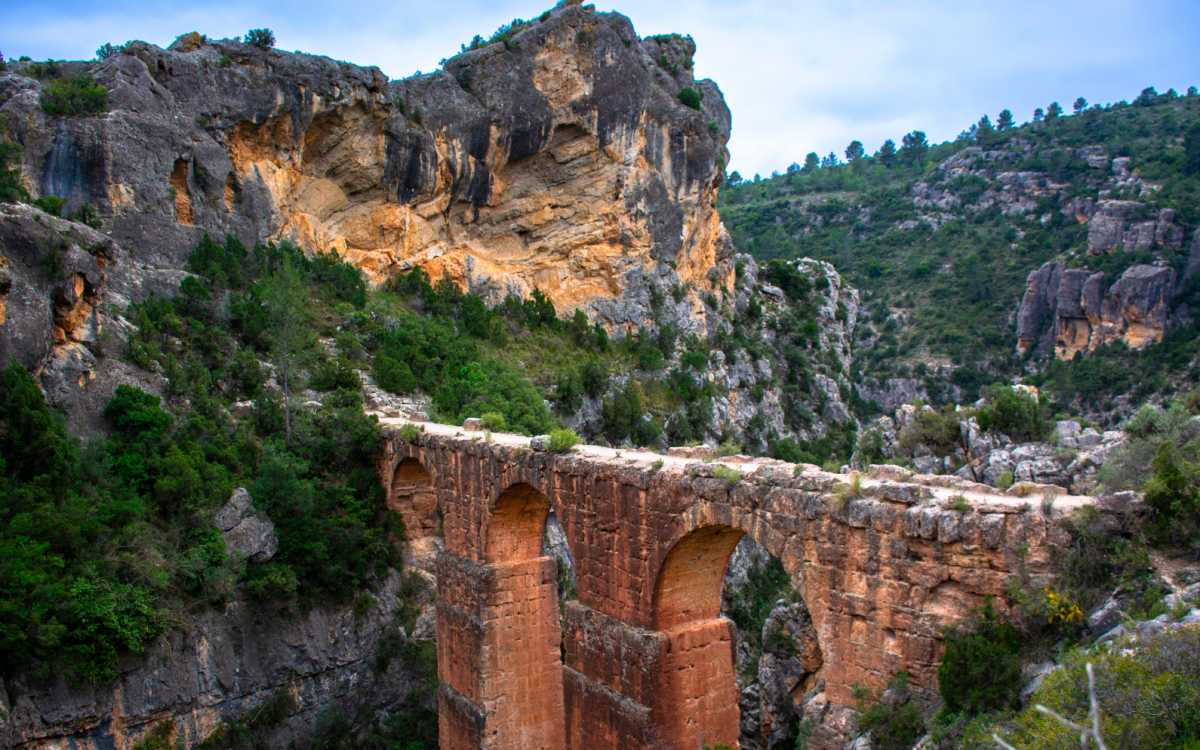
To see up close Spain’s longest Roman aqueduct, you have to travel to the region of Los Serranos, in the interior of the province of Valencia. There, hiking enthusiasts are well acquainted with the colossal arches that appear in the middle of the mountains, the Peña Cortada aqueduct, also known as La Serrada or La Serranía.
The remains found total 28.6 kilometres, between the municipalities of Tuéjar and Domeño. However, recent studies suggest that the water's final destination was none other than the city of Valencia, almost 100 kilometres away. Such work required the admirable technical expertise of the Romans, who also knew how to impart the magnificent and imposing style of the empire.
What was Spain’s longest Roman aqueduct like?
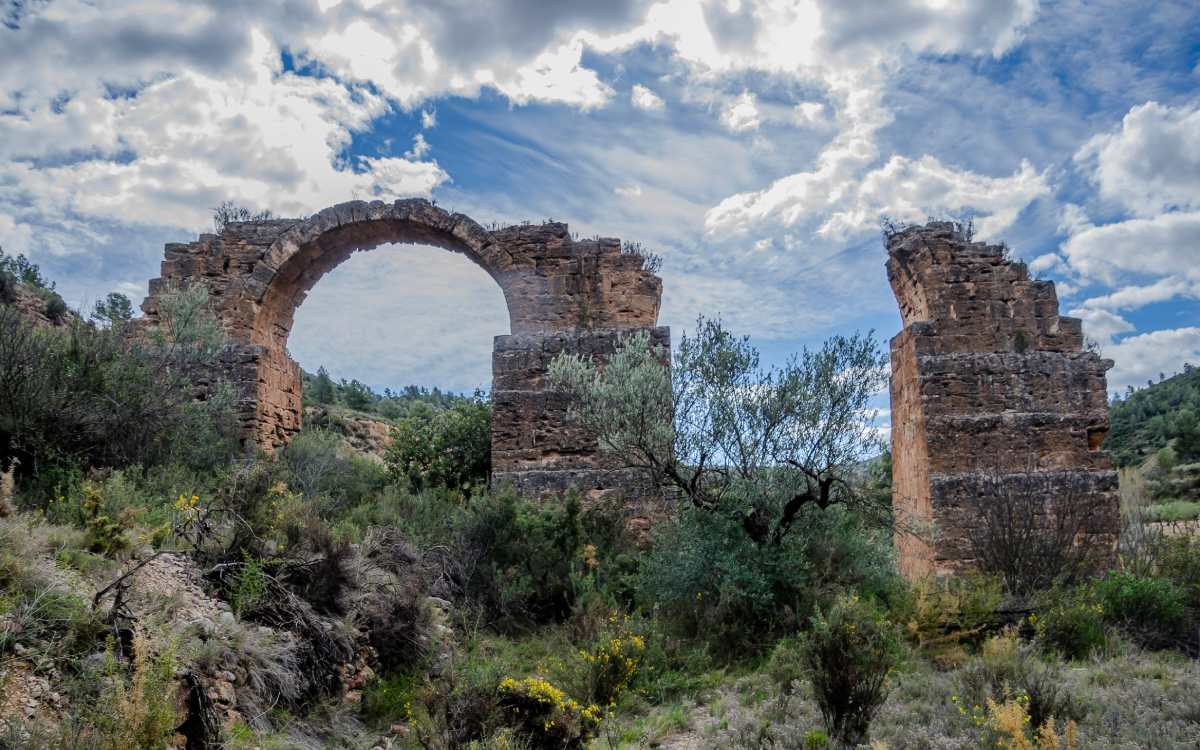
The Peña Cortada aqueduct consists of different sections, depending on the demands of the terrain. Near Fuente del Saz, in Tuéjar, the water diversion began two thousand years ago, in the 1st century. There, a simple dam connected with a section carved into the rock.
Further ahead, the slope was overcome by bridges. The bridge over the Alcotas ravine, in Calles, preserved its six arches until the 18th century. There are several others in various states of preservation. The other solution to the challenging terrain is as spectacular as the bridges, if not more: cuts were made in the mountain up to 25 metres deep, which is what gives the work its name. Indeed, Peña Cortada means ‘cut rock’.
Visiting the Peña Cortada aqueduct
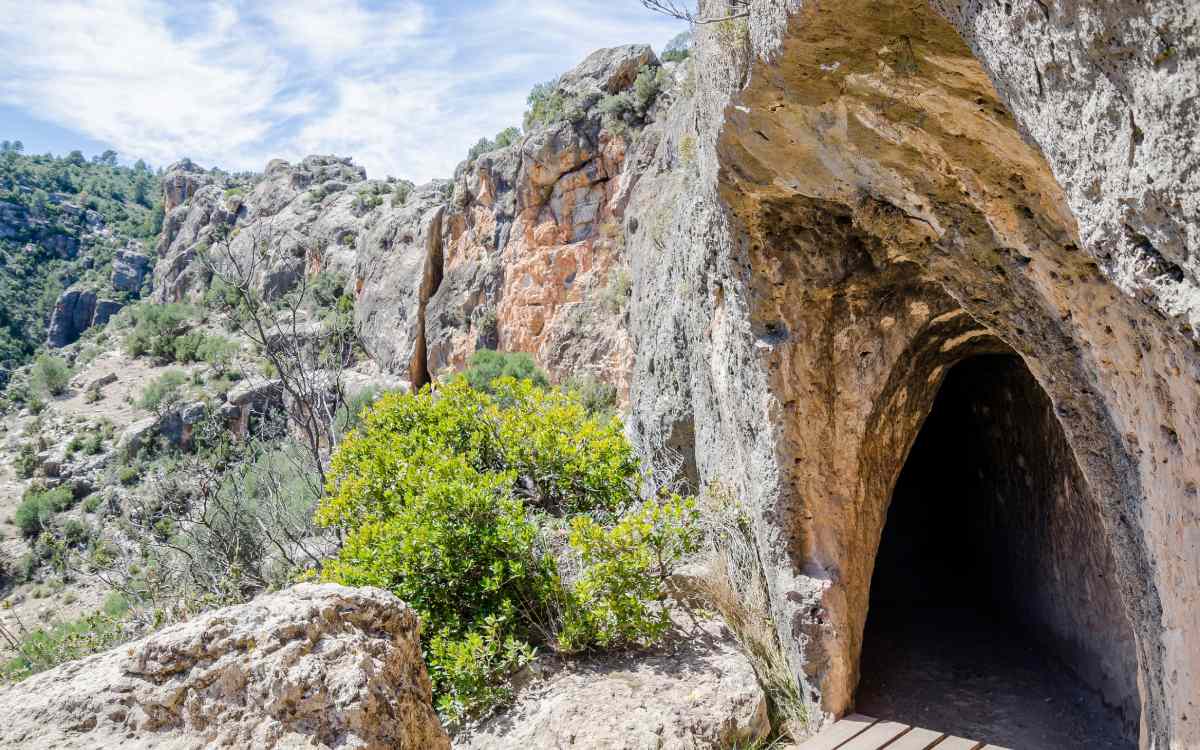
The best way to experience this marvel of antiquity firsthand is to walk the so-called ruta del agua — ‘water’ route in English — in Chelva. The route quickly places us on top of this two-thousand-year-old structure, with magnificent views and the certainty of walking through history.
Further on, upon reaching the impressive Peña Cortada, the sense of wonder increases when considering how something like this could have been excavated with little more than bare hands. We pass through tunnels and galleries all carved into the heart of the mountain, and then the path brings more passageways and stone bridges.
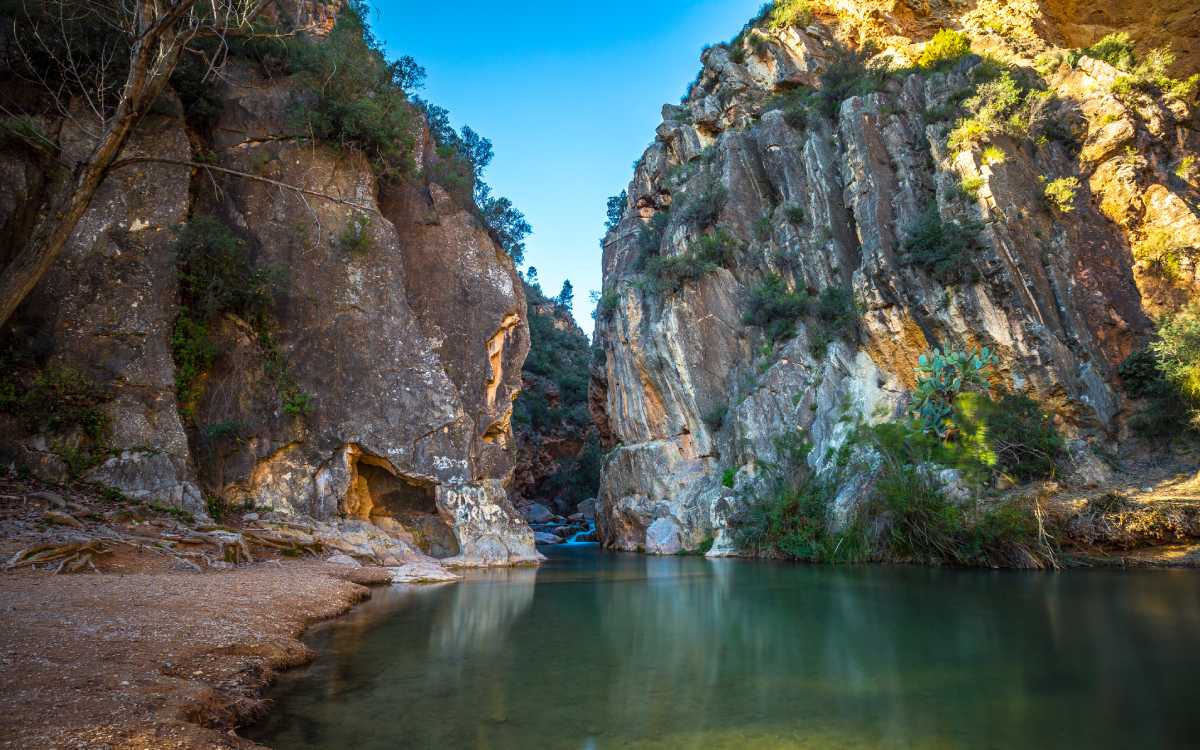
This itinerary has small delights like the beach formed by the Tuéjar River, in addition to the fabulous views over the village and the entire surrounding area. However, what makes this place unique is the carved stone, later shaped for the aqueduct, the true marvel of this region.
Other attractions of Chelva and its surroundings
Since we have come to this beautiful village in Valencia, it would be a shame not to visit its historic neighborhoods, such as the old Muslim Medina, the Christian neighborhood of Las Ollerías, the former Aljama, or the Mudéjar and Morisco quarter. All of them retain visible traces of that multicultural society, with alleys and passageways to get lost in with pleasure.
Also, noteworthy are the Viscount's Palace, which incorporates an Almohad fortress, and the surprising Baroque beauty of the Arciprestal Church, whose domes can be seen from afar. Chelva's rich history is also condensed in places like the hermitage of Santa Cruz, which had been a mosque, or the old wall that appears here and there.
Outside the urban area, and apart from the aqueduct, the hermitages and the old Chércol castle, a tower steeped in history, are of interest. The Fuente de La Gitana, with its 22 spouts and beautiful azulejos, or the several washhouses on the outskirts of the town, allow us to visualise the daily life of this locality, which has more than enough charm to us to make a stop here.
You can also read this article in Spanish here.
Follow us on Facebook!