
The best of Toledo: what to see in the City of Three Cultures
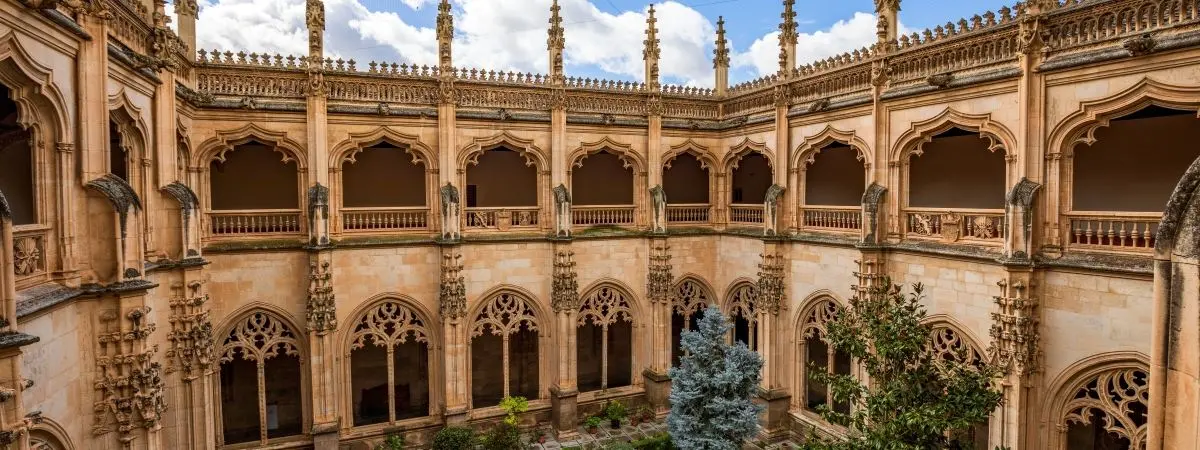
Toledo, the monumental jewel and capital of Castile-La Mancha, rises majestically upon a hill lapped by the Tajo River. Known as the City of Three Cultures, Toledo has been a melting pot where the indelible traces of its past remain in every corner of the city. Walking around Toledo is not only to step into history but into a work of art.

A selection of Toledo’s treasures
Exploring Toledo is a pleasant journey through history. Its Christian, Jewish, and Islamic temples embellish the city, each from its own religious tradition, while the maze-like streets are an invitation to roam carefree. The Tajo River at the foot of the town wall is a flowing reminder of life’s transient nature.
The Cathedral of Saint Mary, Dives Toletana
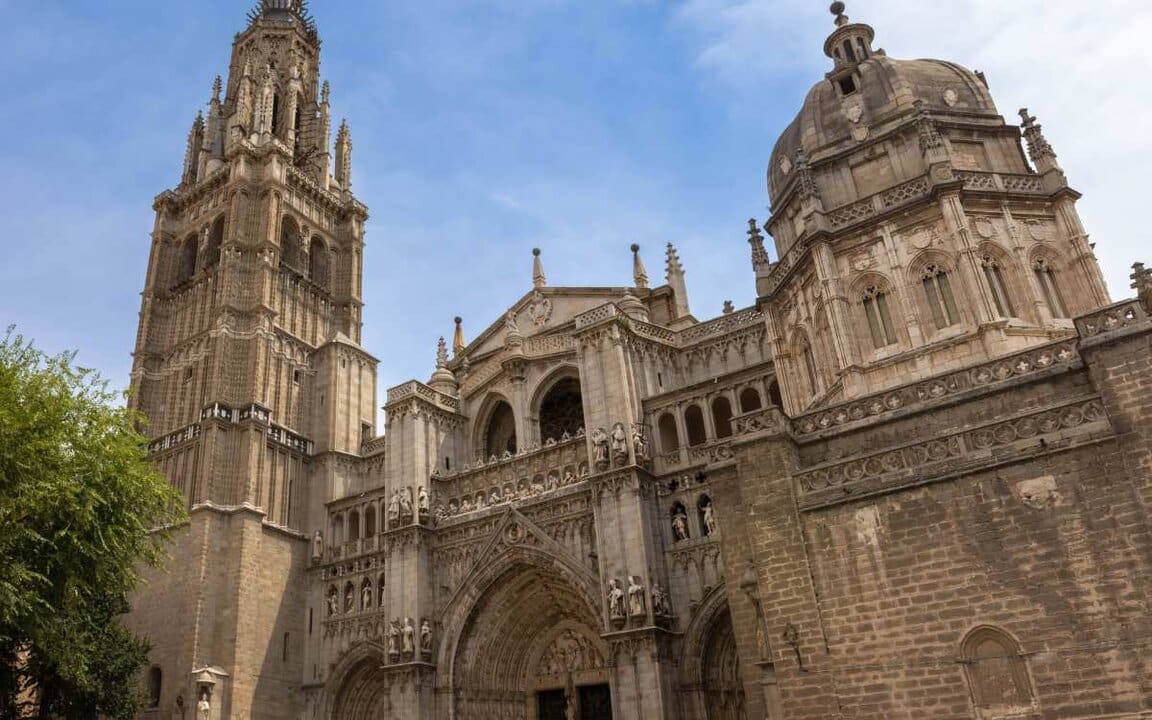
The Primatial Cathedral of Saint Mary of Toledo, also known as Dives Toletana (The Rich Toledan), is preeminent among Spanish cathedrals. This cathedral is the apex of the Spanish Gothic style. Its extraordinary artistic value includes various masterpieces of assorted styles spanning several historical periods.
The white stone from the Olihuelas quarry used in the cathedral’s construction has created a silver-toned filigree on the door reliefs and pinnacles. Each successive epoch has bestowed its finest art onto the cathedral, from its Renaissance grillwork to the Baroque altarpiece, El Transparente, and much more.
The old quarter, a labyrinth of history

The old city centre of Toledo, safeguarded by the town wall and the bend of the Tajo River, has been a UNESCO World Heritage Site since 1986. Its more than two-thousand-year-old history has bequeathed artistic treasures from diverse periods and cultures.
The narrow and twisting streets of old Toledo are an ingenious adaptation to the terrain and climate and, indeed, a defensive aid to possible attacks. Walking through these jaw-dropping scenes full of history and into one of the old city’s squares is to feel the beating public heart of centuries past.
The Alcázar, a majestic presence

The magnificent Alcázar of Toledo overwhelms the city’s landscape, but its solemn elegance soon wins over the newcomer’s heart. Located at the highest point of the city, this once mighty fortress is today a museum and library.
Prior to its current status, the Alcázar served many other functions, including Visogothic royal residence, Islamic citadel, and the imperial symbol of power for the Habsburg royal dynasty. It subsequently served as a prison and even a settlement house until its destruction in 1936 during the Spanish Civil War. Today, it stands rebuilt as an unmistakable icon of Toledo.
Santa María la Blanca, the heart of Hebrew faith
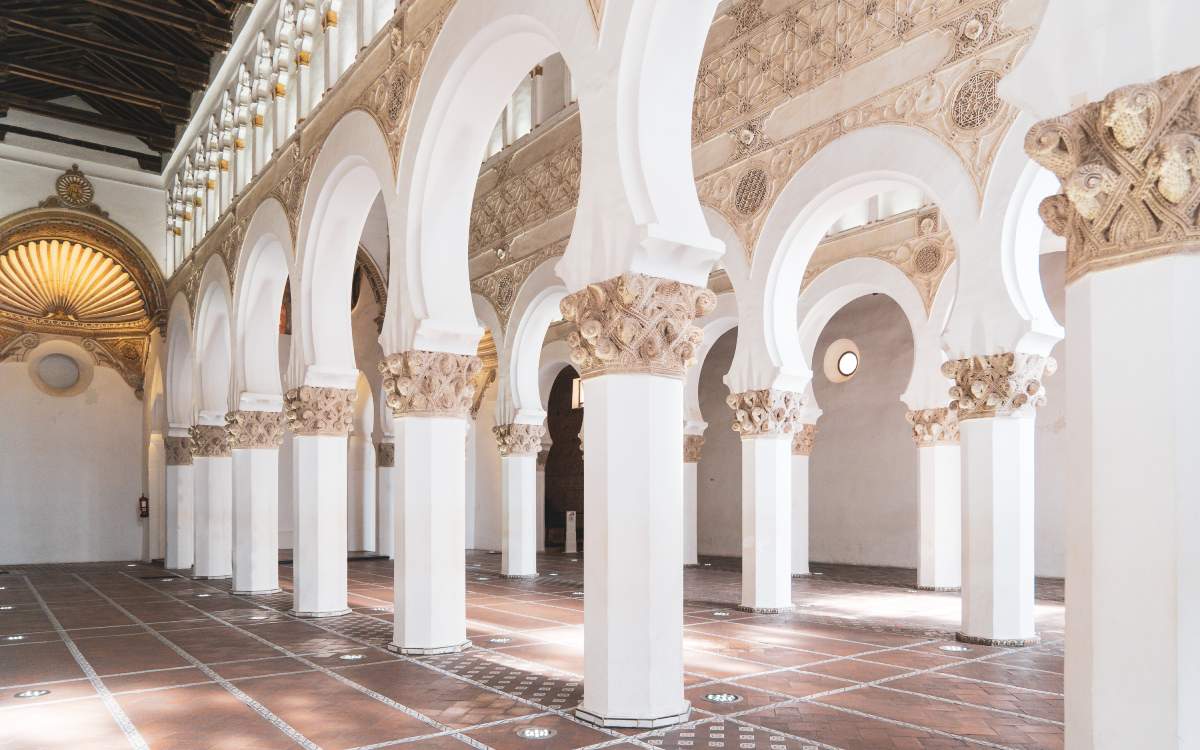
Toledo’s name is synonymous with the history of Spain’s Sephardic community, whose principal temple, presently called the Synagogue of Santa María la Blanca, is located in Toledo. After suffering damage from a fire, King Alfonso X, also known as the Wise, ordered its restoration so that it would remain ‘Spain’s largest and most beautiful synagogue.’
Surrounded by a garden isolated from the bustling city, the synagogue’s exquisite white columns are an open invitation to enter the hushed interior. Its adornments, considered masterpieces of Mudéjar art, are exquisite samples of the Castilian and Nazari traditions.
Mosque of Cristo de la Luz, treasure from Muslim Toledo

The Mosque of Cristo de la Luz was formerly the Bab al-Mardum Mosque, a construction from 999 that was inspired by the Mosque of Córdoba, and remains the oldest standing monument in Toledo today. Although it may be small, the building is a cultural gem and a symbol of peaceful co-existence among differing religions.
A Mudéjar-styled apse was added in the 12th century and converted into a church, and its original identity remained forgotten for centuries. The cupolas and horseshoe arches gracefully blend with the brick and Visigothic capitals of its columns in a building that is the synthesis and a crowning achievement of Toledo’s history.
Santo Tomé, El Greco’s church
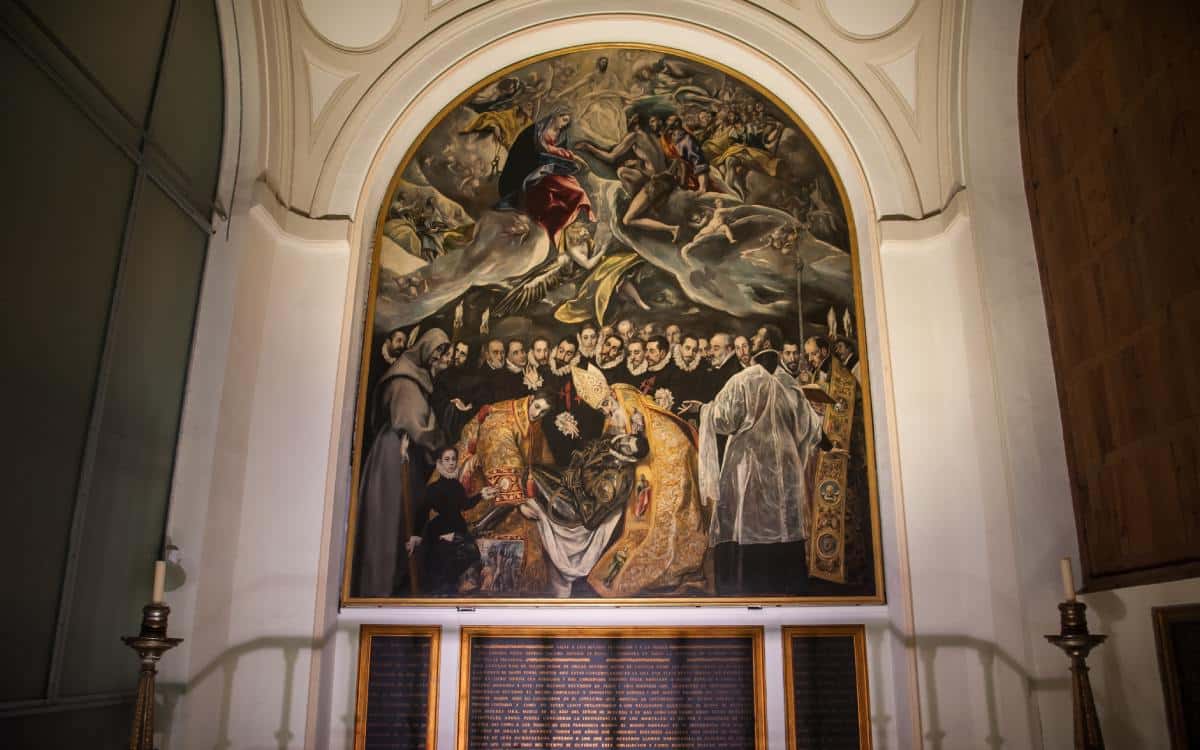
Toledo is intrinsically linked to the legacy of the illustrious painter El Greco, who endowed the city with one of his greatest works, The Burial of the Count of Orgaz. Though this indelible painting is reason enough to visit Santo Tomé Church, there is much more to see.
Santo Tomé Church, or Saint Thomas the Apostle, was founded in the aftermath of the Castilian conquest of Toledo. The church’s site was once a stunning Mudéjar-styled edifice whose magnificent lobed blind arches and other details are still conserved. Gonzalo Ruiz of Toledo, the Count of Orgaz, was a generous nobleman benefactor of Santo Tomé Church, and upon his request, has rested in peace at this church since the 14th century.
Monastery of San Juan de los Reyes, spellbinding Gothic
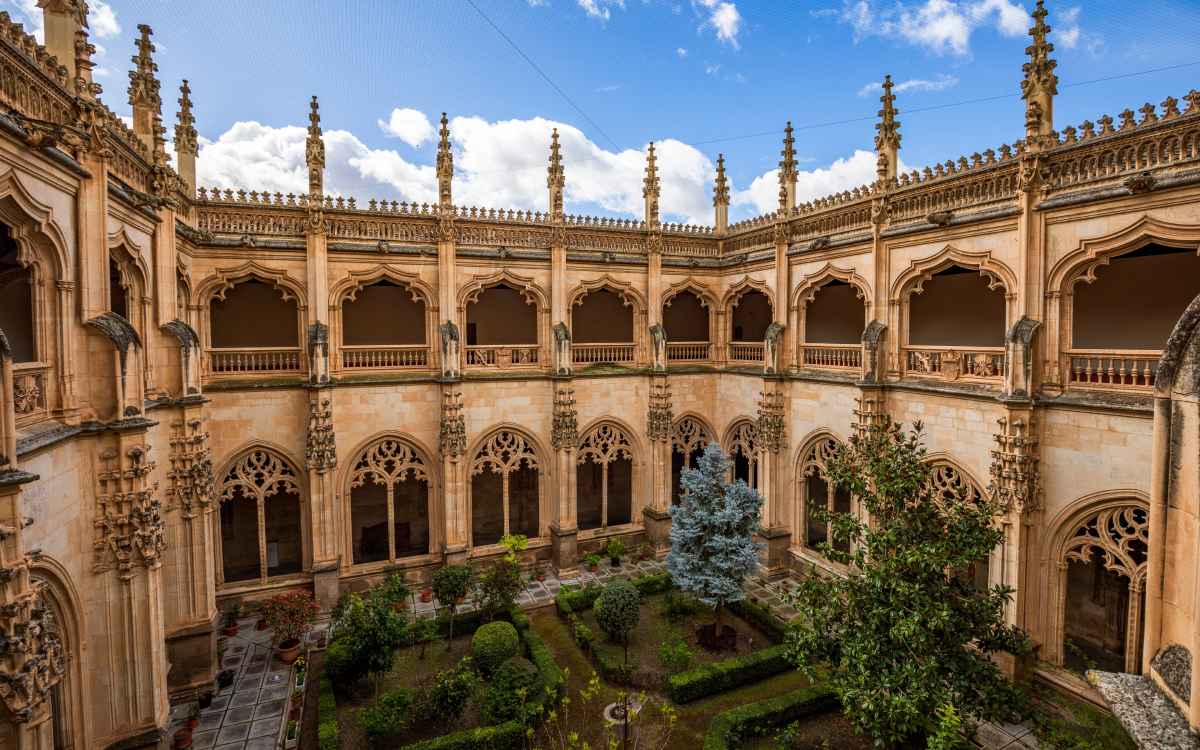
The Franciscan monastery of San Juan de los Reyes forms part of the extraordinary legacy of the Catholic Monarchs, who commissioned its work to Juan Guas in 1476. The church, with its starry cupola and the flaming tracery of the cloister, is a monument to one of the foremost examples of the Isabelline Gothic style.
Wandering the church cloister with its lush greenery and the stylised contours of the picture windows, arcades, and pinnacles is a heavenly experience. San Juan de los Reyes is one of the finest displays of Spanish art and a true wonder of Toledo.
El Tránsito Synagogue, Sephardic splendour
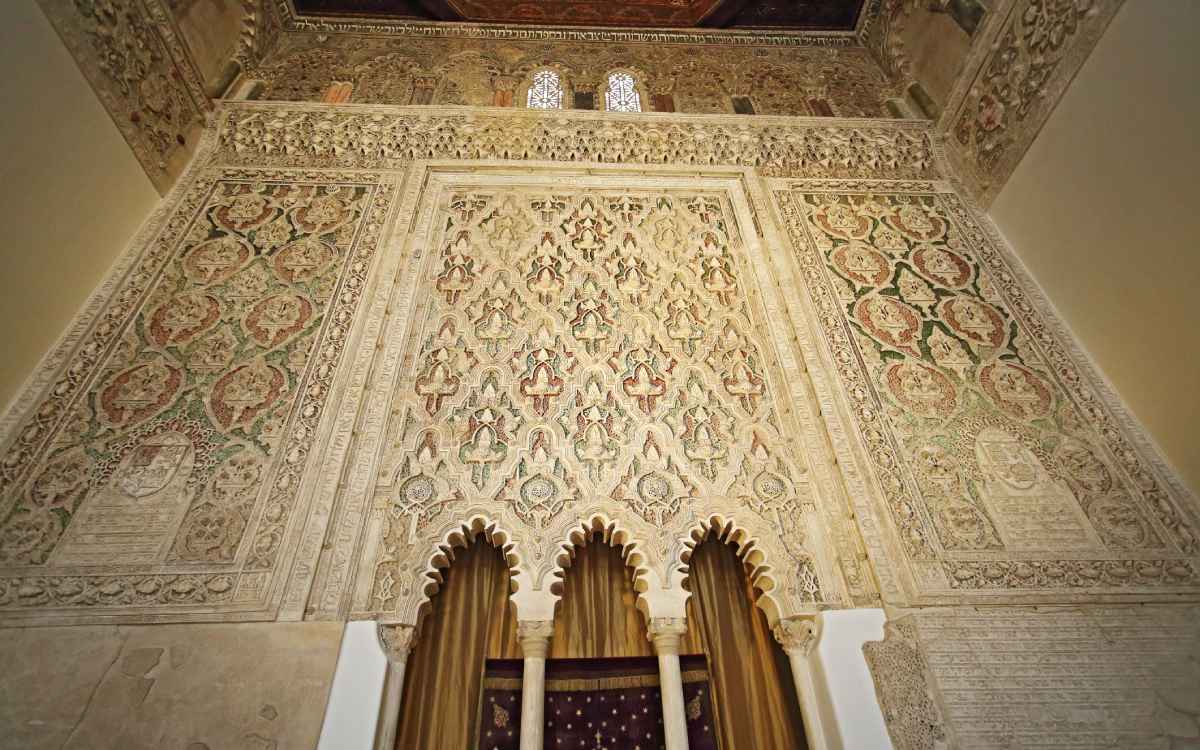
To better understand the exceptional cultural heritage of the Sephardic community, Toledo offers a renowned museum dedicated to its local Jewish culture. There the visitor can discover Sephardic history, starting with the Roman period until their expulsion in 1492 and the subsequent persecutions during the Catholic Inquisition.
However, the site that houses the museum, El Tránsito Synagogue, also known as Samuel ha-Levi Synagogue, is no ordinary building. Not only is it widely acclaimed to be the most beautiful medieval synagogue in the world, it is perhaps the best conserved one as well. Despite such grandeur in Hebrew temples being less common, this temple was designed to be a palatial oratory and the interior ornamentation is simply extraordinary.
You can also read this article in Spanish here.