
9 must-see places in Zaragoza to discover at least once in your life
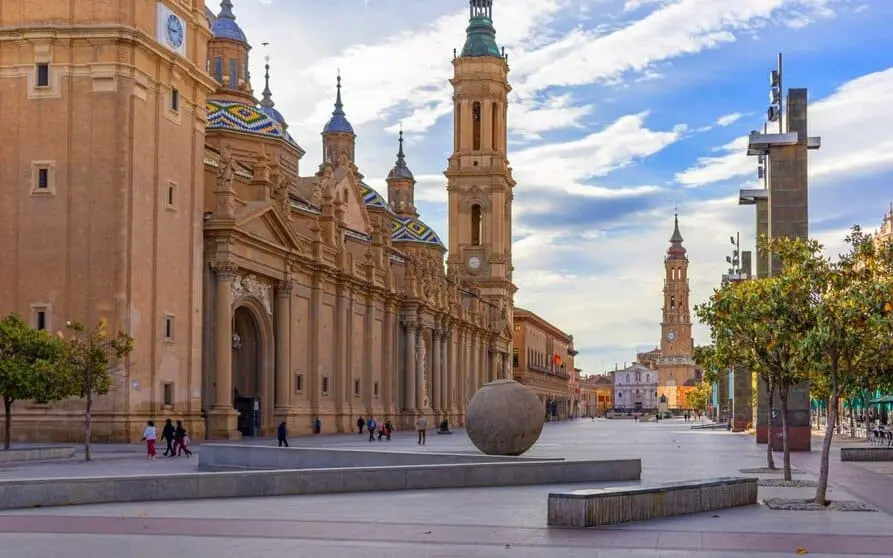
Zaragoza is a boisterous yet welcoming city with plenty to boast about and every part of Aragon’s capital holds a surprise. The city’s more than two-thousand-year history is captured in stone, whether it be the Roman ruins, fairy tale palaces, consummate Mudéjar-style art or either one of its two cathedrals.

Zaragoza has far more to offer than what a weekend break will permit. This place entices any visitor to come back and continue exploring the streets and squares that effectively narrate the history of this city.
The treasures of Zaragoza city: art, culture and some other surprises
Cathedral-Basilica of Our Lady of the Pillar, pride and hallmark of the city
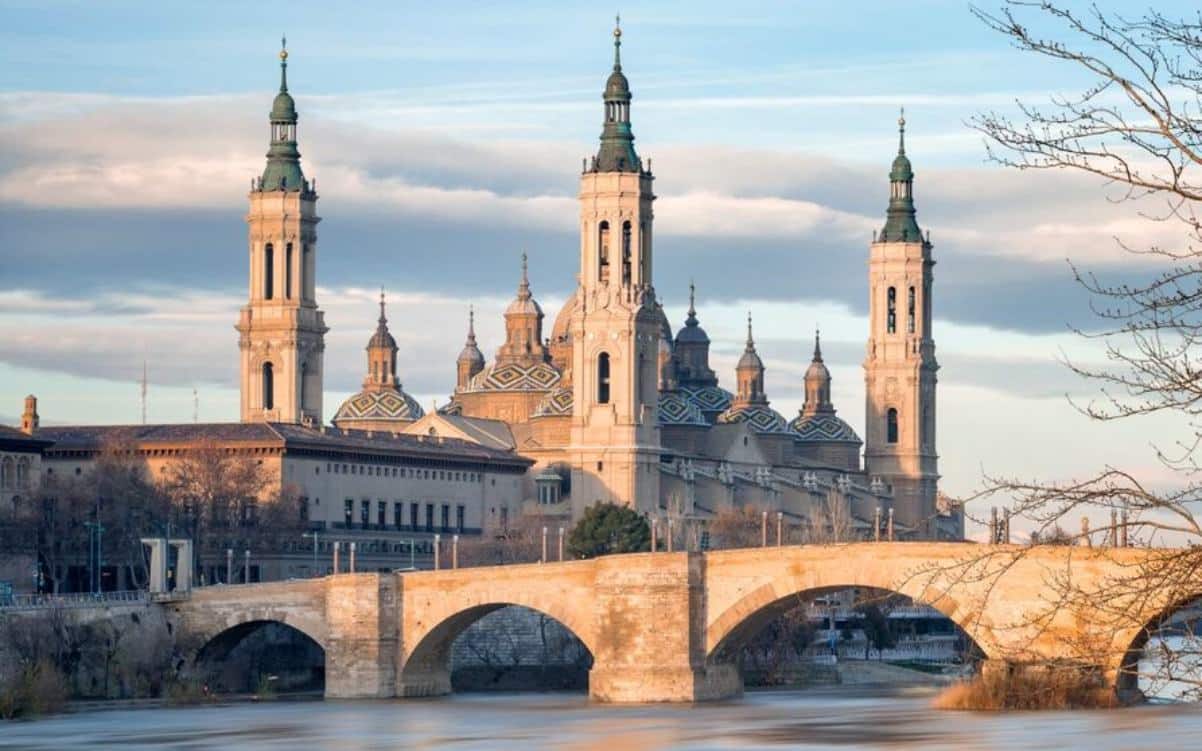
Zaragoza’s soul can be found at the Cathedral-Basilica of Our Lady of the Pillar, the city’s pride and joy and spiritual epicentre. The image of Spain’s largest Baroque temple reflects upon the Ebro River while its four magnificent towers and 11 colourfully glazed domes embellish the city’s sky. Indeed, a temple envisioned to awaken awe from afar.
Once inside the cathedral, the refined beauty of the polychrome alabaster main altar, the paintings by Goya that adorn the Coreto de la Virgen Crypt or the Holy Chapel that houses Aragon’s patron saint, the Virgin of the Pillar or Pilarica, are all treasures not to be missed. Moreover, traces of a miracle can be observed at one of the holes created by one of three unexploded bombs that were dropped on the church during the Spanish Civil War.
The Cathedral of the Savior, a joy for the senses
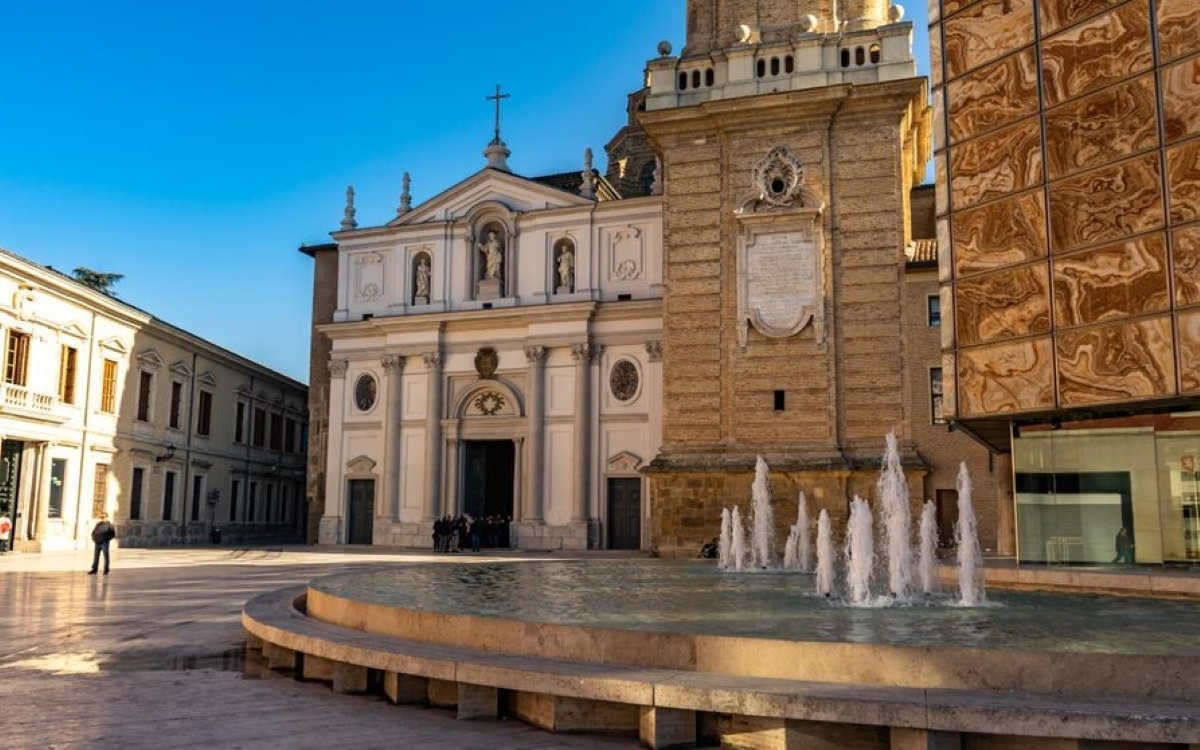
The Cathedral of the Savior, also known as La Seo, has for centuries rivaled its twin sister, the Cathedral-Basilica of the Pillar. A rivalry that eventually led to the rare decision to designate Zaragoza one of the few Spanish cities to have two cathedrals. Nothing however compares to this cathedral’s unique beauty as a result of its awe-inspiring amalgam of styles.
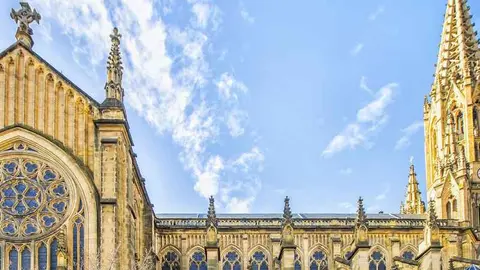
On its outside, the Baroque tower and the immaculately designed Neoclassical main façade give way on one side to the wall that encapsulates one of the most exquisite examples of Mudéjar style in Aragon. Once inside, the Main Altarpiece is a Gothic masterpiece, while the Renaissance flair of Saint Bernard’s Chapel truly dazzles the eye. The church houses another treasure: one of the best collections of Flemish tapestries in the world.
Pillar Square, Zaragoza’s ballroom

Pillar Square is one of the European Union’s largest pedestrian squares and meant to be rambled. This immense, vibrant urban meeting point represents the very essence of Zaragoza as this square has borne witness to the greater part of the city’s history and contains an extraordinarily vast cultural heritage.
The monument dedicated to the painter Francisco de Goya and the Hispanic Fountain sit at opposite ends of the square. The breathtaking Lonja de Mercaderes (Merchants’ Market) rises next to the basilica at the heart of the square, while tucked away on the other side of the square lies the 19th-century Pasaje del Ciclón (Cyclone Passage). Other curiosities include the leaning tower at the church of San Juan de los Panetes, one of the few such towers in Spain.
Aljafería Palace, Taifa kingdom grandeur
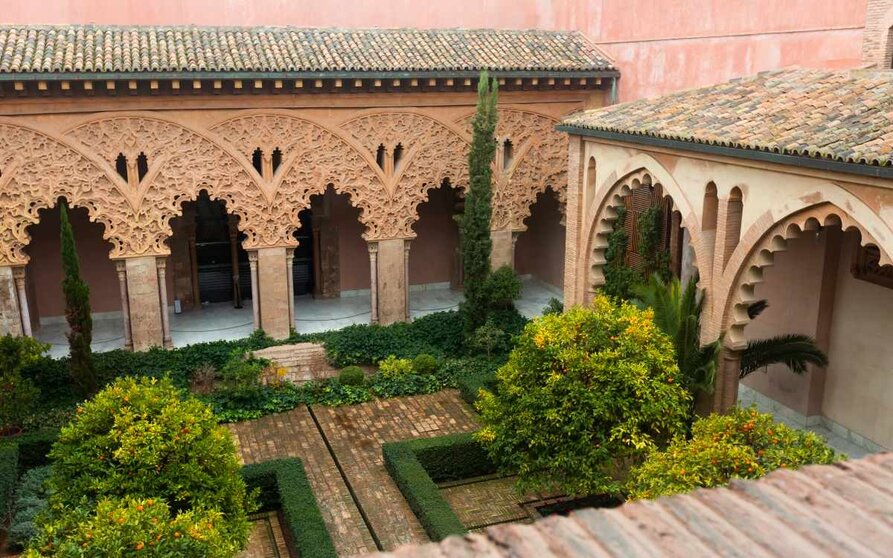
Crossing the sturdy walls of the Aljafería Palace is to step into a tale from One Thousand and One Nights. This one-time pleasure palace for Arab caliphates reveals romantic corners like the Alhambresque Courtyard of Santa Isabel and the evocative Troubadour Tower reminiscent of scenes from Giuseppe Verdi’s opera Il trovatore.
To all this must be added the magnificent array of interconnected lobed arches, coffered Mudéjar-styled façades and ornamented plaster mouldings, all of which make this place an authentic dreamscape. This fantastical place has been a fortress, a home to the kings of Aragon, headquarters of the Inquisition, a prison, military barracks and at present the seat of the regional parliament, the Cortes of Aragon.
Zaragoza’s Roman past: from the theatre to the wall
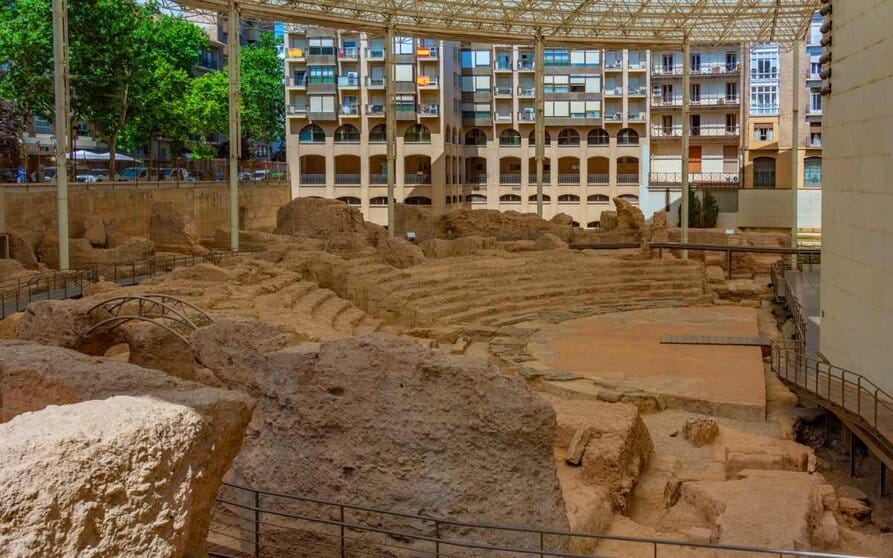
One of Zaragoza’s oldest treasures happened to be discovered only 50 years ago. This theatre was the jewel in the crown of imperial Caesaraugusta and one of Hispania’s largest Roman theatres. Apart from its colossal size, the theatre uniquely concealed a secret chamber beneath the stage from which the actors would magically appear in front of the public.
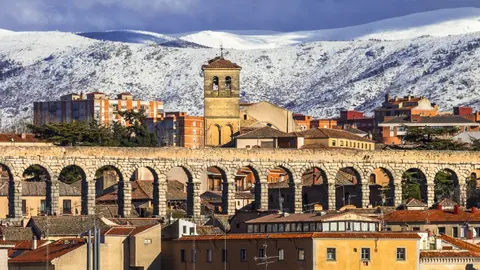
This journey into the splendour of Zaragoza’s Roman past also includes still-preserved ruins of the ancient wall near Pillar Square as well as those along the river port, the thermal baths and more treasures at the Caesaraugusta Forum Museum, found directly underneath Seo Square.
The church of San Pablo, Mudéjar style at its best
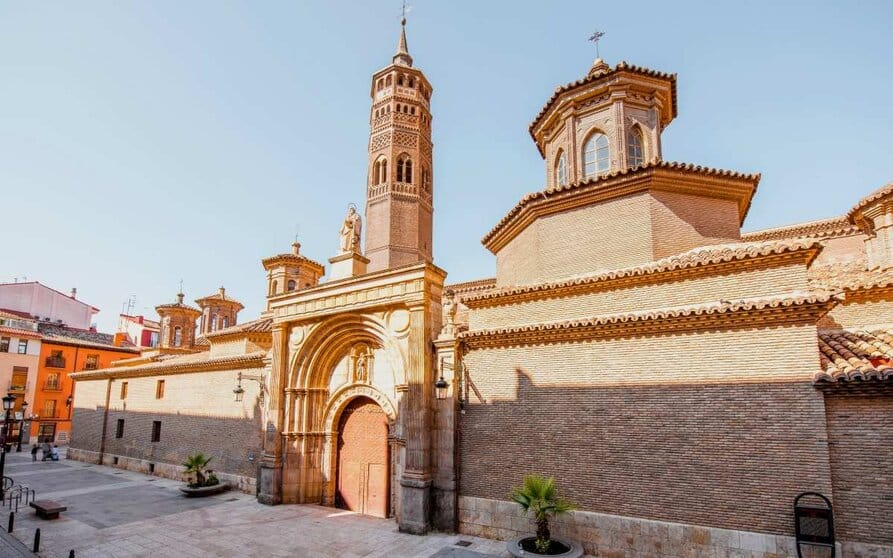
The octagonal-shaped church tower of San Pablo has kept watch over Zaragoza for seven centuries. The exceptional height of this 66-metre-tall watchtower and World Heritage site is one of the prime representations of the intricate beauty of Mudéjar-Aragonese art.
This once free-standing tower is now joined to the church and together, they weave a medley of artistic styles. One cannot help but admire its magnificent multicoloured, equestrian-themed wooden altarpiece incorporating both Gothic and Renaissance influences, or its delicately crafted 60-seat choir and its extraordinary Baroque cupola. It is easy to see why this church is commonly called Zaragoza’s third cathedral.
The Princess Courtyard, a Renaissance gem
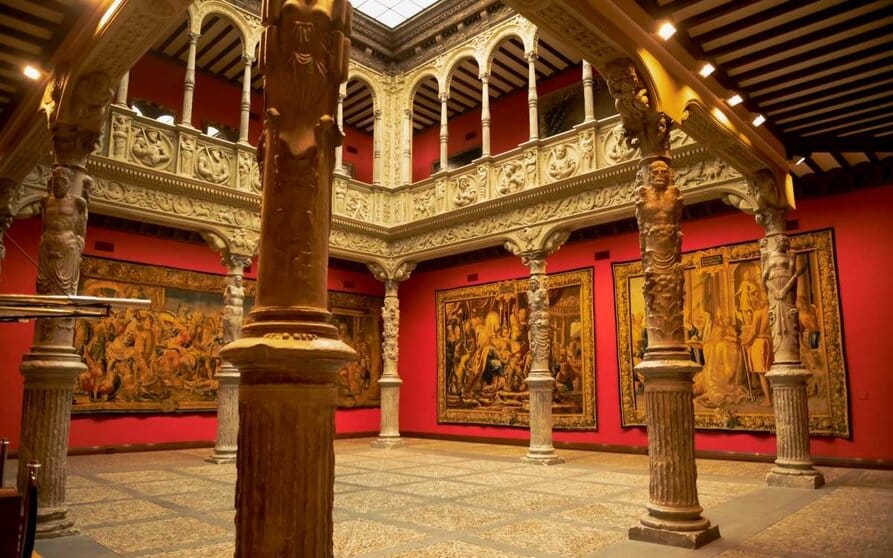
The Patio de la Infanta (Princess Courtyard) reminds one why Zaragoza was once known as the Florence of Spain. A two-storied Renaissance masterpiece with exceptionally ornamented columns, lintels and friezes. The decor encodes a rich symbolism in which mythological characters and historic figures intermingle.
The courtyard’s history is also rather unique being that it once formed part of Zaporta Manor and belonged to a banker of the Aragonese Crown. After a fire destroyed the manor in the 19th century, the courtyard was all that could be salvaged and was subsequently dismantled and taken into the care of a French antiquarian. Decades would pass before the courtyard made its return to Zaragoza when a banking entity acquired the courtyard and installed it in its central offices.
Remnants of Goya at the Charterhouse of Aula Dei

The figure of Aragon’s most famous son is ever present in Zaragoza. However, to discover one of the artist’s more striking facets, one must leave the city centre for the rural neighbourhood of Peñaflor. At the Charterhouse of Aula Dei, a young Francisco de Goya carried out a monumental series of paintings on the life of the Virgin Mary. Although only seven of the original 11 paintings remain, they still reveal the painter’s mastery, genius and originality.
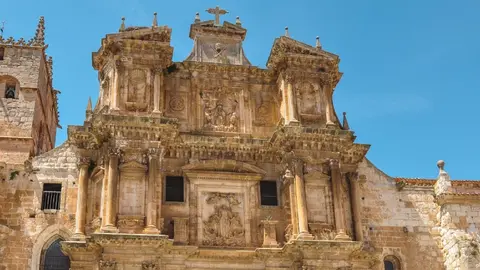
In order to follow Goya’s life and artistic work, one needs to return to the big city and visit the museum dedicated to the painter’s works. Only at the Goya Museum can one find the complete series of the artist’s prints in a building that is itself another one of Zaragoza’s treasures, the Renaissance-styled 16th-century home of Infanzón Jerónimo Cósida.
The meander of Juslibol, a walk through nature
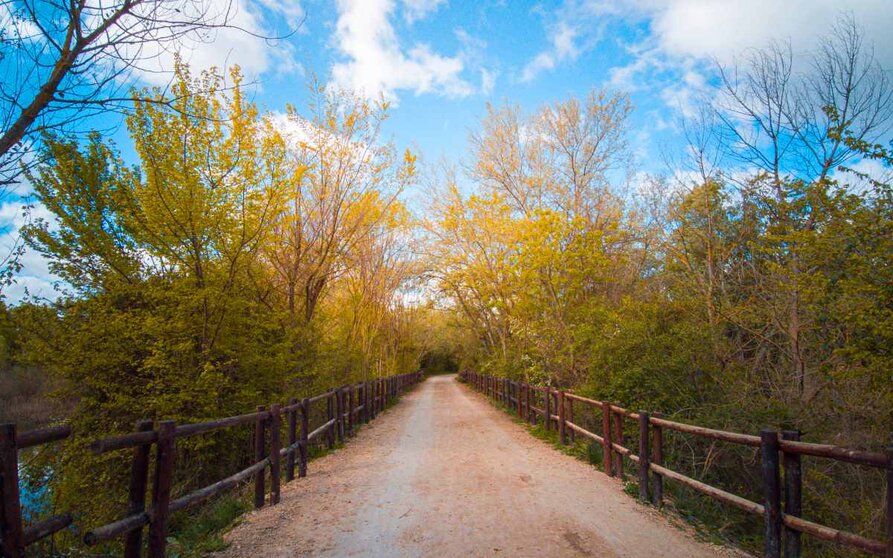
Away from the busy city, this little paradise is where the human touch and mother nature come together in spectacular fashion. The Galacho de Juslibol is an ancient bend in the Ebro River. After a tremendous swelling of the river in 1961, the river changed course and took a straighter route and gave rise to this special spot.
The area remaining between the current river course and the rock escarpment has resulted in a place of great geological interest. Covered by a riverbank forest and littered with artificial lagoons created from extracted gravel, this particular galacho (meander) of the Ebro is an ideal place for a nature stroll within walking distance of the city.
You can also read this article in Spanish here.