
The best things to see in Toledo
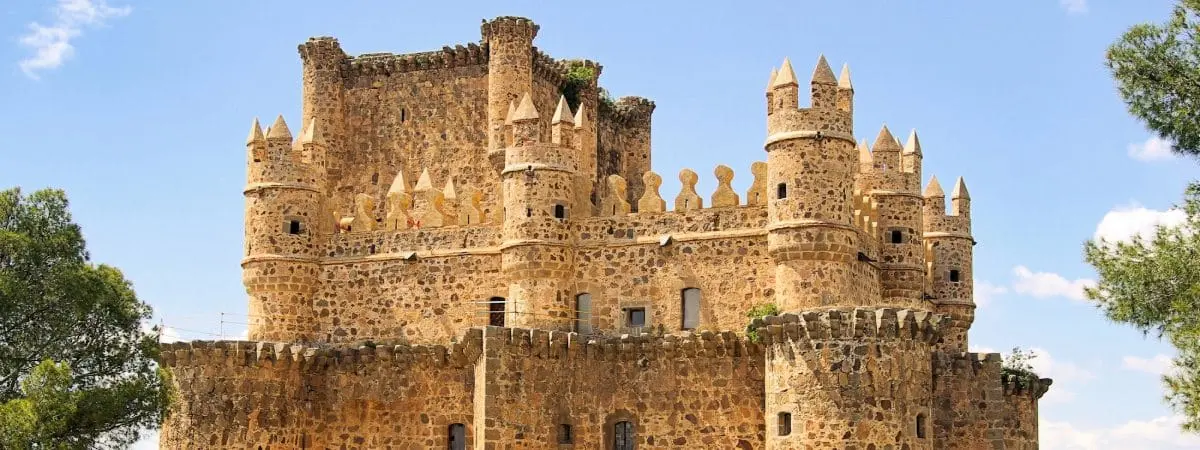
Castilla-La Mancha’s famed capital city of Toledo has long been widely acclaimed. A World Heritage City of exceptional grandeur marked by the three cultures that co-existed there centuries ago. Toledo, however, is also a province containing priceless treasures. Some of these gems come in the form of fascinating constructions while others are gifts of nature, but all of them should be experienced at least once.

Charming towns of Toledo
Consuegra, a quixotic setting
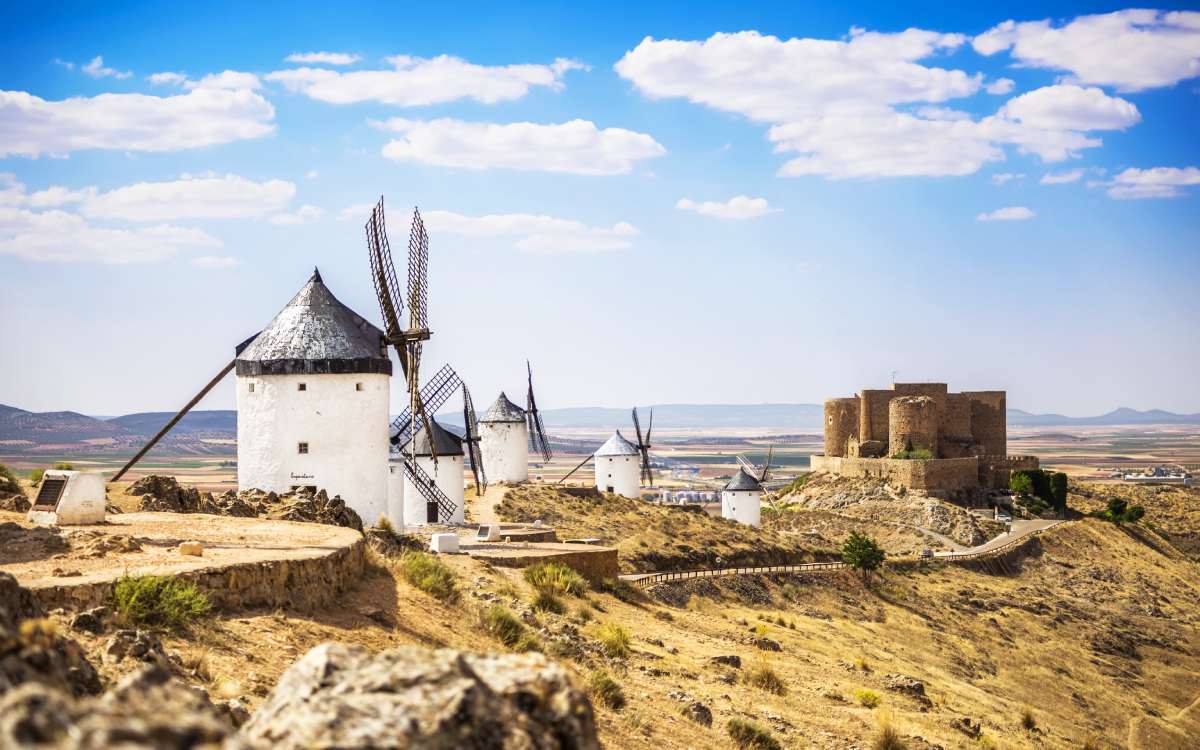
The footsteps of Don Quixote can be traced throughout the province of Toledo. In fact, Consuegra is where some of those giants the errant knight may or may not have faced stand. The municipality has conserved 12 windmills aligned on a ridge known as the Cerro Calderico with the contours of the Muela Castle in the background. Consuegra contains other treasures including the Edificio de los Corredores, the parish church of Santa María la Mayor and a first-century Roman dam.
Anytime is ideal to visit this picturesque town, though two events transform its streets every year. One is Consuegra Medieval, a reenactment commemorating the battle that took place there on 15 August 1097, in which El Cid’s son was killed. The other is the Feast of the Saffron Rose held at the end of October.
Ocaña, gateway to Castilla-La Mancha
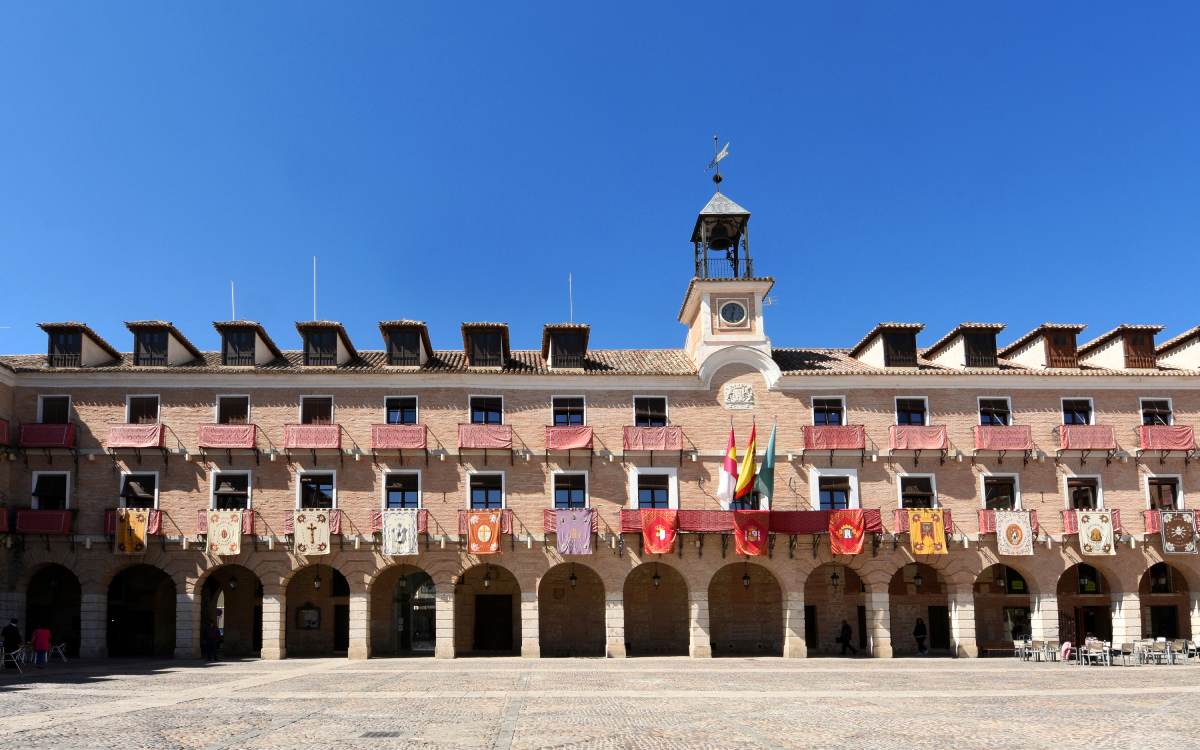
Ocaña is known for its splendid porticoed main square, a baroque-inspired design built during the reign of Charles III. However, one of the province’s most spectacular constructions can be found just outside the town. The Fuente Grande is an extraordinary feat of hydraulic engineering dating to the reign of Philip II.
The fountain consists of an enormous gallery with various water jets, two washing areas and troughs. Its Renaissance style, like that of the Escorial Monastery and the Royal Palace at Aranjuez, were all works carried out by Philip II’s preferred architect, Juan de Herrera.
Ocaña also deserves recognition for being one of the province’s marvels due to its devoutly celebrated Easter week ceremonies. Indeed, it has earned the designation of Fiesta of National Tourist Interest.
Tembleque and its porticoed square
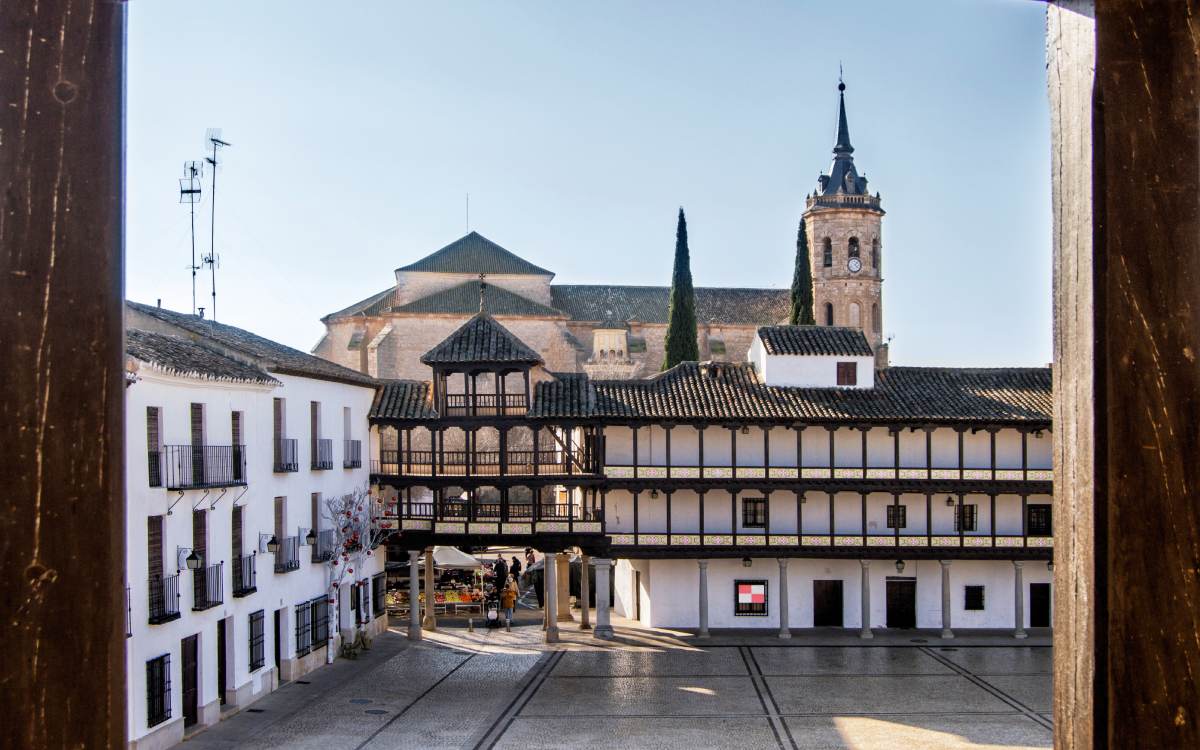
Not only is Tembleque’s main square one of the largest in the province, it is also one of the most breathtaking. A colonnaded square with latticed woodwork and hollowed vaults with a captivating turret at one of its entrances. Built in the 17th century, the square has been the venue for all types of celebrations and spectacles ever since. Today, its appearance is a reminder of those famed comedy houses of that period.
Tembleque’s one-of-a-kind architecture is its other charm. A walk through the streets of the old quarter will lead to the gothic church of Nuestra Señora de la Asunción and the baroque Casa de las Torres. On a hill top outside the town stand two fully-restored windmills dominating a characteristic Manchegan landscape.
Tracing Toledo’s history
Toledo’s Roman past at the Carranque Archaeological Park
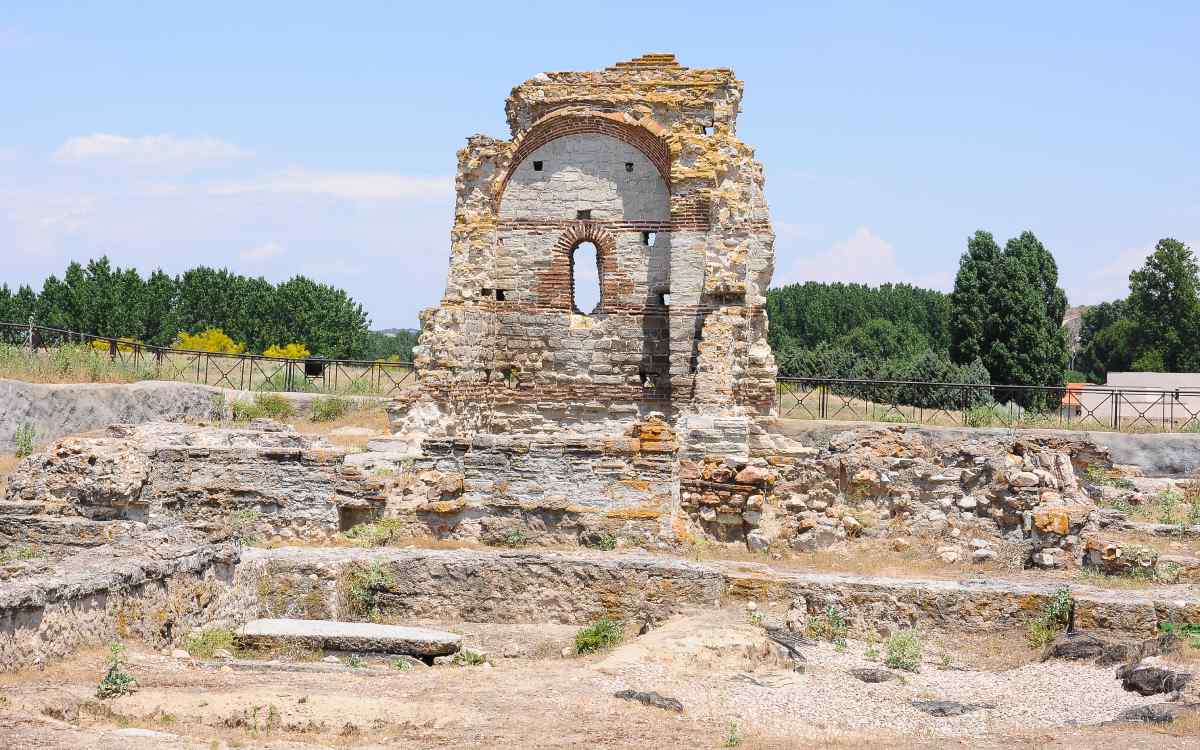
Barely 40 years have passed since the fortuitous discovery of the ruins of the Roman villa of Carranque along the banks of the Guadarrama River. Shortly afterwards, excavations brought to light an authentic treasure in the form of a stately home complete with all the amenities of its time, including heating and running water. It is thought to have once belonged to Maternus Cynegius, a high ranking official of the Roman Empire and close confidant of Emperor Theodosius.
The splendid lifestyle of its inhabitants was not limited to its daily comforts, but also included a magnificent collection of mosaics covering the floors of the mansion’s rooms. These beautifully composed mosaics depict scenes from mythology and undoubtedly cost a significant sum.
Visigoth and medieval Guadamur
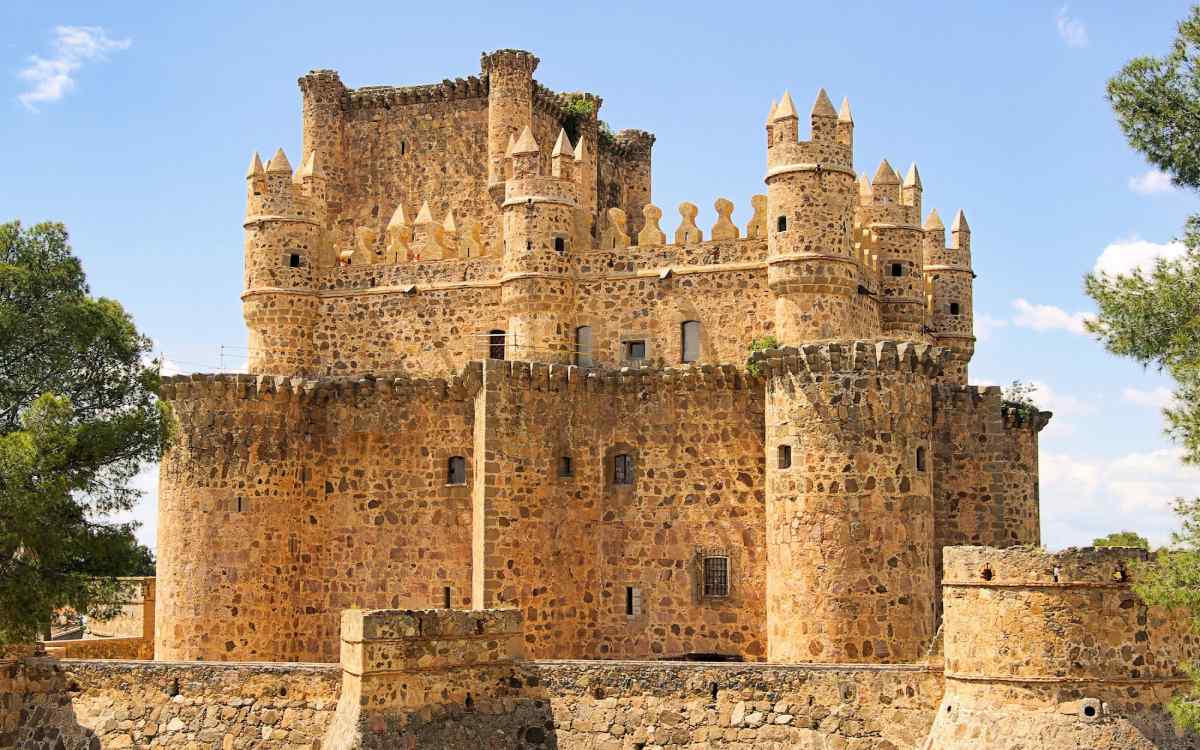
The castle of Guadamur is one of the most stunning and best conserved in the province of Toledo. The walls of this palatial fortress have borne witness to six centuries of history and to such illustrious residents as Joanna the Mad, Philip the Handsome, Charles V and Cardinal Cisneros. It even served as the involuntary dwelling of the scheming Princess of Éboli, whom Philip II had once incarcerated there.
Not far away lie the remnants of the Visigothic kingdom in Toledo at the Guarrazar Archaeological Site. This excavation site has proven to be a treasure-trove, which includes a splendid collection of votive crowns, gold crosses and precious gems. Its most impressive discovery, the votive crown of King Recceswinth, is now located at the National Archaeological Museum. Although the original pieces are no longer at Guadamur, replicas can be found at Guarrazar’s museum, the Centro de Interpretación del Tesoro.
Toledo’s astounding natural wonders
Burujón Ravines, a landscape from another planet
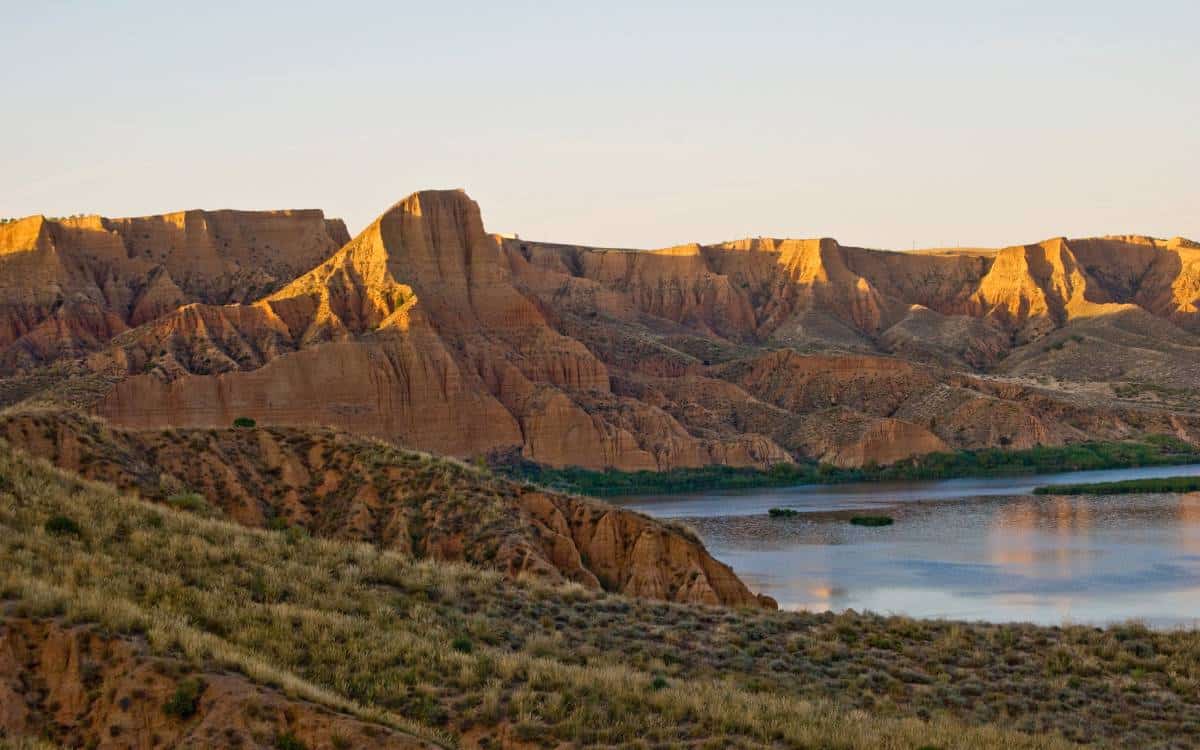
A landscape of gullies and cliffs rising as high as 120 metres overlooking the Castrejón Reservoir make up the Burujón Ravines. A topography of auburn hues moulded by erosion inevitably compared with the Grand Canyon in the United States. Though more modest in scale, the canyons of Burujón are a uniquely beautiful landscape rich in biodiversity.
Every corner of this fanciful natural setting can be explored thanks to a narrow trail skirting its cliffs and the many lookout points found along the way. For a heightened effect, wait until sunset to appreciate the sunlight’s intensifying effect on the reddish, dream-like tones of the terrain.
The wildlife of Cabañeros National Park
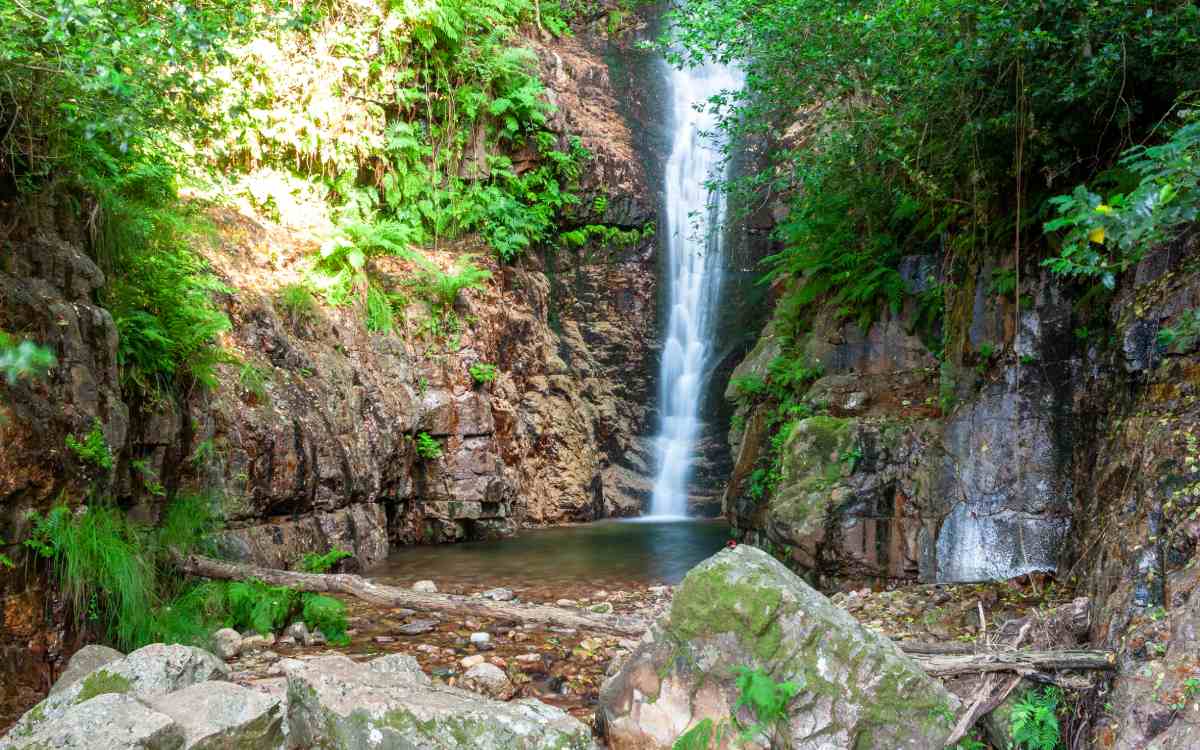
Although belonging to both Toledo and Ciudad Real provinces, Cabañeros National Park is undoubtedly the great treasure of this region. Walking trails leading to the Chica Waterfall and Rocigalgo Peak allow one to discover the flora and fauna of this diverse ecosystem. A splendid example of a Mediterranean forest where the autumn season brings the fascinating spectacle of bellowing deers.
Age-old art and traditions in the lands of Toledo
The ceramics of Talavera de la Reina
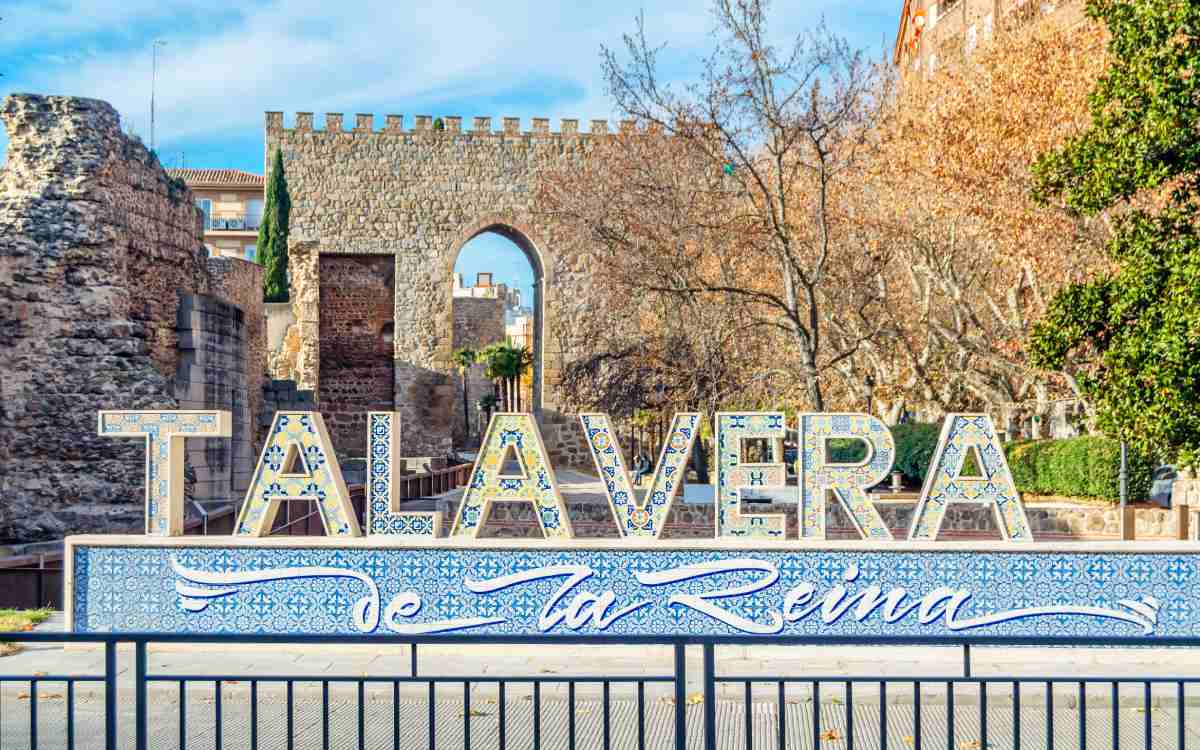
The ceramics of Talavera de la Reina are listed by UNESCO as Intangible Cultural Heritage. An art form reaching its zenith during the Spanish Golden Age, these ceramics adorn countless corners of not only Toledo, but indeed the world.
Seeing firsthand the place where these ceramics originated offers a better understanding and a deeper appreciation for this art form. The Ruiz de Luna Ceramic Museum houses a fabulous collection of ceramic pieces dating back to the 14th century and the Basilica of Nuestra Señora del Prado is known as the Sistine Chapel of Talavera’s ceramic art. Just two reasons among many others to visit and discover this city.
Lagartera’s Feast of Corpus Christi
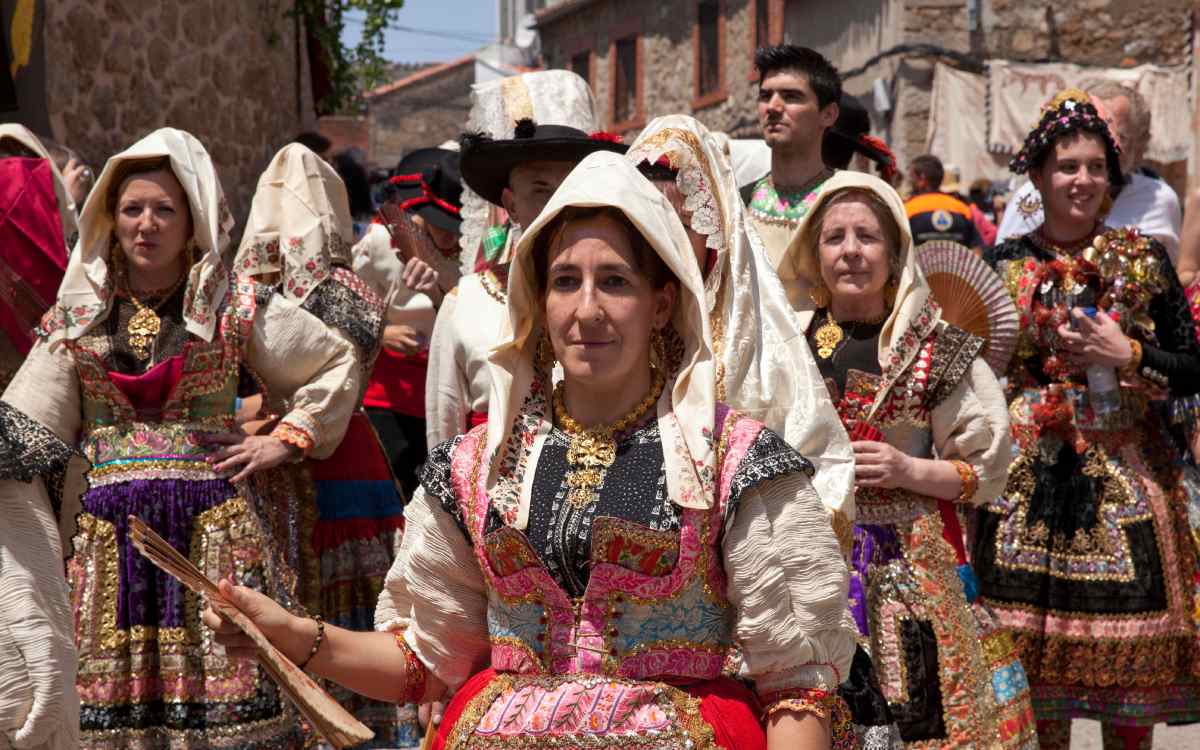
The intricately stitched and colourful embroidery of Lagartera is a genuine work of art. This embroidery has given form to one of the most elaborate and best-known regional attires in all of Spain. The Feast of Corpus Christi is not only an opportunity to display these garments, but also to highlight elegant altarpieces which are decoratively placed at the front doors of local homes.
Members of the Vera Cruz Brotherhood dress in their best regalia to accompany the Holy Monstrance during their processions. A display of devotion, art and tradition dating from 1590. This uniquely multicoloured celebration is one of Toledo’s marvels. In fact, it is a designated Fiesta of Regional Tourist Interest and its exceptional embroidery enjoys Cultural Heritage status.
You can also read this article in Spanish here.
Follow us on Facebook!