Fascinating Soria: its most beautiful villages
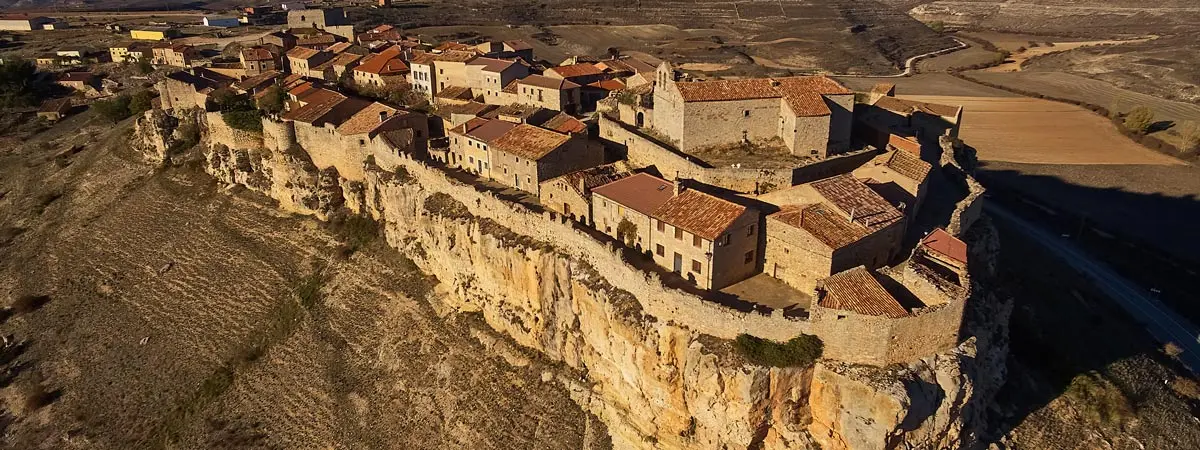
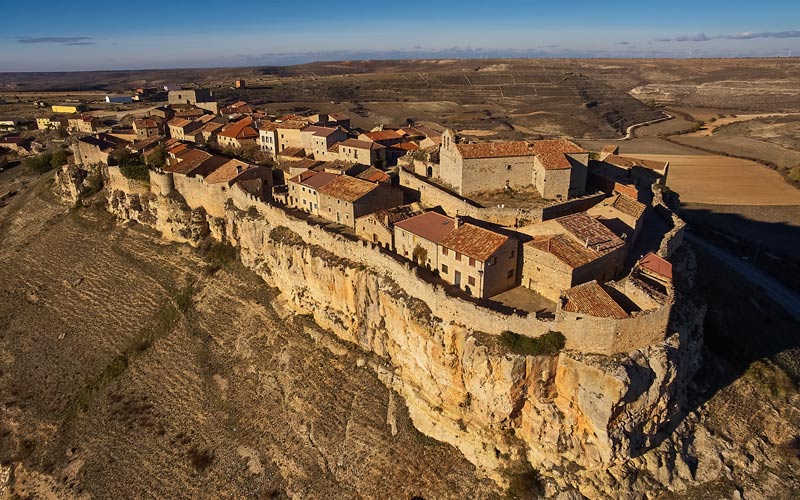
The most beautiful villages in Soria are full of charm and once you see them you will never forget them. Many have in common an ancient medieval layout, with fortifications on top of a hill and walls that surround the town. Here is a selection of some of the most beautiful villages in Soria.

Calatañazor
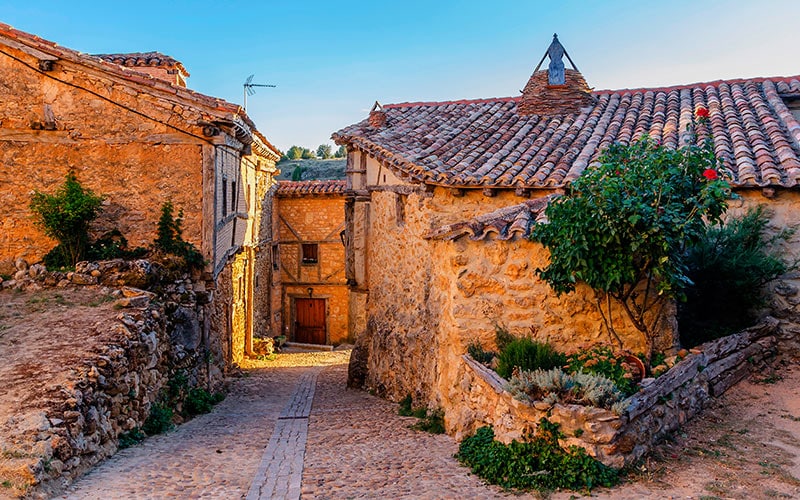
TThe castle, which dates back to the 14th or 15th century, is still preserved, but experts have not been able to determine its exact date. In the homage tower you can see stones rigged in the Arab way that explain an earlier origin. From the castle you can see the extensive plain now known as the Valley of La Sangre. The Romanesque church of Nuestra Señora del Castillo is already in the urban area, and at the outskirts of Calatañazor the also Romanesque hermitage of La Soledad.
Medinaceli
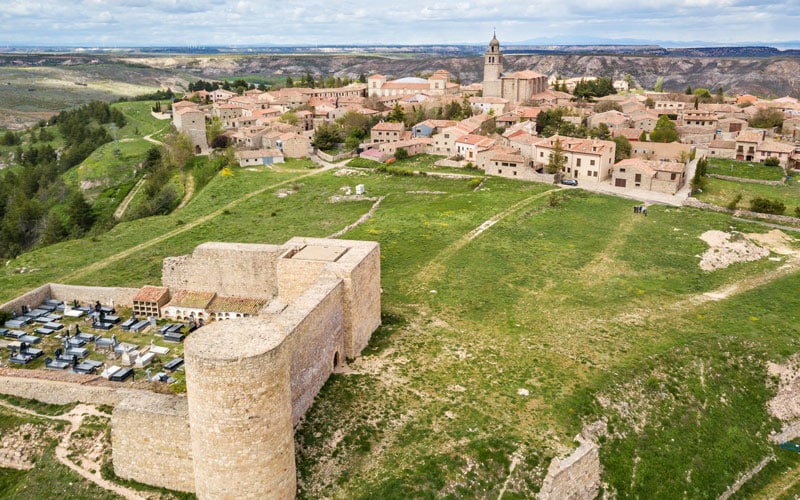
Declared a Historic-Artistic Site, Medinaceli is, without a doubt, one of the most beautiful villages in Soria. Its heritage extends from the Celts, Romans, Arabs and Christians who left their mark on the town. To stroll around Medinaceli is to get a time machine that takes you back centuries.
The visitor must be alert, as there are many monuments found here. One of them is the Roman arch of Medinaceli, the only one of three arches found in Spain. It was built between the first and third centuries AD. A castle, now used as a cemetery, is also located in the town. It was originally an Arab fortress and later the residence of the Counts of Medinaceli. Not to be missed when visiting this town is the Ducal Palace of Medinaceli, in Renaissance style and built throughout the 15th century. The coats of arms of the Casa de Medinaceli can be seen on the façade. The visit is completed with the main square, the wall and the collegiate church, among other monuments.
El Burgo de Osma
San Esteban de Gormaz
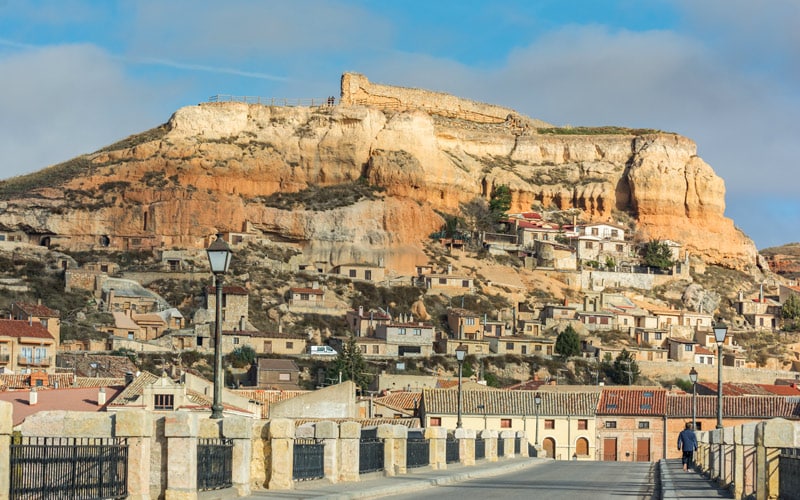
San Esteban de Gormaz is also a picturesque village, with a castle on top of a hill and Castilian houses at the foot of it. The views from the top of this medieval fortress dating from the 9th century are spectacular, as you can see the medieval bridge that crosses the Duero. From here you can also see the two beautiful Romanesque churches of San Esteban de Gormaz, the church of Nuestra Señora del Rivero and the church of San Miguel. As well as being listed as a Historic-Artistic Site, San Esteban de Gormaz is a stop on the Way to Santiago of the Wool, one of the oldest commercial routes on the Iberian Peninsula that connects Alicante with Burgos.
Vinuesa
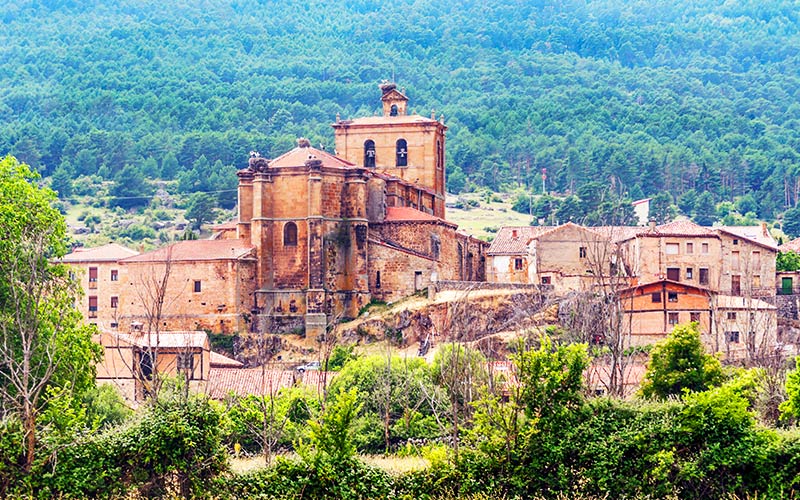
As for the civil monuments, one of the most curious is the bridge and the Roman road, although they are very deteriorated and sink into the waters of the reservoir that is located here. When the water level drops, they reappear as if from nowhere. There are also several buildings of interest, such as the 17th century palace of the Marquises of Vilueña and the palace of Don Pedro de Neyla, known as the Archbishop's Palace of Palermo.
Almazán
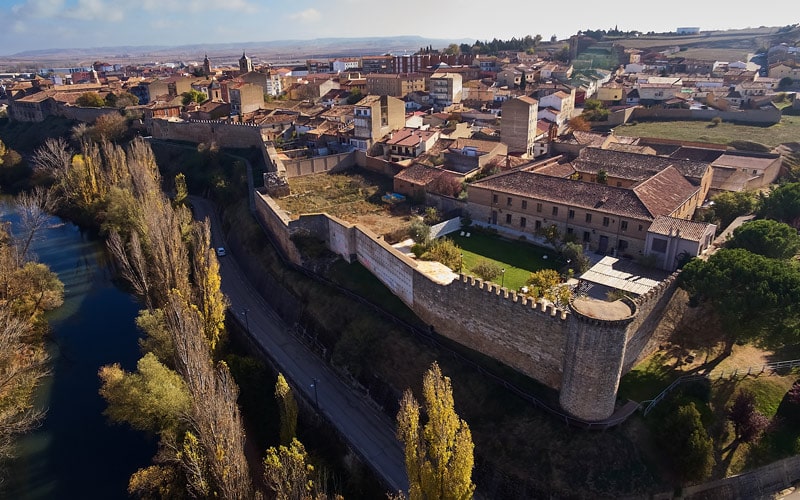
Miguel, an Asset of Cultural Interest and a gem of Soria's Romanesque. Its two-body dome stands out. However, there are up to five other religious temples here that are perfect for visiting. Also important are the main square, where the church of San Miguel is located, and the palace of the Hurtado de Mendoza family, also catalogued as an Asset of Cultural Interest. On the other hand, the walled enclosure includes the Puerta del Mercado, the Puerta de Herreros, the Puerta and Clock de la Villa and the so-called Puerta del Postiguillo.
Berlanga de Duero
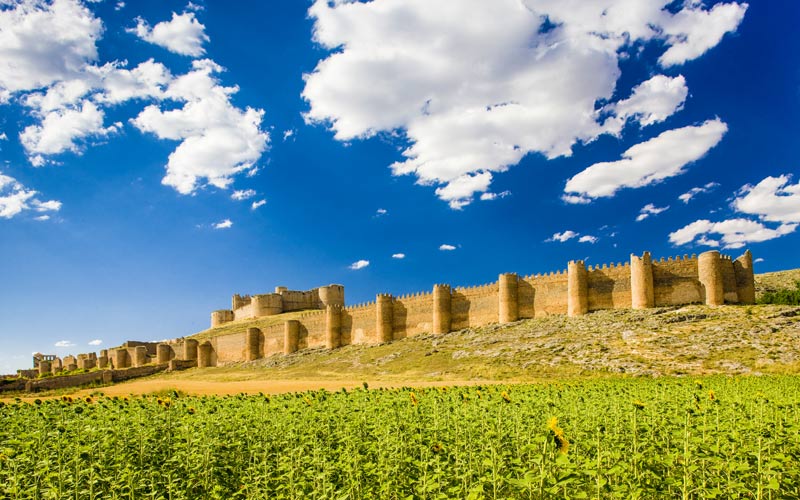
Under the castle are the remains of the Wall that Alfonso I ordered to be built during the 12th century. However, later, in the 14th century, a new tapial wall was built around the town. From the latter, the Puerta de Aguilera is preserved. Another space to see in Berlanga de Duero is the main square, a perfect example of a Castilian square. Furthermore, one cannot leave the town without visiting the Renaissance palace of the Marquises of Berlanga or the collegiate church of Santa María del Mercado (National Monument), among other places.
Rello