Spain’s most captivating Roman theatres
The theatre was one of the Romans’ principal pastimes along with others like chariot races, circus acts and gladiatorial fighting. At the same time, these performing arts helped Romanise the far corners of the empire, resulting in a robust cultural legacy that still endures to this day.

Spain’s 7 best-preserved Roman theatres
Most Roman townspeople could count on a theatre for their enjoyment and Hispania was no exception. Spain, having been a heavily Romanised province, has more than 20 sites where remains of Roman theatres still survive today. Many of these structures still make an impression due to their sheer size and excellent state of preservation. Here is a look at the best of these authentic treasures of Latin civilisation in Spain.
The Roman theatre of Mérida
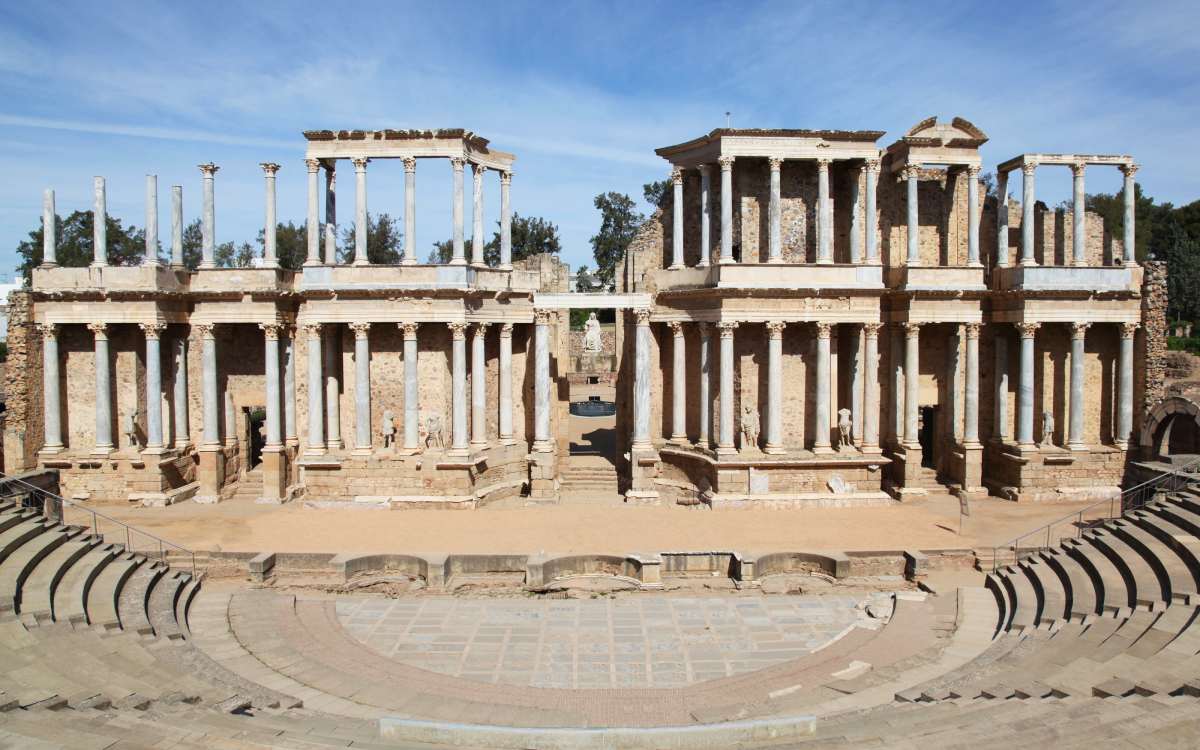
Mérida, formerly known as Augusta Emerita and capital of the Roman province of Lusitania, has what is perhaps the most remarkable theatre to endure to the present day. Its most stunning features are the 2 sections of thirty-metre-tall columns forming the stage and adorned with numerous statues of emperors and enigmatic gods and goddesses from classical mythology.
The Roman Theatre of Mérida is also one of the most active of its kind in all of Europe, as it continues to host major events like the Mérida International Classical Theatre Festival. As a curiosity, it is worth noting that until the 20th century, this site had all but disappeared, having been buried under earth after centuries of neglect. Before its excavation, only 7 piles of stones could be seen on the surface, which the local folklore dubbed “The Seven Chairs”; those chairs which 7 Moorish kings would use while conducting the city’s affairs.
Theatrum Balbi
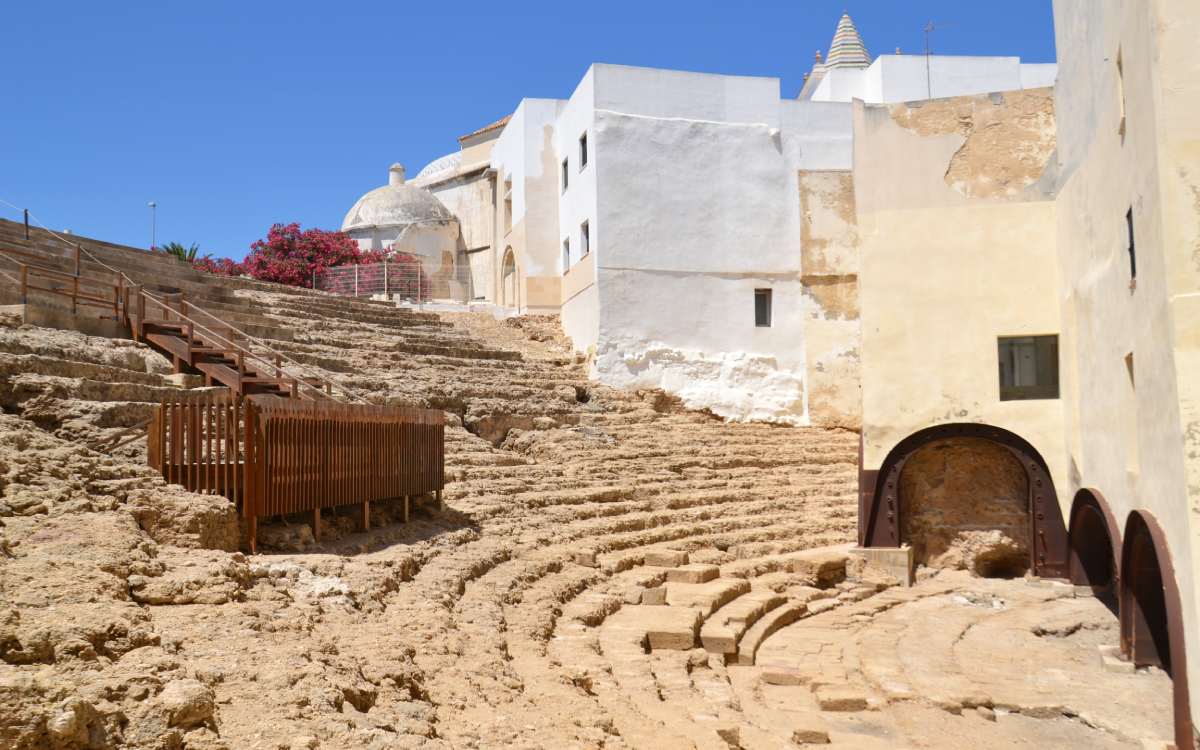
The ancient city of Cádiz never ceases to surprise. In fact, its spectacular Roman theatre, Theatrum Balbi (or Teatro Balbo), was only uncovered as recently as 1980. If strolling Cádiz’s historic centre is akin to stepping into another world, wait until one beholds the old theatre grounds. Set in the beautiful El Pópulo neighbourhood, this theatre is one of Roman Spain’s largest and the Roman Empire’s second-oldest, dating from the 1st century BCE, making it slightly younger than Rome’s Marcelo theatre.
However, even illustrious writers such as Cicero and Strabo mentioning Cadiz’s theatre in their writings did not prevent the venue from being abandoned by the end of the 3rd century CE. Theatrum Balbi continues to be excavated to the present day, shedding new light on the forgotten ruins of Cádiz’s Roman past.
The Roman theatre at Itálica
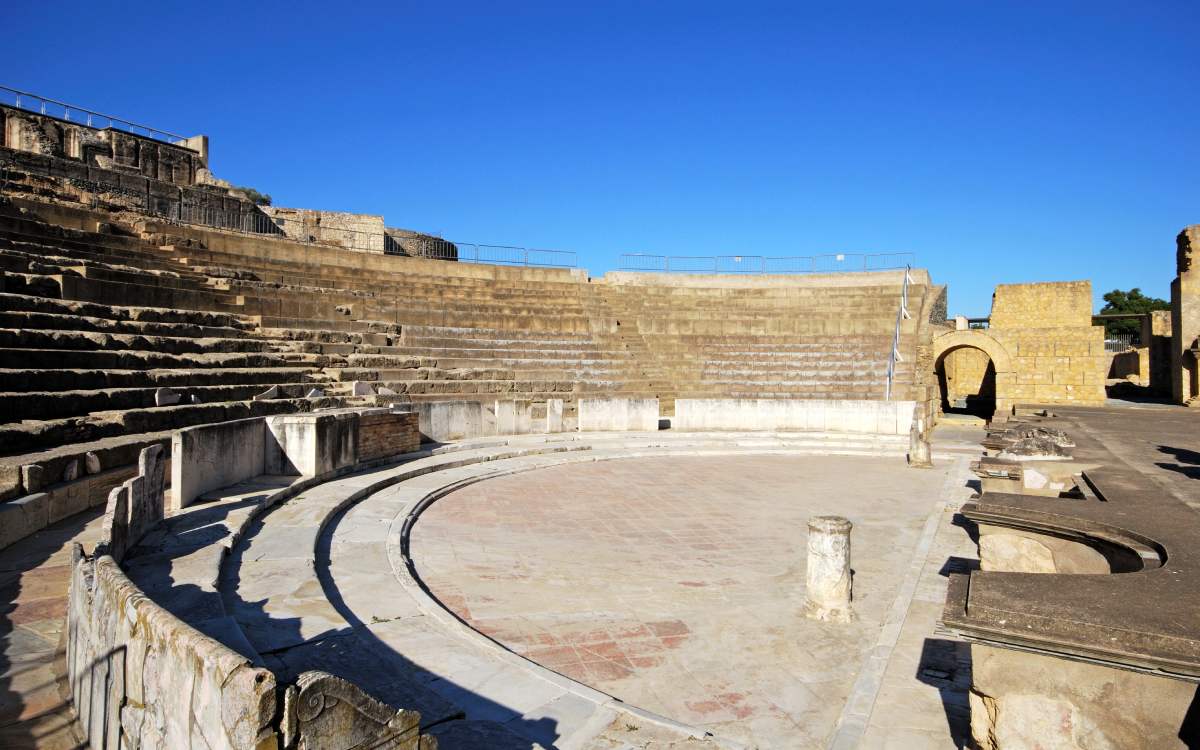
The Roman town of Itálica, modern-day Santiponce near Sevilla, is another one of those places anybody interested in Roman history should visit. The amphitheatre, built like others on a hill in order to take advantage of the topography, is the most well-known civil engineering work at this site, where up to 25,000 people could enjoy tragedies, comedies and mime performances.
Since its restoration in 2014, the Itálica Theatre has hosted numerous dance and classical theatre festivals. Anyone visiting this theatrical marvel will not be able to resist seeing the rest of the archaeological site, birthplace of emperors, with its portico-lined streets, splendid Roman homes and countless other reminders of that special period.
Medellín’s Roman theatre
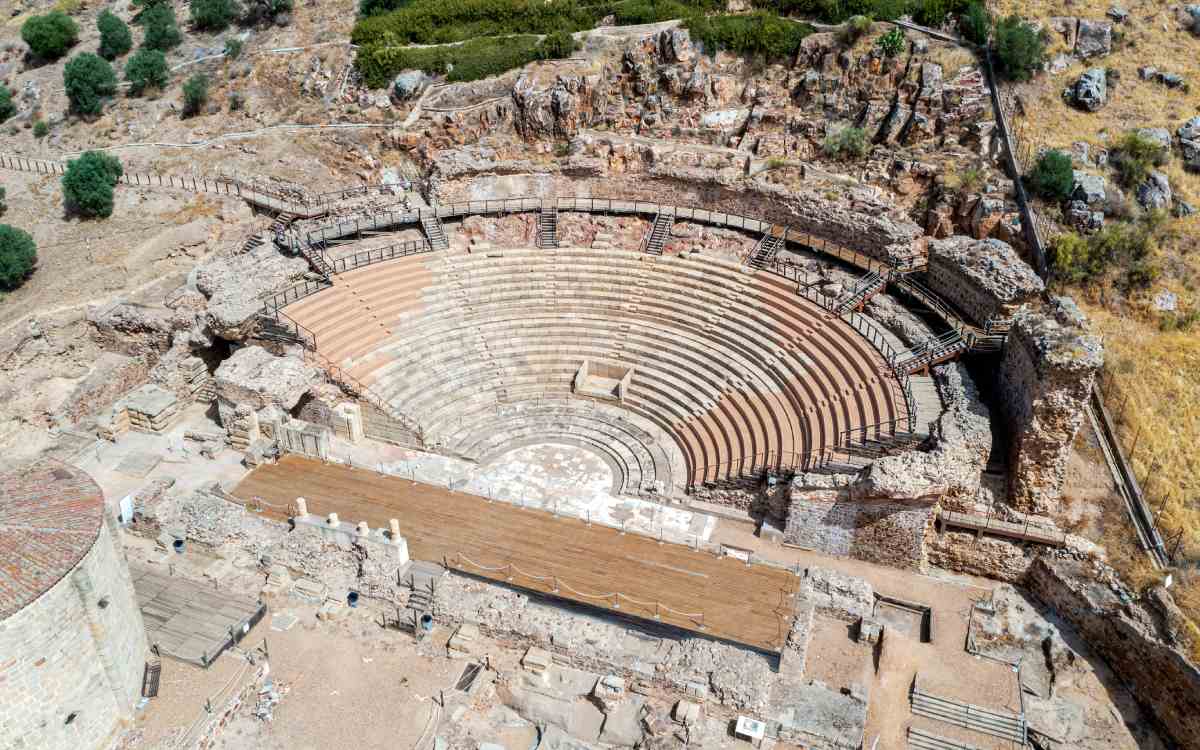
Ancient Metellinum, in the province of Badajoz, was another dynamic city of the Roman Empire owing to its strategic location. The Roman theatre bequeathed to us is noteworthy for its monumental character and the great quantity of original stone blocks to have survived. Additionally, excavations have managed to salvage marble adornments, sculptures and a surprising variety of archaeological treasures, all of which can now be viewed at the local museum. After centuries of oblivion, the site’s exceptional restoration now even hosts festivals, making it the perfect excuse to visit Medellín and discover its rich heritage.
The Theatre of Clunia Sulpicia
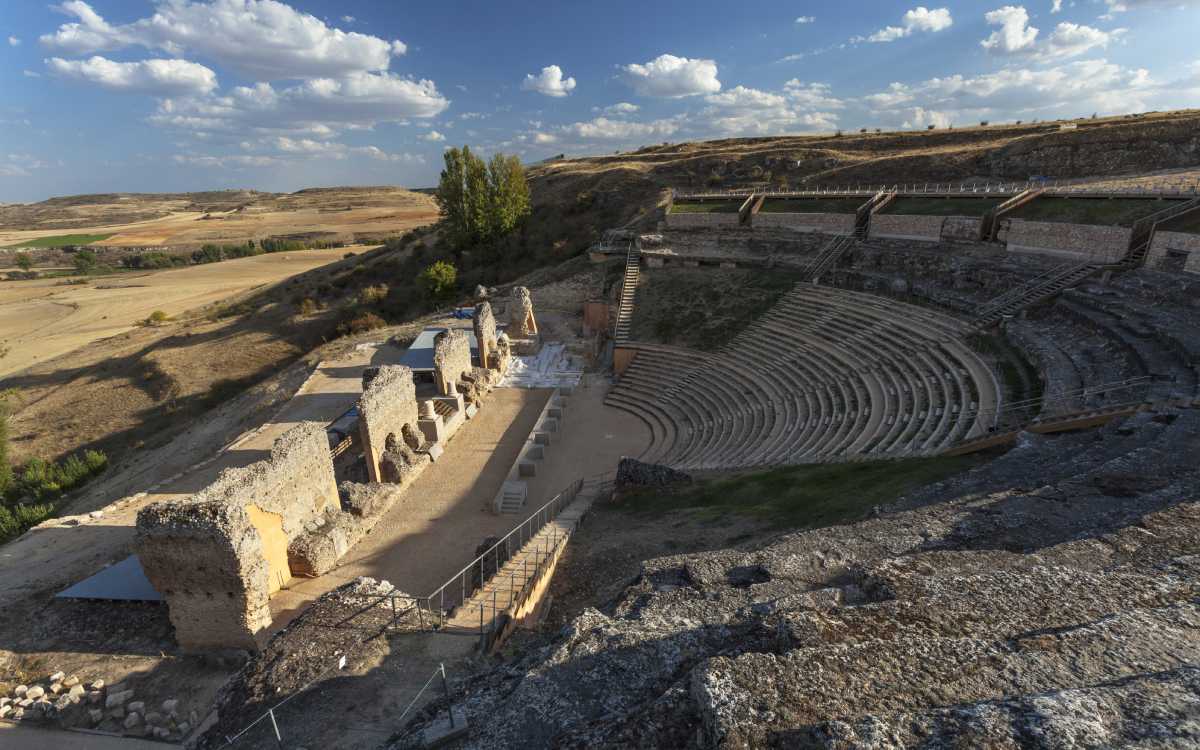
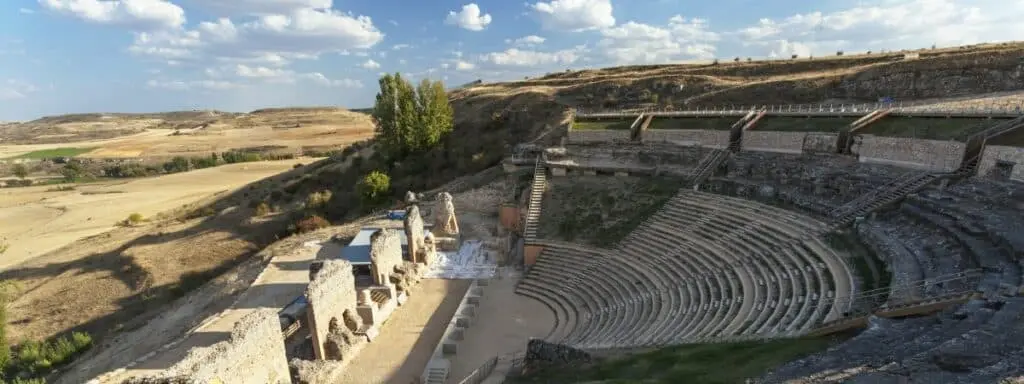
Although southern Spain has many theatres, the north as well presents a magnificent example. Colonia Clunia Sulpicia, in modern-day Peñalba de Castro in the province of Burgos, was a Roman town dating from the time of Emperor Tiberius and today offers a fascinating archaeological site.
The theatre’s enormous dimensions are an indicator of this town’s former significance. The stage façade once comprised 2 storeys of imposing Corinthian columns, including sculptures and stage doors used by the actors. The structure’s extraordinary main façade facing the valley together with the preserved ruins are a testament to the Romans’ audacity, who even managed to use sounding boards and other techniques in order to amplify the sound of these spectacles.
The Roman theatre of Córdoba
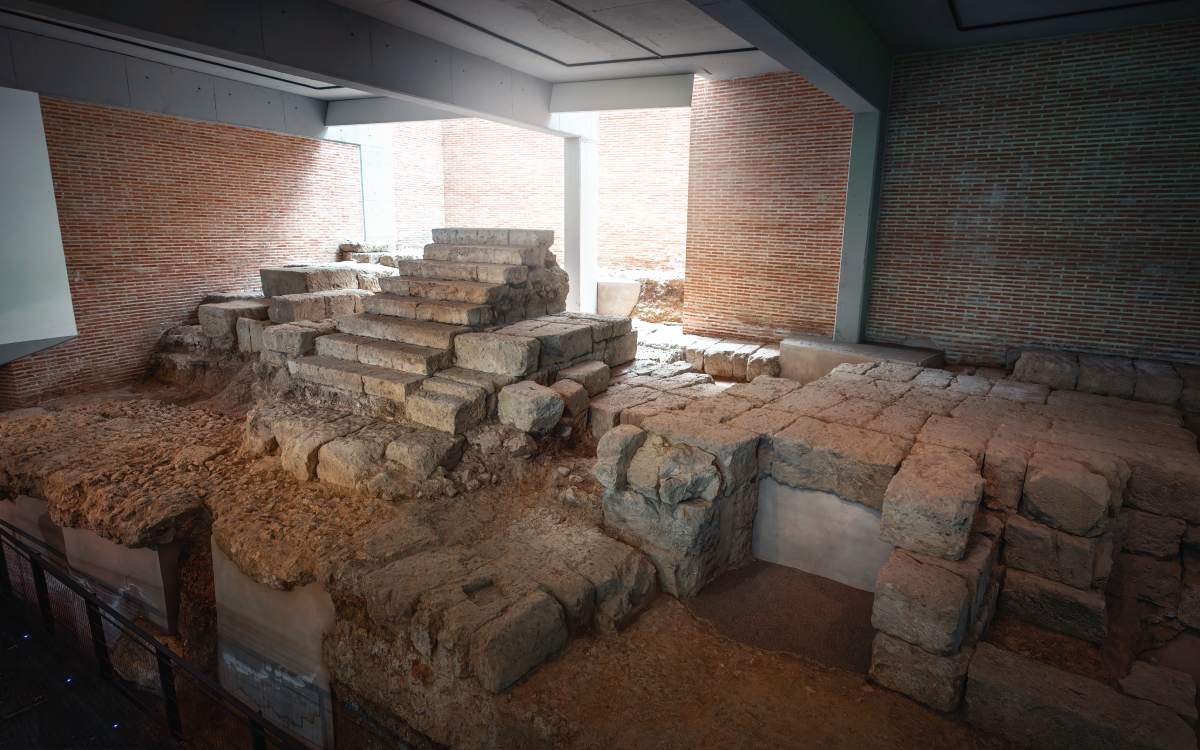
The fact that it lies directly under the urban centre made this theatre’s presence unknown until 1994. Its cavea, spanning 125 metres in diameter with a capacity for 15,000 spectators, made it the largest theatre in Hispania.
The downfall of this magnificent structure began with an earthquake in the 3rd century, and despite subsequent attempts at reconstruction, pillaging and neglect led to it being forgotten until recent times. In any case, the theatre stands today as one of the most significant vestiges of Roman Córdoba, along with the amphitheatre, the Roman temple and the funerary monuments found at the Galicians’ Gate.
The theatre of Carthago Nova
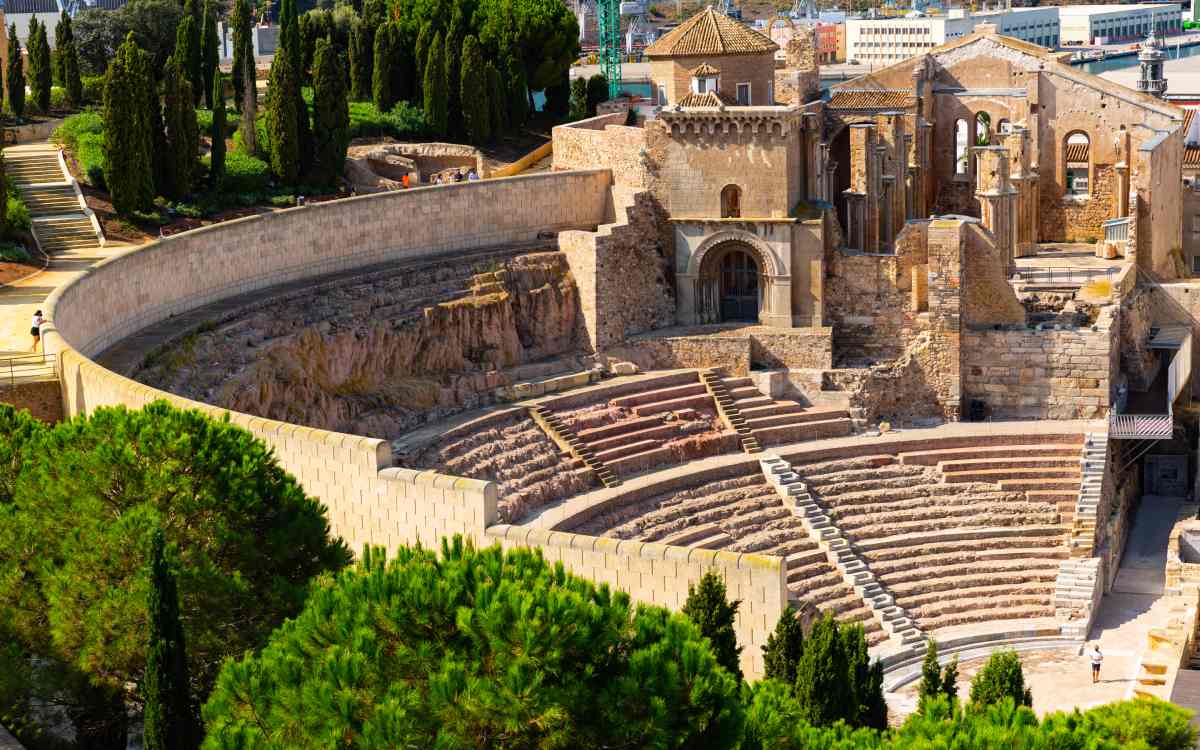
Cartagena, having such ancient origins, is another one of those cities that has accumulated an extraordinary amount of historic treasures. And it is for good reason that the Roman theatre is the area’s most visited monument.
Construction was commissioned during the time of Caesar Augustus, an era of ambitious urban planning, when the city already enjoyed other attractions such as its grand amphitheatre. However, by the time Cartagena became the provincial capital in the 3rd century, the theatre had already been abandoned and its materials subsequently pilfered for the construction of a market and the Cathedral of Santa María la Vieja during the Middle Ages. Happenstance has allowed us to discover and admire a great number of its hidden treasures.
You can also read this article in Spanish here.
Follow us on Facebook!