Discovering Valencia in three days
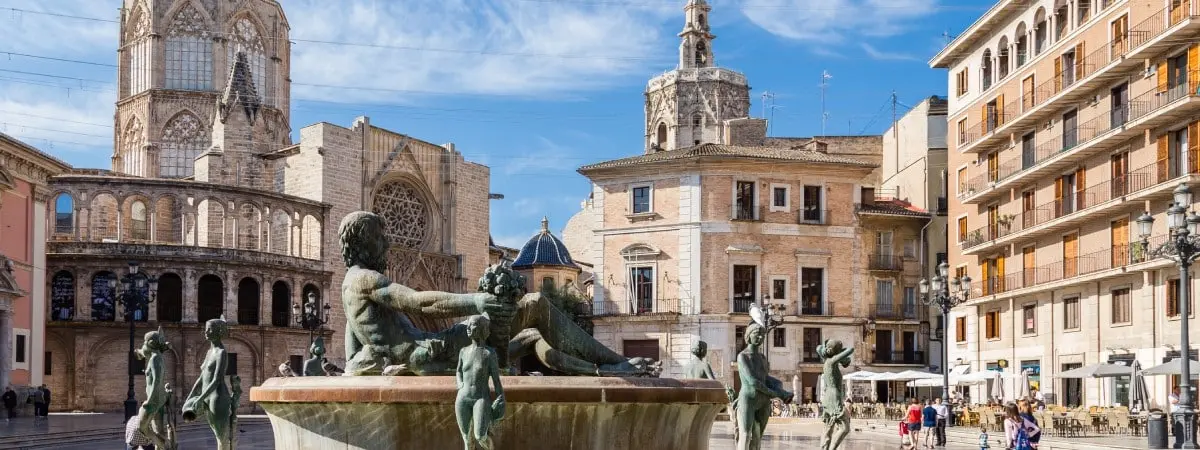
In order to know what to do in Valencia for three days the best thing to do is to go with everything well tied up. Sometimes, wanting to know everything can be stressful and, on the contrary, going without any guide will make us miss out on points of interest. Valencia is much more than paella, although the dish is an excellent reason to travel to the Valencian Community, as it has a great culinary recipe book to combine with everything there is to see.

Valencia is a city of possibilities, with various activities such as Gothic routes. If you get to the Valencian capital by car on the A-3 or A-7, you will discover an exciting landscape.
What to do in Valencia - Day 1
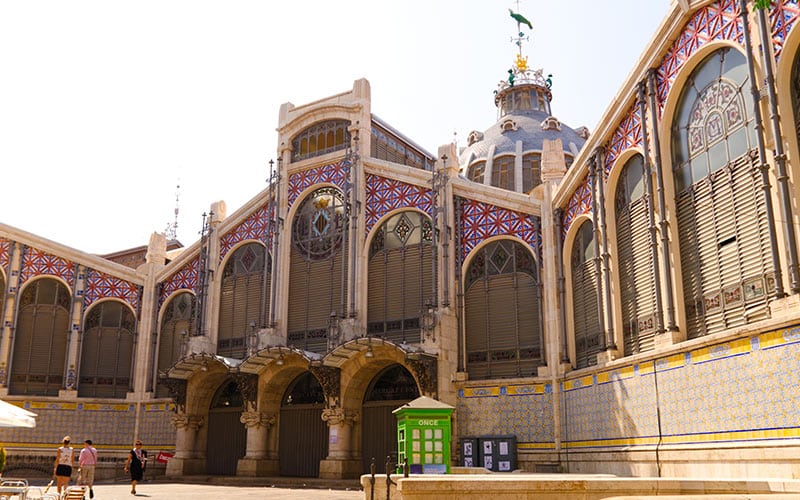
We start this route about what to do in Valencia in three days early in the morning, in the Mercado Central de Valencia. Located in the Plaza Ciudad de Brujas, in the historical centre of the city, it is considered one of the gems of Valencian modernism. It was built by combining materials such as brick, iron, tiles, glass and marble. A great example of the most characteristic style of other cities such as Barcelona. Inside the market you can admire the dome that crowns the building.
With more than 1,000 stalls selling fruit and vegetables, fish, seafood, meat and cheese, a walk through Valencia's Mercado Central is a delight for the senses. As it only opens in the morning, it does so very early, at 7:00, so we recommend going early to make the most of the day. Closed on Sundays. 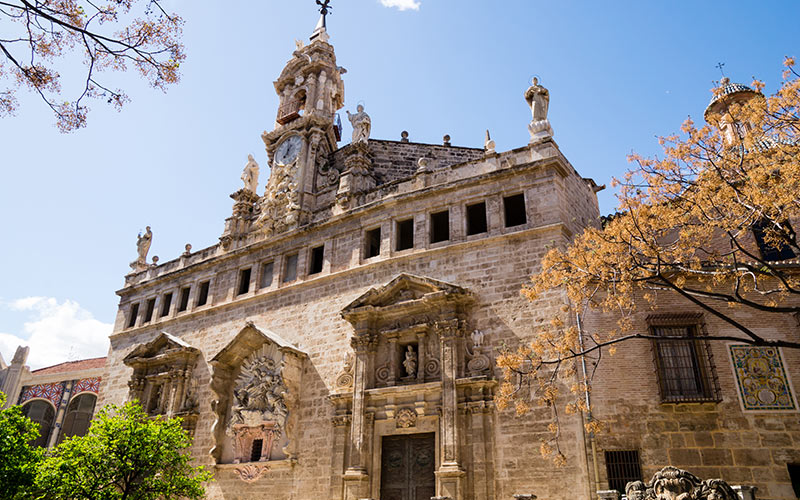
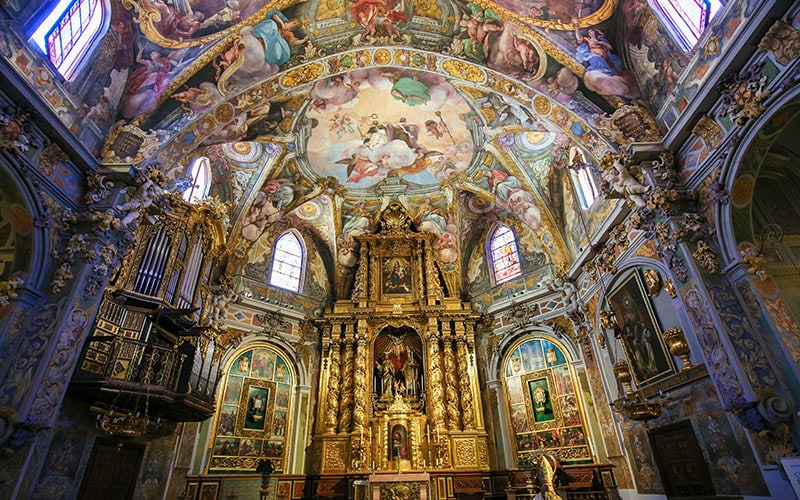
Behind the market is the Church of Santos Juanes, also called the Church of San Juan del Mercado. This temple has four facades, the most important of which is the one that faces the Plaza del Mercado Central. There you can see a sculpture of the Virgen del Rosario and the clock tower, which holds two figures of San Juan. It has a Valencian Gothic style but the fires it went through forced its rebuilding during the 14th and 16th centuries, so it now has a more baroque appearance. 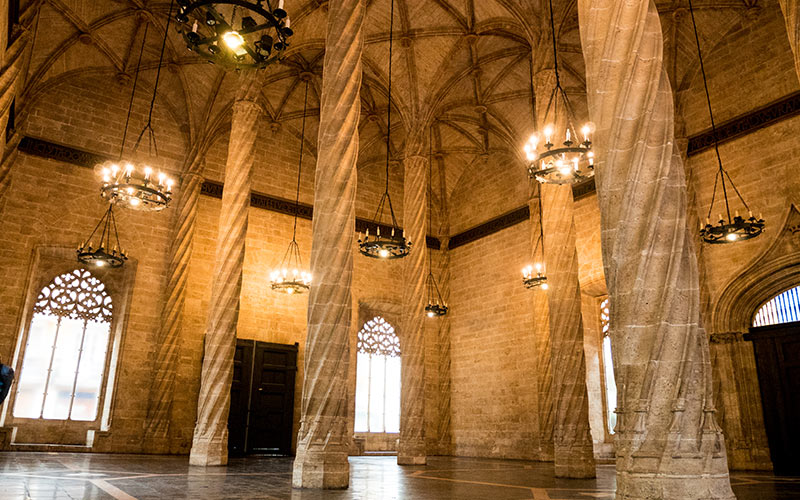
In front of this church and the market is the Lonja de la Seda, also called Lonja de los Mercaderes. It is a culminating work of Valencian civil Gothic, also located in the Plaza del Mercado, the former meeting point of the merchants. Unesco declared the building a World Heritage Site, dating from the 15th century. A work full of details in which the Hall of Columns stands out for its beauty, reaching more than 17 metres in height. Its name comes from the importance of silk for the local industry in the 14th and 18th centuries. 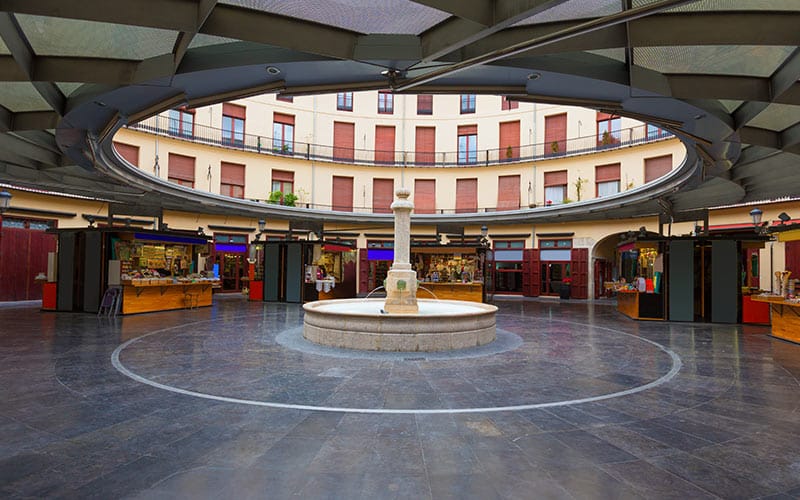
A three minute walk will take you to Plaza Redonda, formerly known as Plaza del Clot. It is located in the district of El Mercat, specifically in the Ciutat Vella district, and in its surroundings there are several notable squares: the Plaza del Mercado, the Plaza del Ayuntamiento and the Plaza de la Reina. Inside there are shops and houses. 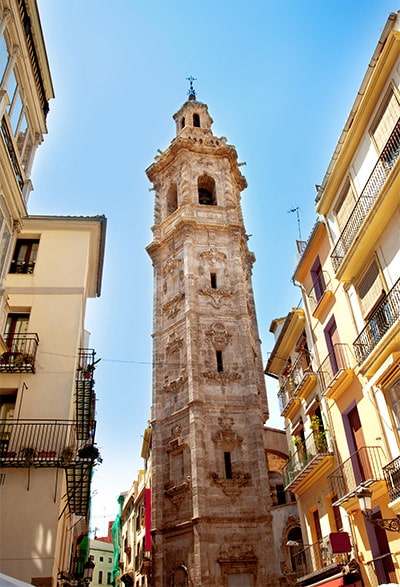
A minute's walk away is the church of Santa Catalina Mártir, located on the remains of a mosque and with a very characteristic Gothic style. Its 18th century façade and the main chapel inside it are amazing. From any location in the Ciutat Vella district you can see its large bell tower, for which it is truly famous. Experts consider it to be one of the most curious of the Spanish Baroque, built between 1688 and 1805. Its Solomonic columns stand out. It is 56 metres high and for a modest price you can climb up the bell tower. Also just a minute away is the Plaza de la Reina, one of the busiest squares in Valencia, kilometre 0 of Valencia's radial roads. 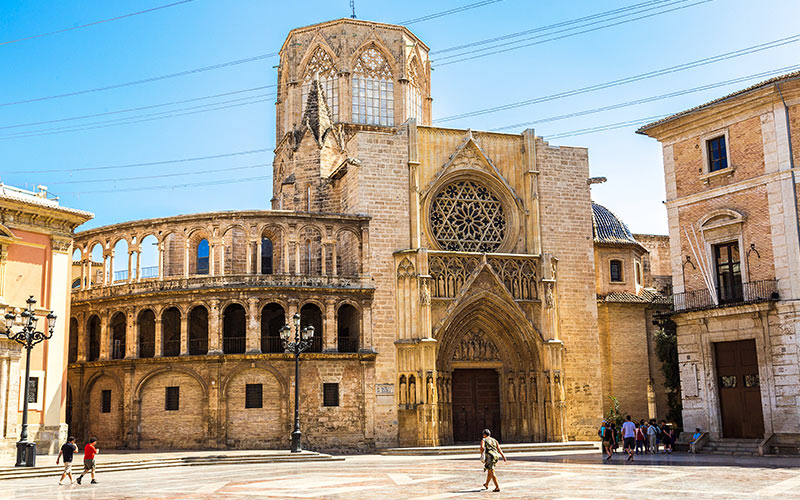
Across the Plaza de la Reina is the Cathedral of Santa María de Valencia, one of the must-see sights in Valencia. It is predominantly Valencian Gothic, but also maintains elements of the Renaissance, Romanesque, Baroque, Neoclassical and French Gothic. It is popularly known as La Seu, where you can see some of the best paintings of the Quattrocento in Spain.
The chapel of the Santo Cáliz, given to the cathedral in 1436 by King Alfonso the Magnanimous, is also venerated inside. Legend has it that it is actually the Holy Grail, that is, the cup that Jesus Christ used at the Last Supper. Other cups to which this honour is attributed are distributed throughout Spain, such as the one in the Romanesque basilica of San Isidoro de León. 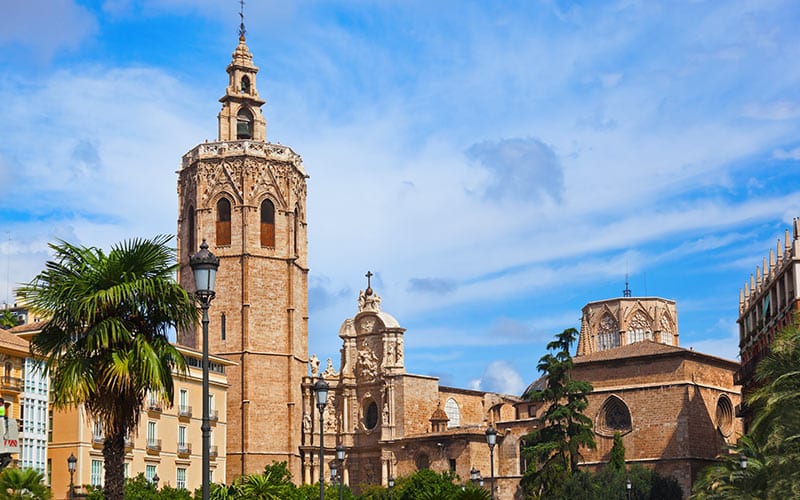
El Miguelete or El Micalet (in Valencian) is the bell tower of Valencia's cathedral. With its 51 meters high, it constitutes a beautiful panoramic view of the city for those who are able to climb its more than 200 steps built in a narrow spiral staircase. With a Valencian Gothic style, the project was directed by several architects, as it was carried out between 1381 and 1429. 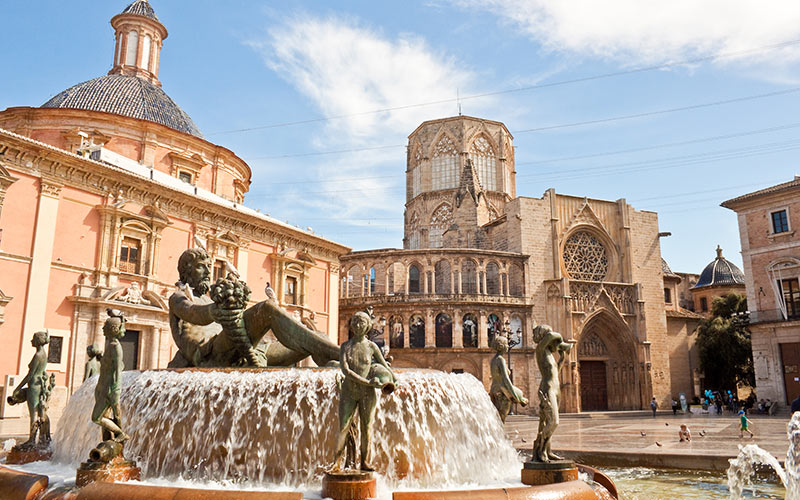
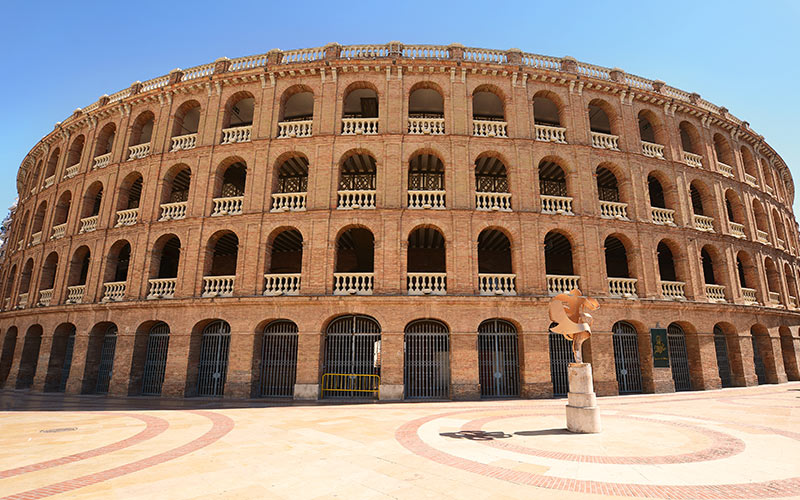
A two minute walk will be enough to reach the Valencia bullring. Built between 1850 and 1860, its design is inspired by Roman civil architecture as well as several amphitheatres. On the outside, a total of 384 arches that follow the neo-Mudejar style. At night it is very beautifully illuminated. 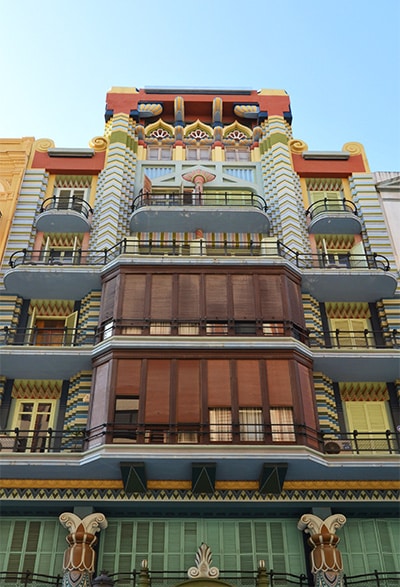
At the same distance as the previous location is the Jewish house, in which we will discover an impressive facade. Inspired by the architecture of other countries and periods, its name derives from the Star of David that can be found at the entrance of the building, specifically on the lintel.
To get to the National Museum of Ceramics you will have to walk 12 minutes. It is located in the palace of the Marqués de Dos Aguas. Inaugurated in 1954, it could be created as a museum thanks to the donation to the State of the collection of ceramic works by Manuel González Martí.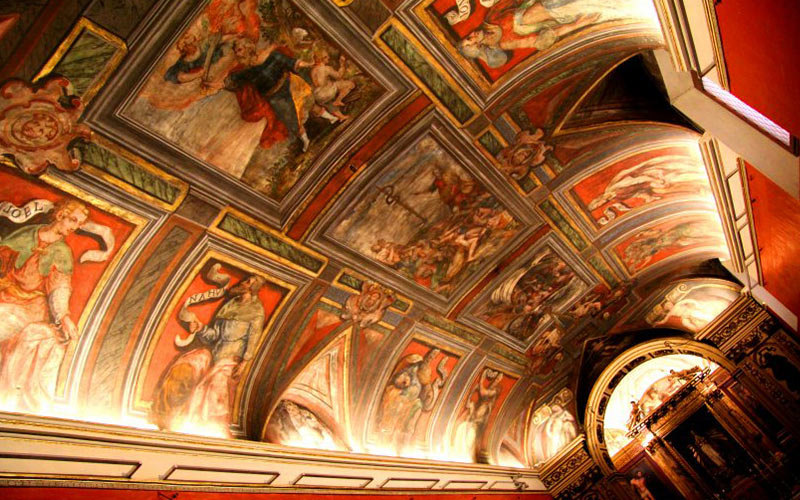
Very close by is El Patriarca National Monument, also an Asset of Cultural Interest, a clear model of Renaissance architecture. Thus, in the museum of El Colegio you can find paintings by El Greco, Caravaggio or Van Der Weyden, among others. The whole of this space, which is itself the Royal College of the Corpus Christi Seminary, also consists of a church, a college and a seminary. 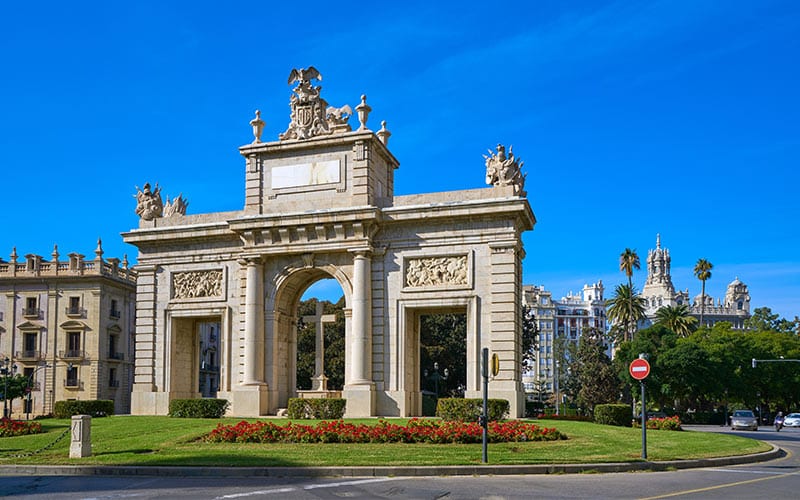
We will take less than five minutes to visit the Plaza de la Puerta del Mar, where Valencia's main shopping street, Calle de Colón, ends. In fact, the Puerta del Mar is a reproduction of the old Puerta del Real, which led to the now vanished Royal Palace. 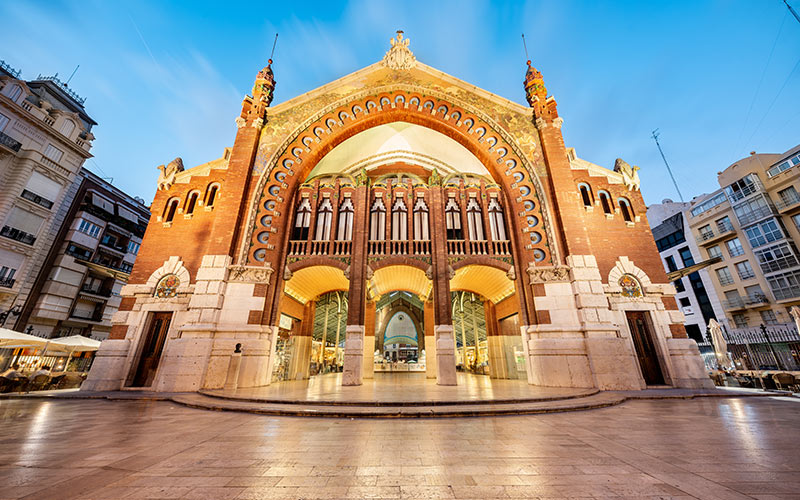
If there is time in the morning, you could have lunch or a drink at the Mercado de Colón, nine minutes from the previous point. Its name may cause confusion, because although it retains the structure of the market that was once, now inside are restaurants and flower stalls. Thus, in spring it looks especially good. Its magnificence has led it to become a National Monument, as well as one of the most characteristic works of Valencian modernism. Some of its elements are reminiscent of Gaudí's works in Barcelona. 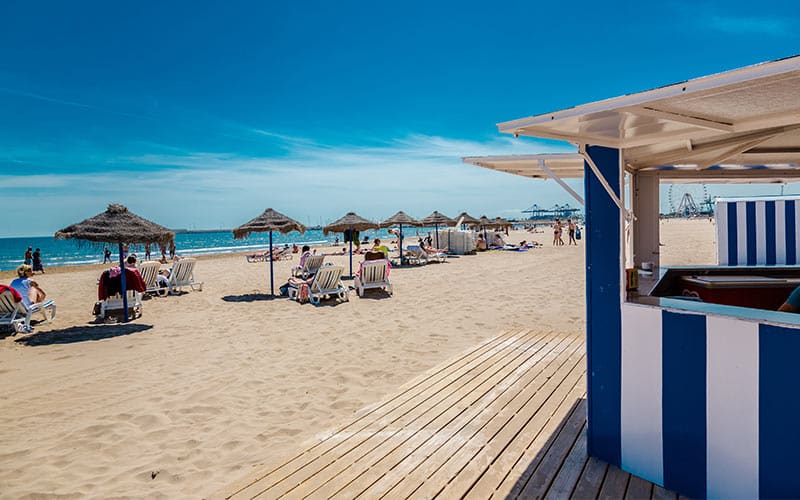
What to do in Valencia - Day 2
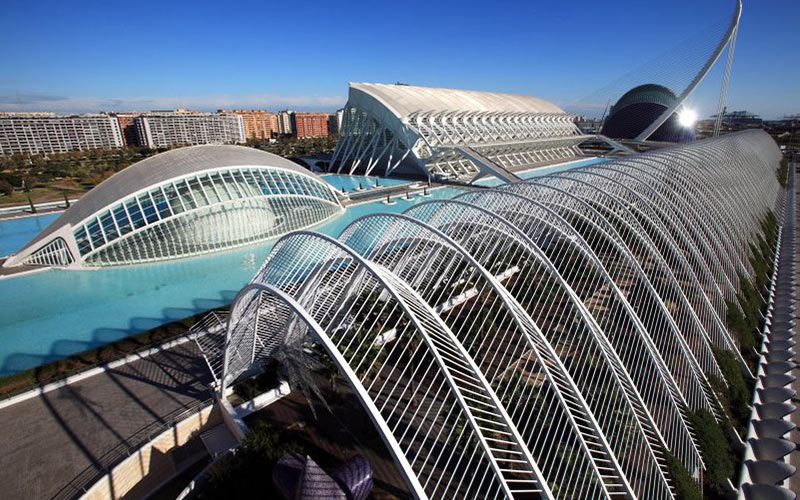
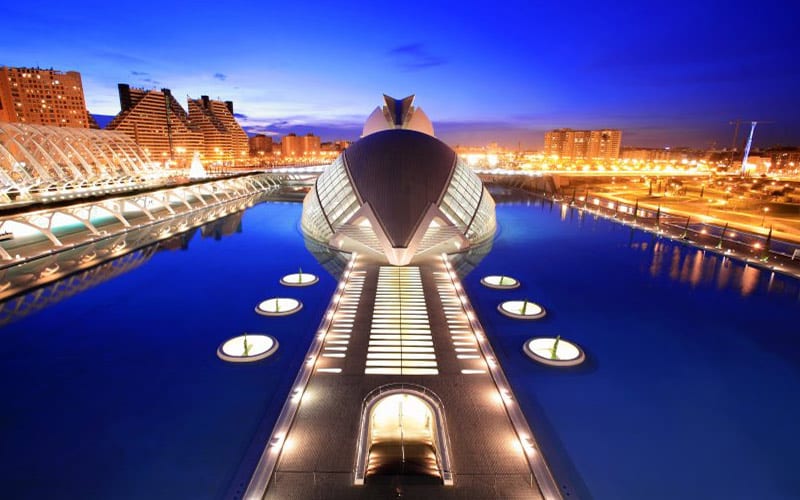
For its part, the Science Museum is a spectacular building that is reminiscent, in its shape, of the skeleton of a whale. It is an interactive science museum with approximately 40,000 square metres. Here the visitor is the protagonist of the exhibitions and activities. 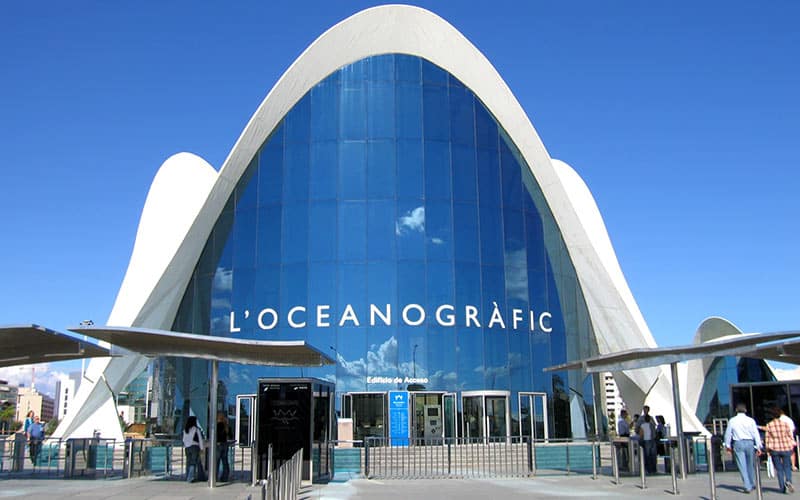
What to do in Valencia - Day 3
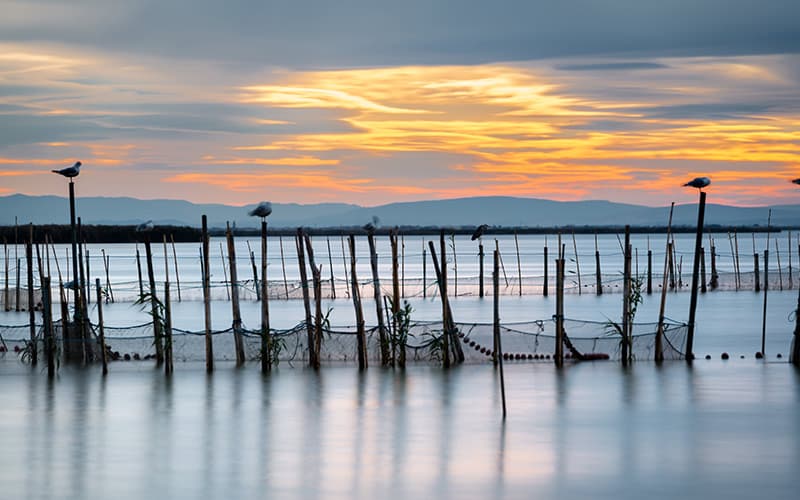
The morning of the last day will be dedicated to the Albufera Natural Park, to which it is possible to stay close by public transport, as it is located only 10 kilometres from the city. It is a living example of nature, where it is possible to take a boat ride and enjoy its wide biodiversity. It is said that this is where the paella was born, so you should not miss the opportunity to try an authentic Valencian paella. In the village of El Palmar you can try some typical recipes such as all-i-pebre or arroz a banda. From the park the sunsets are very beautiful. 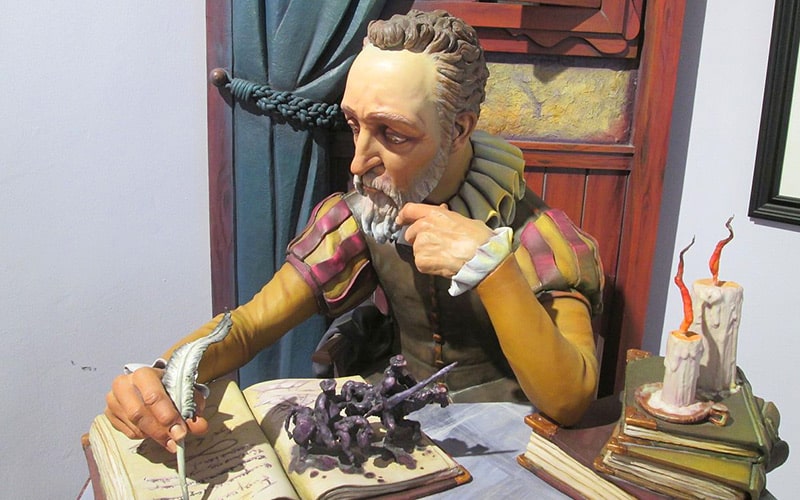
In the afternoon we can visit the Museo Fallero, a fantastic option if you have never enjoyed the Fallas festival. Every year the so-called ninots indultats escape from the fire, ultimately chosen by popular vote. Here rest all those who have escaped from the bonfires since 1934.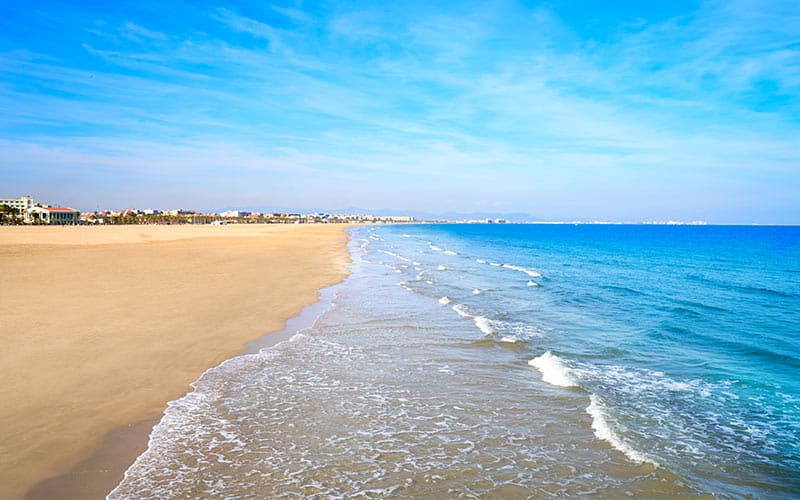
If we have some time left, even at night, nothing like a walk along the Malvarrosa beach. Its proximity to the city makes it one of the busiest, especially in summer. On its promenade there are several restaurants where you can taste the Valencian cuisine.