
Things to Do in Funes
The Fateful Ravine of Peñalén
A few kilometers away from the town of Funes is the Ravine of Peñalén, one of the most interesting places in Navarra and the scenery of a regicide that may have changed its history. It is very close to two very important nature areas: the Natural Park of the Bardenas Reales and the Laguna de Pitillas.Planning your Trip to Funes

Do you want to learn more about this place?
History of Funes
Funes was an important frontier village against the Muslim power during the time of the Reconquest. However, there are theories on the root of its name, which comes from the Latin term finis (limit) as its etymological origin. The Roman winery is the only archaeological site studied of the twenty that have been found in Funes, but tourists are not allowed to visit it yet.In 1076, King Navarro Sancho Garcés IV was hunting in the nearby ravine of Peñalén in Funes when he was thrown off the cliff by his brother Ramón. The Navarra courts, which had authority in the elections of rulers, refused to crown the brother because of the murder of his brother. Before power was restored, the kingdom was invaded by Castilians and soldiers from Aragón, and the Navarrens opted to crown King Sancho Ramírez of Aragón. Because of this, the crowns of Navarra and Aragón were joined together. The story of Sancho Garcés IV was recounted by Lope de Vega in his work, El Príncipe Despeñado (The Prince Thrown Off the Cliff).
Things to Do in Funes
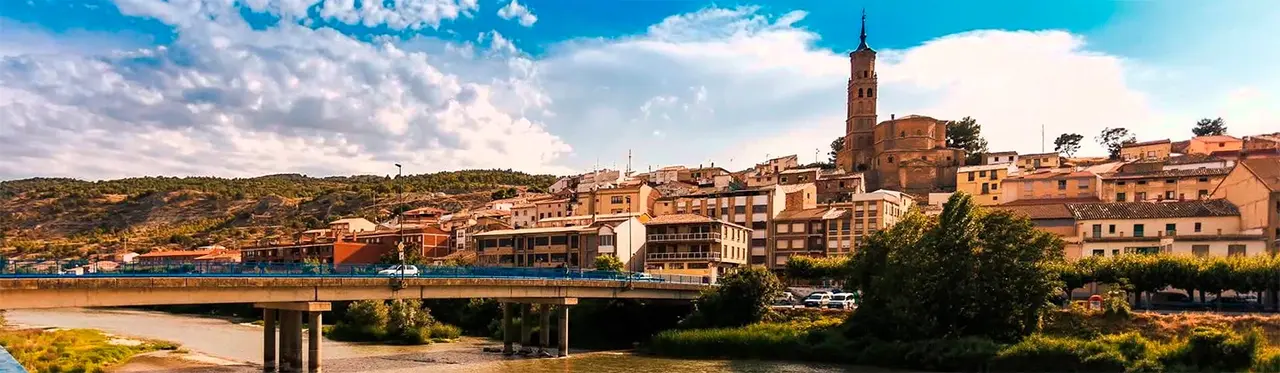
At the most northern point of Funes, and on the foundations of the primitive medieval wall, is the Church of Santiago, a 16th century monument with a high reddish tower that has a square and polygonal finish. In the past, it served as a burial ground for local families.The Hermitage of Santo Cristo del Calvario is an 18th century building that was rebuilt during the 50's of the 20th century, when the garden atrium and the small belfry tower were added. Inside, there is an interesting wood carving of crucified Christ. Two kilometers from the town lies the Hermitage of Our Lady of Portegado.
Formerly, there was another hermitage with the same vocation in the center of the village, but its disuse and abandonment led to the erection of a new one in the second half of the twentieth century. Next to it is the Monument of the Sacred Heart of Jesus, which began to be built in 1959 thanks for volunteer work and money from the village. The stone sculpture is the work of Rafael de la Huerta. Between the Church of Santiago and the monument runs the 'Vía Crucis Monumental' formed by fourteen large crosses made of cast iron.
42° 18′ 50.1″ N, 1° 48′ 10.7″ W
66 km from Pamplona, 68 km from Logroño, 354 km from Madrid
Parking
Around Sancho IV Street and on both sides of the bridge
316 m
2,494 (2013)