
The world’s deepest underwater canyon: almost 5 km deep and located in Spain
Spain’s Cantabrian coast conceals one of the greatest geological treasures on the planet. It is a submarine rift valley of colossal dimensions containing fascinating biodiversity.
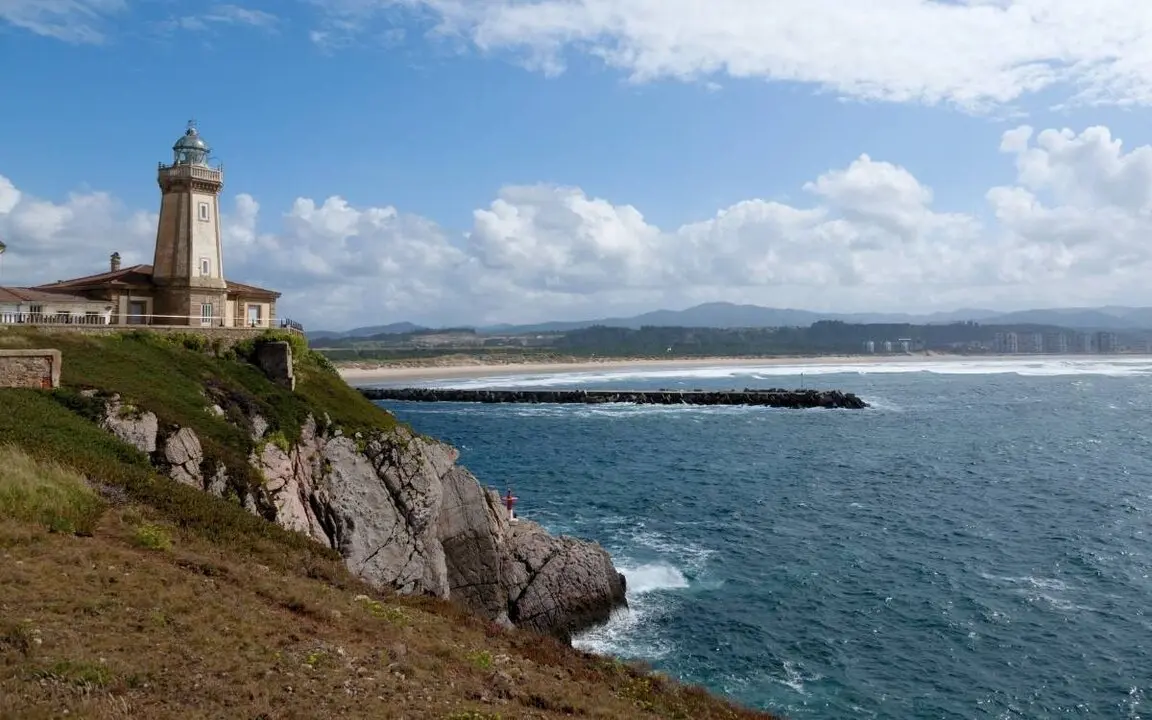
Spain’s Cantabrian coast conceals one of the greatest geological treasures on the planet. It is a submarine rift valley of colossal dimensions containing fascinating biodiversity.
Beneath the choppy waters of the Cantabrian Sea, the seabed breaks open onto a seemingly infinite abyss. Only a few kilometres off the coast of Asturias lies the world’s deepest underwater canyon, a gigantic chasm with unfathomable mysteries. Indeed, the sheer size of this geological rift has rendered it mostly unexplored to date.

A journey to the centre of the Earth
One need not travel to Tibet in order to appreciate towering cliffs reaching nearly five thousand metres in height. The planet’s deepest underwater canyon, the Avilés Canyon, is much closer, though immeasurably less accessible.
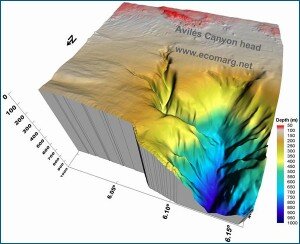
This dark and mysterious subaquatic universe runs obliquely to the coast for 75 kilometres, though its depth, not its length, is the point of interest. On its journey toward the earth’s core, this trench plunges more than 4,700 metres, the result of millions of years of geological activity.
Mythological creatures in the Avilés Canyon
The Avilés Canyon is an immense aquarium cloaking extraordinary biodiversity. The valley walls provide a vital passing zone for marine giants like whales and cachalots while also being home to dolphins, sharks, eels, hake and lobster.
Up to 1,300 different species have been identified in its waters, though one in particular merits special mention, a legendary creature of harrowing appearance that has fueled fantastical tales. That creature is none other than the Kraken, the marine monster that attacks the Nautilus submarine in Jules Verne’s book Twenty Thousand Leagues Under the Seas.
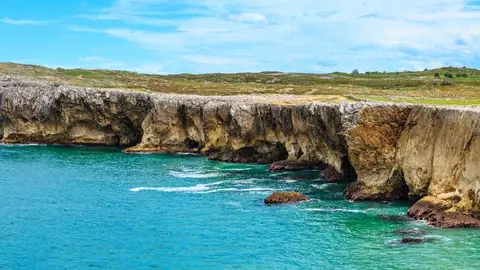
This gigantic squid, the Architeuthis dux or Peludín, as it is called in Asturias, actually exists. Measuring up to 18 metres in length and weighing 500 kilograms, this creature is actually much less belligerent than it appears. Its home is in the depths of the abyss from where little can be observed. On rare occasions has such a creature fallen into fishing nets or beached itself, much to the surprise of anyone who happened to come across such a curious cephalopod.
An underwater paradise
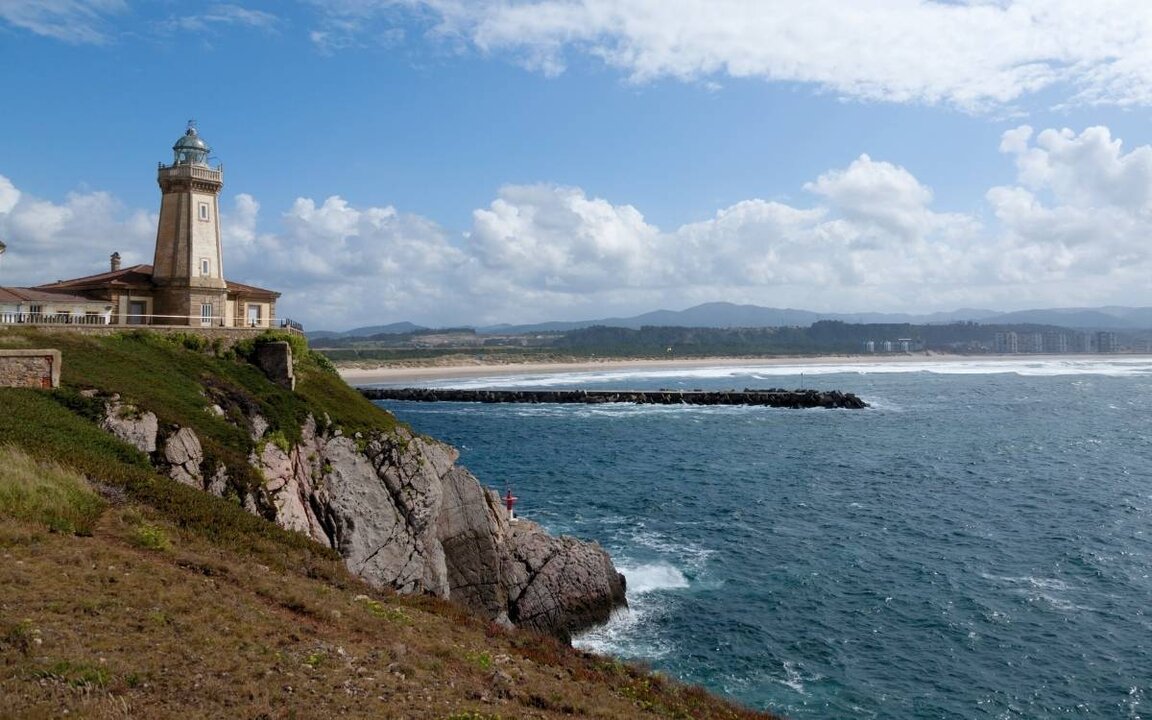
The extraordinary biodiversity of the Avilés Canyon has another star attraction. Spain’s first cold water corral reef was documented in this trench a few decades ago. At more than 700 metres below the water’s surface, the canyon´s slopes transform into a type of orchard where, instead of aquatic plants, there exist diverse species of corral, sponge and anemone.

The Avilés Canyon is a captivating submarine world yet to be explored. Shaped over aeons, it still may take some time to unlock its deepest secrets. Until then, it will continue to feed the popular imagination and the zeal of those seeking adventure and knowledge.
You can also read this article in Spanish here.