
Three interrail trips around Spain and its coasts

Traveling by train is a cheap and easy way to make your way around a country, and you only have to know when you want to travel and where you want to go. Your ticket lets you travel to any station that falls under Interrail One Country Pass. This includes all types of trains, but if you decide to opt for a high-velocity train, we recommend that you spring for a Premium pass, to avoid paying extra costs. You also have to keep in mind that you can only use the Interrail in Spain if it is not your country of residence, so foreign visitors and expatriates are in luck. And now we shall begin our list of recommended train-travel journeys thorough Spain, all of which you can start in Madrid.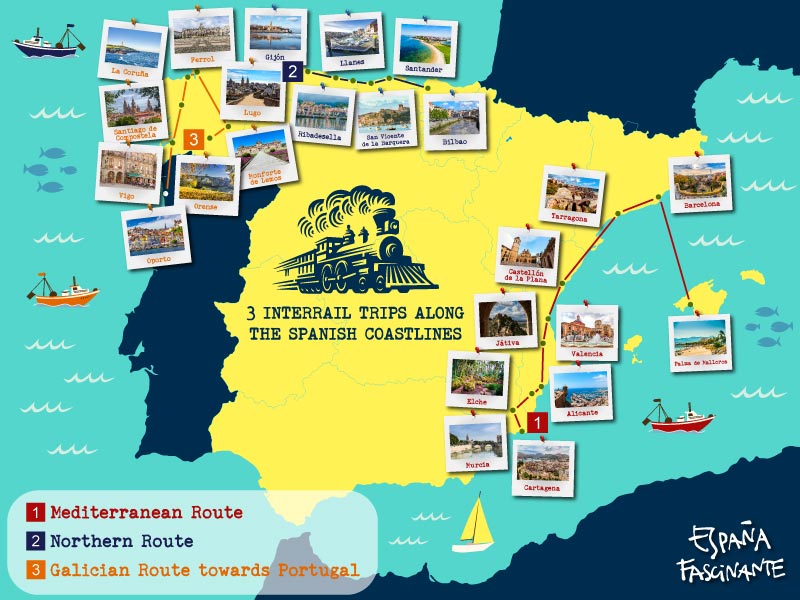

Mediterranean Route
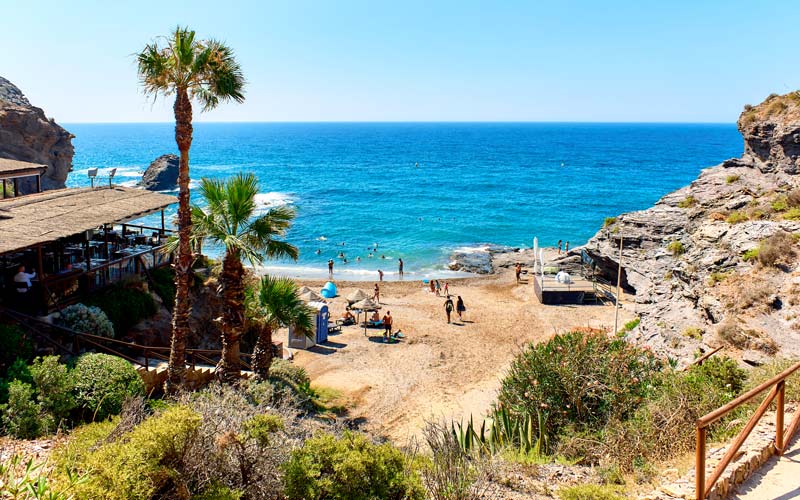
The next stops will bring us to the areas known as the Comunidad Valencia, which means the sun, the beach, and paella. The train from Murcia brings us to Alicante, but before that, you have to make a stop at Elche (touristy, modern, yet at the same time, traditional). Alicante is known for its high-quality beaches and food, and there is enough to do to fill two full days in the town. From Alicante, we continue to Valencia, where you can take a walk through its historic center and eat at one of the restaurants along Playa Malvarrosa. But before you arrive in Valencia, the train stops in Játiva, a town dominated by its formidable castle. From Valencia, we come to Castellón, perfect for enjoying one’s self on its three beaches.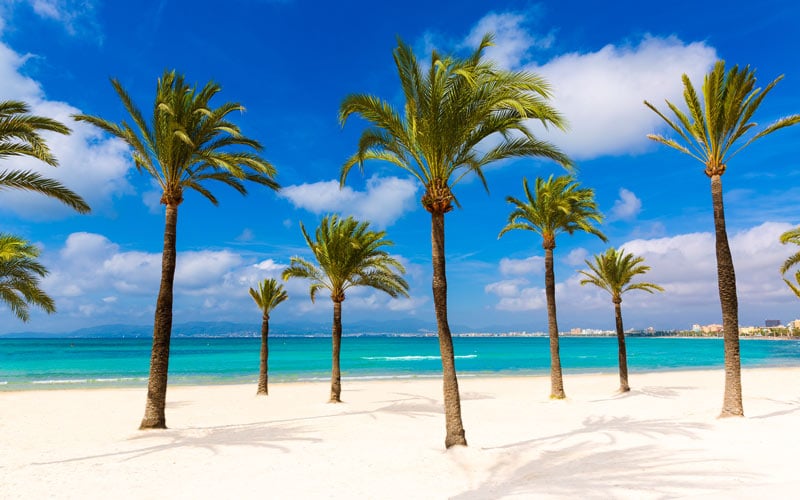
Another plus of this itinerary is that once you have explored Barcelona all you want, you can take a ferry from the city to Palma de Mallorca, where the Mediterranean forms incredible beaches. In addition, the city is known for lively night life, which would put the cherry on top of your Interrail journey through Spain.
Cantabrian Route
This Interrail itinerary through Spain lets you get to know a coast that is completely different from the Mediterranean. The Cantabrian Sea is known for its rocky coast of cliffs and beaches that are not as crowded as the beaches on Spain’s eastern coast.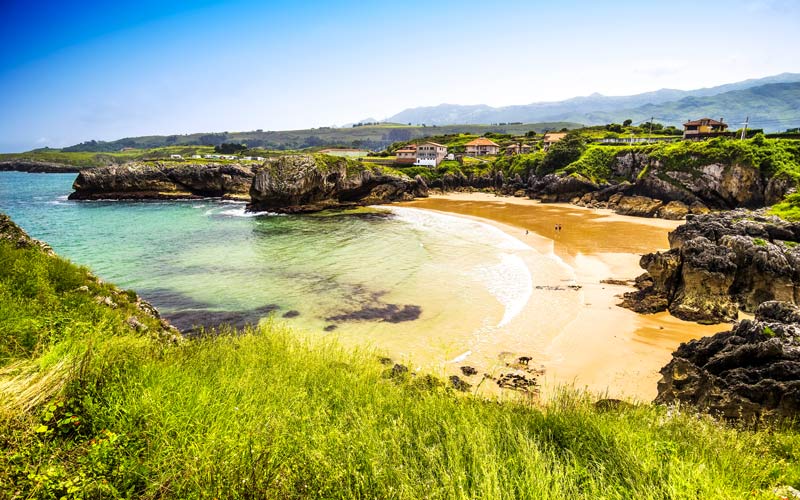
The train then brings us to Cantabria. The first stop is San Vicente de la Barquera, a coastal place in a beautiful geographic location: the Parque Natural de Oyambre. After this, we come to Santander, where you can enjoy magnificent beaches and walk through monuments, like the Palacio de la Magdalena.
This journey through Spain with Interrail ends in Bilbao, the capital of the Vizcaya province, known for its Guggenheim Museum and a rich food culture based in “pintxos.”
Route From Galicia to Portugal
We suggest an Interrail trip through Spain along the marvelous Galician coast, the Tierra de Meigas, where you’ll find the most dreamy landscapes. From the edge of its cliffs, you can look upon the Atlantic Ocean, that from this vantage point seems to have no end, and marvel in the contrast of the emerald coast and the azure sea.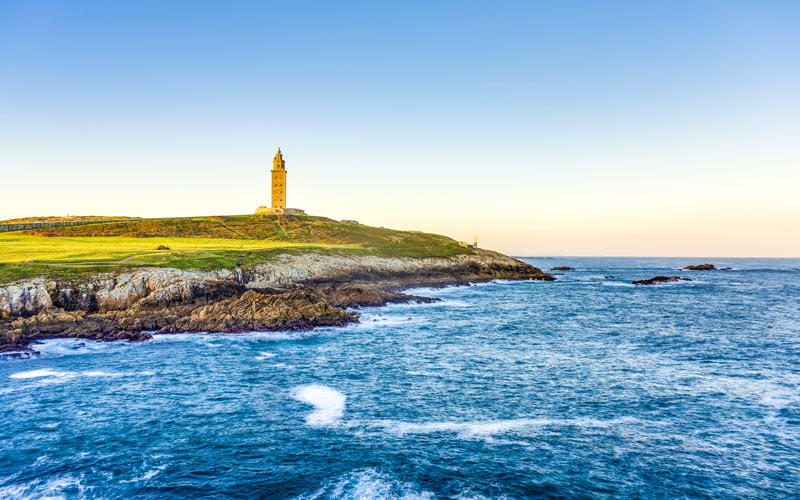
The next stop is Lugo, which is known for its conservation of the only fully-intact Roman wall in the world. Additionally, you have the option to travel by car to visit the Playa de las Catedrales.
After this, this Interrail journey allows us to get to know the city of La Coruña, one of the most beautiful towns in all of Galicia. You also must visit the Torre de Hércules. Dating back to the first century, it is the only Roman lighthouse still in operation. From Coruña, we come upon Ferrol, a village with a maritime past and with one of the most valued coasts of the area. The coast of Ferrolterra surprises all with beaches like Doniños, San Jorge, or Pantín (where they hold a world surfing championship).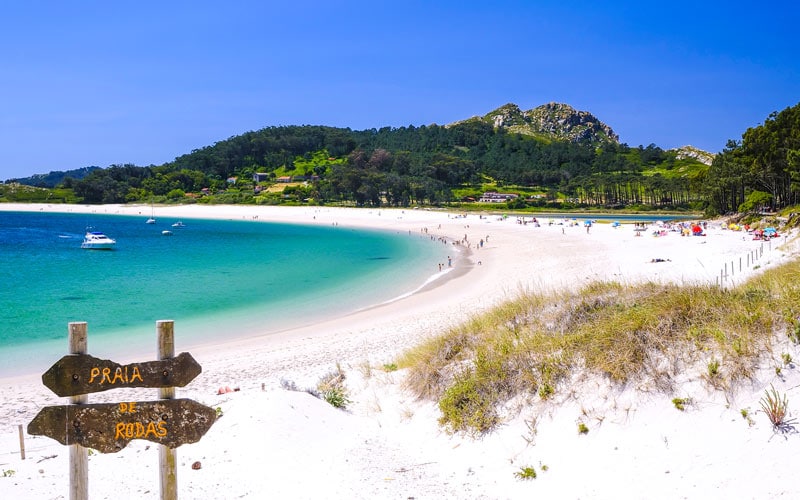
From Santiago, you can take the train to Vigo, the last Gallician city on this Interrail journey through Spain. This city has an important industrial port and an urban beach called Samil. From here, you can take a boat to the Islas Cíes, a paradise in the middle of the Atlantic Ocean.
Lastly (and if you still have the energy), you can cross the border into Portugal. There is a train from Vigo that takes you to Oporto, the second most important city in the country after Lisbon. It is definitely worth the effort to walk down this city’s narrow streets, for which this city has been declared a World Heritage Site.
Author: Paloma Díaz Espiñeira