
The most fascinating hermitages of Gipuzkoa in a day
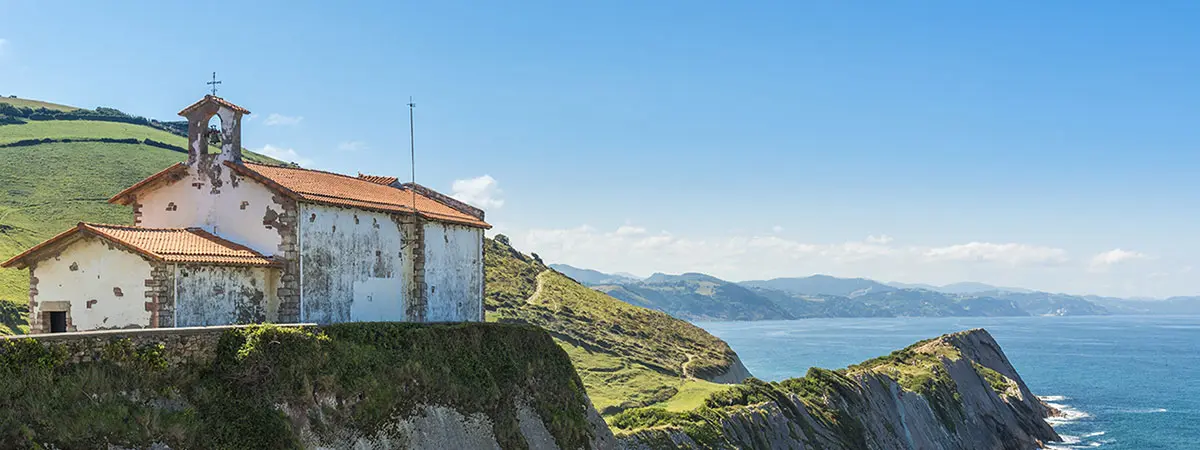
The hermitages of Gipuzkoa are a small temples that gather the devotion and tradition of the nearby communities. These small chapels are places of spiritual retreat and recreation, usually located in beautiful and isolated areas. Among the great number of hermitages in Gipuzkoa, I have selected two interior and three coastal ones, situated in a strategic crossroad of the Way to Santiago. I have estimated that all can be visited in a day, by car.
Zumárraga. Ermita de Santa María de la Antigua. “The cathedral of the hermitages”.
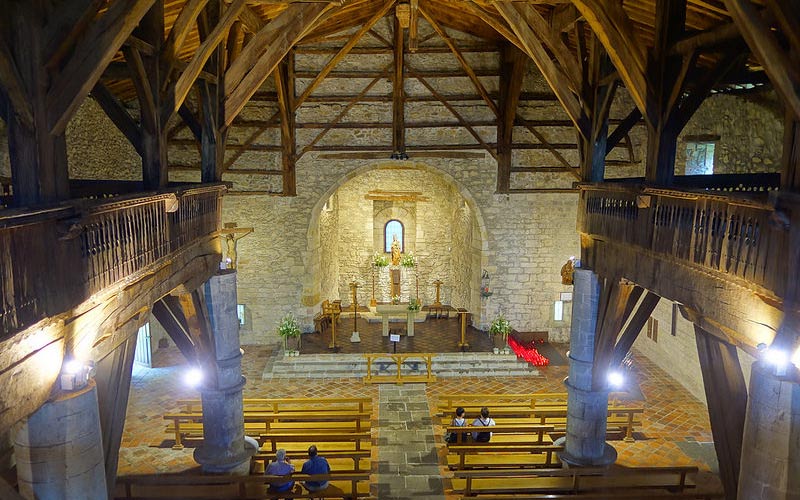

The hermitage is such an important site and for this reason it has its own opening hours; weekends and holidays from 11.30 to 13.30 a.m. and 16.00 to 18.00 p.m. and Fridays from 15.45 to 17.15 p.m. The opening times are similar during the Holy Week and late October. On Mondays the hermitage is closed.
Eibar. Ermita de Arrate. “The hermitage of Ignacio Zuloaga’s paintings.
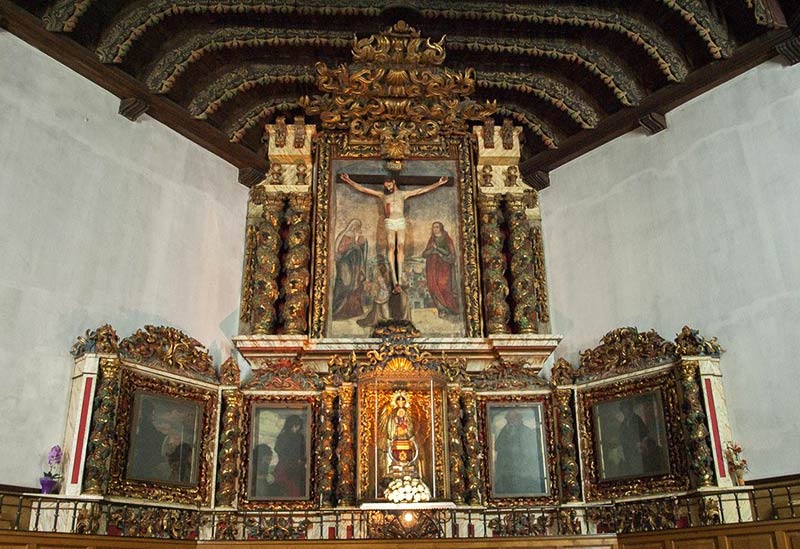
In the interior of this simple construction there is a beautiful altarpiece presided by a craving of the Madonna; which as early as 13th century was called Arriarteko Andra Mari (Madonna between stones). The existence of four armored glasses on top of steel frames is surprising. They protect the paintings that Ignacio Zuloaga created in 1904, representing some penitents: the artist itself, his brother Eusebio, his wife and friends. The painter made a similar gift to the Virgin Mary, for the fulfillment of Her promise. Shortly after the birth of the painter’s daughter, the baby fell seriously ill. The painter decided to walk the steep 5 km-slope with the baby in his arms. Many neighbors accompanied the distressed father in that pilgrimage. Lucía Zuloaga was saved and the artist performed four unctions.
Romería* a yearly, short distance Roman Catholic religious pilgrimage.
Zumaia. Three hermitages in a strategic pass to the Way to Santiago
That hermitage is nowadays part of Z Espacio Cultural, a cultural space and it can only be visited during summer, in the afternoon, from Friday to Sunday. The bulrushes that surround it and outer appearance are a neo-Roman recreation created by the architect Pedro Guimón. Its interior is of Gothic style where two impressive multi-colour carvings by the artists Baobide and Quintín Torre stand out. Both of them were coloured by Ignacio Zuloaga.
If we head towards the village following the clearly marked Camino Norte and by the time we completely cross the village we find Arritokieta hermitage. Take a minute to observe the stunning icon of Andra Mari, patroness saint of Zumaia. Next to the hermitage there was a hospital for people with contagious deseases. San Francisco de Borja, a Spanish cardinal, was admitted to that hospital. As far as opening hours are concerned, you can visit the temple every day; from 9:30 a.m and 19:00 a.m., as the hermitage is located very close to the Way to Santiago. In 7th September, a traditional Salve a la Virgen, a catholic prayer is celebrated and the next day, a High Mass is held.
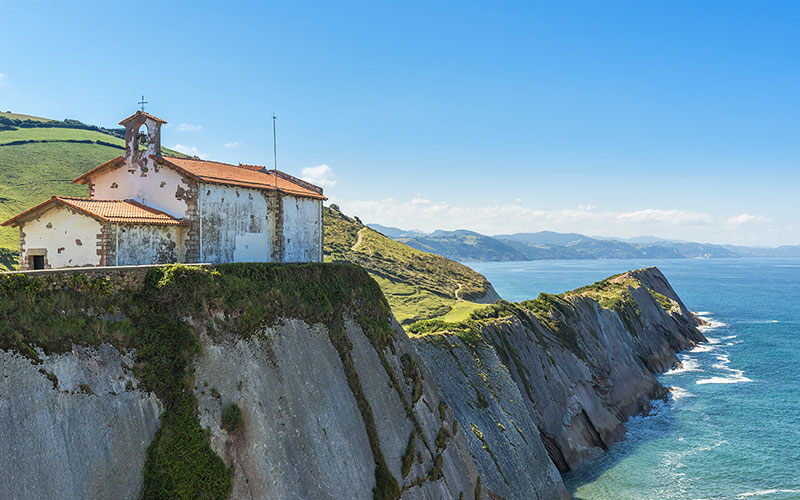
The San Telmo hermitage is located on a hill just in the north of Arritokieta. In order to reach the hermitage you have to retrace your steps on the Way to Santiago, go down Erribeta Street and turn left towards Amaya square; then take the long slope that will lead you to the hermitage. The temple is a very popular place, the wedding in the movie ‘‘Spanish Affair’’ takes place there. The views above the beach (a Game of Thrones scene) and the geological phenomenon of flynch are really impressive. If you want to make a lovely but difficult trekking by the cliif edge of the that phenomenon, we recommend that you wear shoes for walking in nature. The interior of the hermitage is quite interesting and If you’ve seen the movie, well, you identify the scenes. Access is only perimitted with prior booking, just contact the Tourism Office o call Begi Bistan company, the tour costs 65€ including VAT. As might be expected, the hermitage is a popular place for weddings. San Telmo's day, patron of the sailors, is celebrated with a procession the second Monday of Easter.Text by Ignacio Suarez-Zuloaga