Top 10 most spectacular squares in Spain
There are many cities in Spain with spectacular squares. Either by its architecture styles, the arched patio or holding a cathedral, squares in Spain are worth visiting. However, do not miss the oportunity of visiting some of the most spectacular squares in Spanish towns.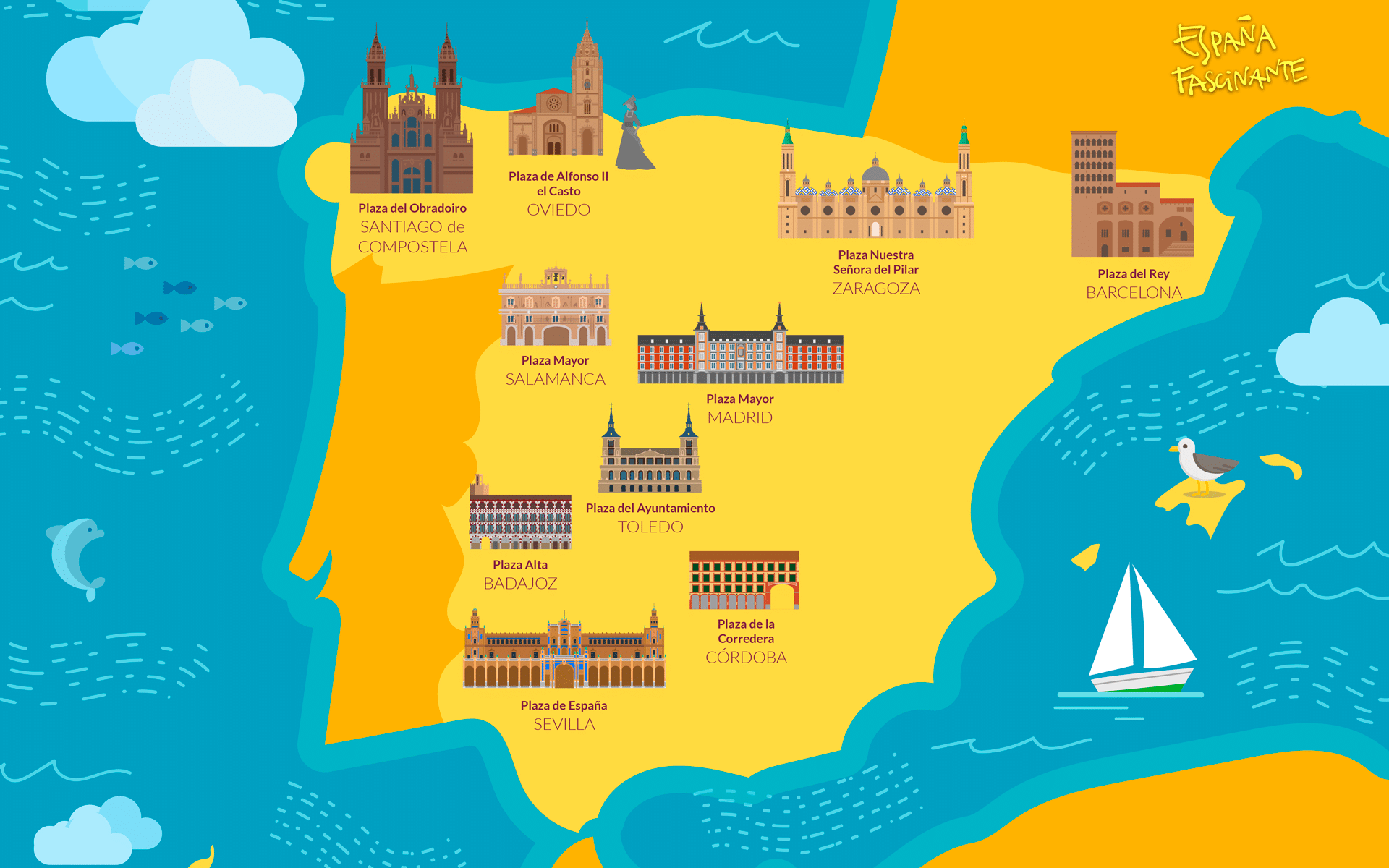

Plaza de España, Seville
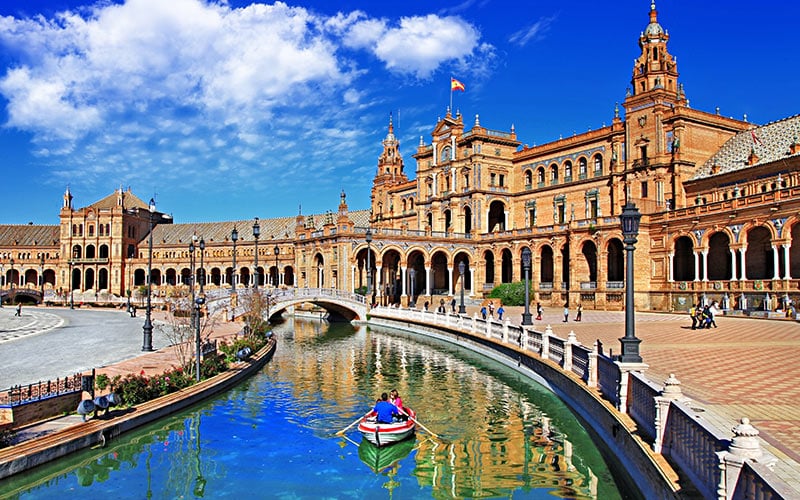
Located in the María Luisa Park, the Plaza de España is full of unique nocks such as its 48 banks, although it should be 50. Nevertheless, when the square was designed, the Canaries just had a province. Furthermore, Sevilla already had lot of protagonosim in the square, so it does not have its own bank either.
Above these banks, 48 busts are placed in the same way. They represent the importance of different illustrious figures of Spanish society. Thus, some of those that appear are El Greco, Lope de Vega, Velázquez, Isabella I of Castile, Calderón de la Barca, Quevedo, Cervantes, Góngora and Goya, among others.
Plaza Mayor de Salamanca
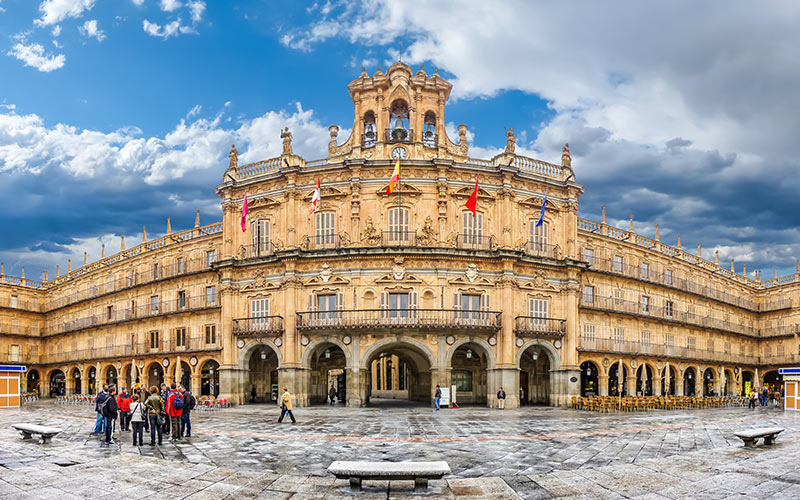
Its 88 round arches on which three-storey buildings and more than 400 balconies stand call everybody attention. The arches are alternated with repersentations of popular people from history of Spain. The square holds the City Council and the Royal Pavilion.
One of the most popular establishments in the Plaza Mayor is the Café Novelty, to which famous writer Miguel de Unamuno used to go.
The material used to build the square was mainly stone from Villamayor. This stone was also used to build other important buildings in Salamanca. That is why they all have that singular colour and texture.
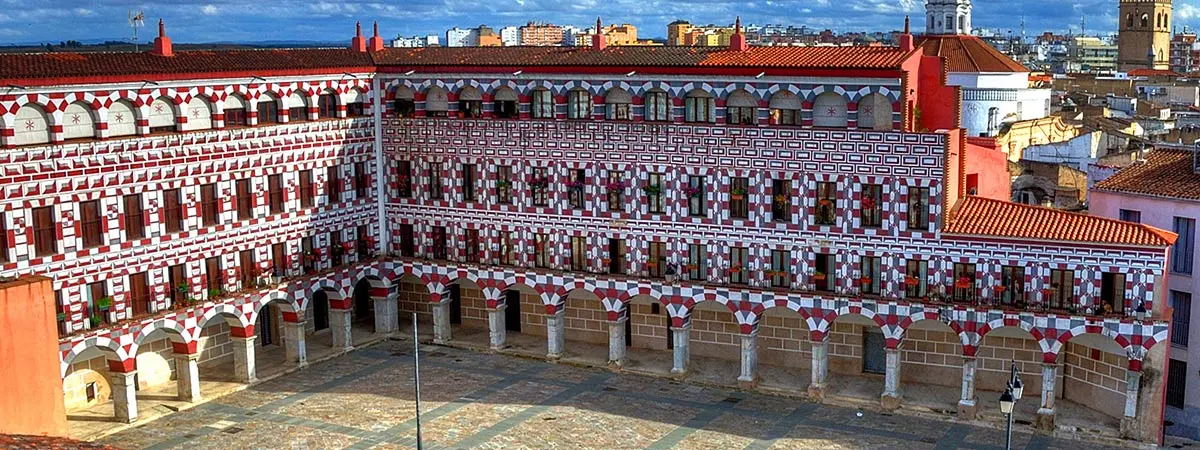
Plaza Alta, Badajoz
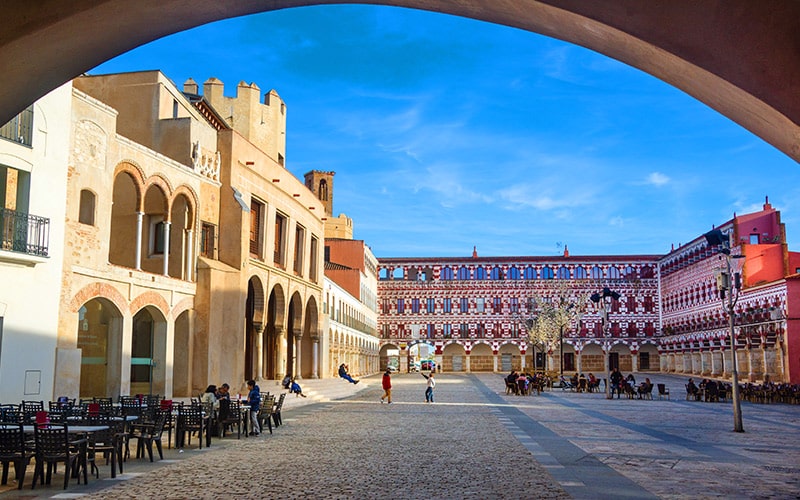
It is one of the most spectacular squares in Spain where two different areas can be observed. On one hand, on the north is the oldest part, influenced by the Medieval. On the other hand, on the south is the more modern part.
There are monuments and houses around the Plaza Alta such as the Alcazaba and Mudejar Houses, the Town Hall and the Tower of Espantaperros. Restoration of the square has meant the recovery of the commercial and tourist activity of it.
Plaza de Nuestra Señora del Pilar, Zaragoza
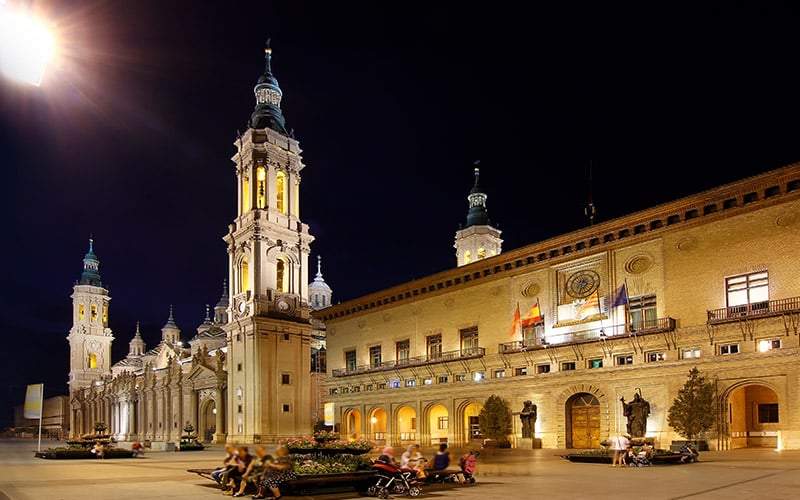
However, the square holds two cathedrals, Nuestra Señora del Pilar and the Cathedral of Salvador o La Seo. It is a representative building of Mudejar in Aragón. Therefore the square sometimes received the name of Plaza de las Catedrales (Cathedrals square). The City Council, the Lonja, the monument to Goya, the Fountain of La Hispanidad and several courts are also located in this square.
Plaza Mayor de Madrid
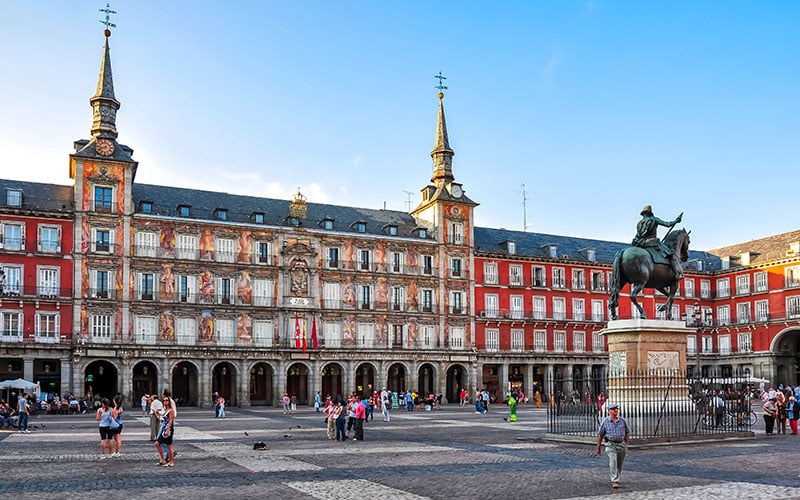
It holds several outstanding elements. Firstly, the Statue of Philip III. It was built in 1616 as a gift from the Duquis of Florence to the Spanish King. It was moved at the middle of the 19th century from Casa de Campo, where it was located until that time.
Secondly, the Casa de la Panadería. It is the most important building of the square and the first one to be built there. It even was the first bakery of the town. From then on, it has been used as Town Hall, Municipal Library and Tourism Office (currently working). The Spanish painter Carlos Franco decorated its facade.
Thirdly, the Arco de Cuchilleros. Of the nine access doors in the Plaza Mayor, this arch is the most popular. Its name comes from Cuchilleros Street, to which it opens.
At Christmas, the Plaza Mayor becomes a huge Christmas market filled with small shops where buying handicraft, toys and local products.
Plaza del Obradoiro de Santiago de Compostela
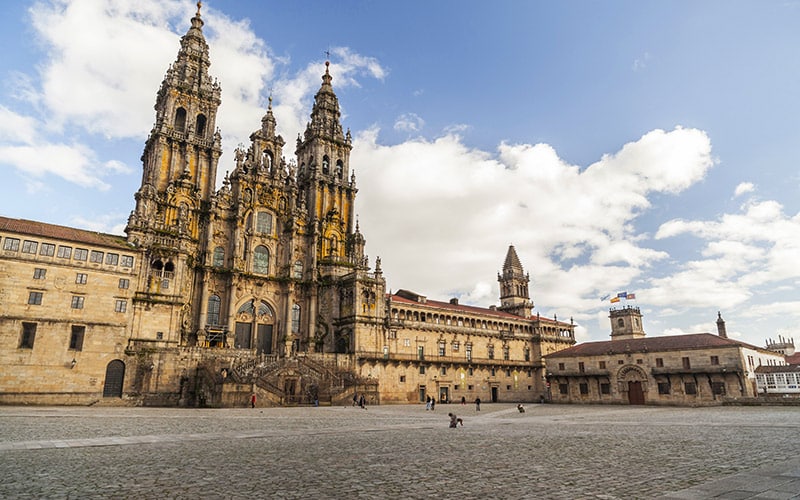
Thus, the buildings and monuments surrounding the square are a sample of different architectural styles that have occurred in its more than 700 years of construction. This gives the Plaza del Obradoiro a particular charm.
The Romanique Cathedral, the Gothic-Renaissance Cloister of the Cathedral, the Late Gothic and early Renaissance Hostal of the Catholic Monarchs, the Renaissance Colegio de San Xermoe with its Late Gothic facade and the Neoclassical Raxoi Palace. Moreover, the Medieval towers of the facade have Gothic finishings.
Plaza de la Corredera, Córdoba
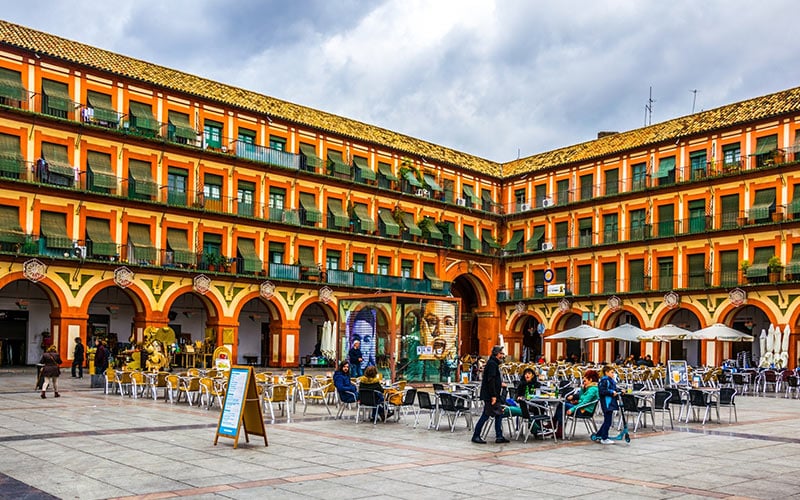
Its function have changed over the years and since its construction in the 17th century. At the beginning it was used as bullring, then a place for religious events. It was even a place where the executions took place during the French invasion. Then, it became the current square.
It is believed that the Plaza de la Corredera is located on an old area occupied by the Roman Circus since some mosaics have been found in the area.
Plaza del Rey, Barcelona
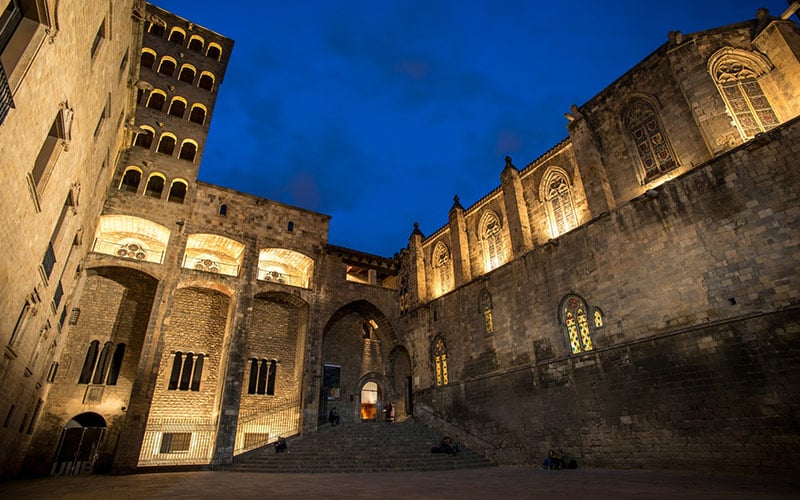
Thus, there is the Salón de Tinell, on which the tower of the view point of King Martin was built. Although the Gothic style predominates, at the base of the building there are Roman and Visigothic remains.
On the other hand, the palatine chapel of Santa Ágata. It was built on the old Roman wall and dates back from 1302. Inside is the altarpiece of Peter, Constable of Portugal. Morover, the Palace of Lloctinet, that is to say, the Palace of the Deputy built in 1549 is also part of the complex. It also has a beautiful Rennaisance patio.
Lastly, the Casa Padellàs, from 16th century. It was originally located in the Mercaders street, but it was later moved to this square. Remains of the old Roman wall were found during the relocation. As a result, the History Museum was created.
Plaza de Alfonso II el Casto, Oviedo
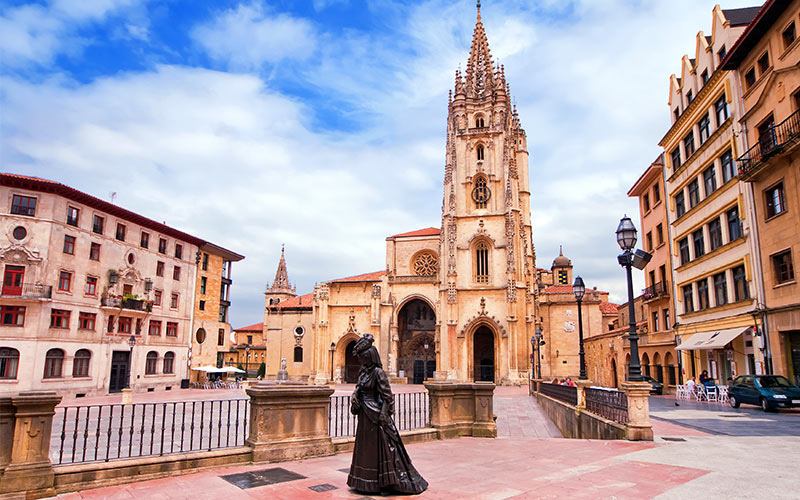
The Garden of the warrior-kings and the Baroque Palace of Valdecarzana and Heredia (declared a Historic Artistic Site). The Palace was built in 1627, although it was later renovated. There lived the marquisis of Valdecarzana-Heredia, as it is proven by the coat of arms placed in the central part of the facade.
In addition, there is an sculpture that commemorate the writter Leopoldo Alas Clarín and it represents Ana Ozores, the protagonist of its book La Regenta.
Plaza del Ayuntamiento, Toledo
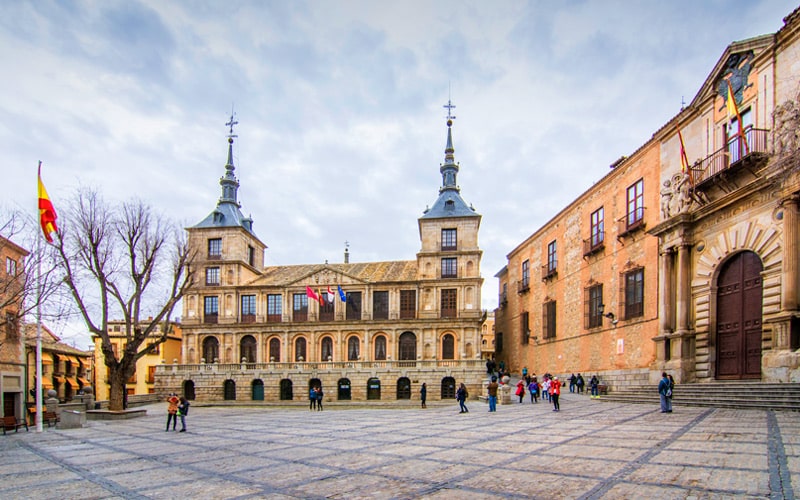
Although the layout of the square is irregular, the buildings there are impressive. Firstly, there is the beautiful Cathedral of Toledo, a jewel of the Gothic. However, from the square only a part of the temple can be seen, specifically a tower composed of eight bells that dates from the 15th century. The Archbishop's Palace, on the other hand, has an elaborate facade dating from the Renaissance, although it was renovated in the 18th century.
Finally, the City Hall of Toledo, an original design by Juan Herrera, in which architects such as Jorge Manuel Theotocopuli, El Greco's son, and Vergara del Pozo also participated.
*Main photo: JMBADAJOZ