
Spain’s most remote village
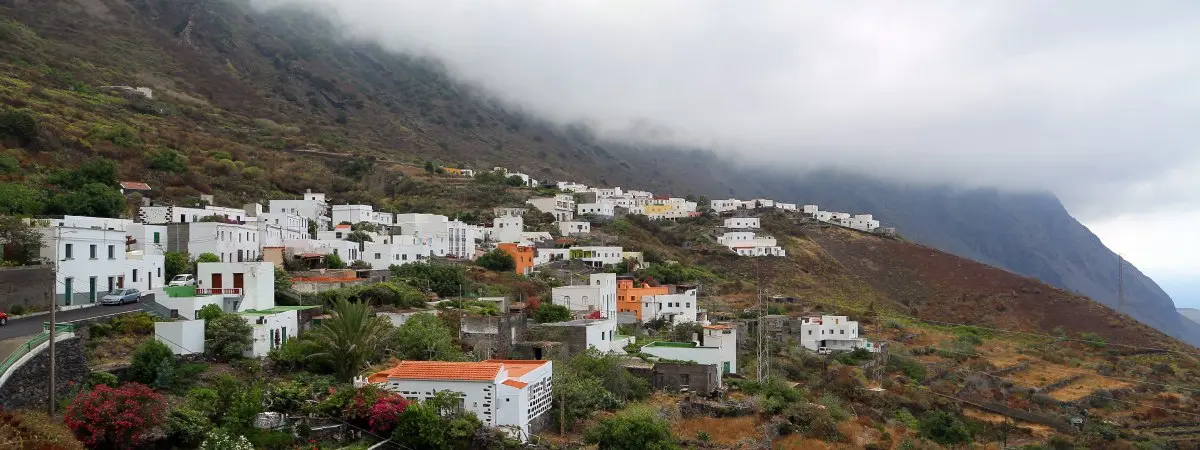
Perched on a steep volcanic slope, a cluster of whitewashed houses stand out against a vast ocean. An extraordinary yet lonely vantage point, where the silence is broken only by the winds. By all appearances, a village like many others tucked away on the Canary Islands, though this village bears a special distinction. A quick glance at a map of Spain will reveal that beyond this village to the west, there is no more inhabited land.

Where civilisation ends
To reach this remote spot, one must travel to El Hierro, the furthest, wildest and most mysterious of the Canary Islands. The island’s northern slope is a huge depression in the form of an amphitheatre facing the ocean. At the far edge of this concavity, called Valle del Golfo, the municipal outline of Sabinosa can be glimpsed.
The immaculate whitewashed façades contrast with the grey and green coloured landscape. The colossal cliffs surrounding Sabinosa provide the grey tones, while the terraced vineyards the greenery. And it has been this flora that bestows Sabinosa its life and flavour. Although facing the ocean, the village has turned inward to shepherding and the cultivation of a distinctive wine.
Capturing El Hierro’s essence in Sabinosa
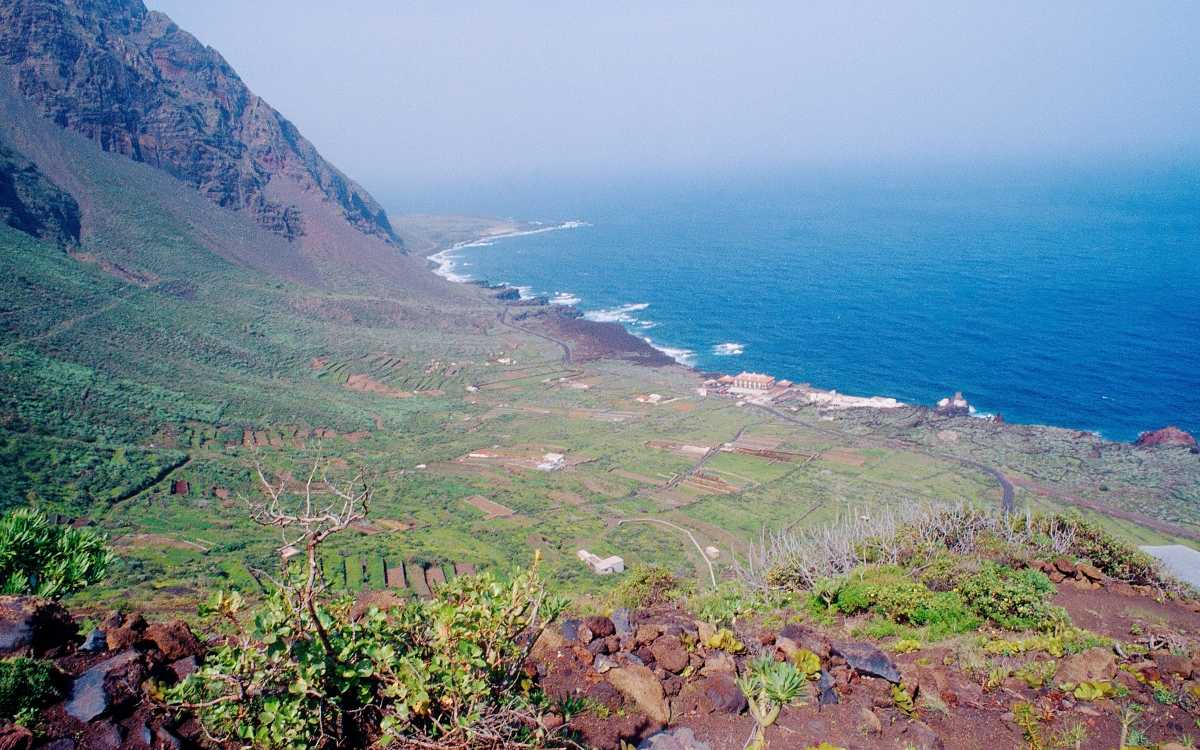
Sabinosa’s unparalleled remote setting is a hidden treasure that makes it both picturesque and authentic. Perhaps due to its unique location, Sabinosa has mostly managed to preserve this island’s untamed spirit, its traditions and its peculiar idiosyncrasies. A starting point for some of El Hierro’s best trekking trails, Sabinosa is well worth the time to visit and appreciate its seductive serenity and the amicable nature of its people.
Sabinosa’s streets meander and cling to the uneven terrain. These narrow and steep lanes offer the perfect excuse for carefree walks. Though lacking in grandiose monuments, Sabinosa does offer a captivating sample of El Hierro’s typical architecture. One such treasures is the placid 18th-century parochial church. Just outside the village centre stand some fairly distinct edifices that served as ancient wineries where the grapes were once trodden.
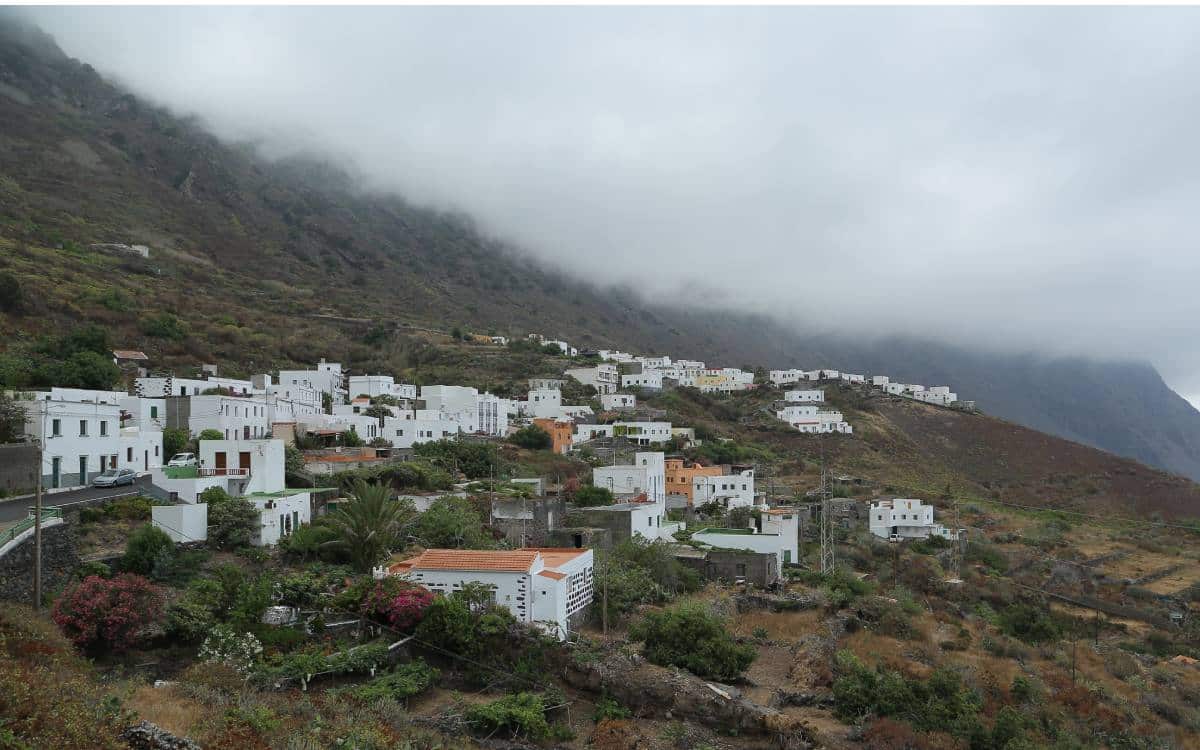
Another facet of this place, and one fervently defended by its residents, is its folklore. In fact, its traditional dances and music have been paramount in the recognition of their cultural heritage. As a consequence of the residents’ dedication, this far-flung village of fewer than 300 people has managed to make Sabinosa and its essence more widely known.
What to see near Sabinosa
Sabinosa summons one to take delight in the calm and silence that shrouds this place, to forget about time and chat with its people. The beauty of its surroundings warrants spending the time to discover its charms.
The Mencáfete Integral Nature Reserve
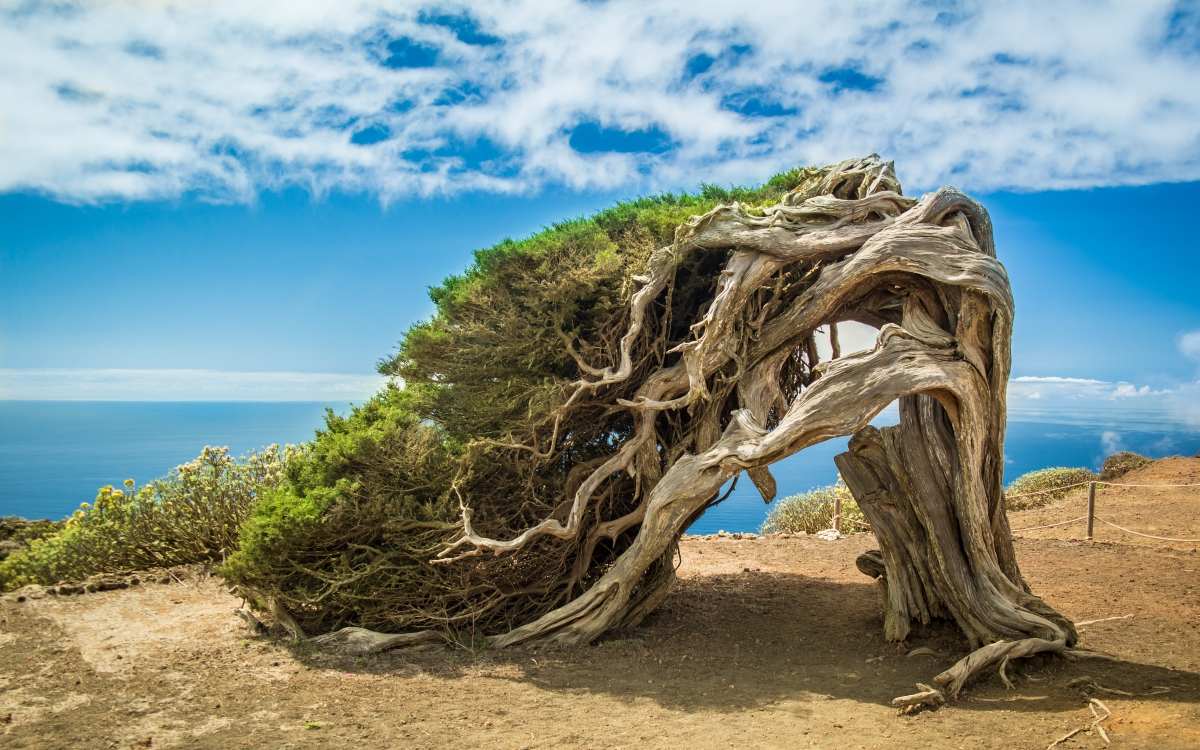
The Mencáfete Integral Nature Park forms part of the Frontera Rural Park, where Sabinosa is located. This reserve, containing Monteverde and laurel forests, is a paradise for nature enthusiasts. At its highest point, a ghostly-looking scene can be found where juniper trees, owing to the wind, crookedly grow in outlandish ways.
El Hierro’s characteristic trees would certainly grow profusely if not for the trade winds. These winds batter the trees with such strength that its trunks and branches are forced to bend and crawl along the forest floor in order to survive. The result is an enchantingly unique yet disconcerting forest that has spawned legends and become an iconic image of the island.
Nuestra Señora de los Reyes Sanctuary
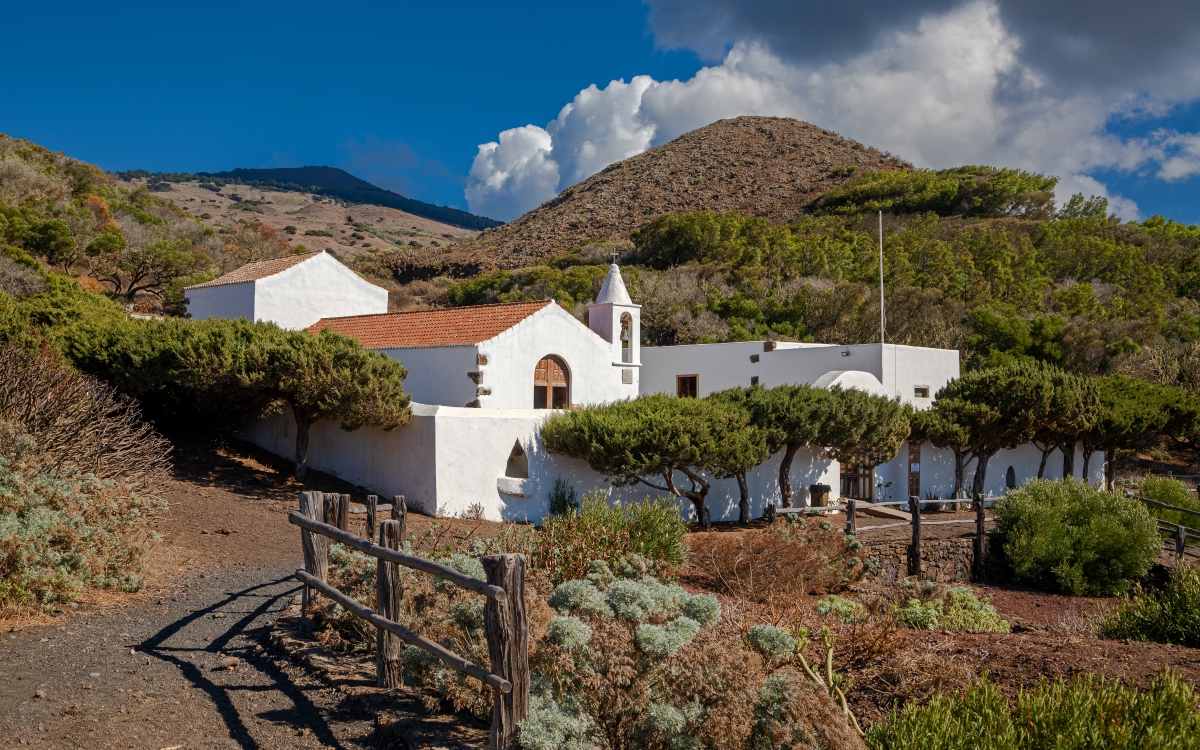
The icon of the island’s patron saint has its home quite close to Sabinosa, in a meadow once used for livestock herding and now serving as a precursor to the juniper grove. Every four years, this simple whitewashed stone building is the site of a multitudinous pilgrimage or romería, in which the statue of the patron saint is moved from the sanctuary to the capital town of Valverde. Such devotion to the saint stems from her famed miracles, as narrated by the legends, in which she replenished El Hierro’s water reservoirs during the island’s worst droughts.
Pozo de la Salud
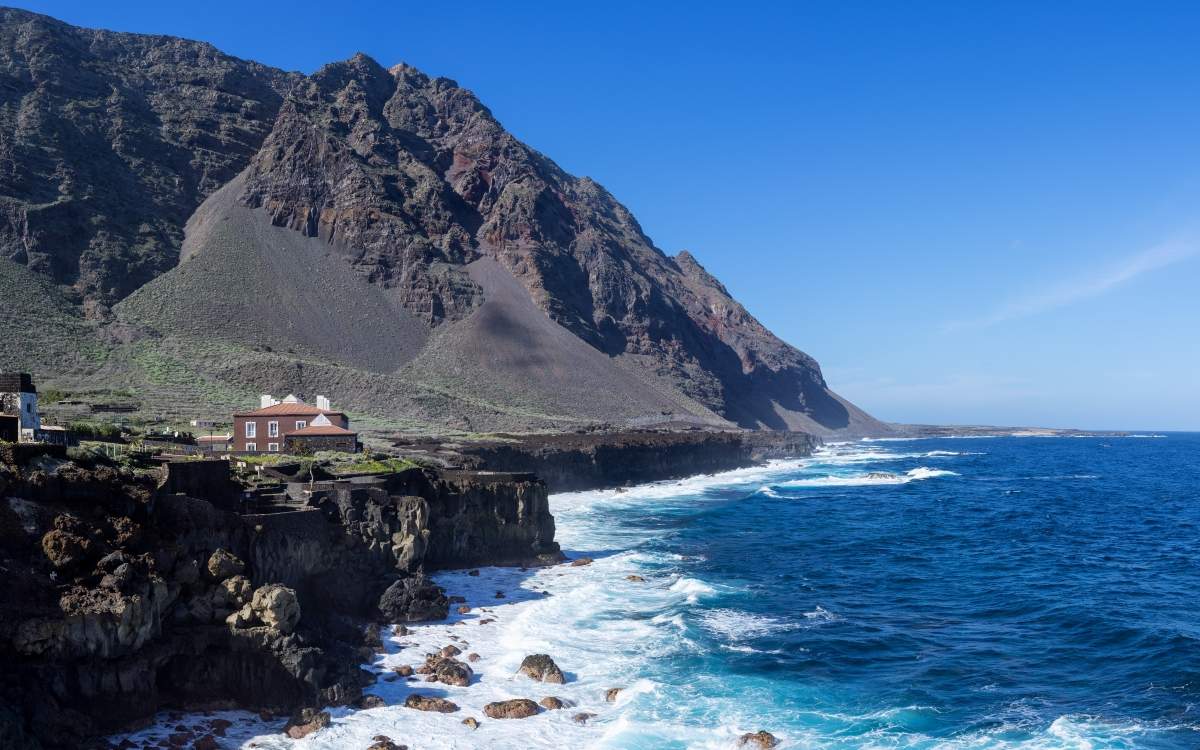
Water, or the lack thereof, has been a constant theme throughout El Hierro’s history, an island which has suffered prolonged droughts. In the early 16th century, one such drought led to the drilling of a water well not far from Sabinosa. What sprang up was a sulphurous water unpleasant to the palate, but later discovered to have curative properties. Its waters were even bottled at one point due to its renown. Today, that well is now home to spas offering some of the best panoramas in all of Spain.
Other marvels around Sabinosa
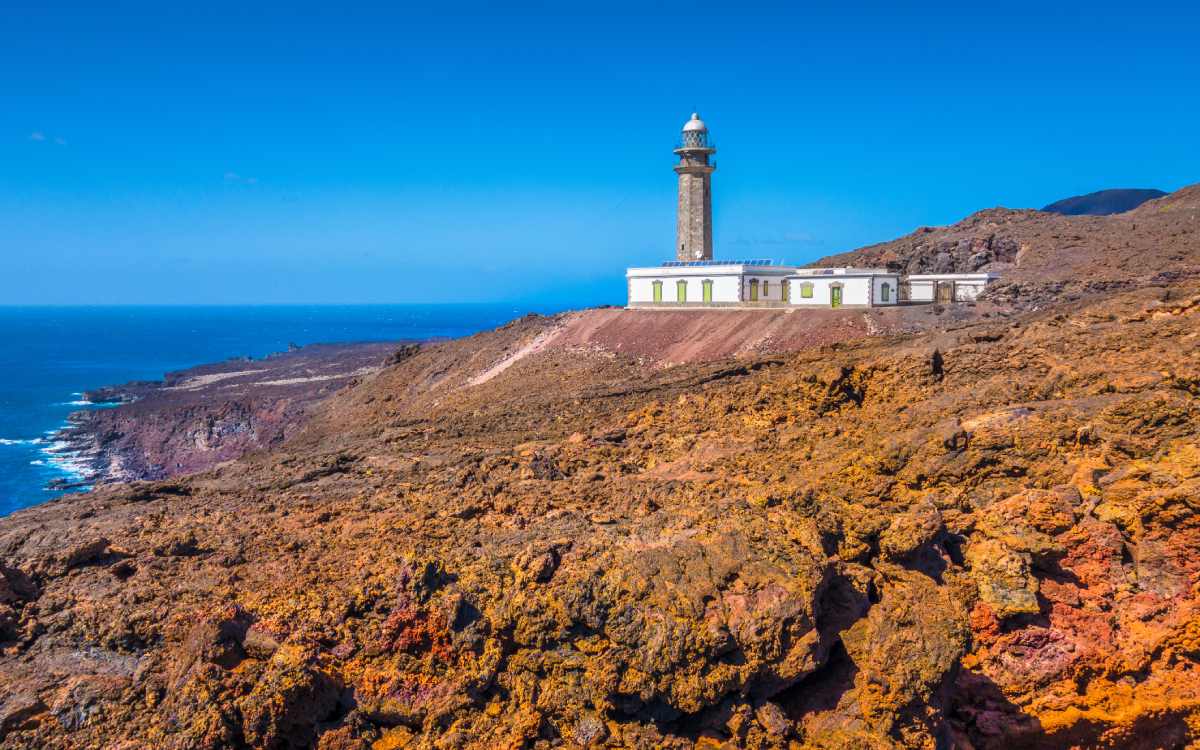
Rising from an epic landscape, the lighthouse of Punta de Orchilla sits at Spain’s most western and southern point. A one-of-a-kind lighthouse not only for its location, but also for its history. From the times of antiquity until the 19th century, early mapmakers designated this spot as the prime meridian (0º longitude). In 1933, some time after Punta de Orchilla had already lost its internationally recognised prime meridian status, a 25 metre-high lighthouse was erected. Reaching a total of 132 metres above sea level, the lighthouse’s beam of light can be seen as far away as 24 nautical miles.
Rather more hospitable is the picture-perfect setting of Arenas Blancas Beach, the only white beach on the island, though it is not actually white sand, but tiny fragments of mollusc shells. Small, untamed and rarely frequented due to its challenging accessibility, this is one of the best beaches to get away from it all.
You can also read this article in Spanish here.
Follow us on Facebook!