
Europe’s longest volcanic lava tube is in Spain
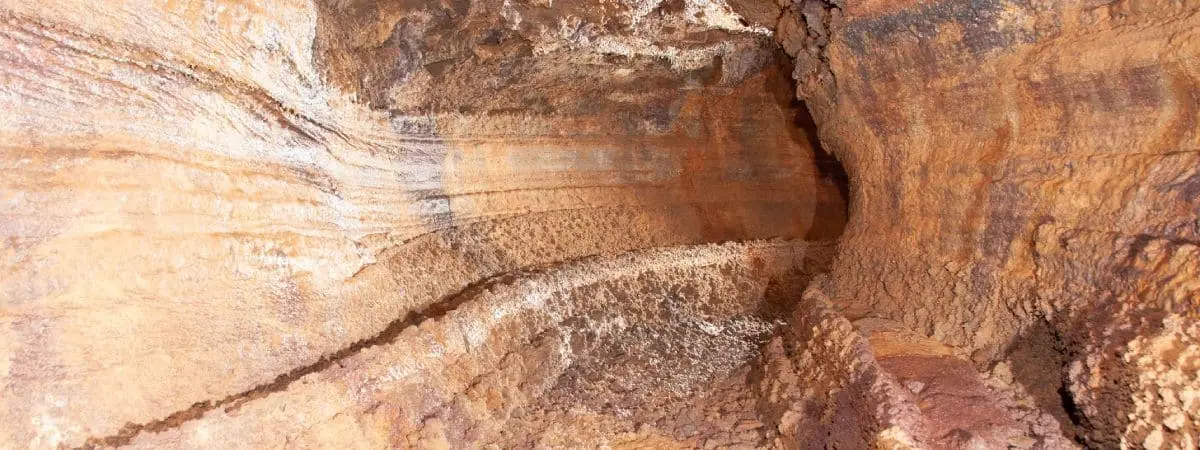
Nature has created spectacular caves. On some occasions it may take millions of years of slowly trickling water to wear down the rock bit by bit. At other times, mother nature changes the landscape in an instant with a torrent of highly pressured burning lava. This is how the world record-breaking cave, Cueva del Viento, was born.

The Cueva del Viento is located in the municipality of Icod de los Vinos, some 57 kilometres from Santa Cruz de Tenerife. The site is an 18-kilometre-long volcanic lava tube, Europe’s longest lava tube and the world’s fifth largest. Possessing its own unique biodiversity, the site has garnered Special Nature Reserve status. The Cueva del Viento (Wind Cave) owes its name to the currents of air that flow through its interior.
The history of Europe’s longest lava tube
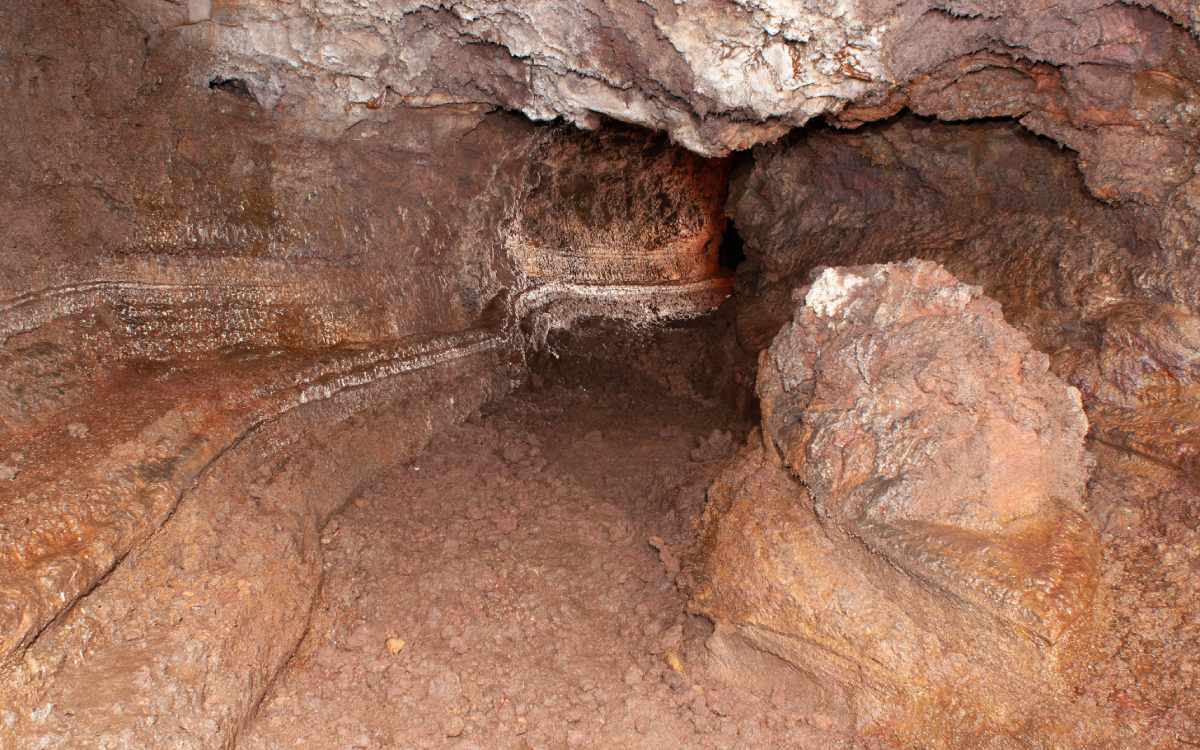
The Cueva del Viento has an ancient history going back to the original inhabitants of Gran Canary Island. The Guanches people used the site as a burial ground more than 2,000 years ago. The first written references to the place date to 1776 when the brothers Bethencourt de Castro and Alfonso Molina mentioned it in their description of San Marcos Cave.
The first exploration and topographical map of the cave was carried out by La Guancha speleological team of Tenerife’s Mountaineer group in 1969. In 1974, speleologists from the Shepton Mallet Caving Club discovered a four-kilometre-long cavity that connects the third and second levels. Today, it is known as the ‘Englishmen’s Well’ in honour of these explorers.
In 1989, the Benisahare Speleology Group of Tenerife discovered the connection between Cueva del Viento and Cueva del Sobrado. The cavity was then confirmed to extend for 14 kilometres.
In 1994, the Museum of Natural Sciences, part of the inter-island council of museums of the Canary Islands, began the reconditioning works on the cave in order for the general public to visit it. During the clearing of an entrance, a 17-metre-deep chasm and a lava cascade were discovered, leading to another level of the lava tube and spanning over two kilometres in length.
This last discovery established the currently explored 18-kilometre-long cavity, making it Europe’s largest. The Canary Islands, including Cueva de Los Verdes in Lanzarote, are an important destination for anybody studying volcanic speleology.
The geology and biology of Cueva del Viento
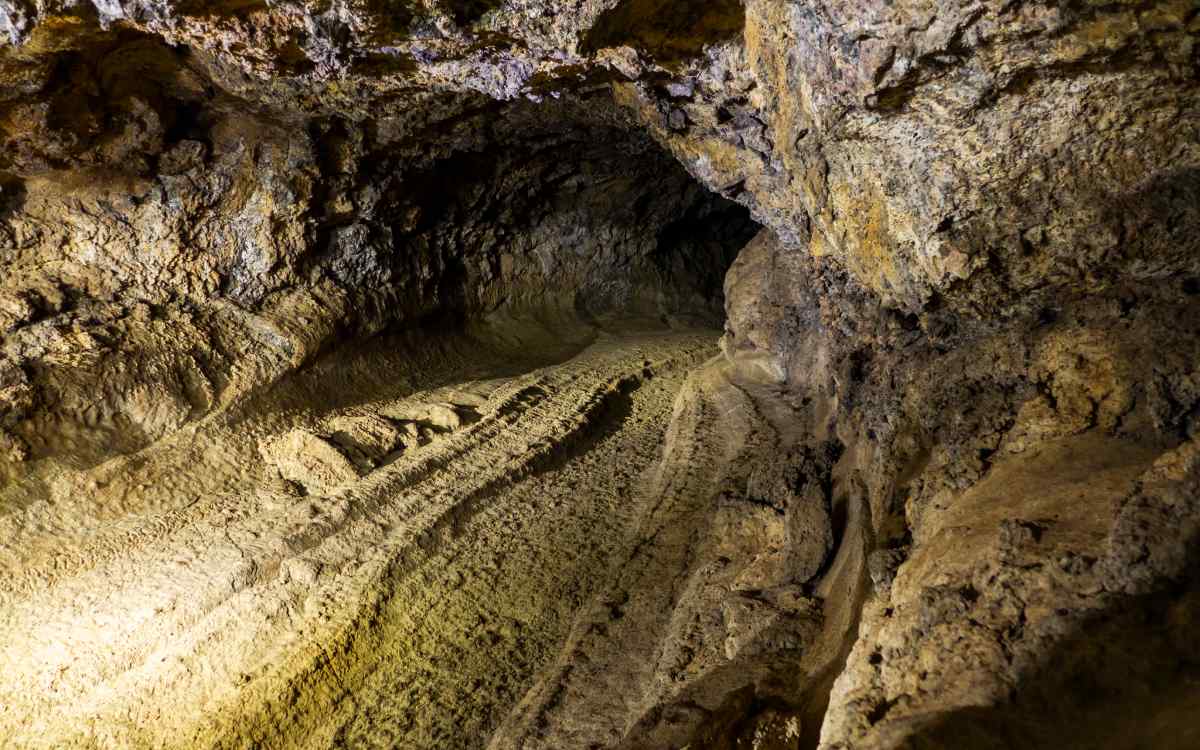
Cueva del Viento is a volcanic cavity forged some 27,000 years ago by basaltic lava flows coming from the initial eruptive stage of the Pico Viejo volcano, located next to Mount Teide. It is singular in its geomorphology due to the network of tunnels and diverging branches throughout its three superimposed levels. A one-of-a-kind phenomenon found nowhere else in the world.
Some of the secondary tunnels within the cave have yet to be explored, which means new topographical discoveries in the coming years cannot be ruled out. The caves formed by the lava flows have left a spectacular setting of stalactites, cascades, terraced walls and lakes all formed from lava as well as a variety of other exogenous deposits.
In addition to its extraordinary geological formation, Cueva del Viento is known to possess a singular subterranean fauna. To this day, it remains a site of tireless investigation for the experts. At present, 190 species have been discovered, all of which have adapted to living in absolute darkness, the majority being invertebrate animals.
Among the new biological findings are 15 previously unknown species such as the eyeless cockroach (loboptera subterranea) and the beetles Wolltinerfia martini and Wolltinerfia tenerifae. Additionally, the cave includes a collection of fossils of now extinct vertebrate animals only found on the island of Tenerife, including rats and giant lizards as well as bone remains from species like the rook bird and the houbara bustard.
Visiting Cueva del Viento
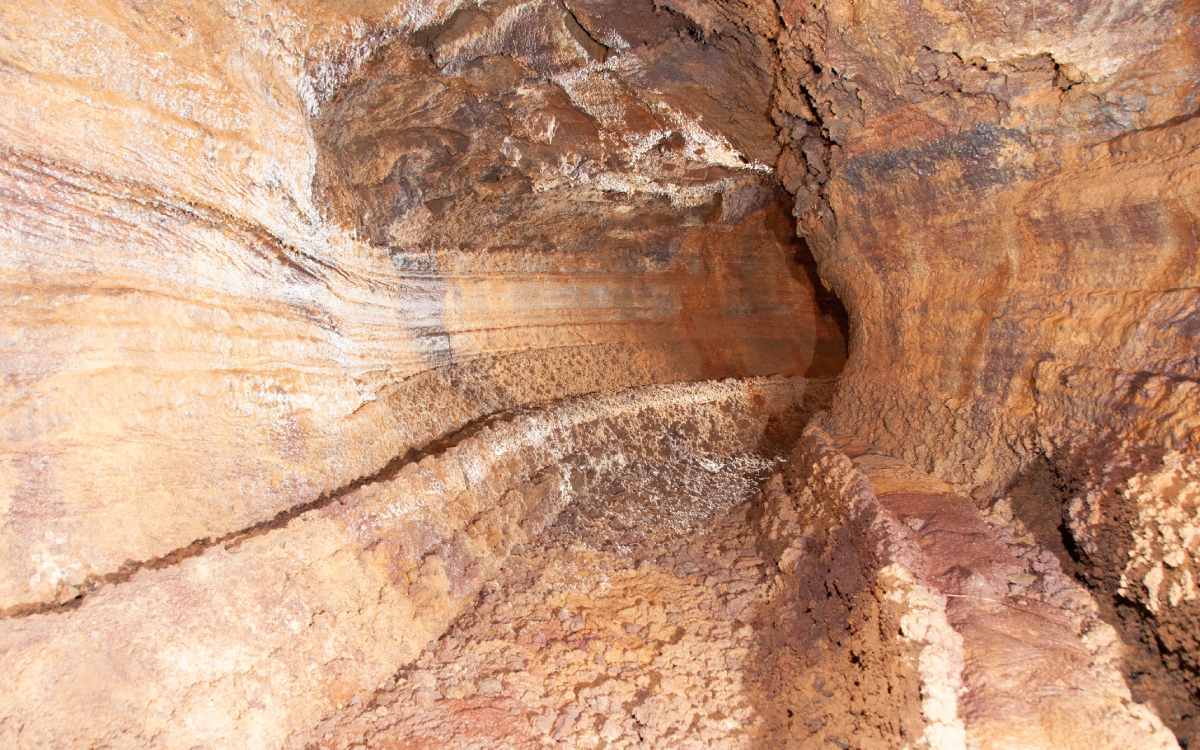
There is a 300-metre section adapted for public access inside the Cueva del Viento. Visitors can learn firsthand from experts on the most important aspects of the volcanic formation and its fauna. The complete route takes approximately two hours and suitable footwear and clothing is mandatory.
The route begins at the Visitor Centre located in Icod de los Vinos, where introductory information serves as a reference for the visitor. After the initial explanations, visitors will travel by car for almost a kilometre before continuing on foot along the old royal trail to the cave entrance. During the walk, the first observable signs of the solidified lava flows emerge from the surrounding pine trees.
In order to protect the species that have adapted to the darkness, there is no artificial illumination available, for which the visitor must wear a helmet provisioned with a headlamp. Once inside, one will be able to observe the formations generated by the lava as it advanced and appreciate the changing textures and colours. The guides’ explanations are complemented by informative signs detailing the ins and outs of the tunnel and the biodiversity dwelling within.
Icod de los Vinos, home to Cueva del Viento
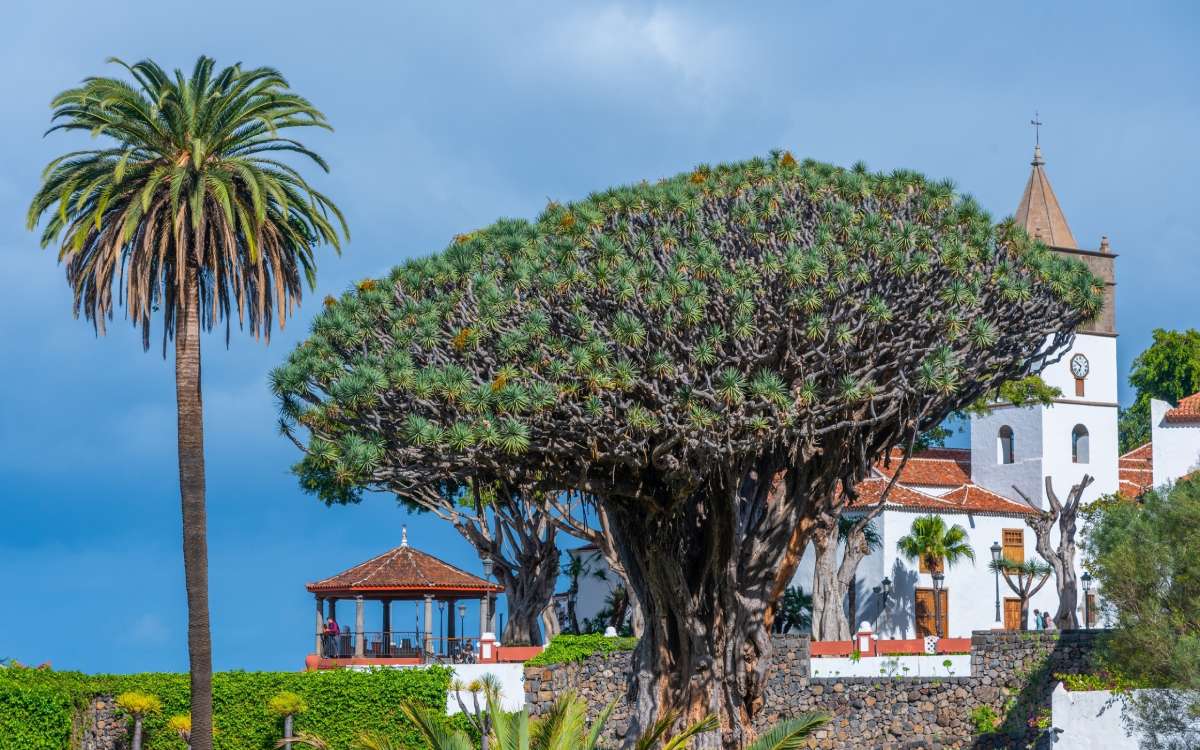
After visiting the Cueva del Viento, one should not miss the village of Icod de los Vinos. For starters, it is home to the 800-year-old Canary Islands dragon tree, considered one of Tenerife’s most notable icons.
This tiny village of cobblestoned streets and whitewashed homes typical of the region offers plenty of sites to visit. Among them are the Dolores Chapel, San Agustín Church and the old convent of San Francisco. Furthermore, the lovely San Marcos Beach presents a lovely black volcanic sand. The crescent-shaped beach lies sheltered from the swell of the Atlantic Ocean and is one of the most peaceful beaches to be found on the island’s north coast.
Located between Teno Country Park and Teide National Park, Icod de los Vinos offers multiple opportunities for active tourism. Seven kilometres to the east of Icod de los Vinos lies the village of Garachico, a place of interesting historic and artistic heritage.
Icod de los Vinos and its nearby environs are known for their fertile terrain, ideal for grape growing, and they have created various wineries of Designation of Origin, including Valle de la Orotava, Tacoronte-Acentejo and Ycoden-Daute-Isora. Moreover, a great variety of local gastronomy is on offer that includes an array of mackerel, tuna and the famous papas arrugadas (wrinkly potatoes) with mojo picón (spicy pepper sauce).
You can also read this article in Spanish here.