'Beyond Barcelona: 7 Under-the-Radar Spanish Regions Where Speaking the Language Makes All the Difference'
Spanish as a tool for connecting with locals to ensure an immersive travel experience.

Spanish as a tool for connecting with locals to ensure an immersive travel experience.
Spain’s official language is Spanish, also known as Castilian, and although it coexists with other languages in some autonomous communities, such as Basque in the Basque Country; Catalan in Catalonia; Galician in Galicia; or Valencian in the Valencian Community; it remains the common language that allows you to travel the country from one end to the other. Speaking Spanish not only makes it easier to ask for directions, make a restaurant reservation, or understand a menu, it also opens the door to spontaneous conversations, local recommendations, and a much more authentic way to experience each destination.


Spain is the second most visited country in the world, and in the most touristy areas, it’s common to find people who can get by in English or other languages. However, outside of major cities, Spanish has become an essential tool. Spaniards usually go out of their way to help travelers, but having a basic grasp of the language, or even a Spanish tutor, can completely transform the experience.
LINGUISTIC JOURNEY
Although the same language is spoken, there are regions in the country where the way it is spoken, its phonetics, its accent, or the coexistence with other co-official languages give Spanish its own distinct character. That is precisely why traveling through Spain can also become a linguistic journey.

In Castile and León, historically regarded as the cradle of standard or reference Castilian, Spanish is characterized by clear pronunciation and a syntax traditionally associated with the standard form of the language. It is therefore considered the reference point for learning the language.

On the other hand, Andalusia has its own distinct and highly recognizable linguistic character. Its accent, marked by phonetic features such as the aspiration of certain consonants or the loss of final sounds, is one of the richest and most distinctive in Spain.
The Canary Islands stand out for a truly unique blend, where features of peninsular Spanish and Latin American Spanish merge. In this case, they use «ustedes» more often than «vosotros» , and have their own vocabulary influenced by the islands’ Atlantic history. It is an ideal destination to discover a familiar, warm, and very musical variant of the language.
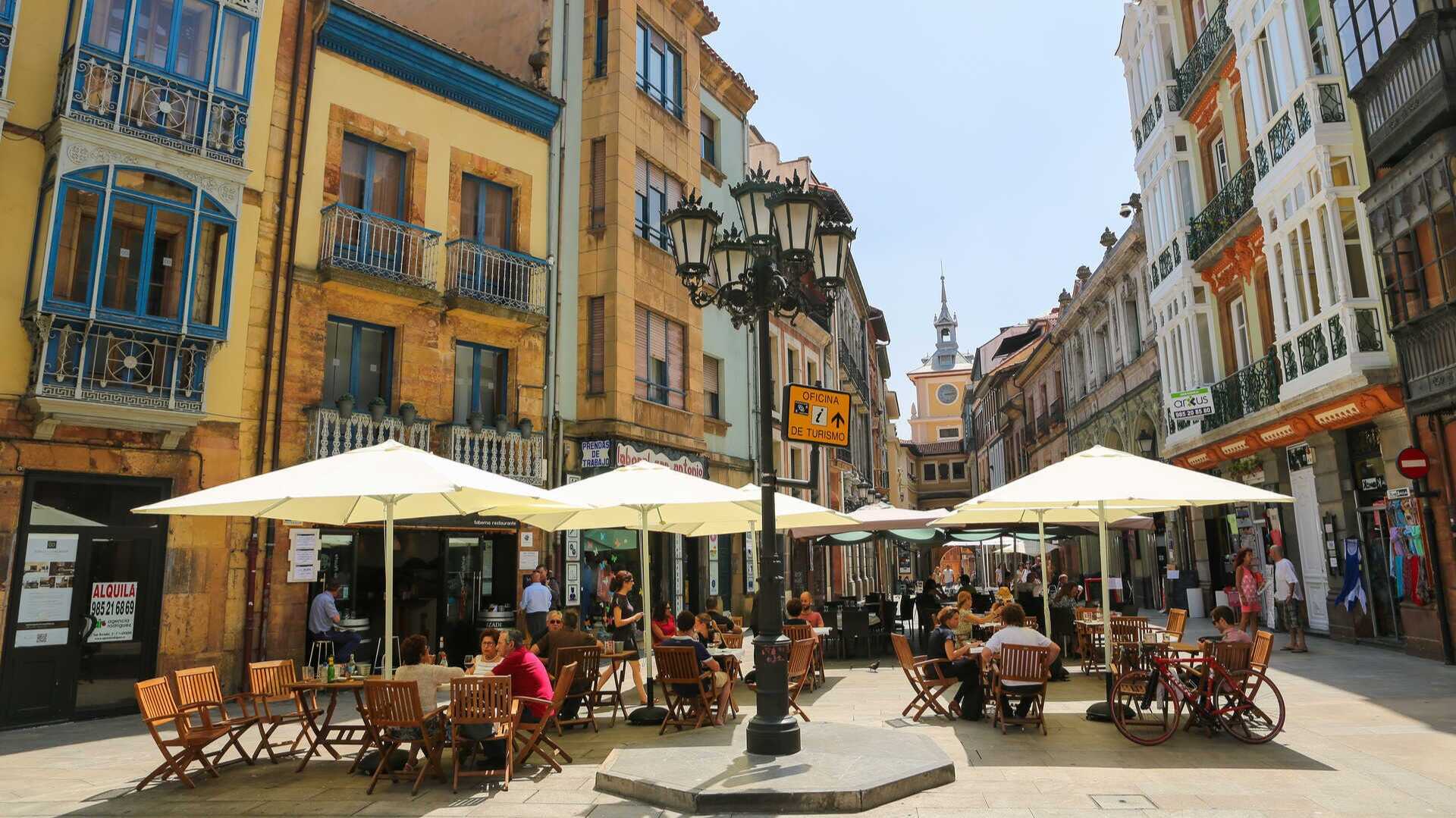
Linguistic studies often rank Asturias and Cantabria among the regions where a particularly clear form of Spanish, very close to the standard spoken language, is preserved. Furthermore, their villages, green landscapes, and traditions make practicing Spanish there an experience deeply connected to local life.
The Region of Murcia, known for its Murcian dialect, features a distinctive accent influenced by other dialects of the southeastern peninsula. Its way of speaking exhibits phonetic and lexical differences from standard Castilian Spanish, making it a particularly interesting region for those who wish to go beyond academic Spanish.

In Catalonia, the Basque Country, Galicia, and Valencia, Spanish coexists with other co-official languages, resulting in intonation, vocabulary, and phonetics influenced by each region’s native language. Understanding this linguistic coexistence helps travelers better appreciate the cultural identity of these regions.
Speaking Spanish in Spain is not just about communicating, but about connecting. Beyond the most famous destinations, the lesser-known regions offer a unique opportunity to discover that language is also part of the journey.