
Spanish sauces to stop using always gravy
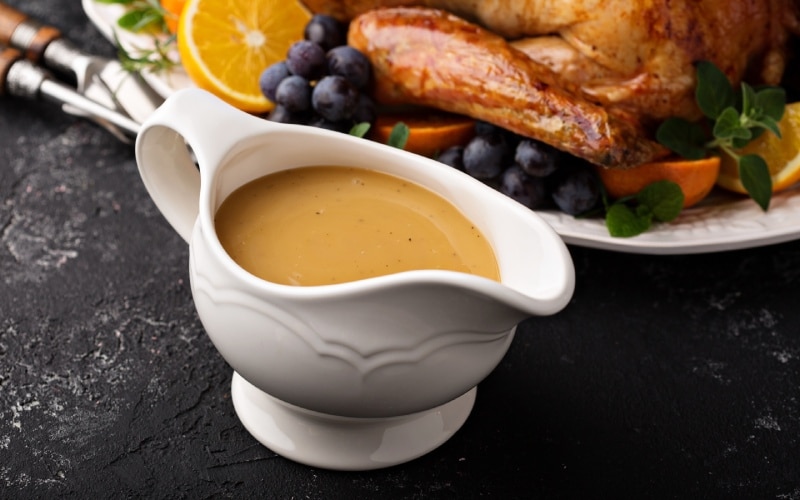
Gravy goes great with almost everything and nowadays sold in all kinds of grocery stores. A delicious English sauce that has been used for a long time. Ready after being cooked for approximately two hours, and thickened with a little bit of flour. In the UK and Ireland, gravy is eaten in Sunday roast, and goes perfect with pork, beef, lamb and chicken. In some countries, like Scotland and Wales, it is usually served with just chips. Meanwhile, in the United States, gravy is enjoyed especially on Thanksgiving, with a delicious turkey, mashed potatoes and stuffing meal.
The word ‘gravy’ probably comes from the Old French grave, graue, a misspelling of grané, which means ‘sauce’, ‘stew’. It is thought that this word originally meant ‘properly grained’ or ‘seasoned’, from the Latin ‘grain’, ‘seed’. One thing is for sure, patience and time turn simple ingredients into a succulent sauce that can save almost any meal. However, it is usual that people use this sauce in many meals, so we bring you a rich Spanish variety of sauces, so you do not get tired of always accompanying your dishes with the same sauce.
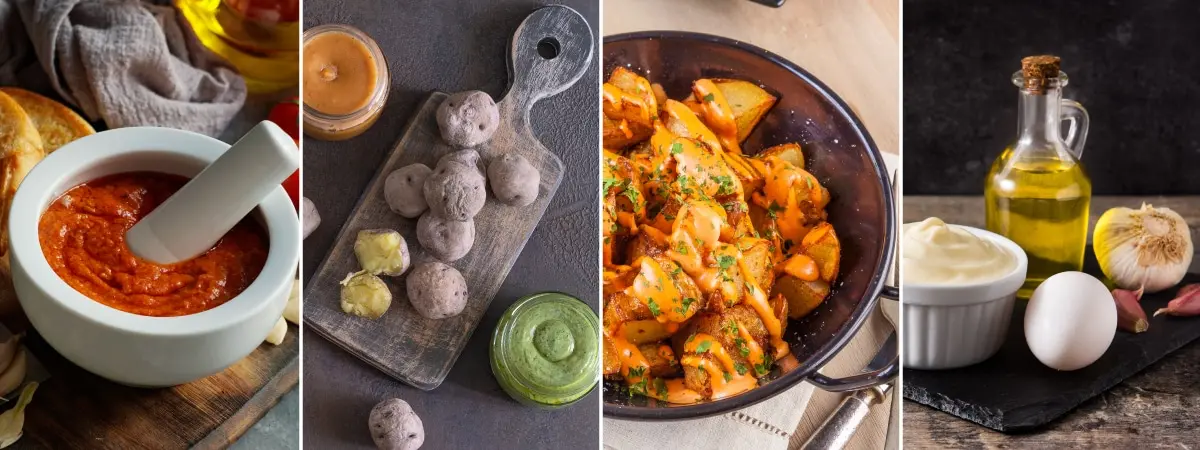
In Spain, sauces are also very important, even essential in some meals, and are enjoyed with a great variety of traditional dishes. From a basic and easy recipe of the tasty ‘salsa brava’ that goes well especially with boiled potatoes or French fries, to a more elaborated sauce like romesco.
The one and only: alioli
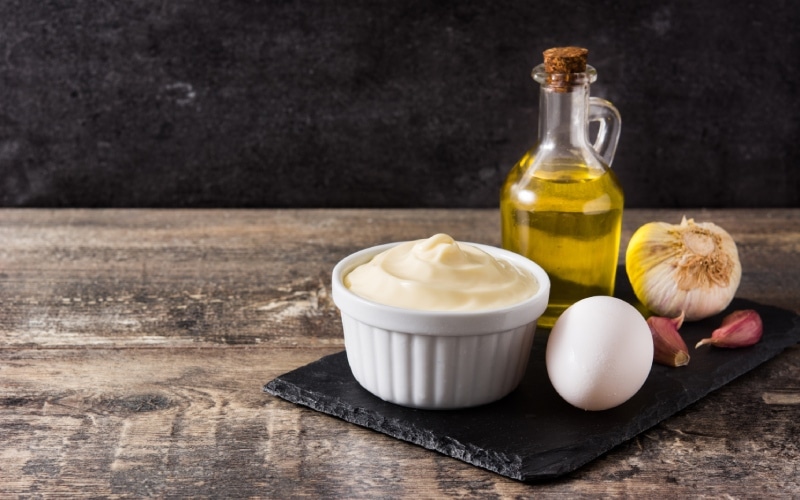
Aioli is a very old recipe, from which many of the sauces we eat today are born, from mayonnaise to pesto, just to mention some of the best known. It is served with many meals, and is the most beloved and popular sauce among Spaniards. Every family has its own way of cooking it, and a big debate of whether this sauce should have egg or not is still very alive in Spain. There are some that believe that aioli was born in Egypt and the Romans spread it throughout the ancient world. Later, people in southern Italy, southern Spain, especially Catalonia and Valencia, made their own oil and garlic paste. Every region also has its own way to spell or say this name.
The Catalan Institute of Cuisine and Gastronomic Culture affirms that alioli should be made like this: In a mortar and with a little bit of salt, pound 2 garlic until you get a very fine paste. Then add 15 cl of extra virgin olive oil drop by drop and stir constantly until you obtain a very thick and compact sauce.
It has, like it has been said before, many variations, but many defend that this is the original recipe of alioli and the only way in which this sauce can be called like that. But one thing is clear, it is a very special sauce in Spain, and without it, many dishes would not taste like they do.
Romesco, the perfect mix of Mediterranean ingredients

Originally from Catalonia, romesco has a very special flavour that can go perfectly with meats, vegetables or fish. This tasty sauce is usually made from tomatoes, garlic, ñora, roasted almonds and hazelnuts, a slice of toasted bread, extra virgin olive oil, vinegar, paprika, and salt. This sauce can be spicy or not, it is up to the cook.
The thing is not very clear, but it seems that its precursor was a seafood dish (the romescada), very typical of the coast of Tarragona. A sauce that was integrated into the dish like a snack, until it became a sauce.
Mojo, the Canarian treasure
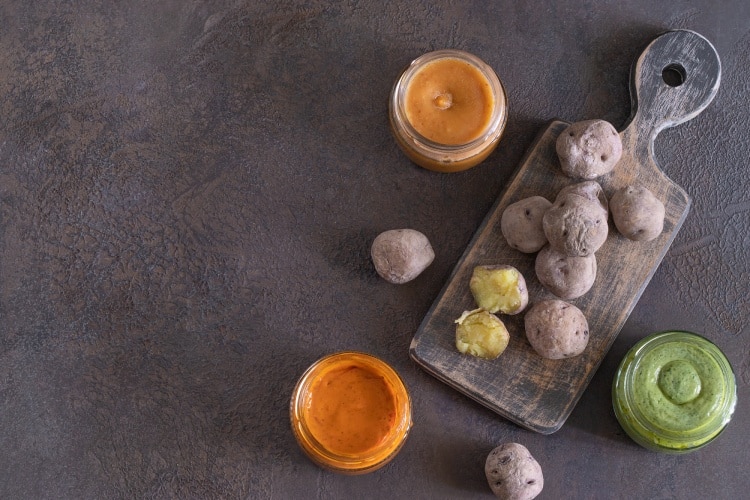
Green, spicy red or cheesy, mojo has been with the Canary gastronomy since ancient times. Usually served with small boiled potatoes, also known as ‘papas arrugás’ in the Canary Islands, or with ribs and corncob. The most famous one is, of course, the ‘mojo picón’ which, as its name suggests, has a spicy touch.
Made from oil, garlic, chillies, cumin, salt and paprika, it is the perfect starter for every Canarian dish, and very beloved in these islands. The word ‘mojo’ has its origin in Portuguese, where this sauce is called ‘molho’. This exquisite sauce arrived in the Canary Islands due to the commercial exchange of spices from different regions of Europe, Africa and Latin America.
Salsa brava, the star among tapas
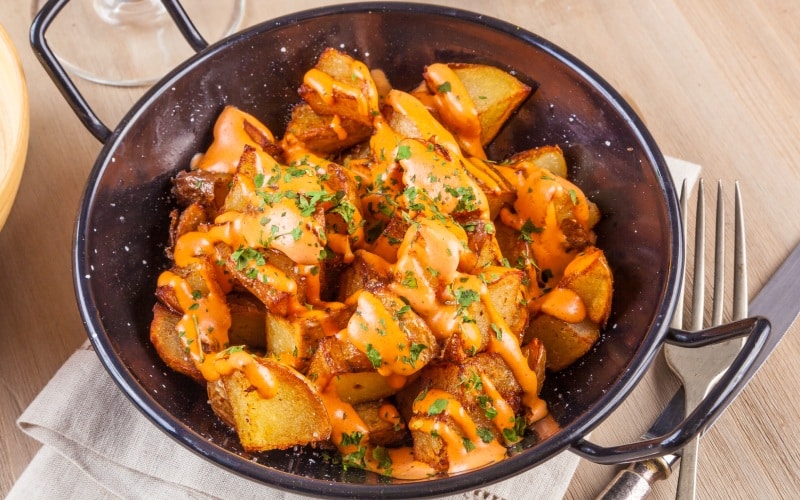
Salsa brava is a spicy sauce typical in the Spanish gastronomy. Its main ingredients are olive oil, flour, hot paprika and poultry or vegetable stock. Ideal to enjoy with boiled potatoes or French fries. It can be more or less spicy, but the original is, indeed, very hot.
Without sauces, our lives would not be the same, and in Spain there is a great variety of them. The perfect sauce for almost every meal, all of them fingerlicking. An introduction to these sauces may open minds about how to accompany your favourite meals, and to leave the common gravy aside for a minute and try other flavours that will wake your palate up.