Garden in the Monasterio de Piedra in Nuévalos
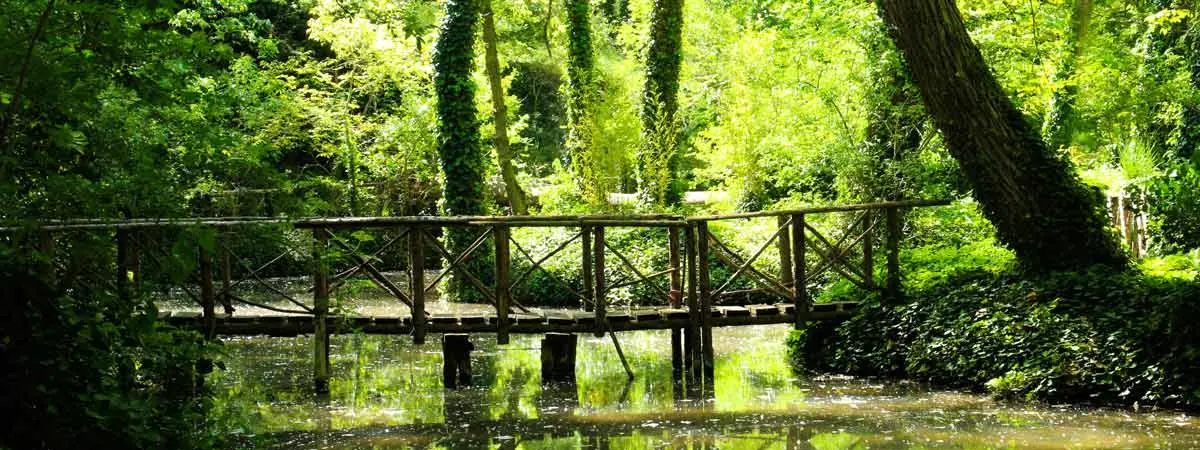
Few places blend art and nature as thoroughly as this romantic garden in the Monasterio de Piedra, in Nuévalos (Zaragoza). It was designed for the contemplation of the dramatic waterfalls, caves and natural lakes of its majestic landscape.

In spite of its natural appearance, the garden, like any other, is artificial –that is to say, man-made– and uses nature as a material. But the art of gardening is to reproduce not simply the outward forms of nature (the natura naturata), but also its inner workings (natura naturans).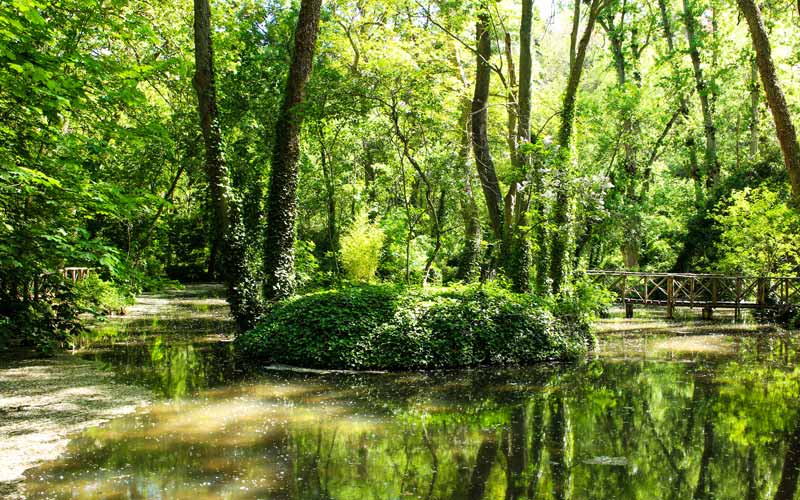
Juan Federico Muntadas
It refers to Juan Federico Muntadas, the architect of this superb union of natural landscape and garden. He was responsible for impregnating it with his romantic and pictorial aesthetics. The garden has become a setting that seems to be taken from a canvas by the German romantic painter Caspar David Friedrich, where man is dwarfed by the forces of nature.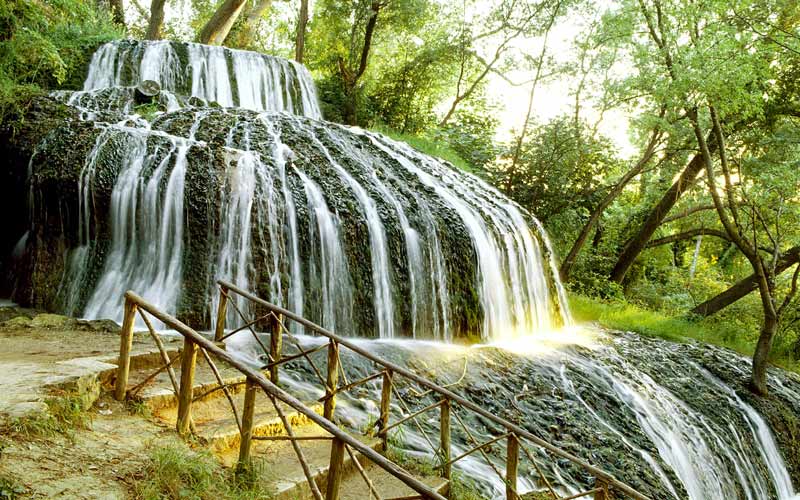
Pablo’s plan was to develop the estate as farmland. His son Juan Federico discovered the astonishing Gruta Iris, or Iris Cave, which led him to open the park to the public. By the 1860s it was a tourist attraction. Juan Federico Muntadas founded the first fish farm in Spain, a combination of the useful and the beautiful.The Monasterio de Piedra is an extraordinary union between the man and his environment, a paradigm of the Romantic creation. Its location in one of the most deserted areas of Aragon makes it a treasure. Among the mountains of the Iberian System there is an orchard watered by the river Piedra, which is the name of the place.