Arribes del Duero Natural Park
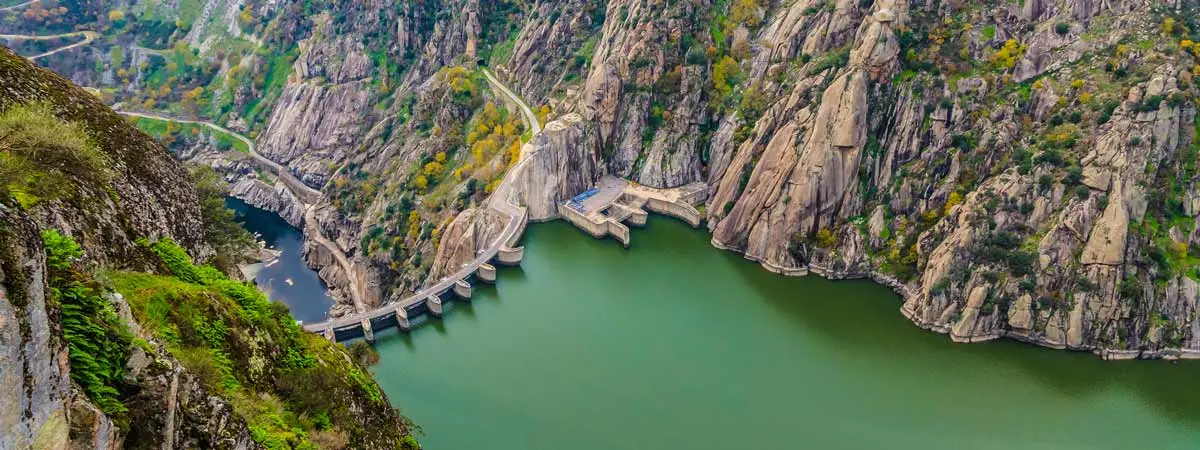

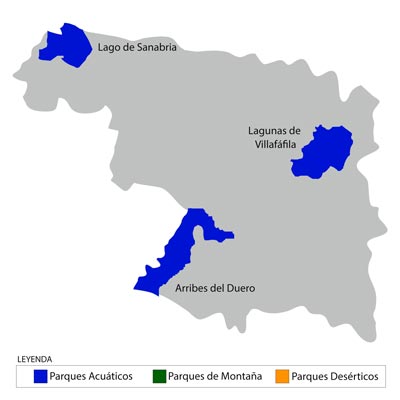 The Arribes del Duero Natural Park extends across 106,105 hectares in the west of the provinces of Zamora and Salamanca, delimiting part of the border between Spain and Portugal.
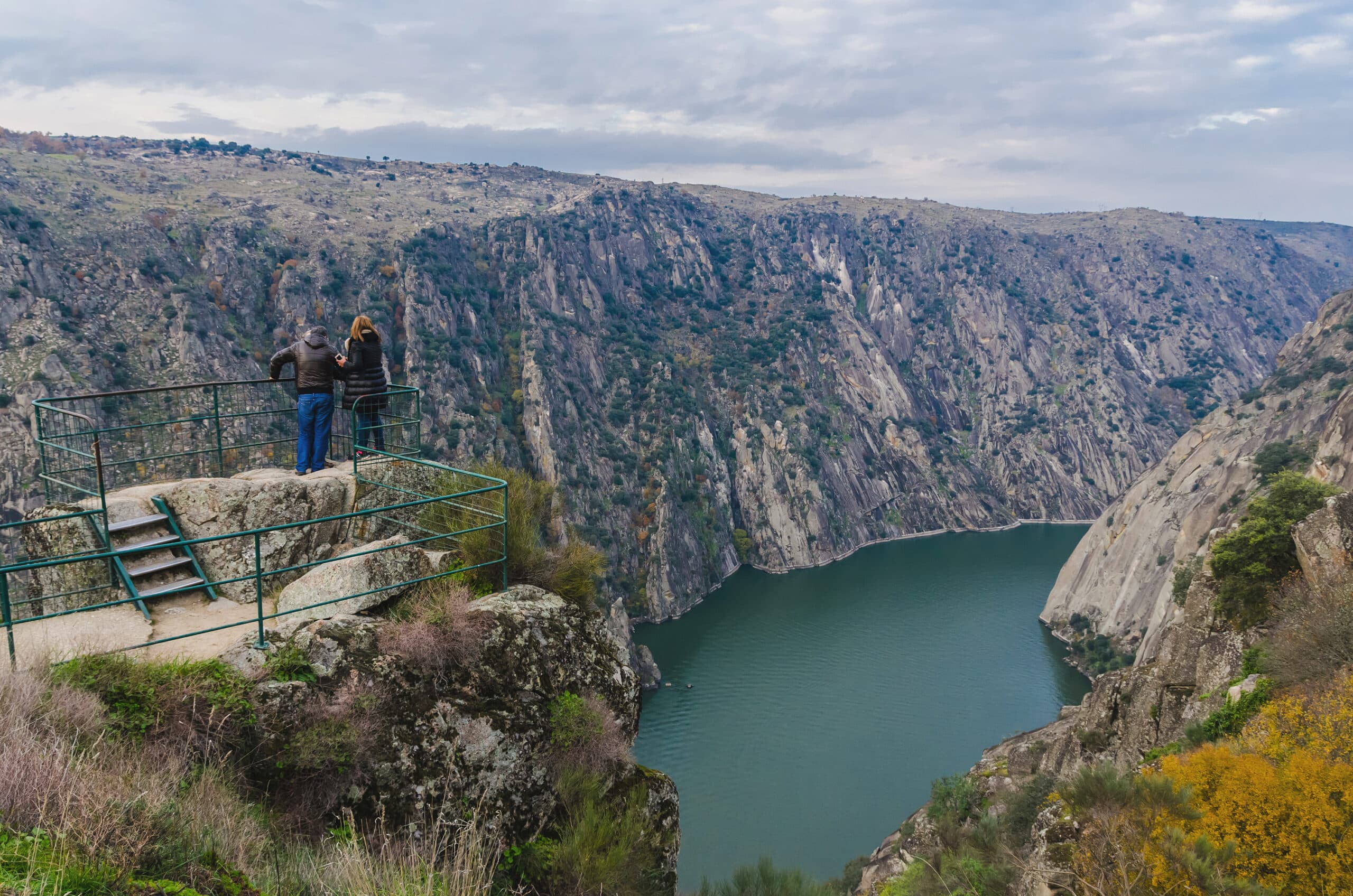
The main attraction of the Arribes del Duero Natural Park is the extensive series of canyons and cliffs carved into the granite of the area.
Duero riverbed is the main axis of this area, which is complemented by other tributary rivers such as the Huebra, the Uces, the Tormes, the Águeda and the Esla.
The flow of the Duero is used for hydroelectric purposes. Along its course there are numerous reservoirs and dams that, as a whole, are used for hydroelectric purposes. These are called "Saltos del Duero".
With more than 120 kilometres of extension and reaching heights of several hundred metres in some of its points, it constitutes the most extensive group of canyons in all of Spain.
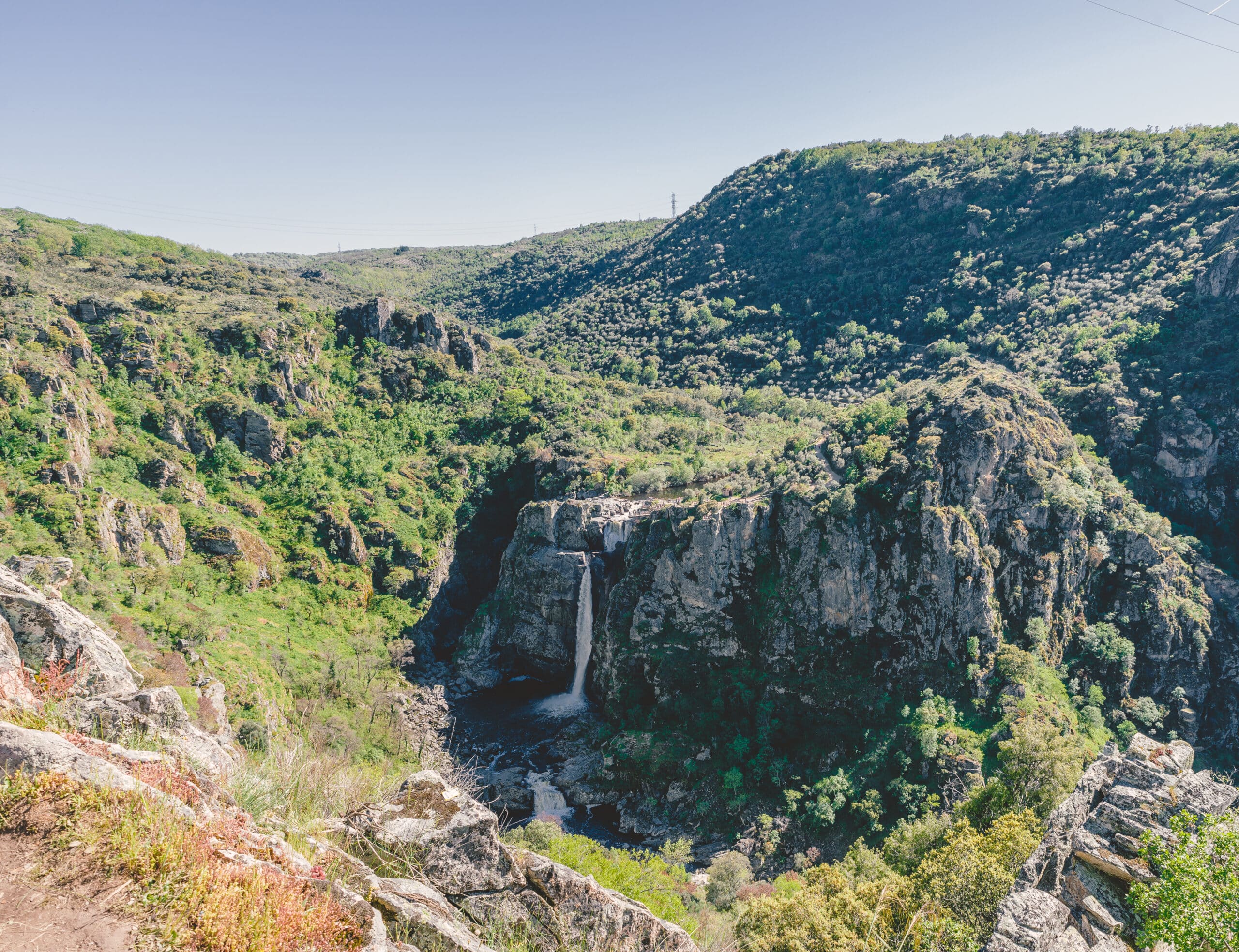
The diversity of the Arribes del Duero Natural Park is spectacular, as can be seen in places such as Paraje de Ambasaguas (where the rivers Tormes and Duero meet), the Peña Gorda rock, or the Pozo de los Humos waterfall; a large waterfall nearly 200 metres high.
Vegetation and fauna
In addition, the Arribes del Duero Natural Park has an extensive historical and cultural heritage in the urban area of the very interesting Fermoselle.
The vegetation of the Arribes del Duero is made up of juniper, gall oak, holm oak and cork oak forests. Along with them, there are species of the Mediterranean climate that are rare in these latitudes, such as vines, olive and almond trees.
The whole area is a nesting ground for birds of prey such as Bonelli's and golden eagles, vultures, Egyptian vultures, peregrine falcons and eagle owls. Among the most frequent mammals, there are communities of otter, marten, fox or wild boar.
Hiking and access
The whole of the Arribes del Duero Natural Park is very popular among hikers. Among the signposted trails that run through it, several sections of the GR-14 (Douro Trail) and the Arribes Greenway, between La Fregeneda and Barca d'Alba, in Portugal, stand out. Cycling and some water activities are also frequent.
From the city of Salamanca, the SA-300 road goes to the park through Ledesma and the C-517 goes via Vitigudino. On the other hand, from the capital of Zamora the C-527 road reaches the aforementioned Fermoselle, located within the territory of the Arribes del Duero Natural Park.
Some recommendations for eating and sleeping around Arribes del Duero

Province of Salamanca
In Lumbrales
Restaurante El Rincón Charro
Bar-Restaurante Florida
Restaurante Apartadero II
In Sobradillo
Restaurante La Tinaja
In Vitigudino
Restaurante El Trinquete
Restaurante La Viña
Province of Zamora
In Bermillo de Sayago
Restaurante Amadeus
Restaurante Sayago
In Fermoselle
Restaurante Casa Mati
Posada de Doña Urraca

Province of Salamanca
In Lumbrales
Casa Rural Julia
Hotel-Casa Rural La Antanilla
Casa Rural El Teso
In Pereña de la Ribera
Camping El Balcón de las Arribes
In Sobradillo
Casa Rural El Mirador de las Arribes
In Vitigudino
Hostal La Viña
Casa Rural Antonio
Province of Zamora
In Cibanal de Sayago
Camping Los Arribes
In Fermoselle
Hostal Casa Mati
Casa Rural Antiguo Casino de los Arribes
Casa Rural La Casa del Regidor

Province of Salamanca
Cruceros Fluviales El Corazón de las Arribes(Aldeadávila)
Rutas en Todoterreno El Arribito (Aldeadávila)
Cruceros Fluviales La Barca (Vilvestre)
Province of Zamora
Turismo Activo Ricobayo Natural (Ricobayo del Alba)
Turismo Activo Aliste y Sayago (Villalcampo)

Province of Salamanca
Casa del Parque El Torreón de Sobradillo. Plaza Castrillo, 58. Sobradillo. Salamanca. Spain. Phone: 923 522 048. GPS coordinates 40º 55′ 8.02” N – 6º 47′ 52.65” W.
Province of Zamora
Casa del Parque Convento de San Francisco. C/ San Juan, 89. Fermoselle. Zamora. Spain. Phone: 980 614 021. GPS coordinates 41º 18′ 59.61” N – 6º 23′ 49.95” W.