Roman Theatre of Mérida
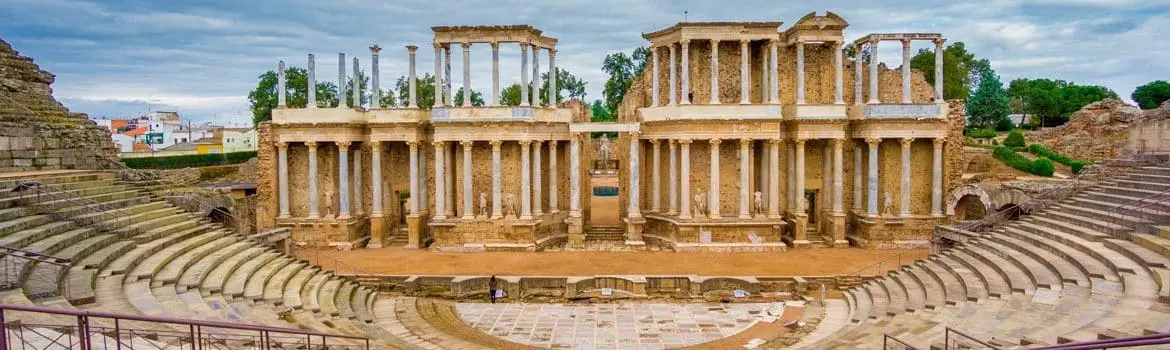
The Roman Theatre of Mérida is the old theatre building of the Roman colony Augusta Emerita. It is a World Heritage Site since 1993. .
A BRIEF HISTORY OF THE ROMAN THEATRE OF MÉRIDA
The Roman theatre of Mérida was built on the orders of the consul Marcus Vipsanius Agrippa. According to the inscriptions of the theatre itself, it was inaugurated between the years 16 and 15 B.C. Its construction was planned together with the one of the next amphitheatre.
As time went by it suffered several reforms. Throughout the 1st century A.D., the stage was raised, as we see it today. Around the 4th century A.D. it underwent a further remodelling.
Once Christianity became the official religion of the Empire, theatrical performances were considered immoral. Therefore, the theatre was abandoned and, later on, mostly collapsed. Only the 'seven chairs', i.e., the highest part of the grandstands, stood out on the ground.
The excavations that led to the rediscovery of the theatre began in 1910, under the direction of José Ramón Mélida. Today it is the jewel of Roman monuments in Mérida, and one of the best preserved theatres of antiquity.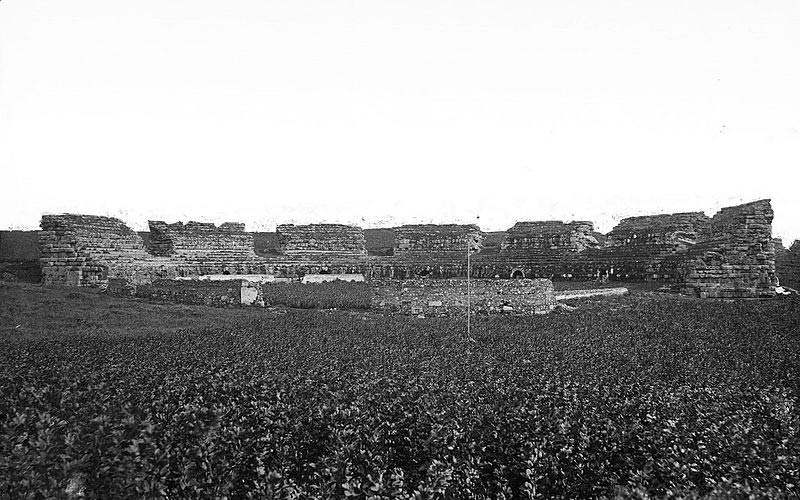
POINTS OF INTEREST IN THE ROMAN THEATRE OF MÉRIDA
The cavea or grandstands benefit from the slope of the San Albín hill. It has an audience capacity of 6,000. As other Roman theatres, it is divided into three areas, separated by a wall called balteus.The ima cavea was the closest sector to the stage, just behind the seats reserved to authorities. The media and summa cavea, also separated from each other, have five rows of seats. Access and transit to the stands were made through the so-called vomitoriums.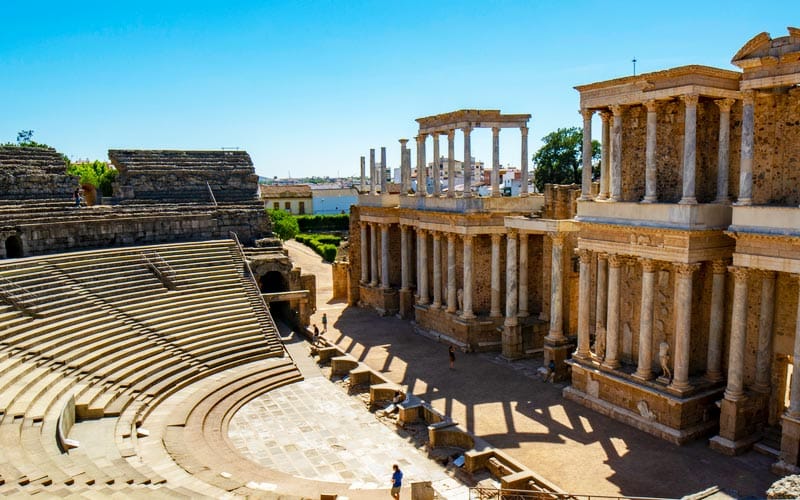
At the lintel placed in the access to these passages, there is an inscription confirming Marcus Agrippa as the promoter of the theatre construction.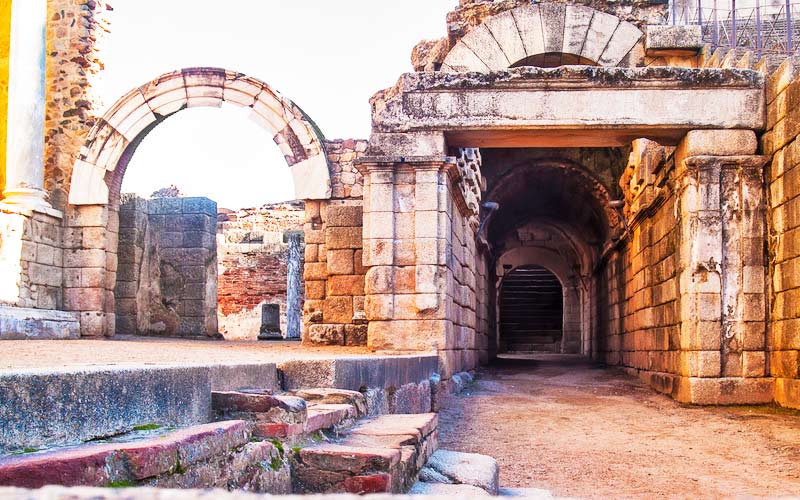
At the scaena, the frons scaenae, the construction that serves as a backdrop, stands out. It has two floors upon which stand Corinthian columns. The main door for actors was called valva regia. Besides, the lateral doors were the valva hospitalia.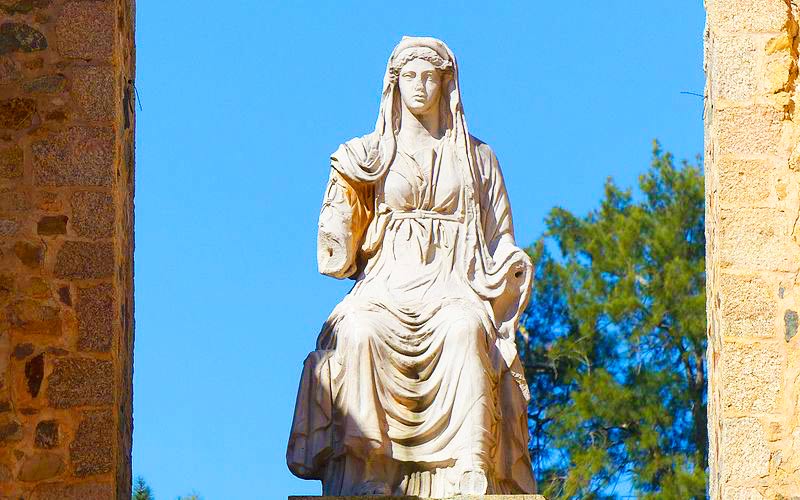
At the back, a rectangular room has been preserved. It has been identified with an imperial worship place. There were also portraits of Augustus as Pontifex Maximus and of Tiberius.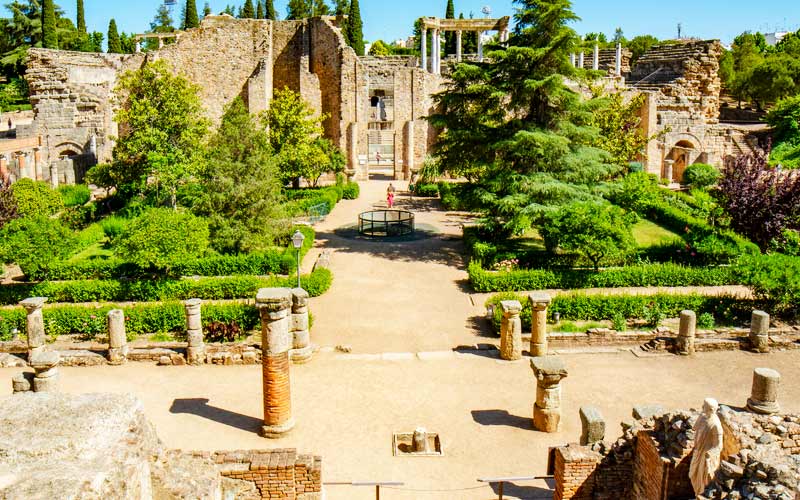
USEFUL INFORMATION
Location: Plaza Margarita Xirgu, s/n, 06800 Mérida, Badajoz.Telephone: (+34) 924 00 49 08
Here you will find information about your tickets as well as the updated schedule of the Roman Theatre in Merida.