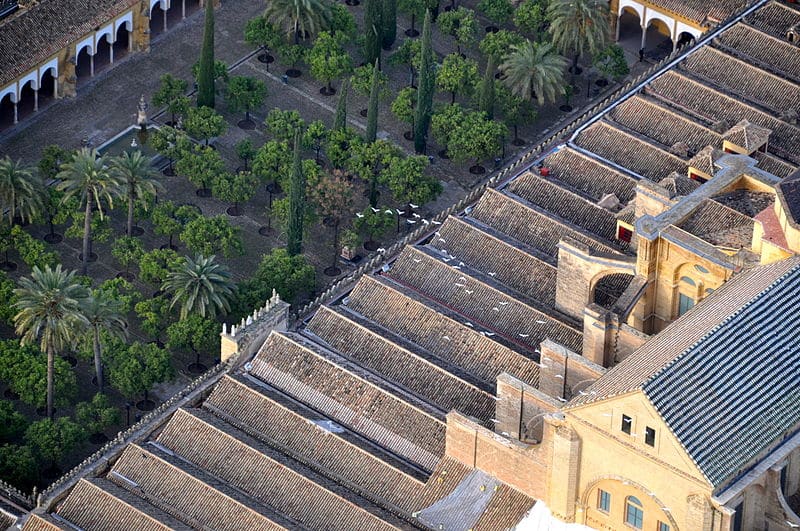
Court of Oranges in the Mosque-Cathedral of Córdoba
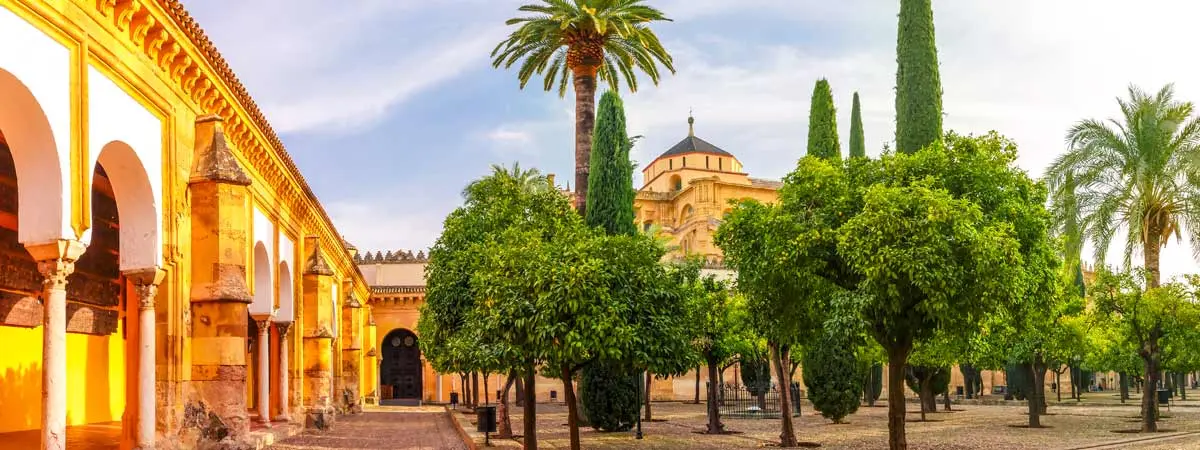
Considered the oldest garden in Europe, the origins of the Court of Oranges date back to the end of the 8th century, when construction began on the impressive Córdoba Mosque which, together with the Alhambra, is the most important monument of all Arab-Andalusian art.

"The Mosque of Cordoba is, without doubt, the first monument in Spain, the most original and the most beautiful," wrote the Englishman Gerald Brenan. It is a magnificent example of the union between architecture and gardening, a place where the rows of trees outside are the visual extension of the immense forest of columns inside. Its refinement reflects the sophistication of the culture of Al-Andalus and Caliphal Córdoba, which around the year 1000 was the most populated city in the world, with one million inhabitants, and a very important political, economic and cultural centre.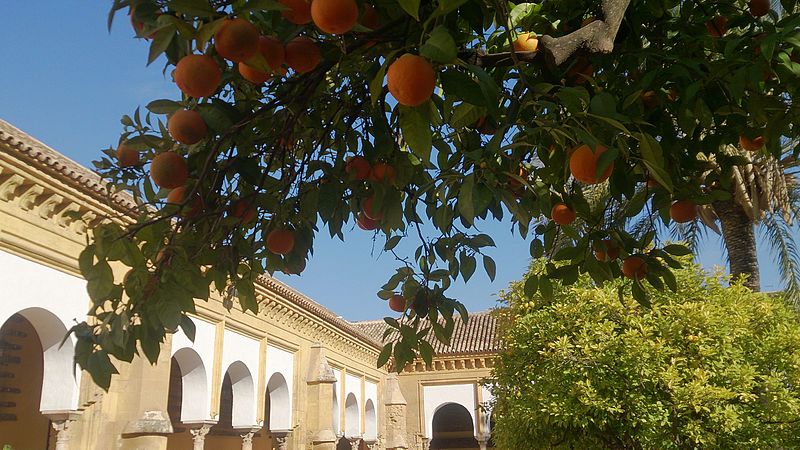
Until the Christian era, the mosque was open to the courtyard, which allowed the total fusion between the interior and exterior, forming a single continuous space with the columns and tree trunks, which were initially palms, cypresses and olive trees (the latter supplied the temple's oil lamps). The orange trees that give their name to the patio arrived in the 10th century, when, along with many other species (lemon trees, apricots, bananas, rice, cotton, sugar cane, date palms, aubergines...) they were introduced to Europe by the Arabs. They are bitter oranges (Citrus aurantium) originating from Southeast Asia, whose fruits were used for perfumes, jams and medicines. Thanks to their great aesthetic appeal, these trees became the protagonists of Spanish and Islamic gardening and were present in the streets, gardens and patios.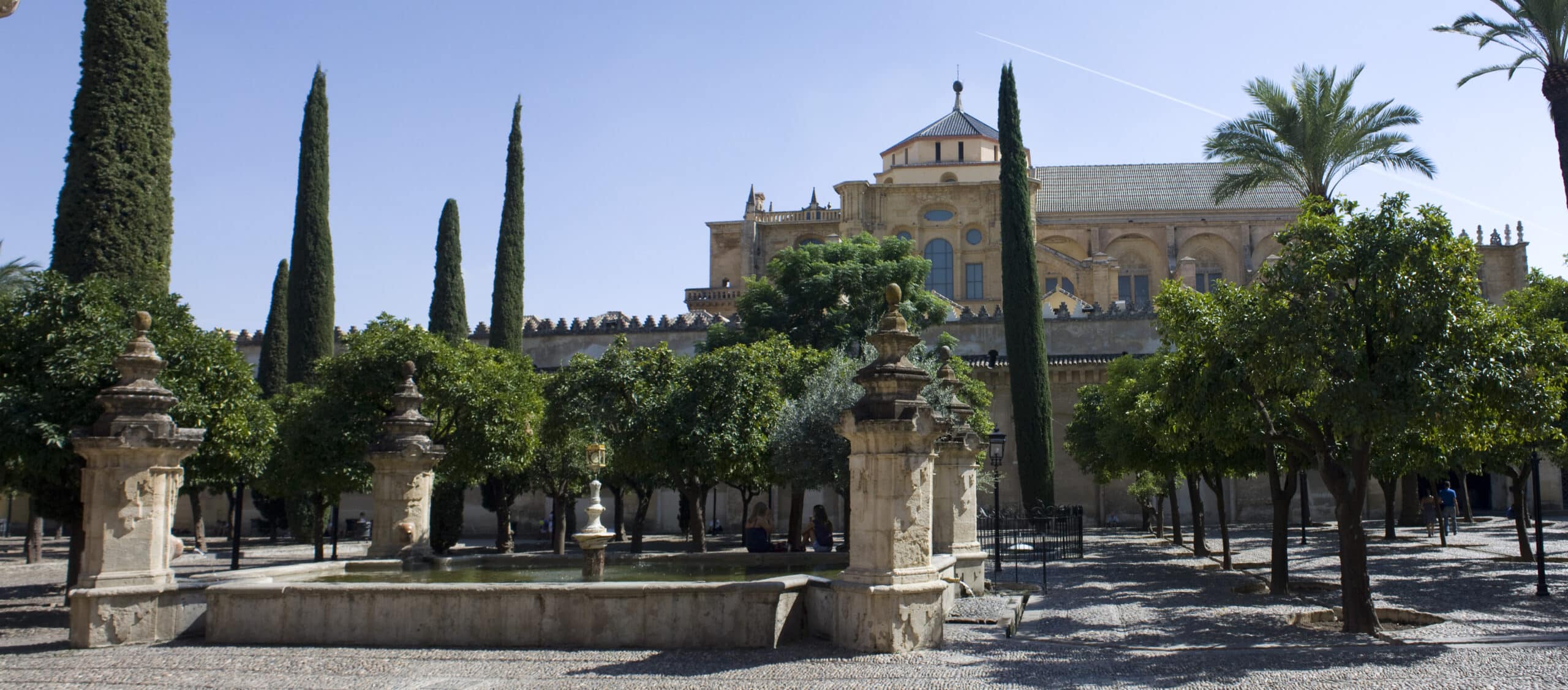
During the Muslim era, the Court of Oranges was used for ablutions (the ritual washing that precedes prayer in the mosque), but it was also a place of rest and social gathering for the people of Córdoba. We could even consider it as the most important public garden in the city, open to everyone to delight in it, evoking the one who awaits the faithful in paradise, as announced by the quotation from the Koran in one of the inscriptions inside the temple: "Do not be afraid, do not be sad, but rejoice in the garden that was promised to you". Once again we find the timeless idea of the garden linked to the longing for paradise, an idyllic place, brimming with peace; that is to say, a true spiritual garden.