
The battle of Lucena and the capture of Boabdil
The victory of Aliatar in the siege of Loja in July 1482 served to consolidate in the throne his son-in-law: the young Sultan Boabdil. While the astonishing release of Aliatar in November of that year seemed to give the impression that Allah was supporting the political faction formed by Boabdil, the sultan mother – Axia – the Abencerrage’s clan and Aliatar himself in the civil war of Granada. The deposed Sultan Muley Hacen and his brother El Zagal - father and uncle of Boabdil - were supported by the other rival group of the Abencerrages: the clan of the Zegríes. In the winter of 1483, Muley Hacen's army also succeeded in defeating the Christian troops of the Catholic Monarchs; which occurred in the mountainous area of the Axarquía region of Malaga (to the northeast of the current province, in the area between Archidona and Frigiliana), that was part of the Muslim territory controlled by the Zegríes.

The news about the victory of Muley Hacen, upon arriving in Granada, was a great popular jubilation; so the fallen spirit of the people of Granada was filled with hope; the good news was especially celebrated by the Zegríes of the city, enemies of Boabdil and the Abencerrages. To regain popularity in Granada, the young Boabdil decided to prove that he was a military commander as good as his father; thus preparing to gather enough forces to defeat the Christians.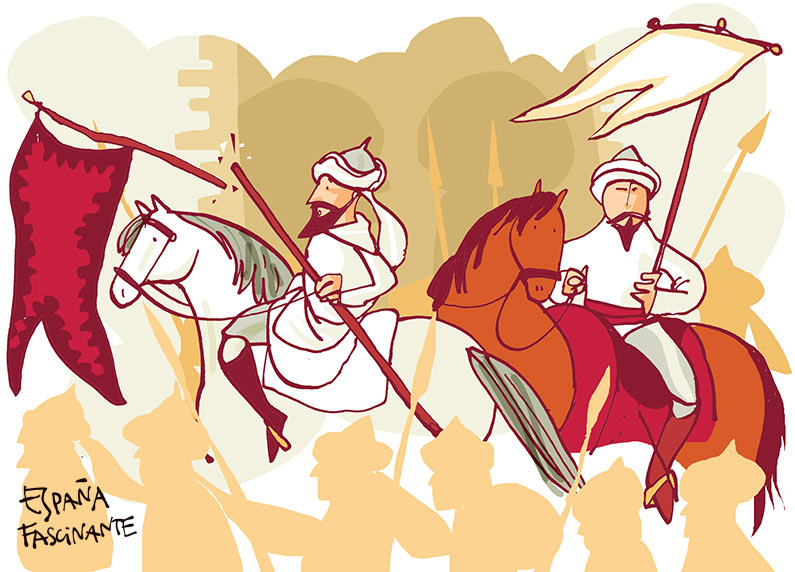
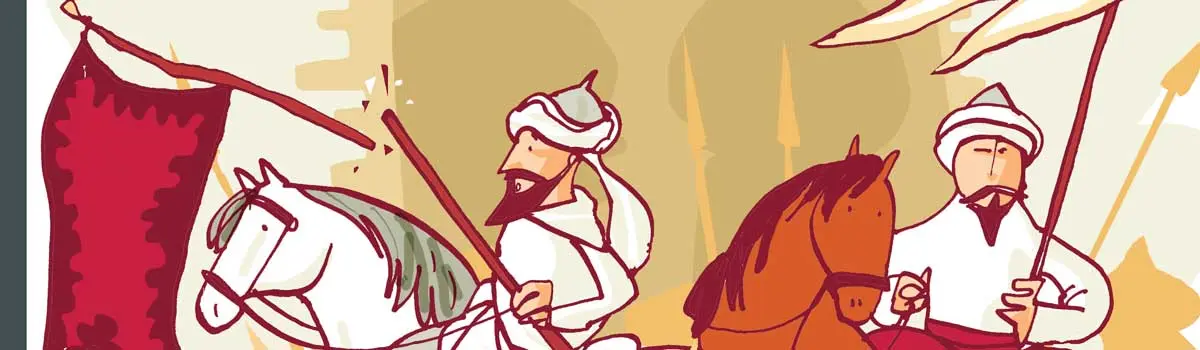
At the beginning of April Boabdil and his father-in-law Aliatar managed to gather in Granada about fifteen hundred horsemen and seven thousand infantrymen with which to attack the Christians. Among the cheers of the crowd, Boabdil's army was ceremoniously exiting through the Elvira Gate. Then there occurred a small accident which had the immediate effect of silencing thousands who were watching the flamboyant warlike retinue: as the knight who bore the royal banner lost his balance as he passed through the large door, and struck the wall of the arch with the pole of his staff. As a result of this, the stick broke and the banner fell to the ground. All present interpreted this event as a negative premonition.
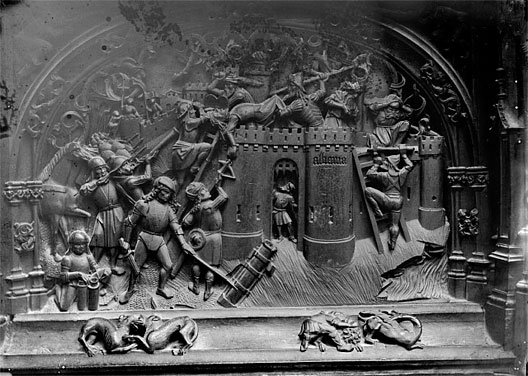
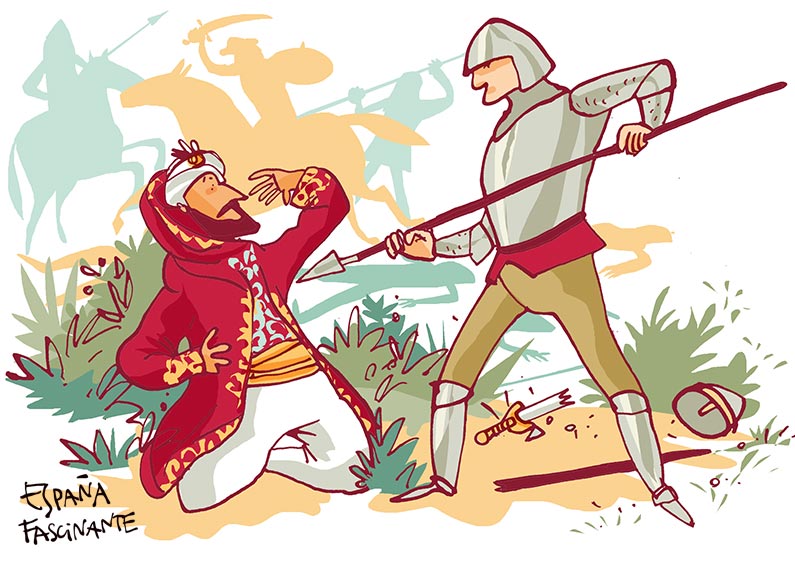
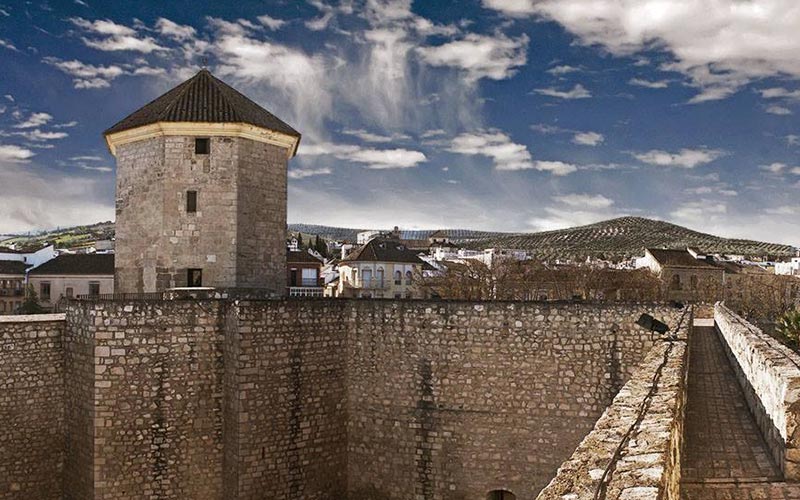
Due to the luxury of the clothing, the modest pawns deduced that the prisoner was a very important person. They inquired about his identity and Boabdil tried to hide it, answering that he was the son of a rich nobleman of Granada. At that moment the Governor Diego Fernandez of Cordoba arrived at the scene; putting a red band on him as emblem of a prisoner and sent him with others to a dungeon of the Castle of Lucena. In the following days more fugitive Moors were captured by the surrounding fields; and when being transferred to the castle of Lucena, some of them prostrated before the Sultan trying to excuse their actions. These gestures prompted Boabdil to be identified. When they heard the news, the Catholic Monarchs enclosed Boabdil in the Castle of Porcuna; the tower that served as a prison to the young Sultan, which since then has been known as "The Tower of Boabdil".
Texto de Ignacio Suarez-Zuloaga e ilustraciones de Ximena Mai