Will the controversy over the Spanish Constitution ever end?
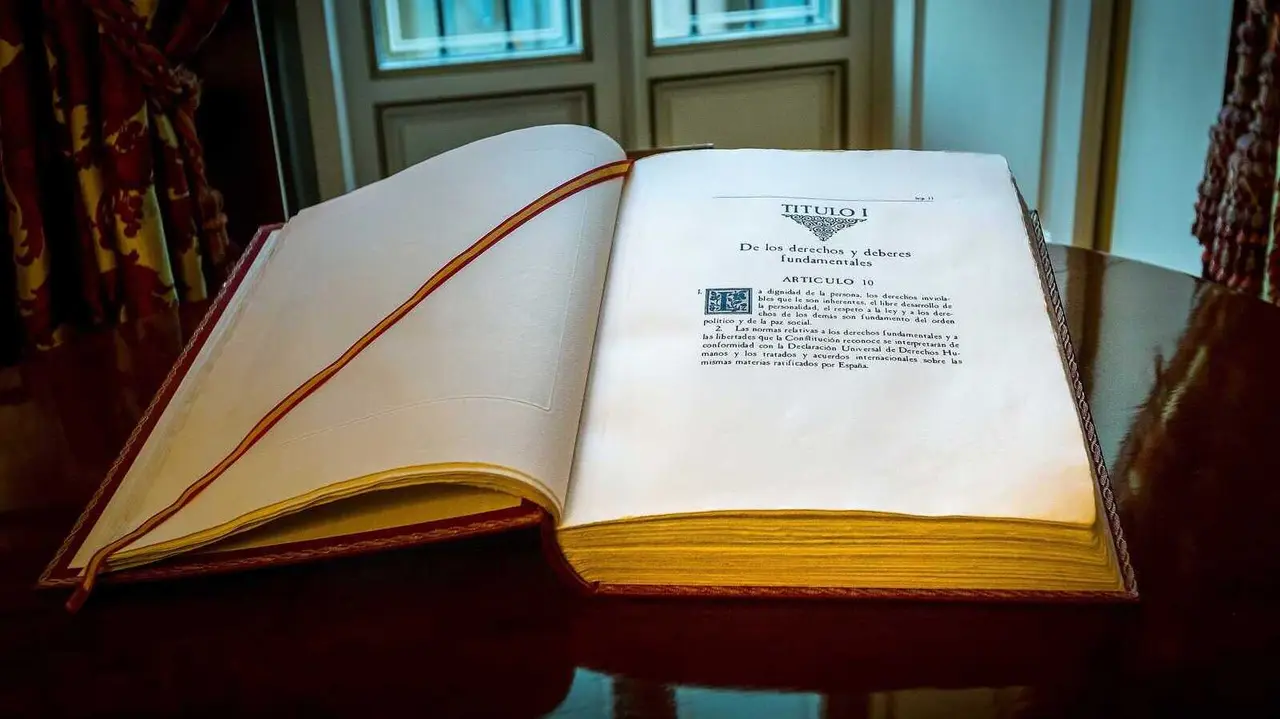
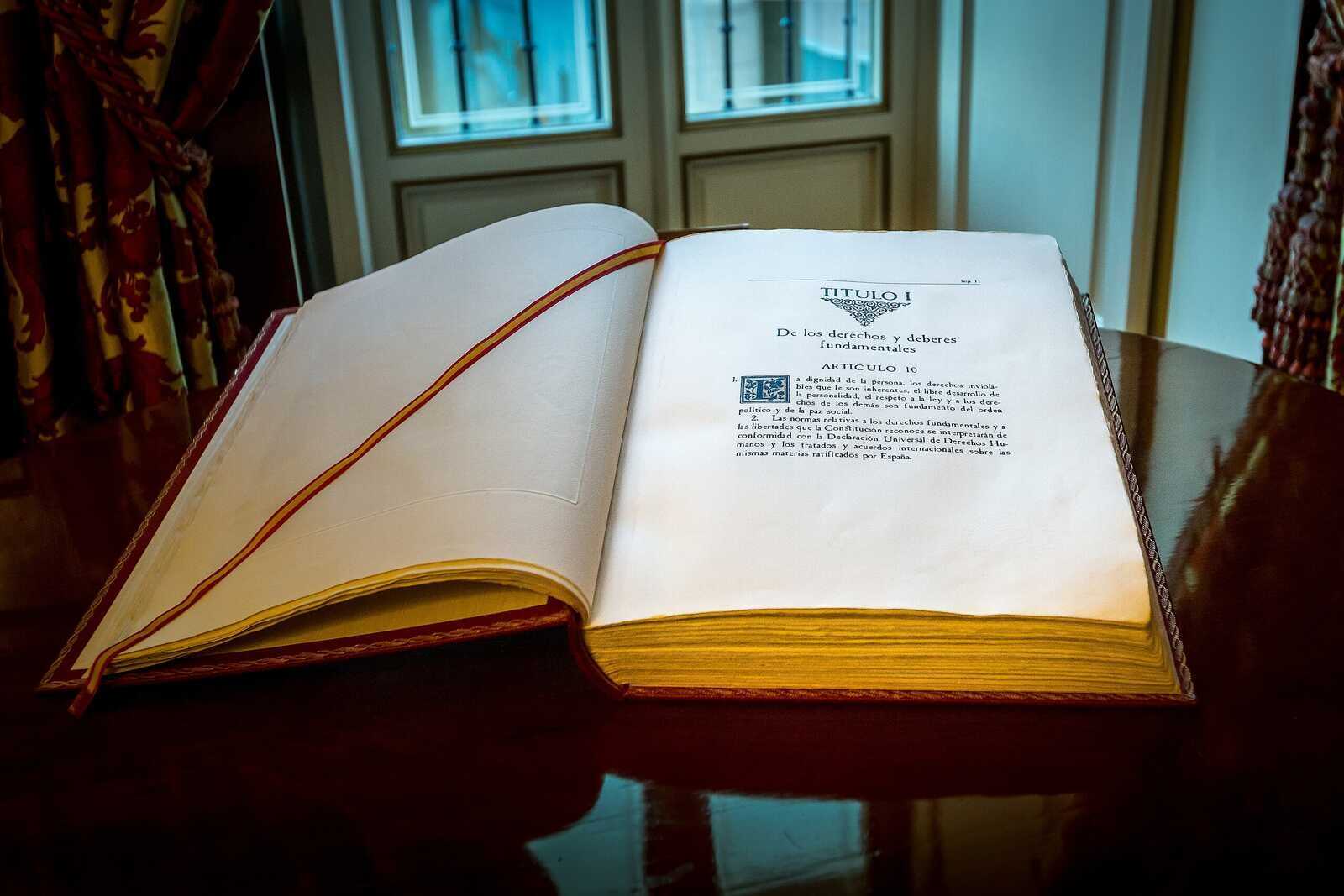
In 1977, fledgling political parties chose seven representatives to form the commission that would write the consensual text of the Constitution. The creators of the Constitution represented five political parties: the Union of the Democratic Centre (the Government’s Party, represented by Gabriel Cisneros, Miguel Herrero, and José Pérez-Llorca), the Spanish Socialist Workers' Party (Gregorio Peces-Barba), the People's Alliance (Manuel Fraga), the Communist Party of Spain (Jordi Solé), and the Catalan minority (Miquel Roca.) They are known as the ‘Fathers of the Constitution’. There were not any representatives of the Basque National Party, an omission that might have had important consequences, since the main challenge of the young Spanish democracy was the terrorism of ETA, an independent Basque movement.

How the new Constitution of Spain was created
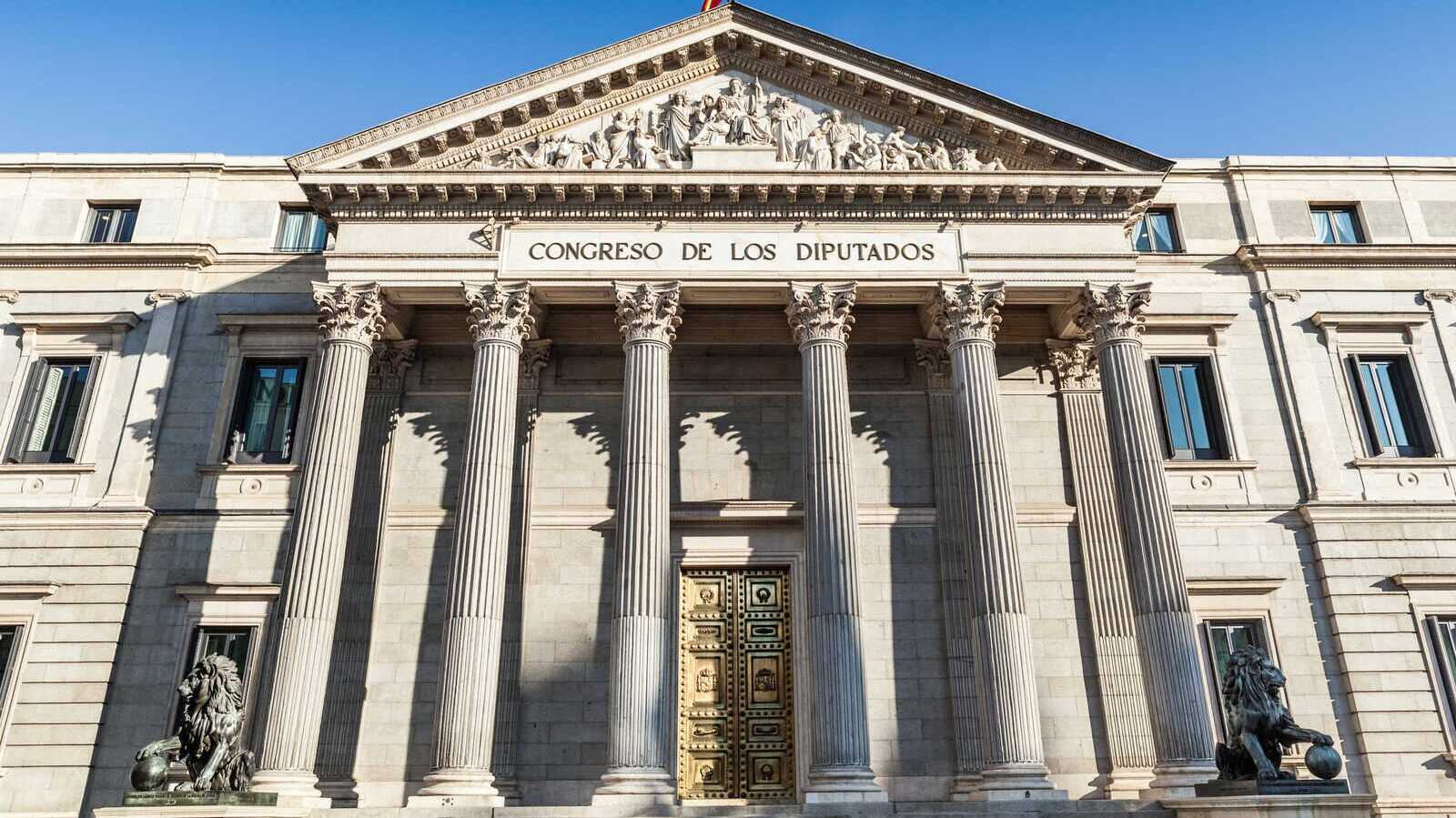
Since not every main political sensitivity was part of this commission, the negotiations were not performed exclusively and in a formal way in the Congress. There were endless dinners and lunches in reserved areas of restaurants near the Congress of Deputies building. Many leaders of parties who were not included in the redaction commission attended these meetings, which have been popularly known in historiography as ‘tablecloth pacts,’ since they happened in restaurants.
Despite most constitutional speakers belonging to centre and right-wing parties (UCD and AP reunited four out of seven), they did not try to impose their criteria, since consensus prevailed in the writing of each chapter. They could not help but remember the last civil war (1936-1939) and the long exile some of them had suffered. In the commission, there were two leaders who had been part of the reformist wing of Francoist Spain: Gabriel Cisneros and ex-minister Fraga. But there was also Solé Tura, who knew what it felt like to be incarcerated due to political militancy and who had to exile to Paris and Bucharest. Besides, Peces-Barba had been prosecuted due to illegal propaganda by the Court of Public Order.
They aimed to write a text that could be accepted by most political parties. This was incredibly difficult, since there were communist and Francoist parties, as well as unitarist and separatist parties of multiple territories (back at the time, there were political parties that pursued the independence of Catalonia, Basque Country, Galicia and the Canary Islands.) Besides, many representatives and party leaders had suffered war and exile in their homes. For all these reasons, the reconciliation between the so-called ‘two Spains’ was a common purpose.
Two serious threats came along with this difficult emotional situation. On one side, Marxist and independent terrorism, since half a dozen terrorist organisations attacked Spain at the time inspired by both ideologies. On the other hand, there was the involutionist threat of Francoist people, who perpetrated intimidatory acts against libraries and shows and even committed murders. The emerging democracy was threatened by both sides.
It will never be known with certainty whether the inclusion of PNV in the constitutional commission could have got them to support the text. Besides their direct non-participation, Basque nationalists found various difficulties: the non-recognition of the Basque Country as a nation and their originary sovereignty, and the possibility of achieving this independence through a referendum. It was one of the parties’ foundational goals, and they found it unquestionable, so they recommended abstention. The outcome in the Basque Country was abstinence, with more than 50% in Bizkaia and Gipuzkoa, almost doubling the positive votes. The votes of support almost tripled the negative ones.
It was approved by the courts on the 31st of October of 1978 and endorsed by referendum on the 6th of December.
The Spanish Constitution of 1978: source of constant tensions and political disagreements
Since that moment, the main critics of the Constitution have been Basque nationalist parties, who have complained that the transference of competences has been deliberately delayed, submitting them to the parliamentary support of nationalist parties in the parliament. They have also reported the works of the Constitutional Court of Spain to interpret restrictively the competences in general and the Statute of Autonomy of the Basque Country in particular. As more competences have been accumulating in the Basque Government and terrorist threats have been eliminated, PNV has condemned that while they supported the Statute of Autonomy with their votes, it is not the appropriate legal framework to manage their self-government anymore. For this reason, PNV has been insisting on amending the Constitution since 1978.
In regard to Catalonia, the coalition of Convergència i Unió in the first years of the Spanish transition to democracy discarded the option of an economic agreement like those of Navarre and the Basque Country, which they considered an antiquated model. But after many decades of control of the Catalan institution, it decided that it was time to get more competences in line with a federal or confederate model (depending on the member of the coalition.) Since a constitutional reform was necessary, this pretension was blocked. They thought of two ways to achieve their goal: the referendum for the sovereignty or independence of Catalonia and the one-sided declaration of independence. Encouraged by the majority decision of the International Court of Justice, which stated in 2010 that the independence of Kosovo did not violate the international public law, some Catalan parties began to carry out their one-sided way, the declaration of independence. Finally, on the 27th of October 2017, most representatives of the Parliament of Catalonia declared unilaterally the creation of an independent Catalan republic. In response, the Spanish government applied Article 155 of the Constitution, taking control of the Catalan institutions temporarily.
Years after this event, when institutional normalcy had returned to Catalonia, the number of parties that sought a constitutional reform that would transform Spain into a federal or confederate state had increased progressively. Extreme leftist parties are among those who have changed their minds on the Constitution of 1978, and so are the coalitions that have integrated the Communist Party of Spain, which until recently had always advocated for the equality of Spanish citizens.

There are tensions between centre and periphery in every country. Some of them have federal constitutions (such as Switzerland and the United States), and they even went through civil wars in the 19th century for this matter, the most centrist interpretation always prevailing. This is the case of Spain, the second country with the highest altitude in Europe (and more geographically diverse.) Modern states have had a lower capacity of sociopolitical and cultural homogenisation in the preceding centuries, preserving traditions and languages that are less relevant in other states. For Catalonia and Euskadi, with a high level of development equal to or superior to those of the new Baltic states that have successfully joined the European Union since 2004, the change of legal status has become a main objective.
For this reason, tension regarding the extension of government powers and those of the autonomous communities seems far from becoming a reality unless some of these communities get to separate from the state and become its neighbour.
Follow us on Facebook to discover more fascinating places in Spain!