
Map of traditional Spanish dishes
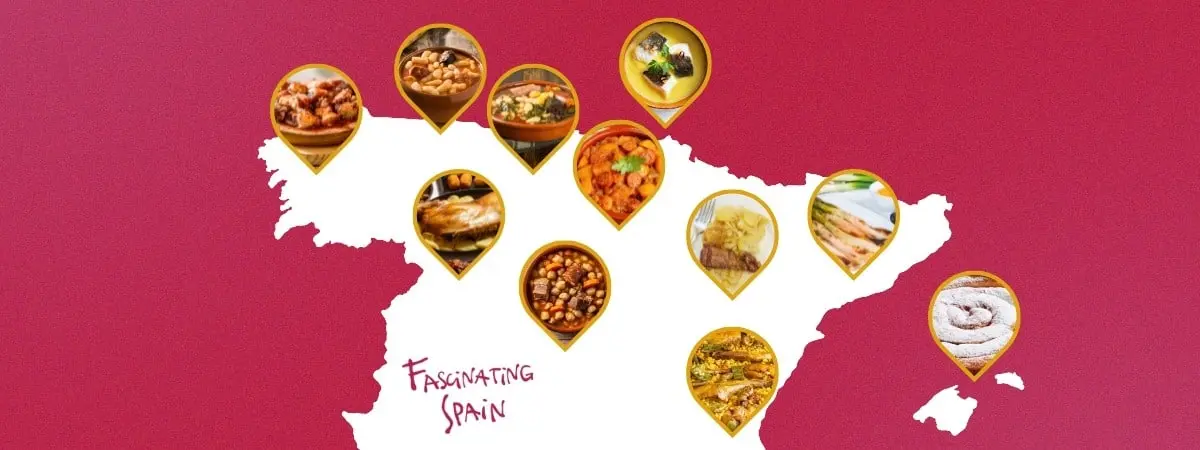
If there is something Spain can boast about, it is its brilliant cuisine from north to south. No matter the region you visit, you will always find not just one but several delicious culinary specialties! There are so many that it even generates controversy around which typical Spanish dishes best capture the essence of the country. An Andalusian will defend his gazpacho, just as another will support the flamenquín. Similarly, an Asturian will debate between cachopo or fabada, and a Navarrese will debate between pochas and piquillo peppers.

Choosing just one dish per autonomous community is a daunting task. However, it is also a great way to clearly expose evidence of the country's rich gastronomic variety. In the following lines, we will deep dive into the map of traditional Spanish dishes, exploring each autonomous community to discover their most emblematic specialties.
17 autonomous communities and 17 traditional Spanish dishes

Andalucía
We begin our journey through traditional Spanish dishes in the south of Spain, in Andalucía, to be more specific. There, we refresh ourselves with a good Andalusian gazpacho. This dish, whose origin dates back to Roman times, was consumed as a mixture of water, oil, a bit of bread, and vinegar. Over the centuries, ingredients like tomato, pepper, and cucumber were added, resulting in the current gazpacho. This very refreshing cold soup adapts to the area's warm climate.
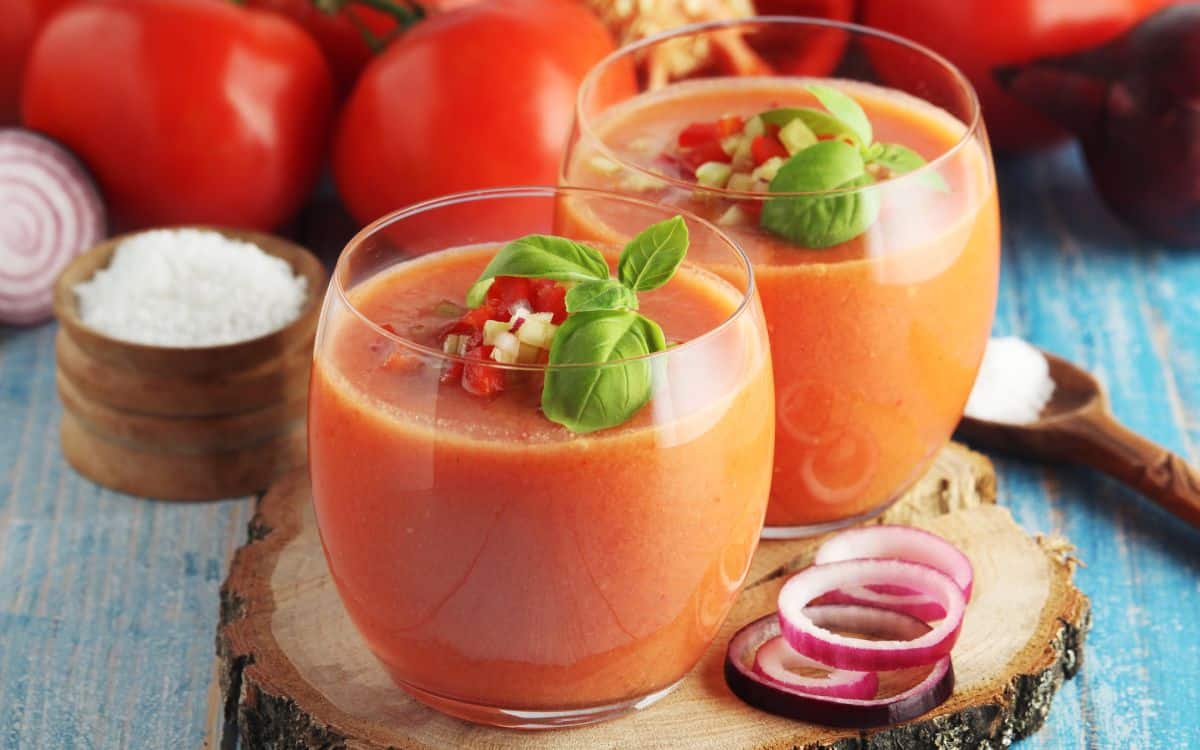
Be careful not to confuse gazpacho with its thick variant, salmorejo. Originating from Córdoba, in addition to not containing pepper and cucumber, it incorporates breadcrumbs and is accompanied by jamón ibérico and a hard-boiled egg. A true delight!
Aragón
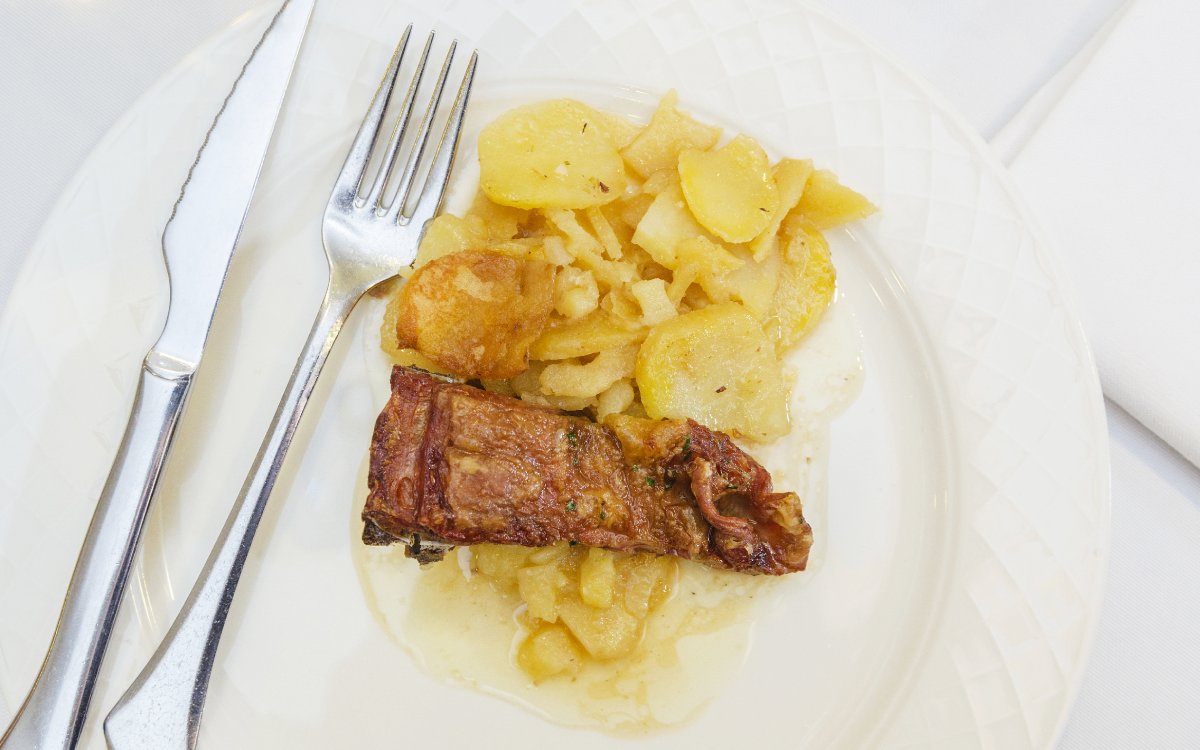
One of the regions with the most history in Spain could not lack a traditional and equally delicious dish: the roasted ternasco. This Aragonese recipe is made with suckling lamb roasted in the oven with potatoes, onions, and garlic, resulting in a tender and flavorful meat.
This dish has been enjoyed from generation to generation since the 13th century and is still very popular today. It is often consumed during the Fiestas del Pilar, the largest celebrations in the capital of Aragón.
Asturias
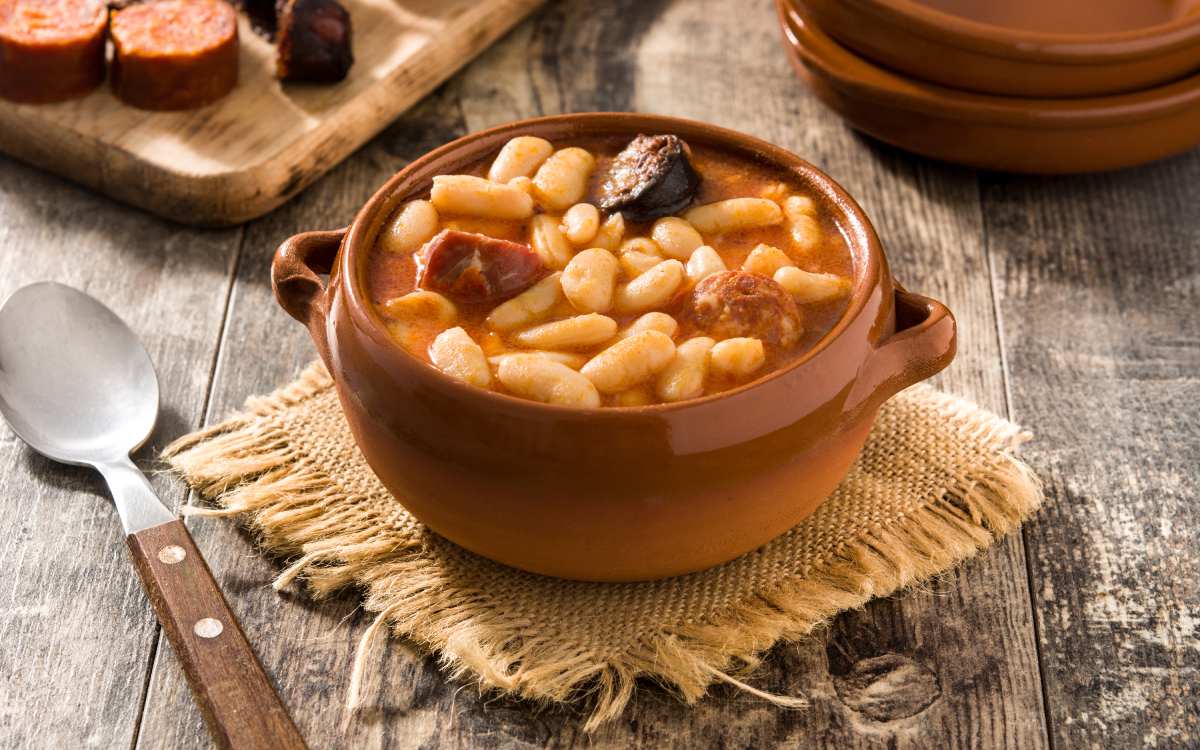
Mixing beans or fabes, chorizo, morcilla, bacon, onion, and garlic results in a succulent, nutritious, and hearty dish: the Asturian fabada. The quintessential typical food in Asturias first appeared between the 18th and 19th centuries and has come down to our days. It is mostly enjoyed during the winter months.
Cantabria
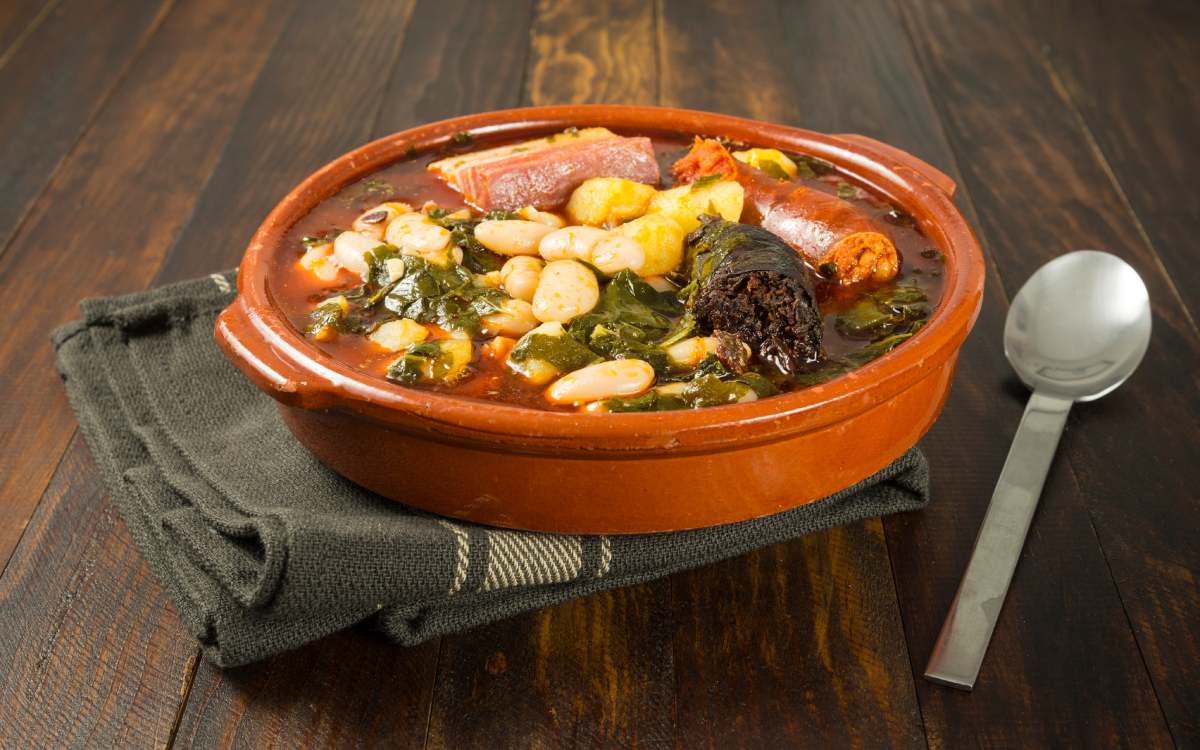
The workers from the 16th and 17th centuries who worked in the field of Cantabria needed the necessary nutrients to withstand their long days. The substantial and equally delicious cocido montañés was born from that need.
This preparation mixes all kinds of ingredients, such as chickpeas, bacon, chorizo, morcilla, ribs, onion, potato, cabbage, and noodles. Like other specialties, such as the fabada, it is usually eaten during the cold season.
Castilla y León
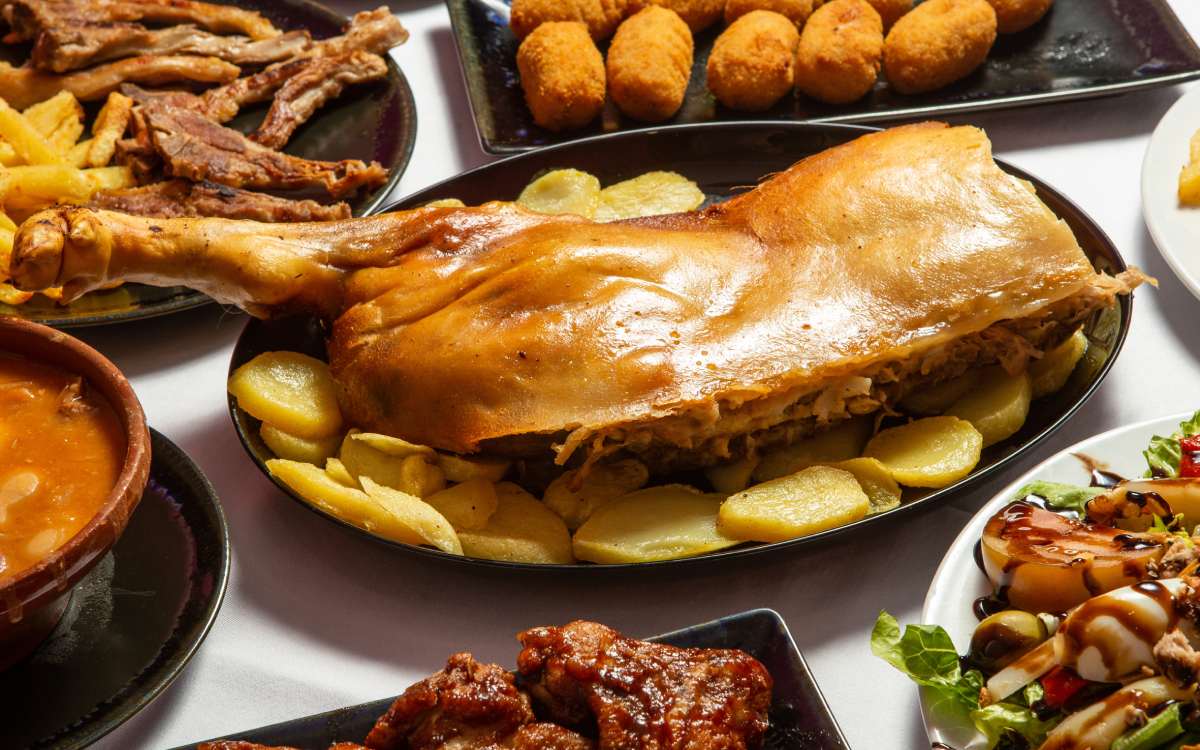
The region of Castilla y León is extensive enough to have all kinds of gastronomic preparations. Nevertheless, one dish stands out more than others: the roast suckling pig, or cochinillo asado in Spanish.
Prepared especially in the province of Segovia, the pig is roasted in a wood oven in a clay casserole dish and served when the skin is crispy. It will, without a doubt, make your mouth water.
Castilla-La Mancha
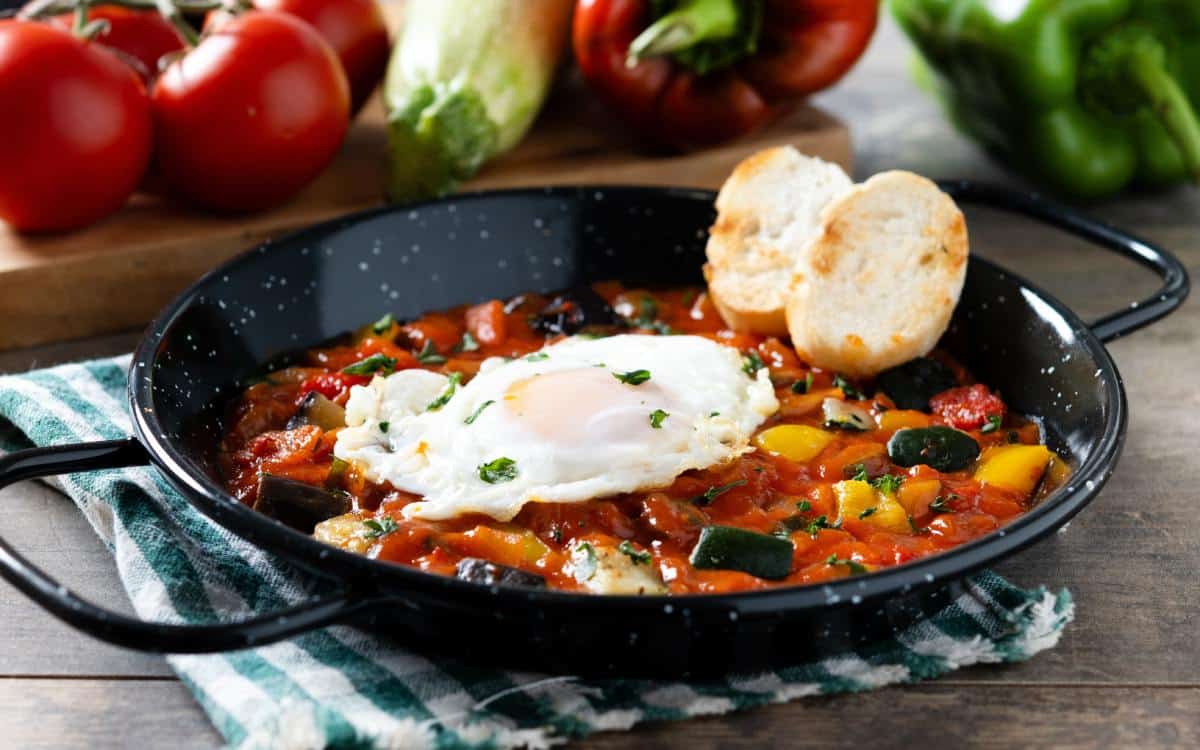
The pisto manchego, as its name suggests, is typical of Castilla-La Mancha. It is a delicious vegetable stir-fry usually made with fresh vegetables, such as tomatoes, zucchini, and green and red peppers. It can be prepared cold or with broth. Furthermore, it is also usual to see it prepared in many ways, with fried eggs, ham, or olives, among other ingredients.
Cataluña
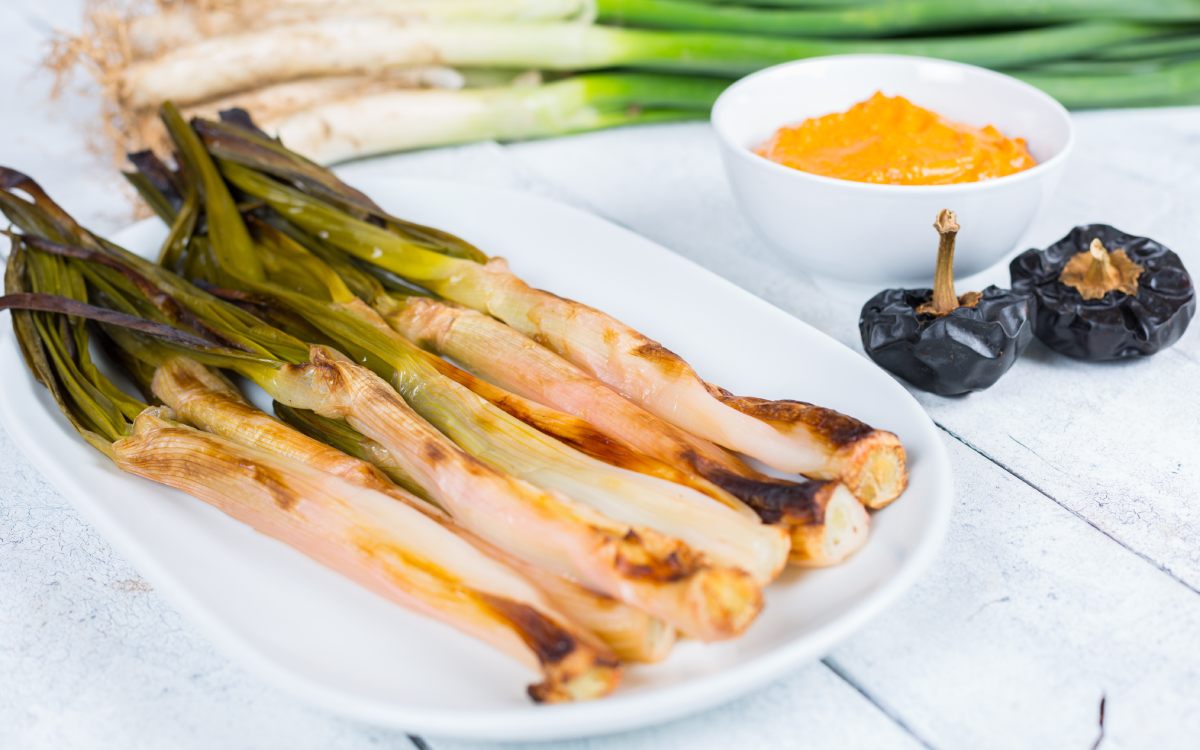
This dish even has its own gastronomic festival, the calçotada, a celebration where calçots are cooked and eaten in large quantities. These calçots are a typical food of Catalan cuisine, especially from Tarragona. People began to cultivate them in the 19th century, but they became popular in the 20th century.
These tender onions, about 20 centimetres long, are chargrilled and served with romesco sauce. The outer layer is usually removed and eaten with the hands. Getting covered by salvitxada sauce is definitely common and is part of the experience.
Community of Madrid
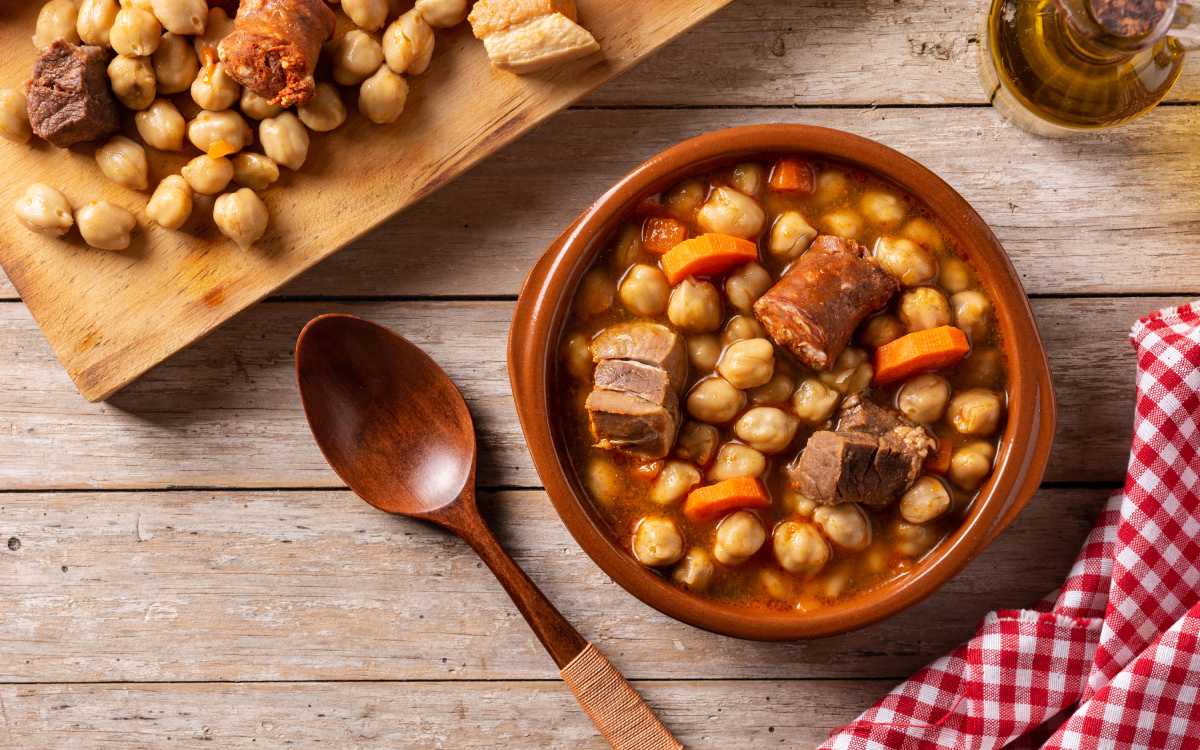
Soup, chickpeas, meat, and vegetables. Clay pot and slow fire. These are the keywords to let the magic happen and taste this succulent stew so deeply rooted in Madrid cuisine. The cocido madrileño nourishes the body and warms the heart. Its origin is uncertain, perhaps dating back to the 17th century, but there is no doubt that it is a much-loved meal among locals and the most traditional in the Spanish capital.
Valencian Community
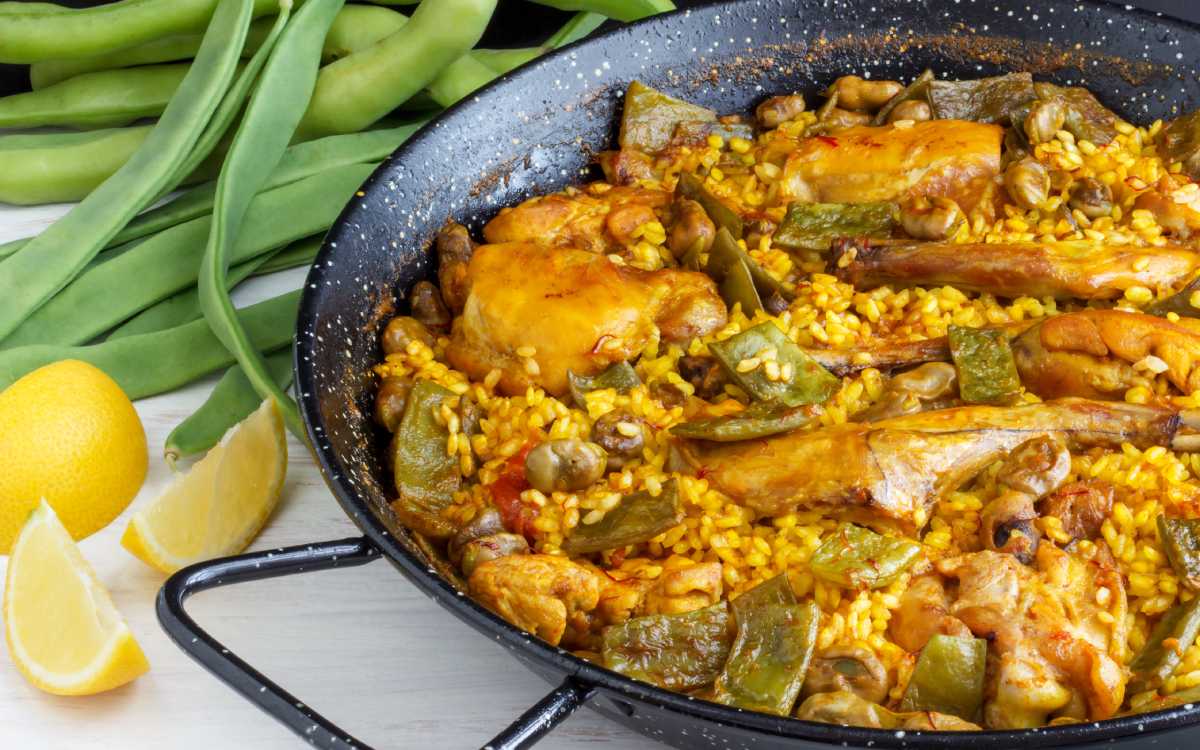
Paella is typical of the Valencian Community, but it is also one of the most emblematic dishes of the country as a whole. Indeed, the Valencian paella is loved in Spain, but it is also appreciated throughout the whole world.
Its origins probably date back to the 16th century, when peasants from the rural areas of Valencia required a meal that was easy to carry and simple to prepare. For this reason, they began to cook rice with other local ingredients, such as chicken, rabbit, beans, and vegetables. Undoubtedly, it is one of those typical dishes that have brought Spanish culture to many other places in the world.
Extremadura
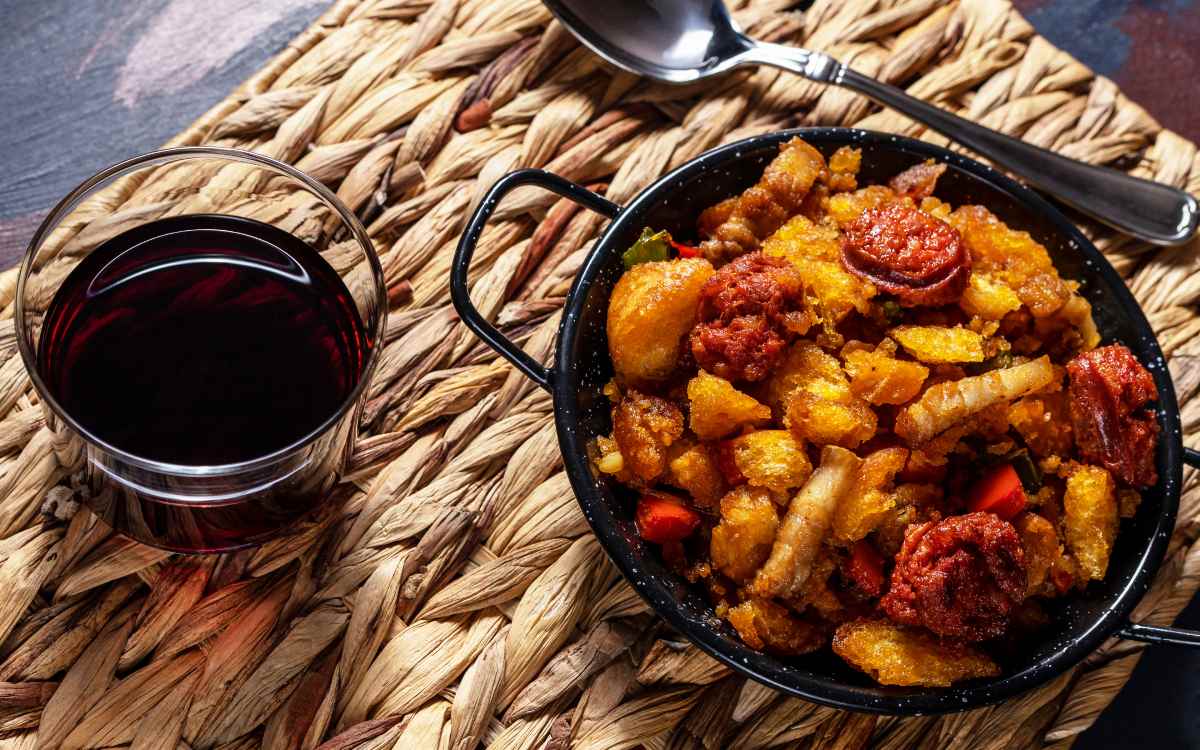
Since "migas" means crumbs, the name of this dish says it all. It is a traditional recipe from Extremadura, and its origin probably lies in Roman times, when shepherds used leftovers of hard bread to prepare an energetic and affordable dish.
Nowadays, it is usually prepared with chorizo and panceta, in addition to garlic, paprika, and oil. This meal has a long history but remains as tasty as always, despite the seemingly simple ingredients.
Galicia
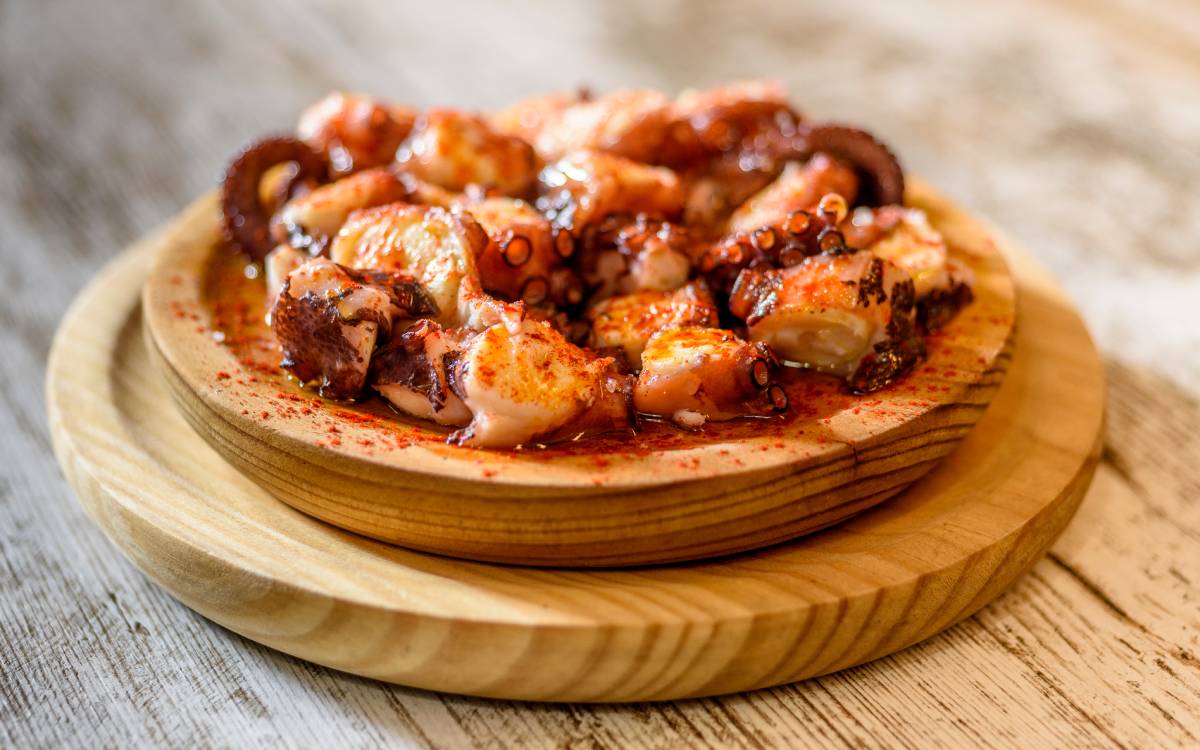
In an area known for its high-quality seafood, Galician-style octopus gets the first spot. Pulpo á feira, as it is known in Galicia, is prepared with potatoes, paprika, and olive oil. It is very popular at typical Galician festivals and fairs, where it is also common to see Galician empanadas, another delicacy of the area with a long history that can be enjoyed with all kinds of fillings.
Balearic Islands
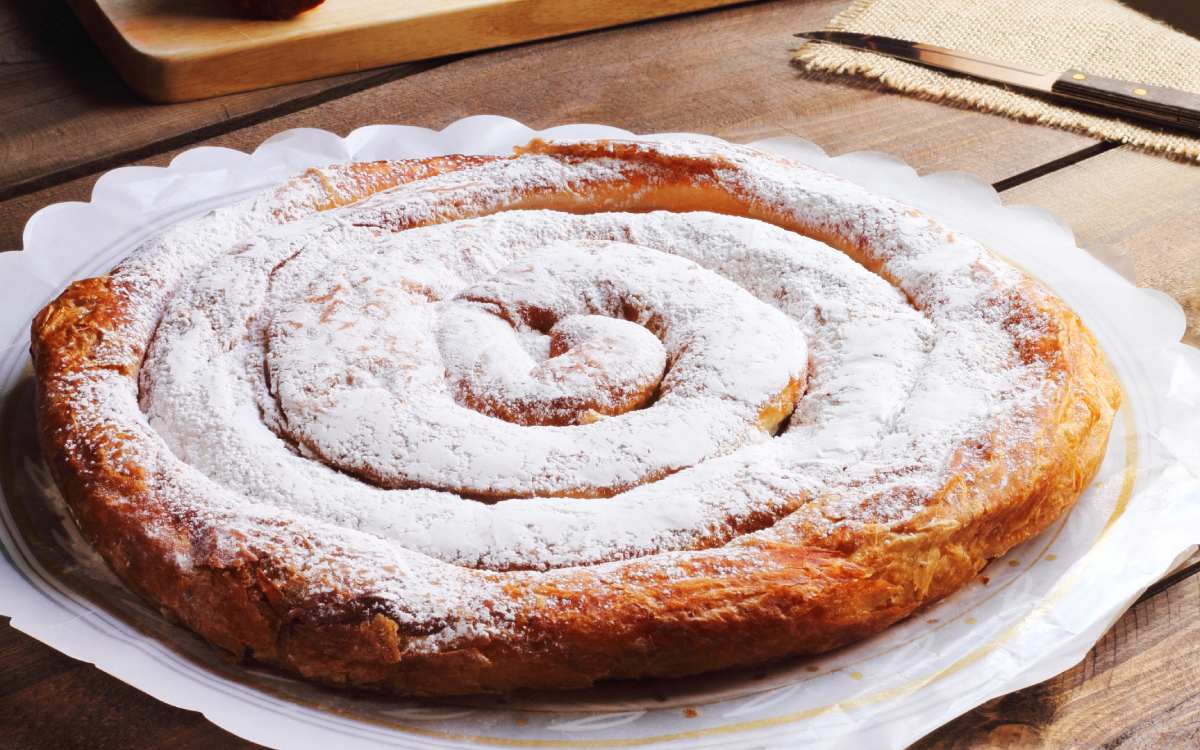
The most famous dish in the Balearic Islands is a typical sweet made with flour, eggs, milk, lard, sugar, yeast, and salt: the ensaimadas. They can be eaten alone but also with ice cream, fruit, or chocolate.
They are believed to date back to the 19th century due to Arab influence, when the technique of making sweet-tasting bread was introduced into the peninsula. If we had to highlight a typical savoury dish from these islands, there would be no doubt that it would be the lobster stew, or caldereta de langosta, Menorca's signature dish.
Canary Islands
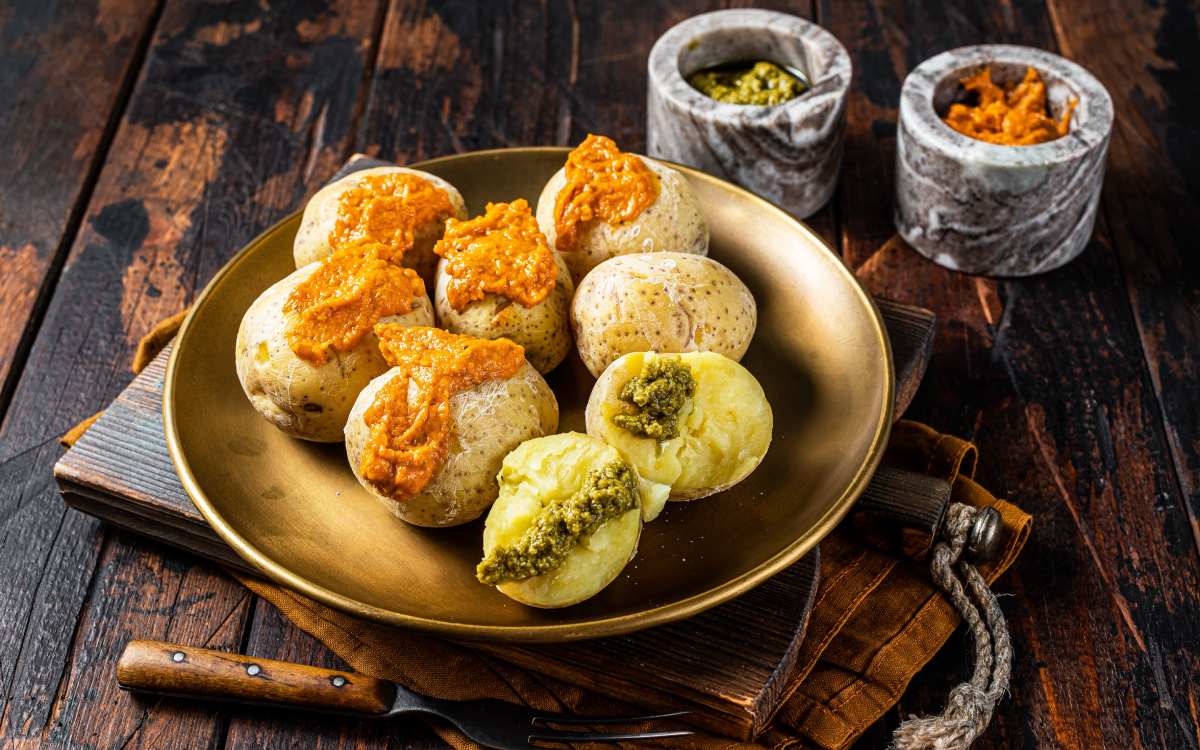
Papas arrugadas, which means wrinkled potatoes in Spanish, are small potatoes boiled with salt until the skin wrinkles, which explains their curious name. They are served with mojo picón, a spicy sauce made with red peppers, garlic, cumin, cilantro, vinegar, olive oil, and salt.
Its origins probably date back to the 15th and 16th centuries. When the Spaniards arrived in the Canary Islands, they brought potatoes from South America and introduced them to the islands.
La Rioja
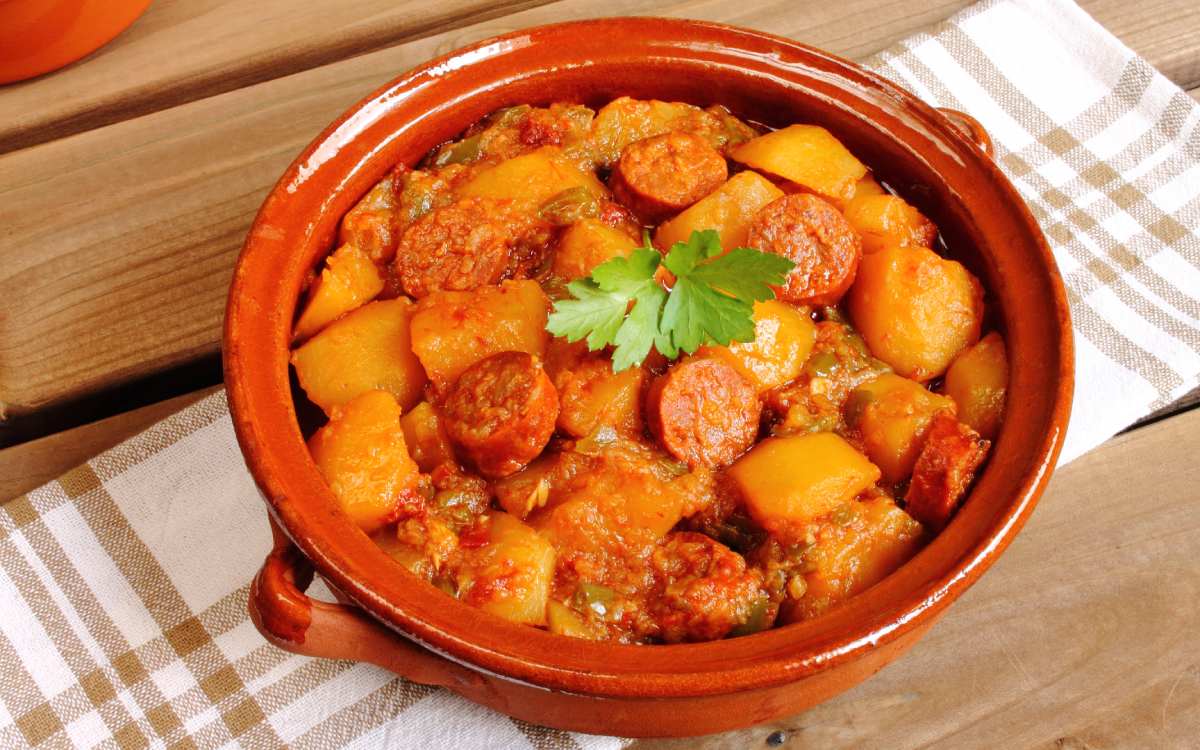
Potatoes a la riojana are a simple but very appetising stew, usually eaten as a starter or main course. This meal may date back to the 19th century, when farmers began to cultivate potatoes and make this delicacy with them, using chorizo, peppers, onion, garlic, bay leaf, saffron, olive oil, and salt.
Although it is probably the most well-known dish from La Rioja, the community can boast of having a great gastronomic repertoire, such as more stews, cod a la riojana, or fried dishes, among many others.
Murcia
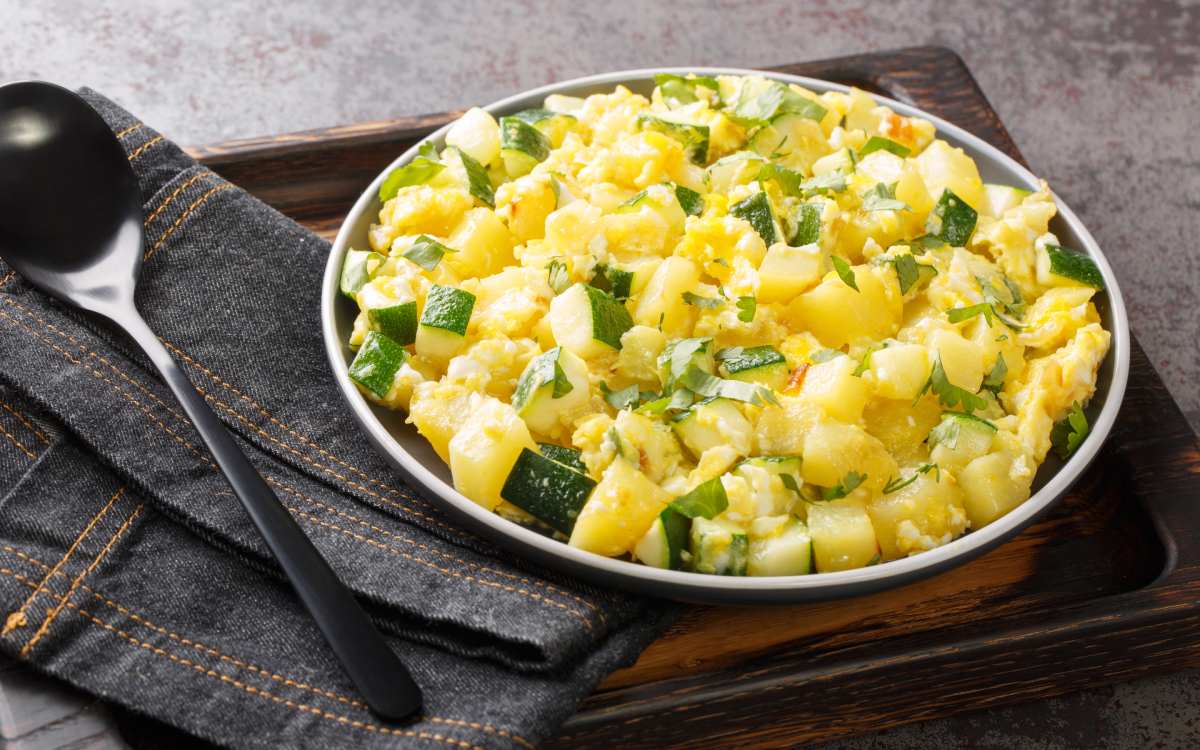
In the Region of Murcia, a dish with a curious name stands out: zarangollo. It is said that such a striking name comes from the word "zaranga", which refers to a mix of things. It is also the name of an Aragonese preparation that reached Murcia.
Likewise, it is a stir-fry or scramble recipe, similar to pisto, whose ingredients are easy to find: zucchini, onion, and garlic. Sometimes, eggs and potatoes are used as a variant. These ingredients are enough to make a delicious meal, usually eaten at Murcian festivals and celebrations.
Navarra

The land of vegetables par excellence has a traditional recipe that reflects the richness of the gardens of the Foral Community of Navarra. The pochas a la navarra emerged around the 19th century when the Navarrese farmers realised something: if they picked white beans, which were a great source of nutrition, before their full maturity in the pod, they obtained a more tender grain. That is the reason behind their name, since “pochas” means tender.
Vegetables are added in the elaboration process, resulting in the pochas viudas, the classic preparation. It is also possible to add other ingredients, such as chorizo, morcilla, bacon, or even a piece of fish or seafood.
Basque Country
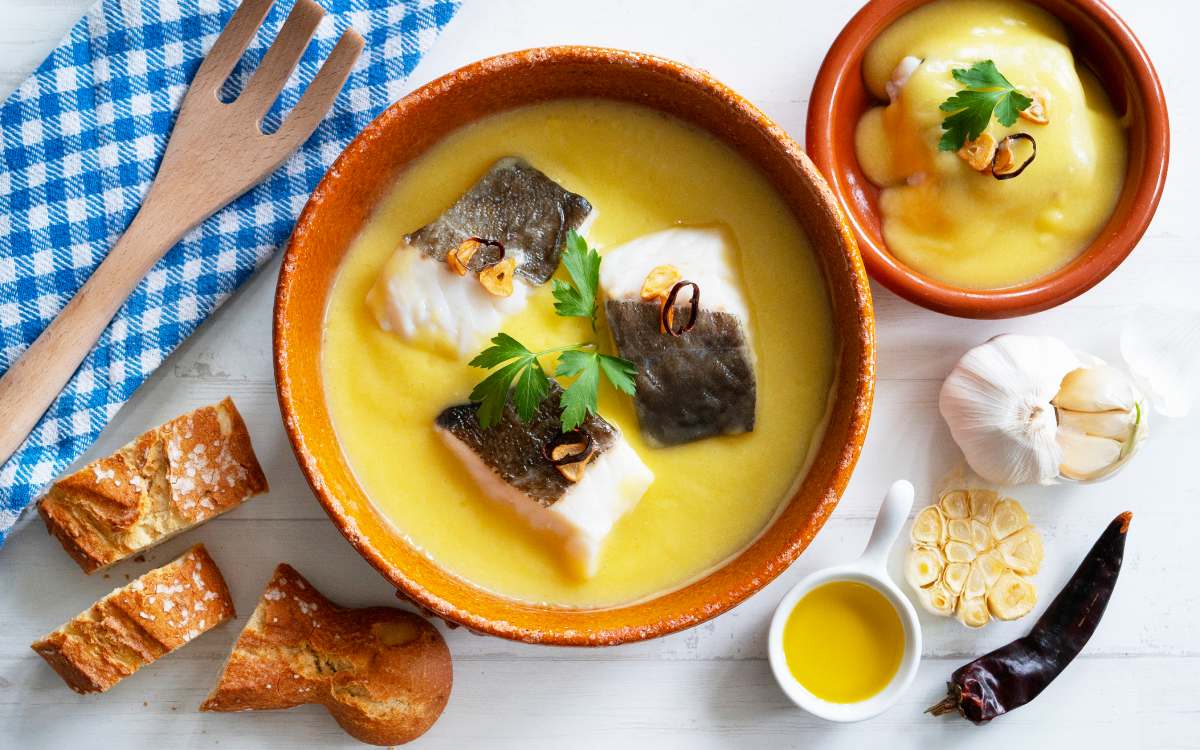
Simplicity and delicacy are two words that perfectly define bacalao al pilpil. This typical Basque preparation closes our list of traditional Spanish dishes. It is made by combining a good piece of fish, garlic, chilli, and olive oil. It is cooked over low heat, constantly moving the casserole, so that the oil emulsifies. In fact, if you wonder what "pilpil" is, it is an onomatopoeic expression referring to the sound of the casserole when it is on fire.
Legend has it that the recipe was first prepared around the 19th century, when a Bilbao merchant ordered cod and was mistakenly delivered more than 2,000 specimens. He created a tasty dish with simple ingredients to sell it more easily so it wouldn’t get wasted. Whatever the case may be, it remains a delicacy enjoyed along the Basque coast to this day.
You can also read this article in Spanish here.
Follow us on Facebook!