San Juan de Ortega
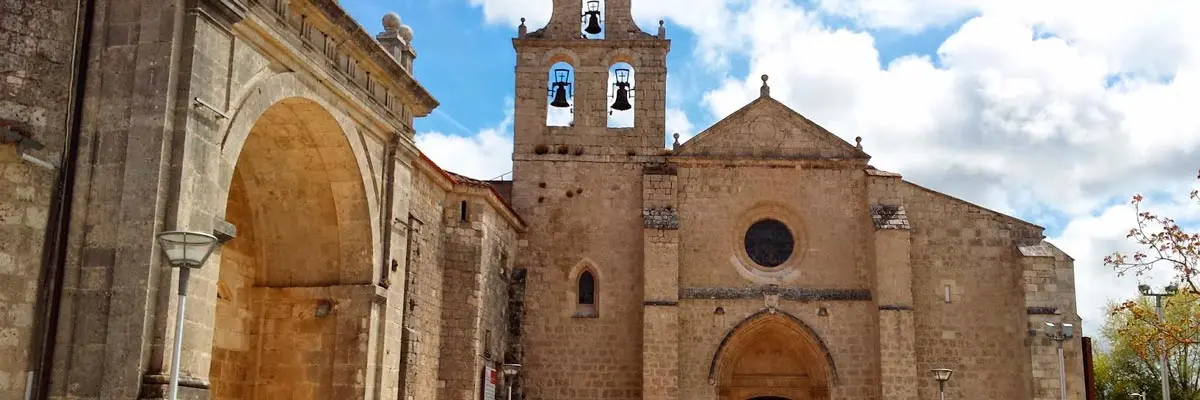
The “Light Miracle” and the Hospital that detoured the Way to Santiago
In a very isolated area of the Original Way to Santiago – and full of bandits—San Juan de Ortega established a monastery and a hospital that was able to detour the pilgrims to enjoy its welcoming. This peculiar Jacobean Center transforms itself during the equinox with the light phenomenon.Plan your trip to San Juan de Ortega
This locality is focused on pilgrims and hikers and visitors usually go during the warmer months so in winter it is quite isolated. There are many tourists that come to witness the equinox in order to see the light phenomenon (light miracle). The nearby natural seatings that are interesting are Villafranca Montes de Oca and the Atapuerca Sitting (accessible through Ibeas de Juarros). To discover the most traditional dishes of the region we recommend checking our specialized page as well to discover the best hotels of the area.¿Quieres conocer este sitio?History of San Juan de Ortega and of the Light Miracle
The young noble Juan de Velazquez –born in Quintanonuño, Burgos in 1080– since he was young he showed his religious vocation, when he was fourteen years old he meet the future Saint Domingo de la Calzada, becoming his assistant. When he was 34 years old the priest went to the Holy Land. During a storm he promised San Nicolás de Bari that if he survided he would build him a hermitage. As it happened, he settled in a place called Ortega, in the middle of the Oca forest, a forest of wild vegetation used by the bandits to assault the pilgrims.

In 1115 it got from the King od Castilla – Alfonso el batallador—the permit to build the hermitage of San Nicolás de Bari. The fame of sanctity and hospitality of the priest was the main reason for many pilgrims to detour their way to sleep in the hostel that he had built. When he died in 1163 he was buried in the chapel of San Nicolás of the temple. Different priests continued with his legate until in 1434 the Jeronimos took the control of the monastery and remained there until the confiscation of Mendiazabal in 1837. Since 1962 the building is administered by the Burgos diocese.
We recommend going with binoculars to witness the phenomenon clearly. The fact that during the spring equinox the image is illuminated exactly nine months before the birth of Jesus has contributed to San Juan de Ortega declaring himself patron of women who wish to have children. For this reason already in the fifteenth century Queen Isabel I of Castile ('the Catholic') pilgrimage to San Juan de Ortega to beg him to give an heir; the same was done by the wifes of the Emperor Charles V and Philip.
What to see in San Juan de Ortega
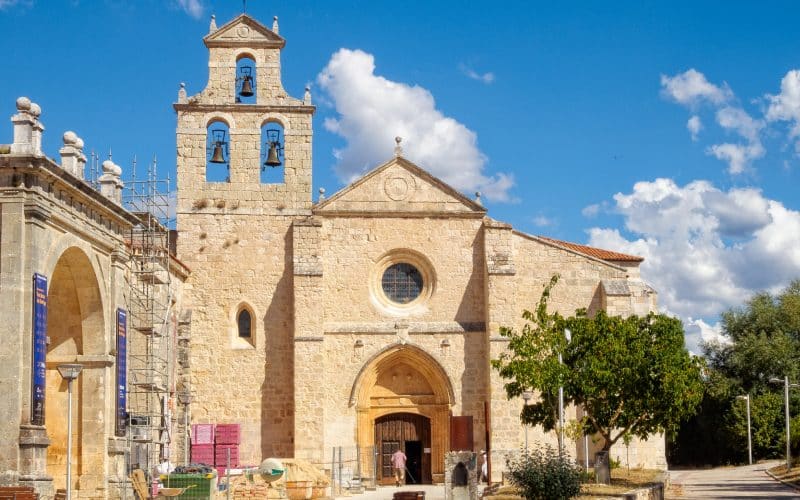
Given the fact that this town is really really small and that everything is settled around the monastery, the main things to see in San Juan de Ortega is the monarch building.
In a place with stunning history and tradition the space with more historical meaning to see in San Juan de Ortega in the chapel of San Nicolás de Bari. It is over the old hermitage founder of the place. Inside there are the In it is the Romanesque tomb with relics of San Nicolás de Bari, a piece that despite being unfinished, is the most important funerary work in the province of Burgos.
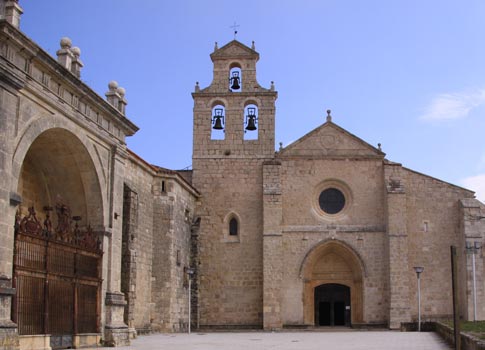
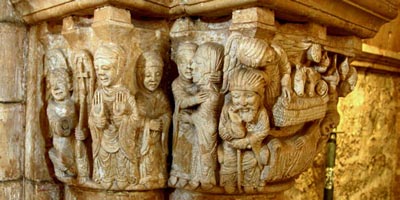
The structure of the church of the monastery is of Romanesque style - it is estimated that at the end of the 12th century - it was enlarged in two Gothic-style buildings during the 15th century. The most important are the double capitals told of the 'miracle of light', described in the history section, which include the Annunciation and the Birth.
In our opinion, another issue that must be seen in San Juan de Ortega carefully is the natural and historical environment; especially the detour of the French Way, which through a beautiful forest leads to Villafranca Montes de Oca. It is also essential to visit the interpretation center of Atapuerca, located in Ibeas de Juarros (and, if possible, the site itself). For history buffs, the trek to the Redondo Meadow, south of the municipality of Agés, where the Battle of Atapuerca and the death of the King of Navarre took place in 1054, a historic milestone that marked the decline of This kingdom in favor of Castilla. It is advisable to ask the locals about the exact places and to be provided with adequate footwear.
Must-see...
Practical Data
DATOS PRÁCTICOS
42º 22’28”N , 3º 26’ 11”W
Burgos: 24 km. Logroño: 97 km. Madrid: 268 km.