Things to Do in Combarro
Granaries and Monasteries
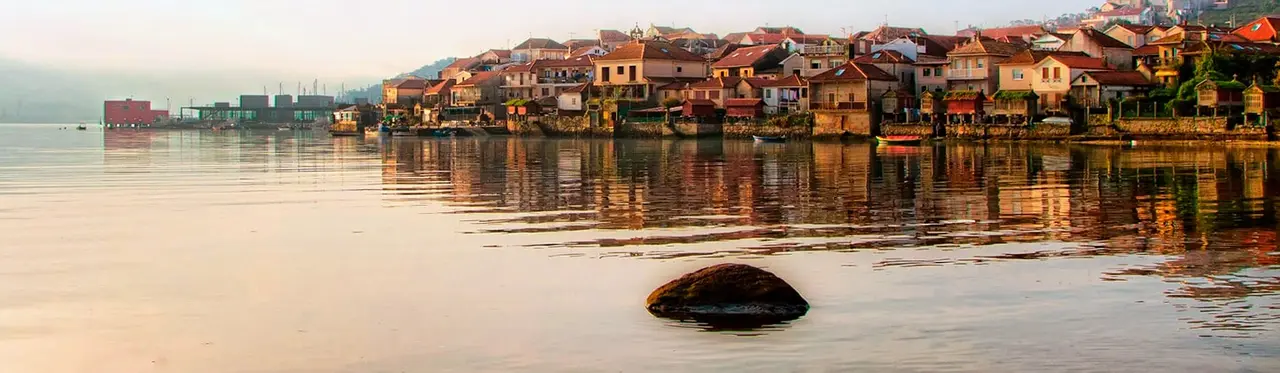
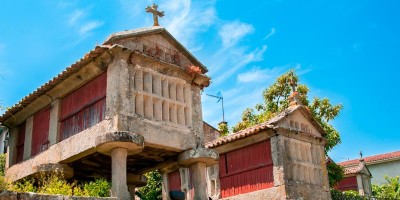
Combarro is famous for its some 30 granaries located on the sea shore, symbolizing its double tradition of being a country village and a seafaring village, just as the huge monastery marks its history.Planning Your Trip to Combarro
Combarro is a typical country and seafaring village in that the main attraction is walking along its streets sprinkled with granite buildings, enjoying the views of its cruceiros (stone crosses), granaries, churches, and areas with views of the river. It is essential to visit the important Benedictine monastery of San Juan de Poio. If you plan accordingly, both things can be done in a single day, leaving the next day for making yourself familiar with one of the neighboring attractions. To the east, the nearby town of Pontevedra needs at least a full day to explore. Following the road to the coast to the west, you’ll come to the bustling vacation destination San Xenxo and then the spectacular Playa de A Lanzada. If you continue this way, you’ll come upon the beautiful village by the sea of O Grove, an excellent place to eat a seafood lunch. You can further visit the lovely urbanized island of La Toja (which offers magnificent views of the estuary). To find out more about the best lodgings and restaurants, check out our articles on where to eat and stay in Combarro.Want to Get to Know this Place?History of Combarro
The name “Combarro” is toponym, deriving from the root word “comb,” that signifies “the curving of the coast,” perfectly expressing the town’s geographic position. In the 12th century, the village and the neighboring island of Tambo were donated to the Monasterio de San Juan de Poio by queen Urraca I of León. The Monasterio de Poio was founded by San Fructuoso in the 7th century and inhabited by the Benedictines for centuries. In its School of Theology, founded in 1548 by emperor Carlos V, was the place where the famous Father Feijoo held classes. In the 20th century, after some years of abandonment as a result of the Desamortización, possession of the monastery passed to the Orden de los Mercedarios. The convent maintained the jurisdiction over the area until the Provincial Organization of Spain in 1836. Currently, Combarro is one of the five parishes that makes up the Pontevedrés municipality of Poio.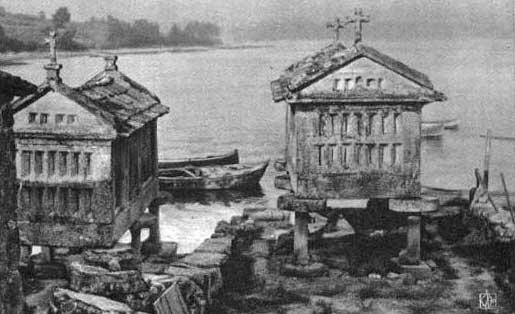
Things to Do in Combarro
Built directly on the granite and next to the sea, the historic village delivers everything a visitor could ever ask for by the way of popular Galician architecture. It is hidden on the edge of the estuary of Pontevedra, and this sequestered location has allowed it to keep its urban structures and architectural style of the 18th and 19th centuries.
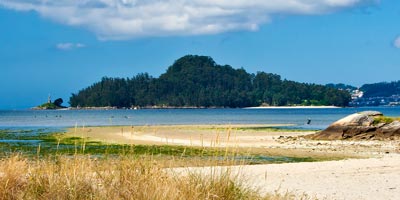
The traveler who comes to Combarro can begin his/her tour walking along the seaside road to the Plaza de Chousa, which used to be a beach. On this path you can enjoy the beautiful coastal views and the mysterious Isla de Tambo, which, at the moment, you cannot access unless you have specific permission.
The architectural heritage that you’ll see in Combarro is characterized by three basic elements: the cruceiros, the popular houses, and the granaries.
The cruceiros (stone crosses) are widespread constructions in the Galician community, showing a spirituality that you can’t miss in its crossroads. However, their origin is not completely known. According to anthropologists, they could be from a pre-Christian cult to their gods to protect the roads and crossroads, which were later Christianized. According to the adverse theory coming from Castelao. “where there’s a cross, there’s a sin.” In the specific case of Combarro, where there are no less than seven in the populational nucleus, the cruceiros have the tendency to point the Virgin toward the sea, but that of Christ toward the land. There is, however, an exception to this rule in Combarro. On the road to the Playa de Padrón, you’ll see the Cruceiro Moderno (1997). Here, the Virgin, under the patronage of Carmen, the patron saint of sailors, looks toward the town, offering her protection to the people that work on the sea.
The town’s characteristic popular houses are mainly grouped together on A Rúa street. The ground floors wee dedicated to storing sailing and agricultural material, and the top floor contains the kitchen and a living room. On its façade, you can see a balcony where the inhabitants would lounge on sunny days. The materials used for this balcony reflect the economic standing of the family who lived there. Stone was the sturdiest material, but the sailors, as a general rule, used wood and wrought iron painted to match their boats, making it easy for them to see from the ocean.
The granaries, a fundamental element of the urban style of Combarro, are a type of warehouse used in the old days for storing food, mostly corn and potatoes. They sit atop stilts to keep the moisture and mice out of its wares, and its floorplan is more rectangular than other Asturian granaries. In Combarro alone, there are still some 60 granaries preserved. 30 of these can be found along the coast, which creates a powerful image. They line the sea like this because their goods were transported by sea, so this was the most efficient location for them.
In the Old Town, you can find the Iglesia Parroquial de San Roque (18th century), which has a wooden roof and a beautiful, colorful, altarpiece inside. It was originally dedicated to San Sebastián, but after suffering a terrible plague that swept through the whole region, it was decided that the church should be dedicated to San Roque, who was considered the great protector against illness and maladies. They also decided to build the cruceiro of San Roque, accompanied by his faithful dog “San Roquiño,” who was placed at the entrance.
Other religious buildings a little outside the city center include the historic group with the Iglesia de San Bernardo, which has a rectangular floorplan, only one nave, and a bell tower with six bells; and the Capilla de la Virgen de Renda, a sanctuary that calls a pilgrimage procession on September 8th.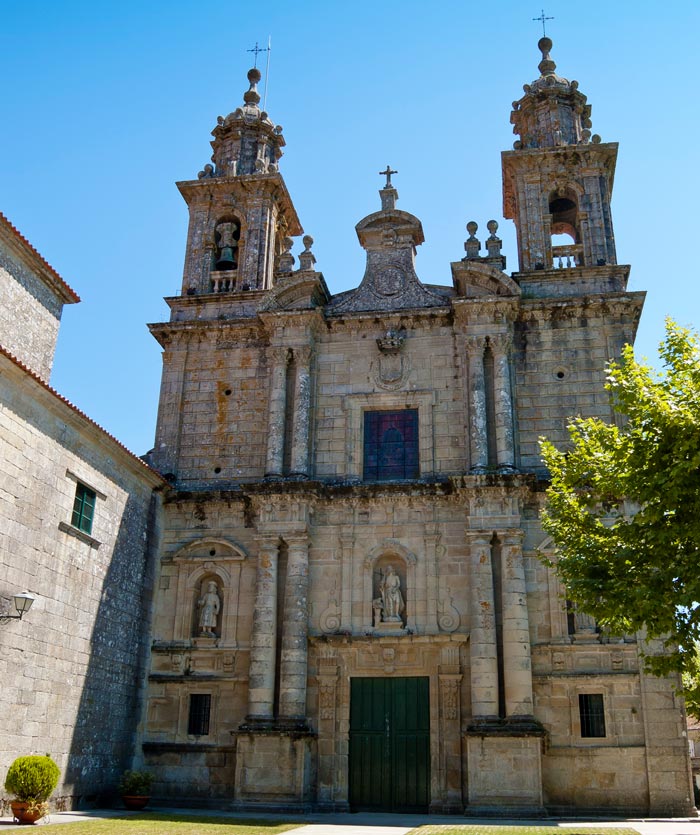
In the monastic property, you can find the famous Hórreo de Poio (18th century). It is the largest in all of Galicia, boasting 17 rows of three columns that support the building with a total area of 123,13 square meters.
Essentials
Practical Information
PRACTICAL INFORMATION
42° 26′ 27″ N, 8° 42′ 5″ W
7 km from Pontevedra
33 km from Vigo
618 km from Madrid
Parking
You can easily park on the outskirts of the town.
0 – 196 m (city of Poio)
1,786 (as of 2008)
FESTIVALS
Virgen del Carmen (July 16th)Santa Rita (May 22nd)
Corpus (June 11th)
San Roque (Patron of Combarro, August 16th)
Fiesta de los Dolores (September 21st)
Romería de A Renda (September 8th)
OTHER EVENTS
Día de Colón (June 16th and 17th)Festa do Mar (August 24th, celebrated since 2001)
Festa do Mexillón (August 15th)
Festa da Castaña (November 11th)