
The Via de la Plata: Southern pilgrimage
WHY TO CHOOSE LA VÍA DE LA PLATA
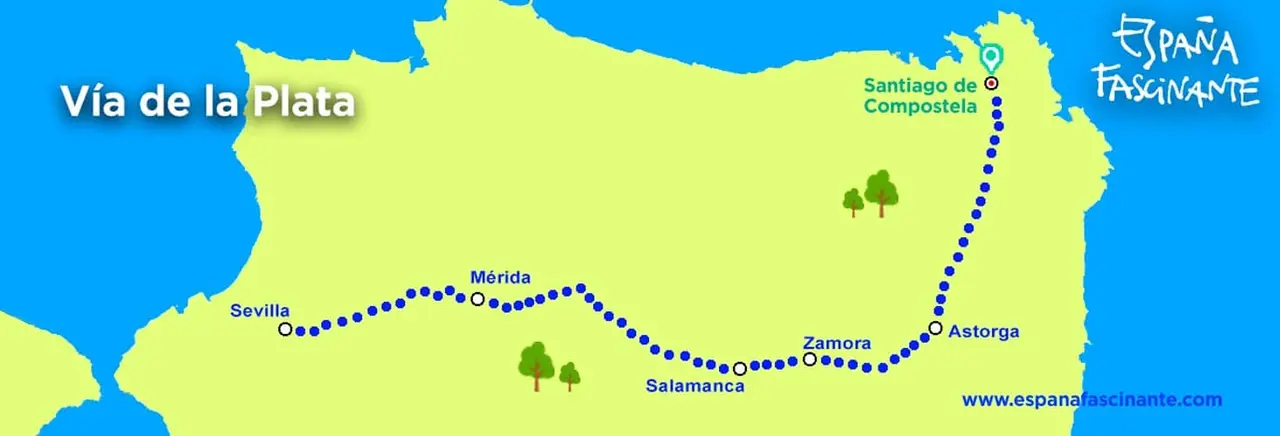
The Via de la Plata is the most important road that starts in the south and has as final Santiago de Compostela. Although some people differ, it is considered that its beginning is in Seville. This route takes advantage of several Roman roads. From the Middle Ages some pilgrims took advantage of them to get to Santiago. It is a very long route (from Seville to Astorga there are 705 kilometers) and it is characterized because the distance between its stages is very long.HISTORY
The Vía de la Plata was established in a Roman road that was used for commercial reasons, linking the southern towns (from Augusta Emerita) with those of the north (to Asturica Augusta). With the Christian conquest of the Peninsula, this route began to be used as a pilgrimage from the south.CLIMATOLOGY
The Vía de la Plata is characterized by having extreme temperatures in summer. That is why it is not advisable to do it between June and September, or at least avoid the stages between Seville and Salamanca In July and August, the temperatures in Andalusia and Extremadura exceed 40 degrees in the shade.NATURAL SPACES
This is one of the routes with greater contrasts, also in its natural spaces. The pilgrim can enjoy places of unusual beauty. From dense forests of Atlantic climate to extensive meadows. Some of the thick oak forests of Sanabria and Orense will leave you with your mouth open. In addition, you can also enjoy the olive groves and vineyards of Andalusia and Extremadura.CATHEDRALS AND MONASTERIES
On this route, the Cathedral of Seville deserves a special mention. Other religious buildings that you can visit with this route are: The Church of Santa Eulalia in Mérida. The two cathedrals of Salamanca, the Old and the New. And the Cathedral of Zamora.GASTRONOMY AND LODGING
Since the Vía de la Plata crosses 4 communities, the gastronomic offer is very varied. Beginning with Andalusia, in it the Mediterranean diet abounds. You can enjoy a lot of gazpacho and "pescaito" fried.
Once Andalusia is abandoned, in Extremadura wine and ham take center stage. Also, something very typical is the Casar cake.
In Castilla y León, the tradition of good wines continues, but its meats also stand out. A roasted lamb will make your mouth water.
As for accommodation, the Vía de la Plata does not have as many hostels as the French Way, but in all the stages that we propose there is at least one.
AMBIENT
The best months to do Via de la Plata are March, April, May and October. In those months, the majority of pilgrims are foreigners. This route is one of the most solitary, although in recent years it has been increasing, but it is still very little prone to overcrowding.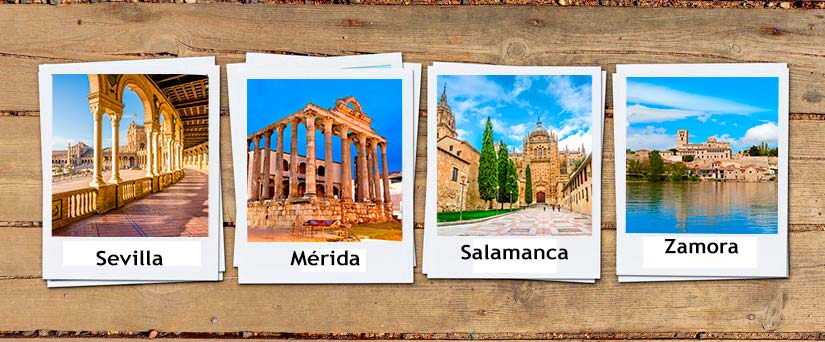
KEY TIPS TO ENJOY THE MAXIMUM OF THE SILVER ROUTE
The signage is very good in general in the Via de la Plata, although being such a long road, it is normal to sometimes get disoriented. In some sections, in addition to the yellow arrows there are other indicators such as stone markers, cubes (in Extremadura) ...The key advice to make the Via de la Plata is to take into account the temperature in the hot months. Heat strokes are very dangerous, so extreme precautions must be taken.
- Seville - Guillena 22.7 kilometers
- Guillena - Castilblanco de los Arroyos 17.5 kilometers
- Castilblanco de los Arroyos - Almadén de la Plata 29.3 kilometers
- Almadén de la Plata - Monesterio 34.5 kilometers
- Monesterio - Font de Cantos 21.6 kilometers
- Fuente de Cantos - Zafra 24.6 kilometers
- Zafra - Almendralejo 36.7 km
- Almendralejo - Mérida 29.6 kilometers
- Mérida - Alcuéscar 36 kilometers
- Alcuéscar - Valdesalor 25.7 kilometers
- Valdesalor - Casar De Cáceres 22.8 kilometers
- Casar De Cáceres - Cañaveral 33.2 kilometers
- Cañaveral - Galisteo 28 kilometers
- Galisteo - Cáparra 29.5 kilometers
- Cáparra - Baños de Montemayor 28.5 kilometers
- Baños de Montemayor - Fuenterroble de Salvatierra 32.9 km
- Fuenterroble de Salvatierra - San Pedro de Rozados 28 kilometers
- San Pedro de Rozados - Salamanca 23.4 kilometers
- Salamanca - The Cube of the Land of Wine 35 kilometers
- The Cube of the Land of Wine - Zamora 31.6 kilometers
- Zamora - Montamarta 18.5 kilometers
- Montamarta - Granja de Moreruela 22.7 kilometers
- Farm of Moreruela - Benavente 25.5 kilometers
- Benavente - Alija del Infantado 22.1 kilometers
- Alija of the Infantado - La Bañeza 20.5 kilometers
- La Bañeza - Astorga 24.2 kilometers
FASCINATING PLACES WHERE TO STAY AND WHERE TO EAT IN THE PLATA DE LA PLATA
We have prepared a page with sections pertaining to local gastronomy and lodging for each town along the Via de la Plata. There are plenty of options for pilgrims who want to sleep near the Via de la Plata during their journey. These options include hotels as well as rural houses. The cities appear in order from South to North.[ultimate_exp_section title="LUGARES FASCINANTES" cnt_bg_color="#ffffff" icon="Defaults-info-circle" icon_align="left"]Etapas
Sevilla: Eating and sleepingGuillena: Eating and sleeping
Castilblanco de los Arroyos: Eating and sleeping
Almadén de la Plata: Eating and sleeping
Monestery: Eating and sleeping
Source of Songs: Eating and sleeping
Zafra: Eating and sleeping
Almendralejo: Eating and sleeping
Merida: Eating and sleeping
Alcuéscar: Eating and sleeping
Valdesalor: Eating and sleeping
Casar De Cáceres: Eating and sleeping
Cañaveral: Eating and sleeping
Galisteo: Eating and sleeping
Cáparra: Eating and sleeping
Baños de Montemayor: Eating and sleeping
Fuenterroble de Salvatierra: Eating and sleeping
San Pedro de Rozados: Eating and sleeping
Salamanca: Eating and sleeping
The Cube of the Land of Wine: Eating and Sleeping
Montamarta: Eating and sleeping
Granja de Moreruela: Eating and sleeping
Benavente: Eating and sleeping
Alija del infantado: Eat and sleeping
The Bañeza: Eating and sleeping
Astorga: Eating and sleeping[/ultimate_exp_section]