
Things to Do in Alpuente
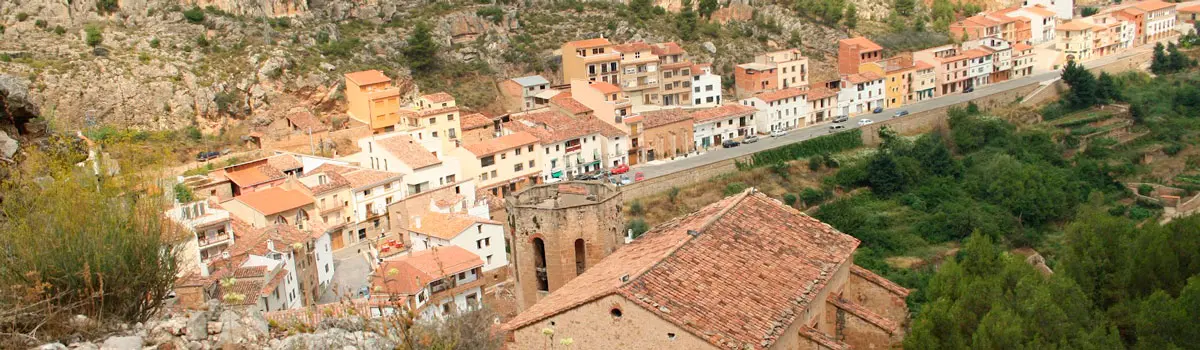
It was the capital of a Taifa kingdom and Carlist Bastion
In the region of Alto Turia, under the cliffs of Alpuente, is a historic-artistic area that housed a Taifa kingdom and was one of the last places of resistance where the soldiers of the "Tiger of Maestrazgo" stayed. Among its attractions is an important center with dinosaur fossils. It is a secluded place that is ideal for relaxing and exploring.Planning your Trip to Alpuente
Located in the region of the Serranía, Alpuente is a beautiful town that has preserved much of its medieval past. Among its monuments are the medieval Aqueduct of the Arches, the Tower of the Aljama, the ruins of the Castle of Alpuente, and the Archpriestal Church of Our Lady of Piety. Visiting this place can take about one morning, and the rest of the day can be devoted to walking and resting. It is a very secluded place, and those who want to sight-see can travel on narrow roads to the wine town of Utiel or even head north to the municipality of Ademuz. Because there are limited places to stay, we recommend you book in advance through our pages on where to stay and what to eat in Alpuente.
Do you want to learn more about this place?
History of Alpuente
In the area, there are vestiges from Iberian and Roman settlement. In the 8th century, following the Muslim invasion, the Omeya emirs of Córdoba commissioned the Berber lineage of the Banu Qasi to govern the Province of Santaver, which encompassed the current provinces of Guadalajara, Cuenca and Teruel. Other branches of this lineage also ruled a large part of the Ebro Valley. To control the road that connects Teruel with the Mediterranean, they fortified the borders of Alpuente, which is the most impregnable place to dominate this strategic mountain pass.Since the year 1009, Nizam al Dawla, local leader of the Banu Qasi, turned Alpuente into the capital of a small Taifa kingdom which also included the Rincón of Ademuz. The BanuQasi, who also ruled in Tudela, Tarazona Ejea de los Caballeros and Nájera, controlled numerous territories from the North peninsular to almost the Mediterranean. From Alpuente, they came to control a more western territory, that had been the Province of Santaver, traditionally dominated by that family. Possibly because of its geographical distance and its small size, Alpuente was one of the Taifa kingdoms that lasted more years, not being conquered by the Almoravids until 1106. Then it was the Almohads who controlled the area.
The Cid took the city in 1089, defeating Abdallah ibn Muhammad, known as Nizam Al Dawla, the fifth and last king of Alpuente. Alfonso VI of Castile gave him the permanent and hereditary lordship of all the lands that the Saracens could conquer in eastern Spain. He gave Abdallah a tribute of 10,000 dinars and remained in the village for a long time, until he returned to his camp in Requena. When the Cid died, the territory was controlled by the Almoravids and then the Almohads. It was then ruled by Zayd Abu Zayd from Valencia, being one of the strongholds that remained loyal when he lost power in the capital.
Towards 1236, Zayd Abu Zayd ceded control of the fortress to King Jaime I; The latter declared it a royal villa and replaced the Muslim inhabitants with Christians, declaring 365 square kilometers of jurisdiction. It would then depend on the Diocese of Segorbe. The administrative importance of this place and the fact that it was close to an accessible passage between the kingdoms of Aragon and Valencia determined that in the years 1319 and 1383, the courts of the Kingdom of Valencia would gathered there.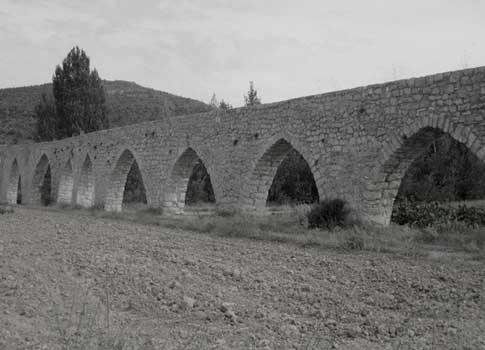
In 1938, it would again be at the front of a war, with fights between the Republicans and supporters of Franco. Wineries and and tourism are now the main income sources for the economy.
Things to Do in Alpuente
Begin your visit at the top of the stone area on which the town sits, in front of the ruins of the Castle of Alpuente. To the left of this impregnable fortress are remains of Roman and Arab origin: cisterns, ponds, and chambers, as well as the stones where gunpowder was made. Enjoy the the Tower of the Veleta or of the Homenaje, a construction of ashlars ten meters high. From there, you can look out at a beautiful view over the city.Next to these ruins is the Archpriestal Church of Our Lady of Piety, a single-nave temple, built between the 13th and 15th centuries, with an octagonal belfry from the 14th century.
The Town Hall was on two occasions used for plenary for the courts of the kingdom in the 14th century. It is located in an old aljama (a mosque), at the entrance of the city. It also served as the Lonja de Contratación and a governing space for Arabs. In the 16th century, a magnificent hall was added.
The ancestral houses, with covers and nobility shields, creates a chivalrous atmosphere. Many houses have balconies of Aragonese influence and other decorative details. One of the ancient furnaces of the 14th century worked until the last third of the twentieth century and it has been put in the Ethnological Museum that includes tools for tillage, blacksmithing, carpentry or materials used to make bread or sausages.
The old Hermitage of Santa Bárbara has been transformed into a Paleontology Museum and an old school has been adapted as a Paleontology Excavation Room. It is the place where the paleontologists clean and reconstruct the dinosaur bones found in the excavations that are carried out every summer.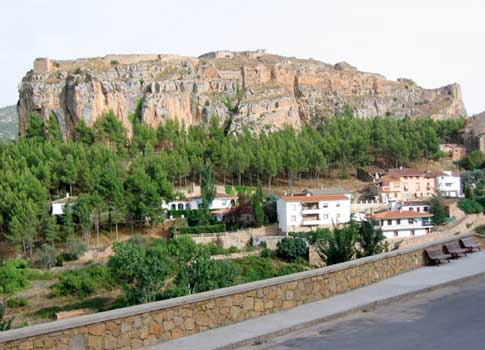
About two kilometers from the village of Collado, are the remains of the historic Poyo Castle, on top of a high mountain. This castle, apparently of Roman origin, played an important role during the Carlist Wars, and its name is linked to Valencian history.
The Hermitage of the Purísima, almost one kilometer from the villa on the Yesa path, is a construction of masonry and ashlars from the eighteenth century.
Aras de Alpuente is the starting place for excursions to the spectacular Araña cliffs, the Rubiales and the Marqués.
39º 52’ 32’’N, 1º 0’ 49’’ W
87 km from Valencia, 312 km from Madrid
Parking
Without difficulty
1000 m
724 (2013)