
Things to Do in Fitero
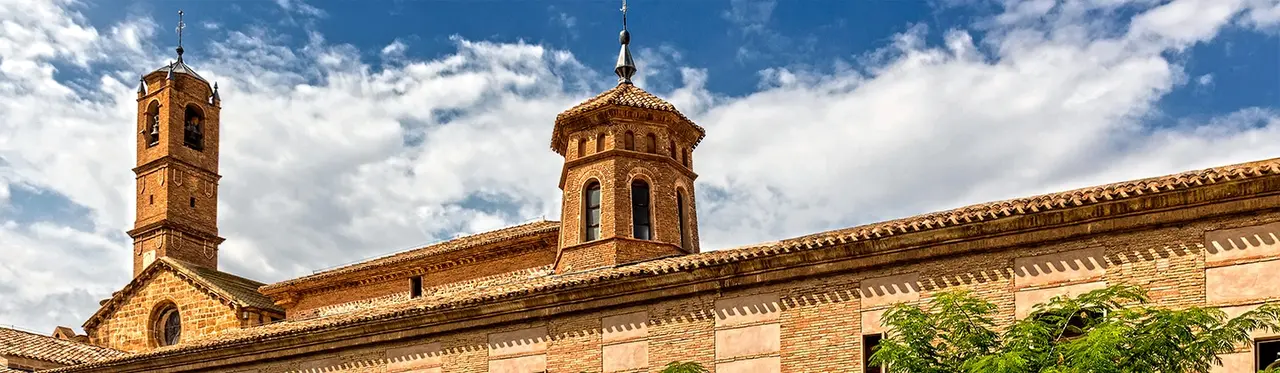
The Cistercian Order of the Peninsula
The history of this town is deeply linked to that of its monastery. It was the first community founded by the Cistercian Order in the Iberian Peninsula, and it created a strong foundation for the population of Fitero.Planning your Trip to Fitero
With an urban area that has little preserved, the greatest attraction in Fitero is its important monastery. Its spa is also very popular with visitors. For excursions, it is possible to head north to see the park of the Bárdenas Reales, a good area for tourist activities. You can also make a trip to visit the Riojan town of Alfaro and the interesting city of Tudela. To learn more about where to stay and what to eat while you are here, we have specific pages for where to sleep and what to eat in Fitero.Do you want to learn more about this place?The History of Fitero
The archaeological remains found in the area give us an idea of the shepherds ' villages in the Bronze Age, Celtic rooms, and a small Roman villa called Tudején, built under the shelter of thermal springs.
In 1140, the Castilian king Alfonso VII initiated the founding of the locality of Niencebas (near Alfaro) of the first Cistercian community of the Iberian Peninsula. They were clerics from the French monastery Scala Dei, in Saint Gaudens. Among them was the monk Raimundo, originally from Toledo, who would be elected abbot of the community. In 1152, the Abbot decided to move his monastery to Tudején. Six years later, the Order of Calatrava was founded.
In 1157, the Treaty of Tudején was created between Alfonso VII of Castile and Ramón Berenguer IV, Prince of Aragon and Count of Barcelona. The territorial limits of the Castilian and Aragonese crowns were set on the site, which became known as Castellón de Fitero because of its frontier character. The monastery belonged to the Crown of Castile until 1373. The history of Fitero began in 1482, when the monastery tried to repopulate the uninhabited population of Tudején, which would cease to exist from there on. The monastery maintained a religious disposition that didn't disappear until after the disentailment during the nineteenth century, despite the constant attempts of its neighbors to emancipate from the authority of the abbey.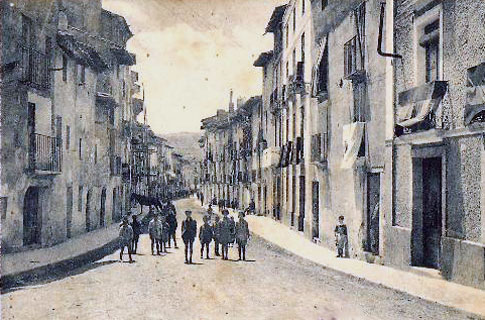
Things to Do in Fitero
Although the town lacks the wealth of other localities, there is a lot to see in Fitero. Inside are two buildings of great patrimonial interest. The first is the Monastery of Santa María la Real de Fitero. What can be seen today is the product of successive extensions and remodeling since its consecration in the second half of the 12th century. The main attraction is the Church of Santa Maria. From its floor, you can see the beautiful ambulatory with its five chapels. Inside, there is a magnificent altarpiece from the end of the 16th century, which is the work of the Flemish painter Roland de Mois. There are also several sepulchres, one of which was built by the Order of Archbishop Rodrigo Ximénez de Rada (patron of the temple during the 13th century) with the intention (that was never actually carried of) to serving as a burial. The church also has a remarkable Renaissance cloister from the 16th century. The Chapter Room is also worth seeing, with a stunning quadrangular floor space dominated by nine sections of ribbed vaults and columns.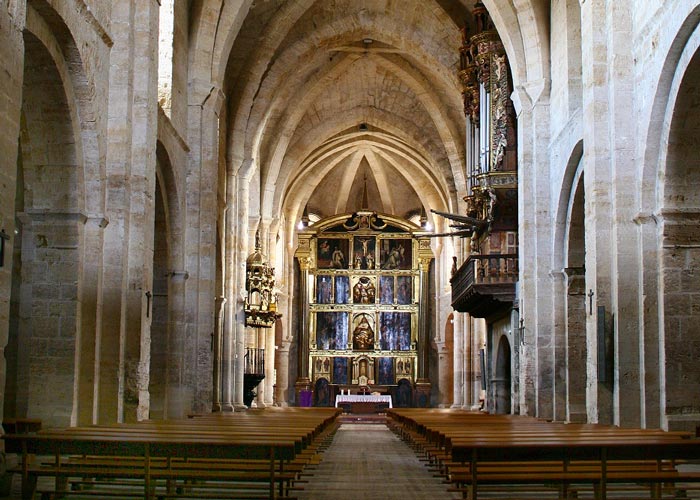
Important Information
IMPORTANT INFORMATION
42° 3′ 29″ N, 1° 51′ 26″ W
99 km from Pamplona, 87 km from Logroño, 313 km from Madrid
In the Paseo de San Raimundo
421 m
2,123 (2013)