The route of the Romanesque churches of the Boí Valley, World Heritage Site
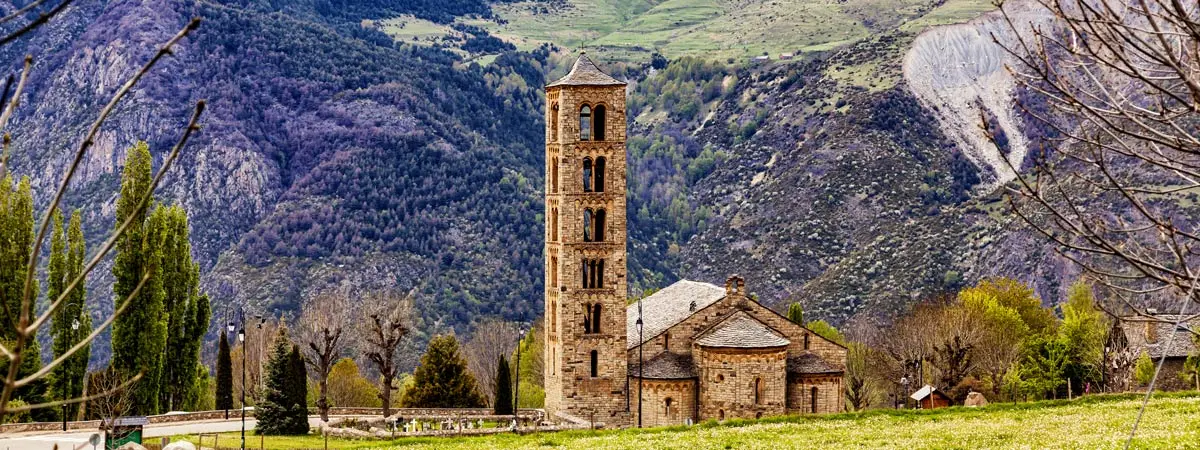
The route through the Boí Valley frames eight Romanesque churches and a hermitage that have been declared a World Heritage Site by UNESCO. This is the Romanesque complex of the Vall de Boí, consisting of the churches of Santa María and Sant Climent de Tahull, the Church of San Félix, the Church of San Juan de Bohí, the Church of Santa María de la Asunción, the Church of Santa María, the Church of la Natividad, the Church of Santa Eulalia and the hermitage of San Quirce. They are located in the region of Alta Ribagorza, in the province of Lleida.

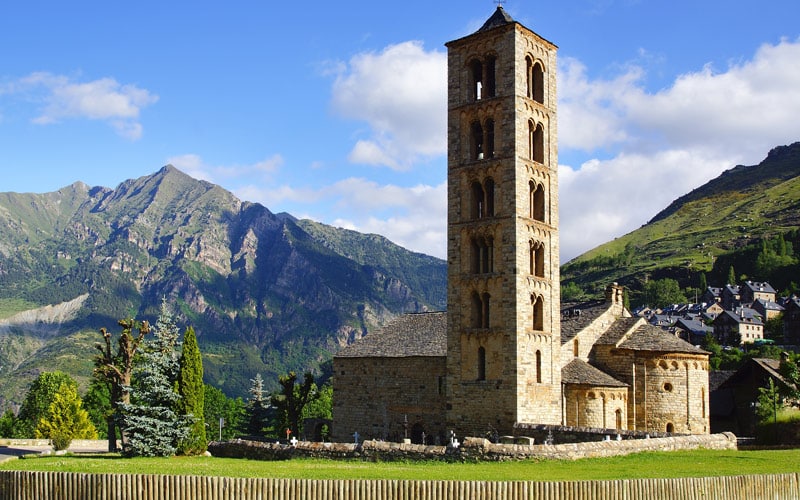
The characteristic that embraces these temples is the unity of the architectural style. They are buildings carried out during the 11th and 12th centuries imitating the models coming from the north of Italy, that is, the Lombard Romanesque. This style is characterised by the functionality of its buildings, the neat work of the stone, the Lombard bands and blind arches as exterior decoration and the slender tower belfries.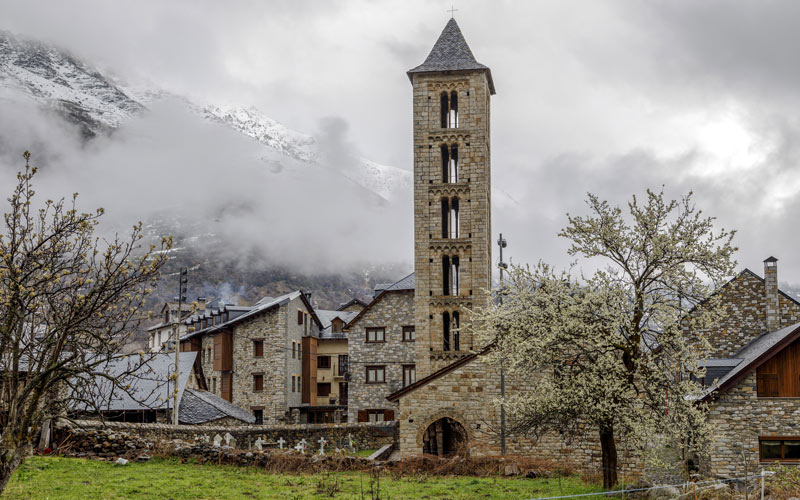
Therefore, the church not only had a religious role in this medieval society, it also played a social role by being a place of meeting as well as a refuge for the people. Specifically, in the Boí valley, the social function is evidenced by the use of its elegant tower belfries as a means of surveillance and communication. Thus, the Romanesque of the Boí Valley is extraordinary given the concentration in such a small space of such a high number of churches that comprise the same architectural style. To this we must add that over time few modifications have been made to them, keeping the concept with which they were created.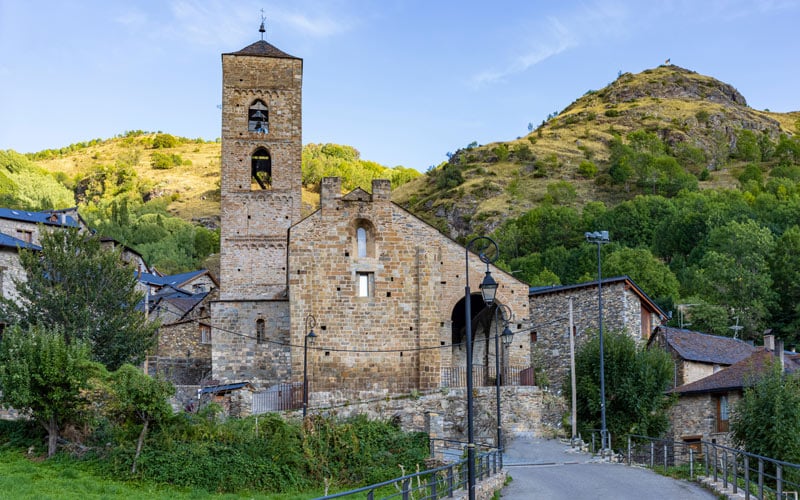
However, there are other Romanesque churches in the Boí Valley that have not been awarded the status of World Heritage Sites. These are the hermitage of San Quirico de Taull, in Pla de la Ermita; San Salvador de Barruera, in Barruera; San Martín de Taull, in Tahull, although only one apse remains; Sant Pere de Boí, of which there are remains in Boí; Sant Cristòfol d'Erill la Vall, in the village of the same name; and San Lorenzo de Saraís, in Saraís, currently an abandoned village.
Church of Santa María de la Asunción in Coll
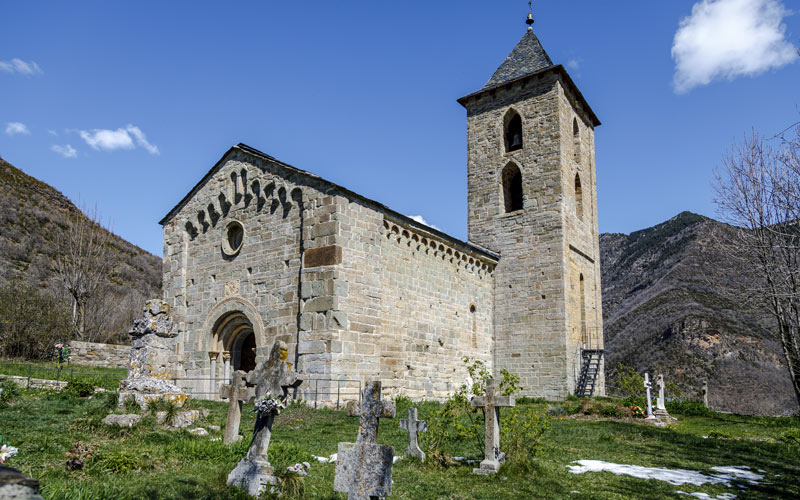
The Church of Santa María de la Asunción is located at the entrance to the village of Coll. It is a Romanesque temple from the 12th century, built with well-carved ashlars. It used to belong to an old Benedictine monastery. In 1110 it was consecrated and now forms part of the cemetery.
It is interesting because it has its own characteristics that distinguish it from other churches in the Bohí Valley. For example, the materials with which it was built, the decoration of the façade (the most interesting part of the church) or the size of the ashlars. The Chrismon and the carved capitals that represent struggles between men and animals are striking.
As in other churches in the Boí valley, the entrance to the Church of Santa María de la Asunción in Coll is guarded by a wrought-iron lock that ends in the shape of an animal's head. Three Romanesque fonts are kept inside the church: the holy water font, the baptismal font and the oil font.
Church of La Natividad in Durro
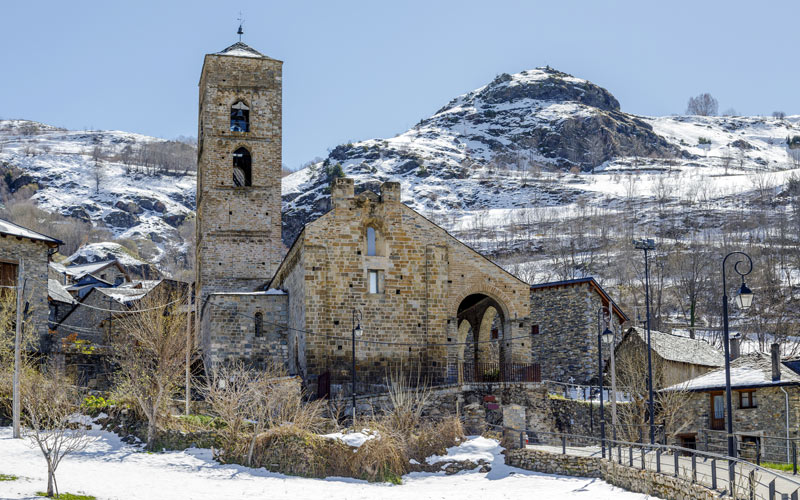
As if framed in a postcard landscape, the Church of La Natividad in the town of Durro is one of the most charming churches in the Boí Valley when it snows. It is contemporary to the churches of Boí, Taüll and Erill la Vall, so it is believed that it was built by the same master builders, as is the case with others in the valley.
Its monumentality is a current testimony of the importance that the village of Durro had during the Middle Ages. Thus, the large proportions of the nave, the portico, the sculpted façade and the bell tower are surprising. In this case, the temple did undergo reforms between the 16th and 18th centuries. The Baroque sacristy and the two Gothic chapels emerged from these remodelling works. Inside the Church of La Natividad you can see the Romanesque image of Nicodemus, which was originally part of the Descent from the Cross sculpture group.
Church of Sant Clemente in Tahull
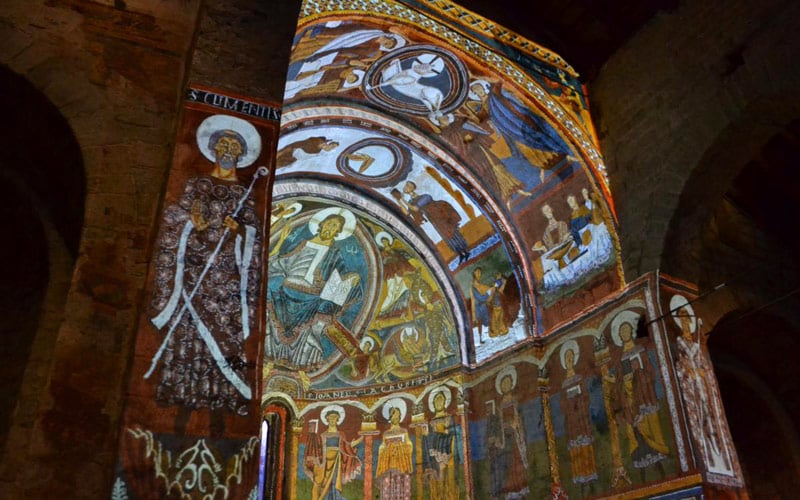
The interior of the church is amazing because of the recovery of the original Romanesque painting and the projection of a video map showing the paintings of the main apse, exposing how the church was in the 12th century. In addition, three Romanesque carvings are preserved here.
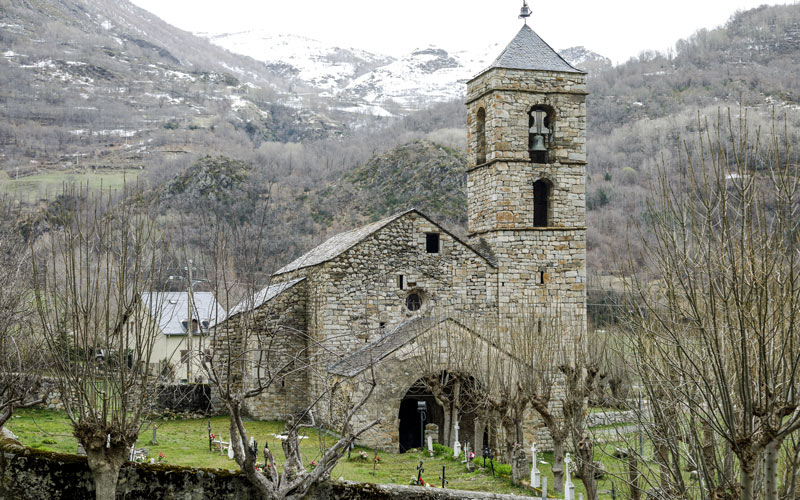
Church of San Félix in Barruera
Church of San Juan in Bohí
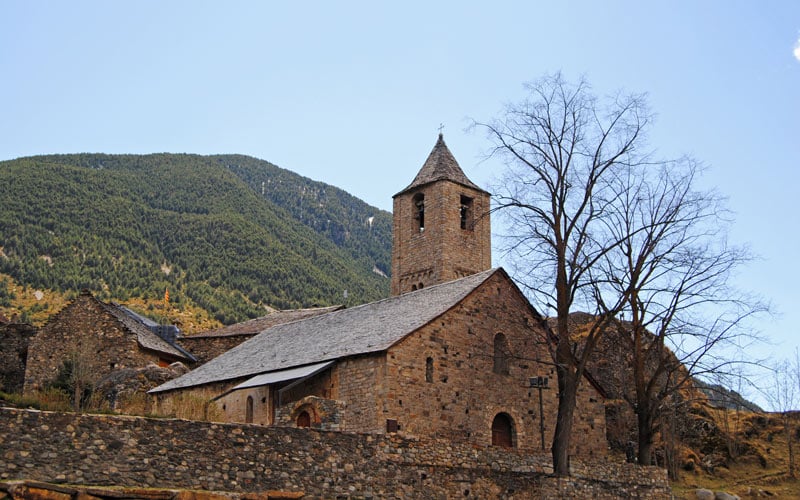
In the town of Bohí is the church of San Juan, located in the Plaza del Treio. It is the temple that has the largest number of architectural elements typical of the 11th century, the first construction period in the Boí Valley. The church of San Juan de Bohí has a basilica floor plan, as do its contemporaries Santa María and Sant Climent. Inside the naves, a valuable collection of mural paintings were found, showing scenes from The Minstrels, the Bestiary and The Stoning of Saint Stephen.
In order to give it a similar appearance to the one it had in the 12th century, during the last restoration copies were made of the fragments of wall paintings that are now preserved in the MNAC. In this way, the original appearance of this church can be seen.
Hermitage of San Quirce in Durro
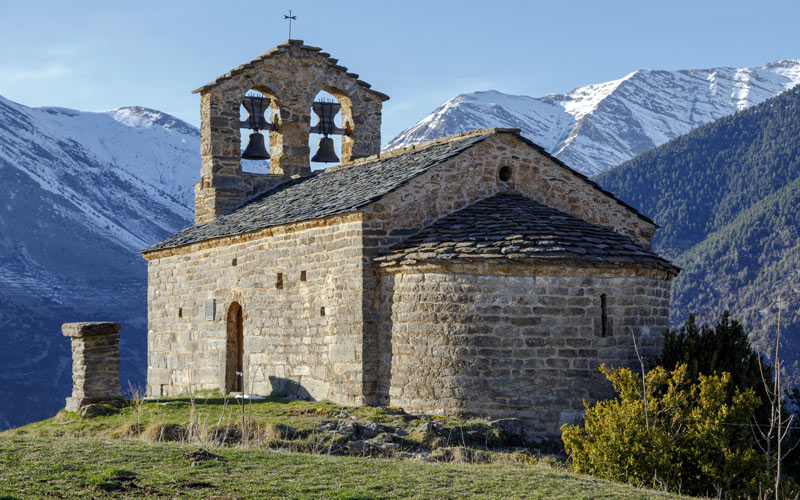
With small dimensions, the San Quirce's hermitage dates from the 12th century and has baroque elements. Inside, one can see how different artistic moments coexist harmoniously: the Gothic image of San Quirc and Santa Julita, the copy of the front of the Romanesque altar and the Baroque altarpiece.
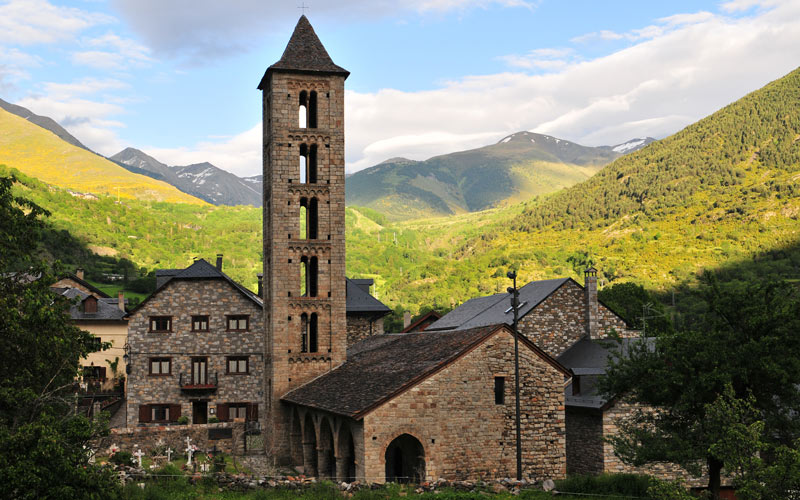
Church of Santa Eulalia in Erill la Vall
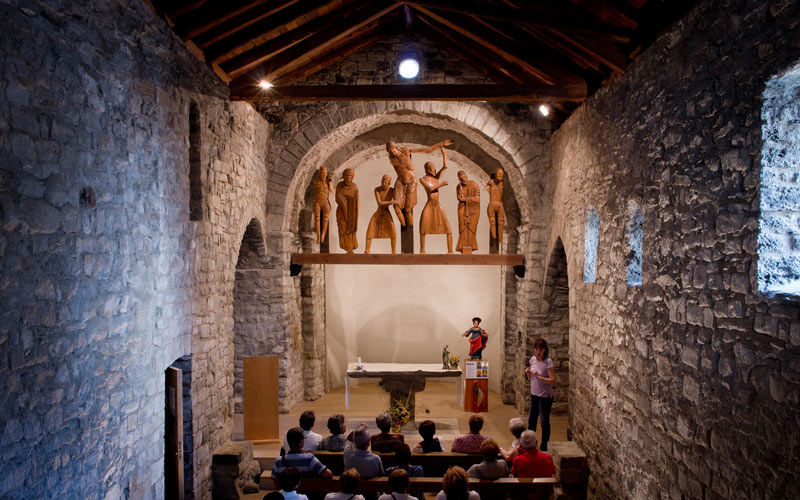
These sculptures are related to a moment of splendour of imagery in Catalonia in the 12th century, reaching the age of the Gothic. A large part of these works were discovered in the Pyrenees, many of them due to the patronage of the barony of Erill around 1104 and 1126. While these woodcarvings were being made known, the frescoes were also painted inside the churches, as in the two churches located in Tahull.
Church of Santa María in Cardet
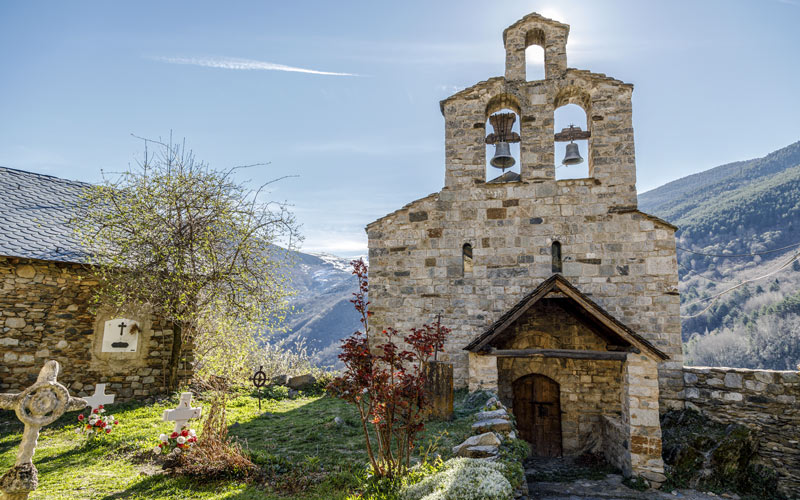
The church of Santa Maria is located in the village of Cardet, and is also known as the church of Santa Maria de les Cabanasses. It underwent some remodelling in the 18th century. It is located at the end of the village, on the slope of a mountain. For this reason, this apse is higher than those of the other churches in the Boí valley, and is also one of the most spectacular.
Inside the church there is a crypt, the only one in the whole valley. Another of its most unique features is the bell tower, which unlike other churches, this one has a belfry, as it is the result of the baroque transformations that took place in the temple. The last restoration carried out has left the interior of the church as it was at the beginning of the 20th century.
Church of Santa María in Tahull
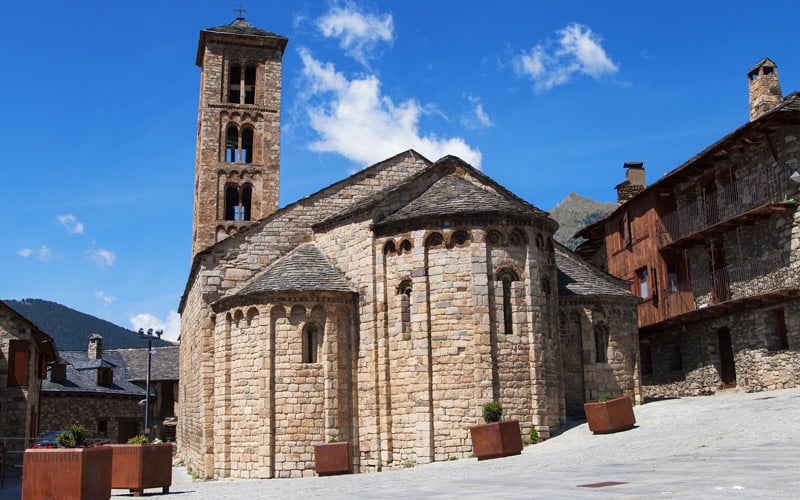
The church of Santa Maria is in the centre of the village of Tahull, unlike the church of San Clemente, which is located at the entrance. The church of Santa Maria was consecrated on 1st December 1123, and only one day later the church of San Clemente was consecrated. This is a reflection of the magnitude of the resources that the Lords of Erill dedicated to the Boí Valley at the beginning of the 12th century. It is also the only church in the valley where the population is based around it.
Between 1919 and 1923 the set of Romanesque mural paintings that were inside it was taken to Barcelona, as is the case with other temples in the valley. However, today we can see a reproduction of the central apse, a scene in which the Epiphany is predominant with the baby Jesus in the Virgin Mary's lap, while the Three Wise Men maintain an attitude of offering.