
Water guides the way through the extraordinary Añisclo Canyon
Discover one of the best kept secrets of Ordesa y Monte Perdido National Park, where flora and running streams mark the trail.
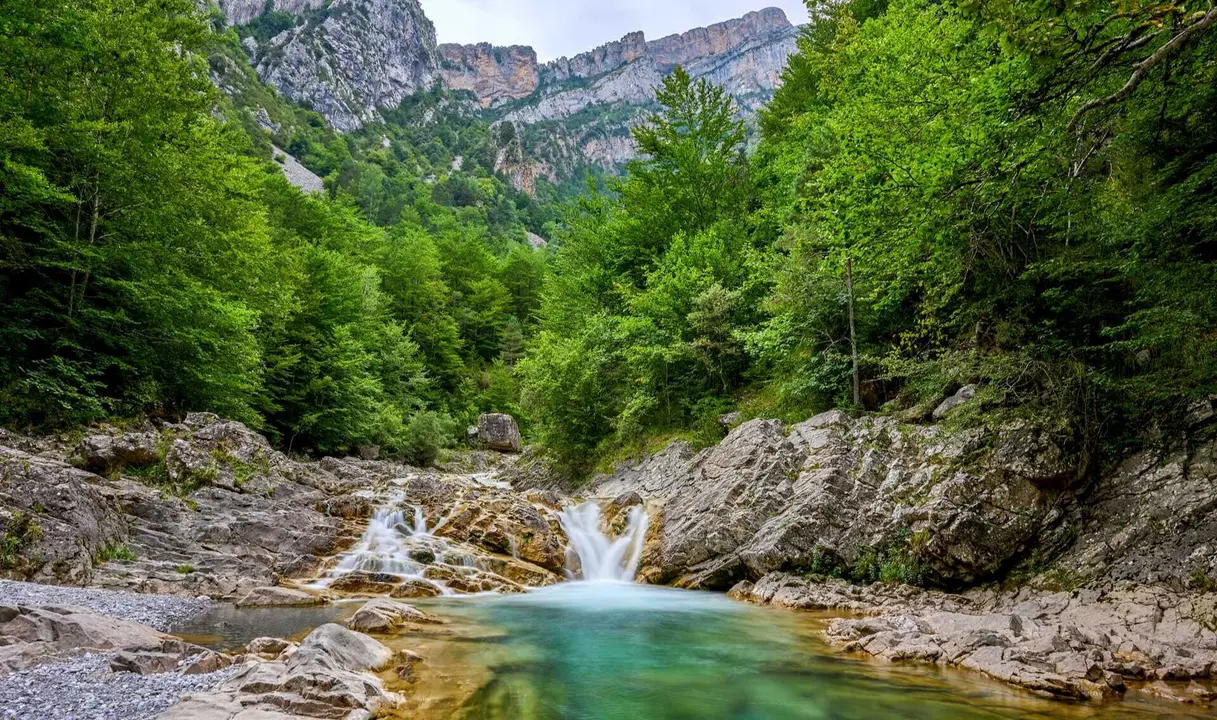
Discover one of the best kept secrets of Ordesa y Monte Perdido National Park, where flora and running streams mark the trail.
On the heights of Huesca’s Pyrenees mountains in the Ordesa y Monte Perdido National Park, the sound of flowing water currents guides hikers to a little-known and mysterious gorge of limestone walls surrounded by woodland and beech forests. And late spring and summer are the best moments to enjoy this natural marvel.

GUIDED BY WATER
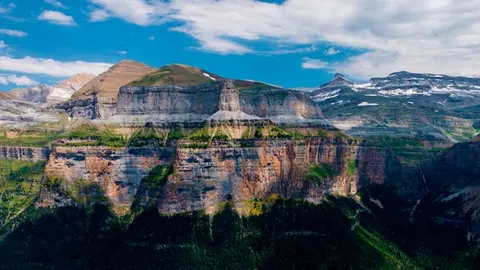
A narrow path hugging the course of the Bellós River leads to the vertical limestone walls of Añisclo Canyon. Crowned by a glacial cirque, the valley’s deep canyon has been carved out by karstic erosion over aeons.
Flowing water currents have slowly shaped the limestone rock into natural flumes, waterfalls and otherworldly shapes, creating one of the most breathtaking landscapes to be found in the Aragonese Pyrenees. The result is a scene of towering escarpments, shaded corners and luxuriant ever-changing vegetation.
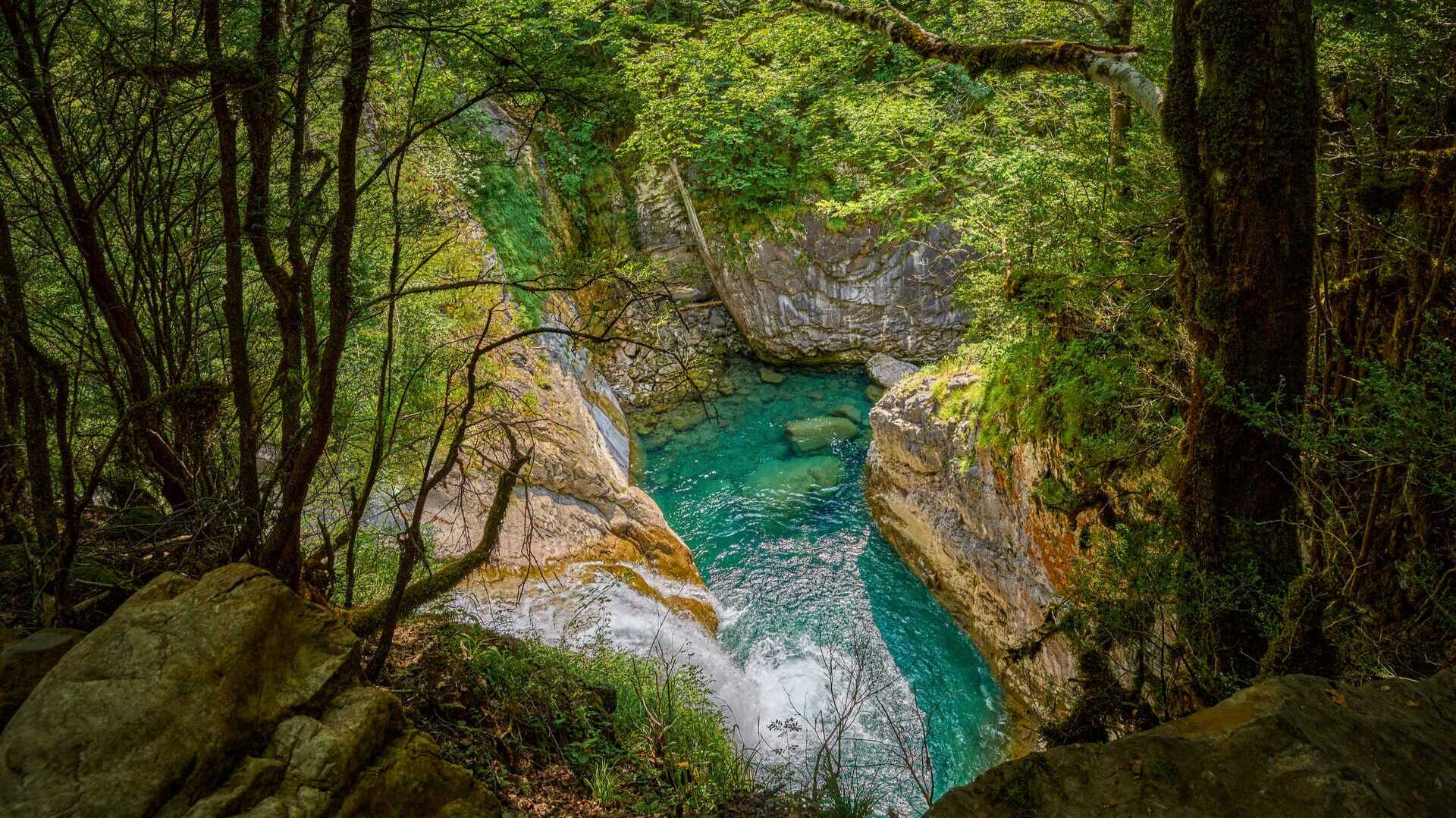
A variety of trails leads to this fascinating canyon, and once there, the surrounding ravines mark the rest of the route. Fresh mountain air, shaded hues, moss-covered stones and the resonance of flowing water accompany trekkers into one of nature’s more curious treasures. Caution is advisable in these parts, especially with children, as the terrain may be slippery.
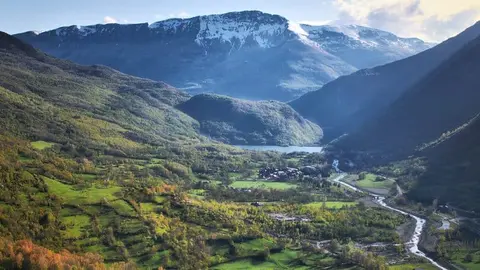
Nature continues to be the focal point at some must-see sites found along the route, which include the Moros Cave, Saint Úrbez Sanctuary and the Añisclo mountain pass bordering the Pineta Valley.
EVOCATIVE ROUTES
A number of walking routes set off from the parking facilities of Añisclo Canyon and two trails come highly recommended. The first route leads to the waterfall of Fuenblanca and to some of the most emblematic landscapes the Pyrenees have to offer. Following the Bellós River and crossing spectacular gorges, the vegetation transforms as one ascends, offering an unforgettable panorama.
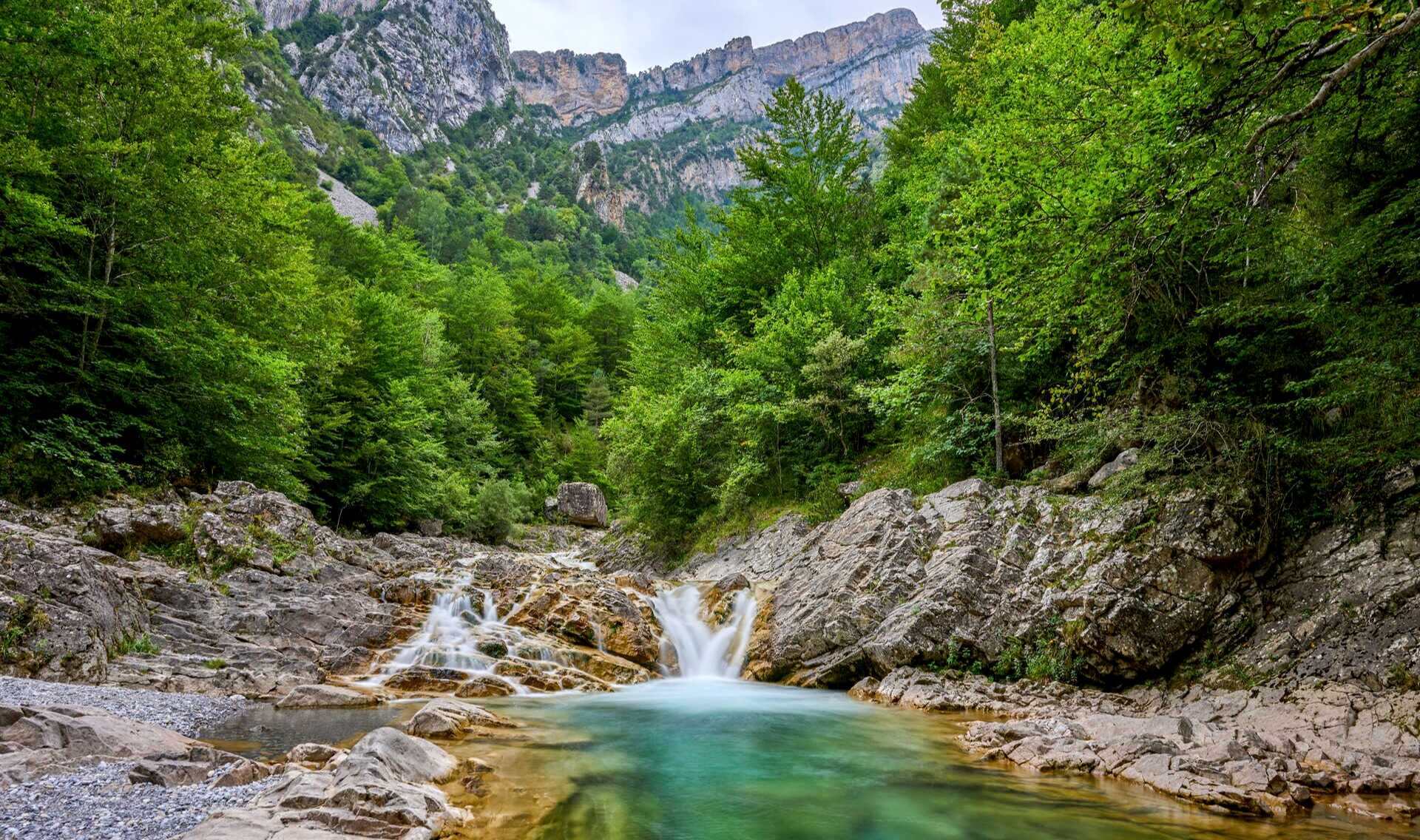
This 28-kilometre route, ascending some 1,650 metres, culminates at the majestic Fuenblanca waterfall and the stunning views of Añisclo Canyon unfolding into the distance.
For those seeking a less demanding hike, but still yearning to enjoy the canyon’s many waterfalls and spectacular spots, the water route provides a less strenuous alternative. Additionally, this route leads to the chapel grotto where, according to legend, French monk Saint Úrbez once lived in the eighth century.
This 45-minute circuitous ascent of nearly a thousand metres leads to a chapel carved into the rock, one of the canyon’s more distinctive spots. Crossing the lofty medieval Saint Úrbez Bridge marks the beginning of this route. Although the chapel’s interior is no longer open to visitors, contemplating its exterior and highly unusual setting is still worthwhile.
Añisclo Canyon exudes the quintessence of the Pyrenees Mountains, where the dynamic mountain waters guide hikers on a mesmerising journey. This carved-out corner of Huesca Province is a true wonder of nature worth exploring.
You can also read this article in Spanish here.
Follow us on Facebook!