
Royal Palace of Madrid
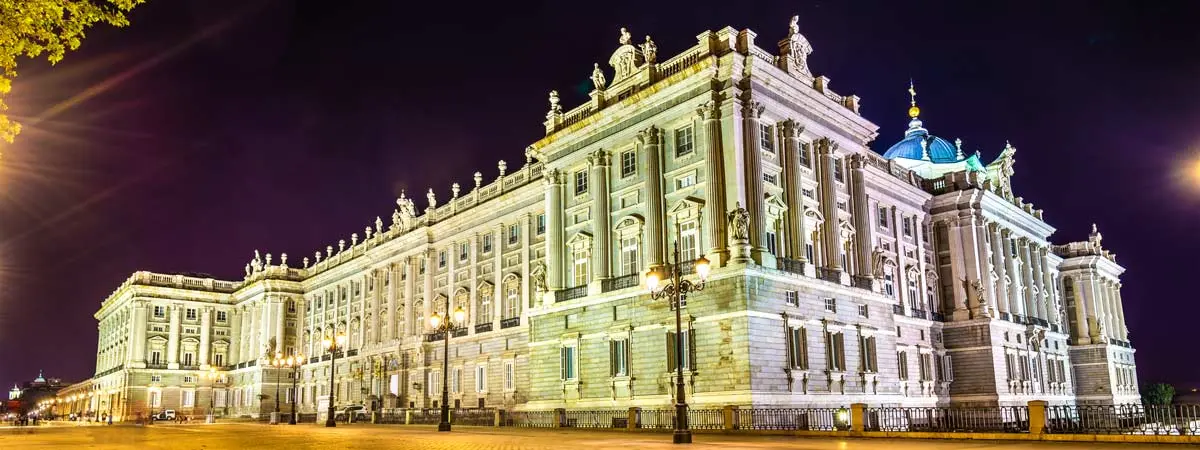
The Royal Palace of Madrid is located in the Madrid of the Austrias. It was the residence and headquarters of the Hispanic monarchy since its construction, during the reign of Philip V, until the proclamation of the II Republic.
A BRIEF HISTORY OF THE ROYAL PALACE OF MADRID
The origins of the Royal Palace date back to the old Alcázar in Madrid, from the Spanish-Muslim period. Centuries later, the Trastámara family transformed this castle into a royal residence. However, it was Charles V who carried out an important restructuring of the building. During the reign of Philip II and at a time when Madrid becomes the capital of Spain, the Alcázar gained great importance.
In the early hours of December 24, 1734, a fire completely destroyed the Alcazar. Philip V was the first monarch of the Bourbon Dynasty, who promoted the construction of a new palace.
The project was entrusted to Filippo Juvarra. However, his premature death caused the construction works to be directed by Giovanni Battista Sacchetti and, later, by Francesco Sabatini.
Finally, the Royal Palace was finished during the reign of Ferdinand VI. Even so, later monarchs carried out small renovations.
POINTS OF INTEREST IN THE ROYAL PALACE OF MADRID
Access to the Royal Palace of Madrid must be through the Patio de Armas (Parade Ground). It is a wide forecourt similar to the one in the old Alcázar de los Austrias. It was aimed to hold the parades of the troops, as well as different military exercises.From here you will enter the Palace through the south facade. It was the first facade to be built, and keeps the same orientation of the main entrance of the Alcazar.
All the decoration of the facades are for propaganda purposes. It exalts the Spanish monarchy and the Catholic Church.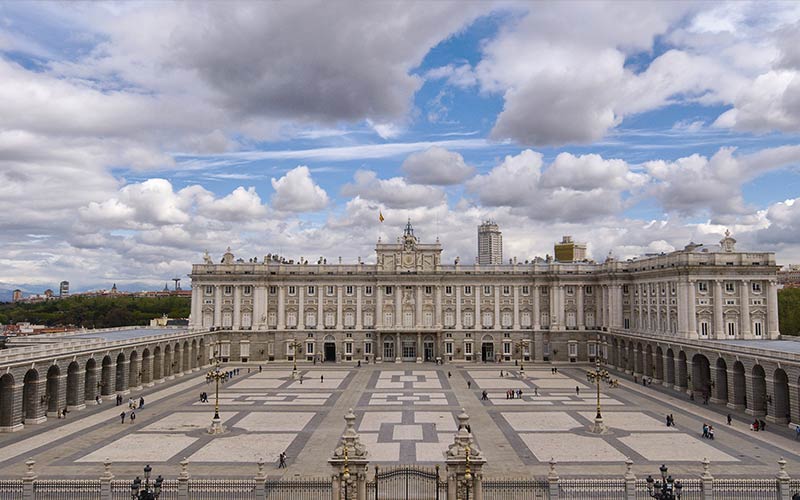
It is an imperial-type staircase with large windows with arches, adjoining columns, pilasters and is decorated with different castles and the Golden Toisón.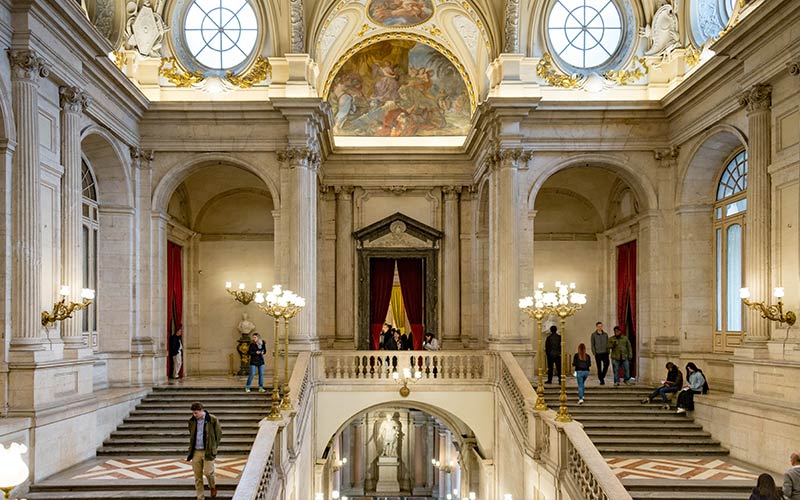
It is completely decorated with red velvet hangings with embroidered borders. Twelve large mirrors are distributed along the walls.
A highly decorated sculptural canopy houses the space of the Throne. There are also two sculptures of two golden lions which come from the old Alcazar. They symbolically protect the Throne.
In this room, various public acts of exaltation of the monarchy are held, such as the royal kissing of hands and the presentation of credentials. In its day it was even used for the exhibition of the mortal remains of Charles III.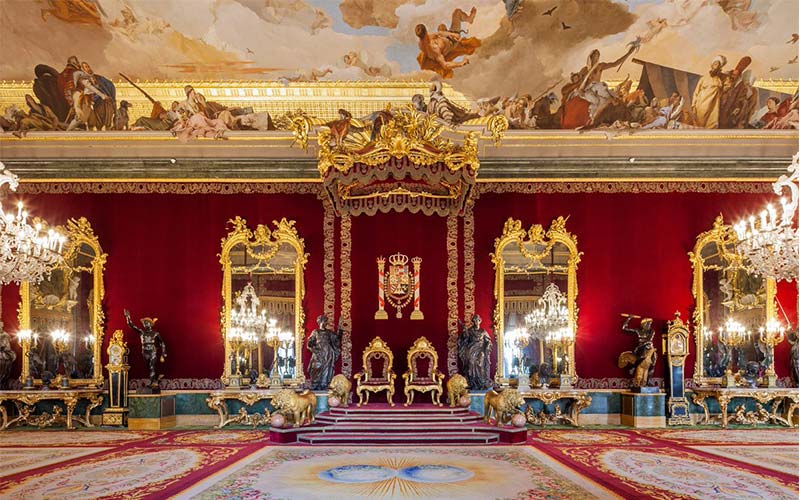
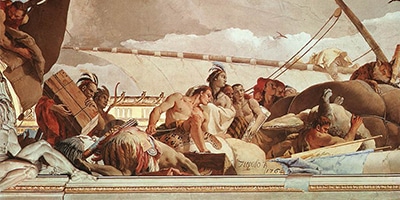
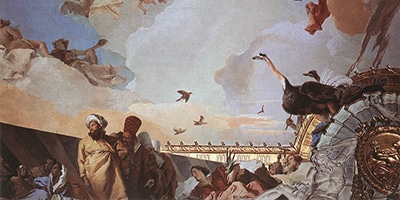
In its vaults there are frescos made by Anton Raphael Mengs. The Apotheosis of Hercules stands out. It represents the moment when Hercules received immortality in recognition of the tests he had to pass.
Different real portraits of the painter Francisco de Goya can also be found in these rooms.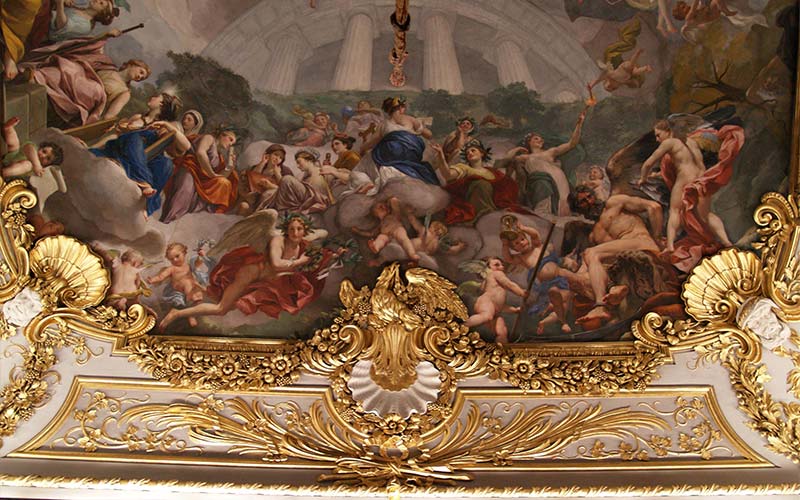
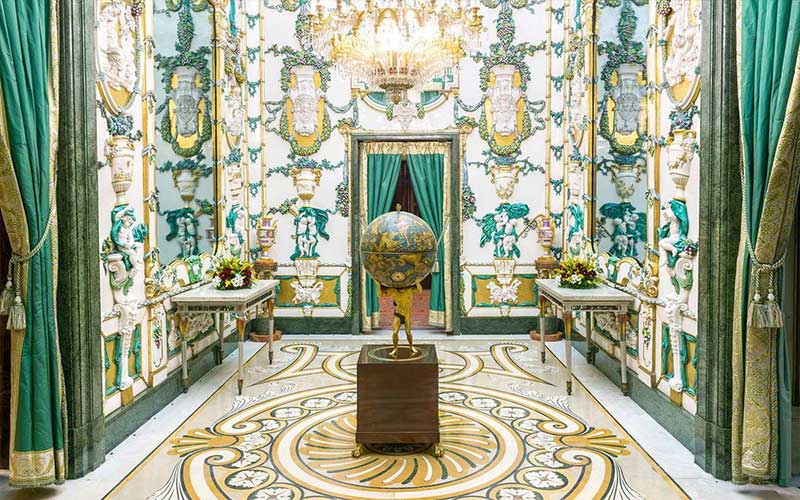
Paintings by Mengs decorate the vaults once again. The most popular is Aurora con su carro tirado por caballos. Also Colón ofreciendo el mundo a los Reyes Católicos by Antonio González Velázquez and Rendición de Granada by Francisco Bayeu. 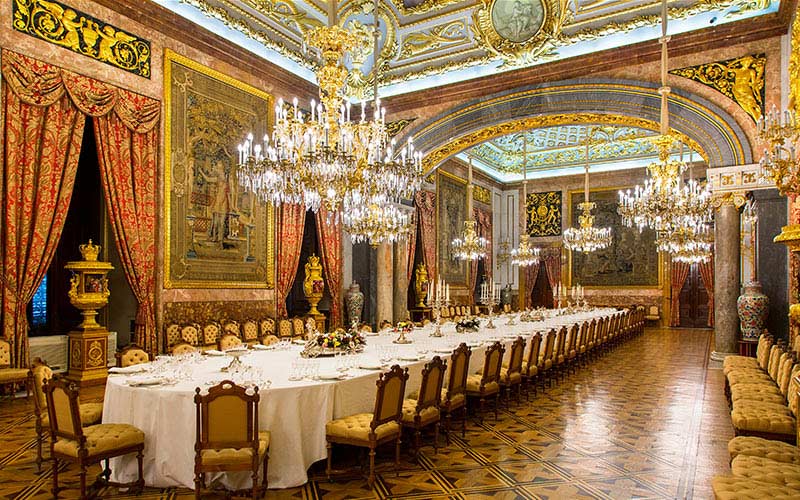
The most remarkable feature of the chapel, besides its rich decoration, is the dome. It is decorated with frescoes by Corrado Giaquinto. They represent the Coronation of the Virgin, as well as important saints from Madrid, such as San Isidro or Santa María de la Cabeza.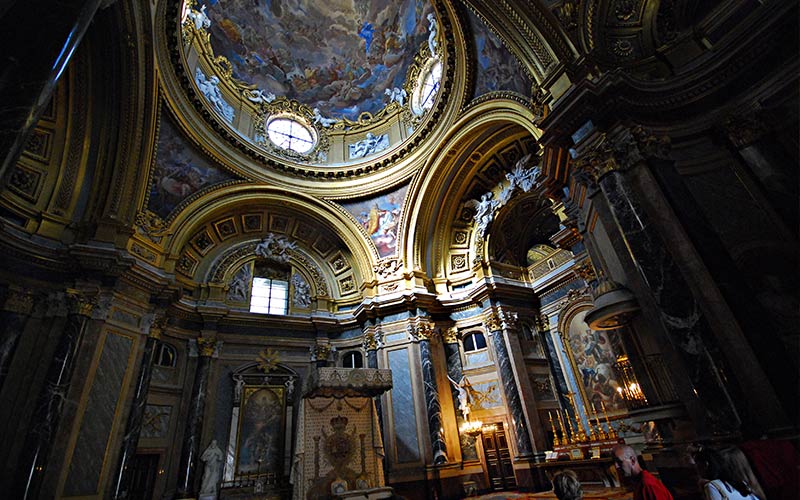
USEFUL INFORMATION
Location: Plaza de Oriente, Madrid.Coordinates: 40°25′06″N 3°42′51″O.
Website: https://www.patrimonionacional.es/en/real-sitio/palacio-real-de-madrid
There is a car parking under the Plaza de Oriente.
Getting there by public transport is easy. Bus lines are 3, 25, 39 and 148. If you prefer to take the underground, you should get off at Opera station (lines 2 and 5).
You can also take the train and get off in Sol and Príncipe Pío stations.
If you are looking for a place to stay, visit our website on accommodation and, in order to enjoy the Spanish cuisine, visit our website with the of best places to eat in Madrid.