The yellow bird and the first aerial stowaway in history

On the evening of June 14 1929, on the beach of Oyambre, four men got off the plane with which they had just made an emergency landing. They were the crew of a French airplane, coming from the United States, and that had tried to arrive at Paris in a non-stop flight. Due to its colour, this plane will be known as the yellow bird.

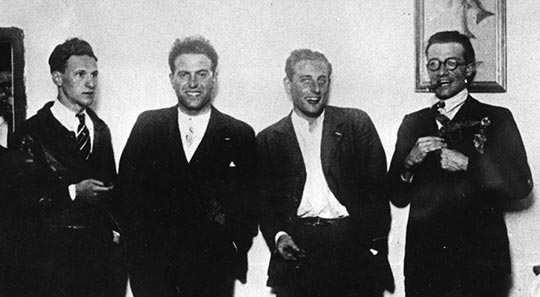
Although two years had passed since Charles Lindbergh managed to cross the Atlantic alone – for which there was no longer a grand prize for the flight – it continued the passion of many adventurers for new modalities of passage. To the extent that more than a hundred pilots had perished and the French Government banned those flights from its territory. That did not stop the French millionaire Armand Lotti from dismantling his airplane Bernard and transferring it to England, and from there to the United States. Since Lotti was one-eyed, and had been banned from piloting, he hired two experienced pilots – Assollant and Lefevre – him traveling as a passenger. Lotti was an optimist; proof of this is that he decided to paint his aircraft in yellow to be more easily identifiable in the event of a landing (as if there were to be ships nearby to pick them up on time). And for this reason he called his plane L’Oiseau Canari (The Canary or The Yellow Bird).After many calculations on the relationship between the weight of the plane and the fuel, hours before take-off they unloaded one hundred litres of fuel to lighten the airplane by 90 kilos and increase the chances of arriving in Paris. But during the long farewell ceremony, long awaited reporters and friends did not realise that an individual was riding on the plane and hiding in the back of the cockpit. It was Arthur Schreiber, a 25-year-old unemployed American. After a few hours of flying, the stowaway showed up to the other three with the simple phrase “here I am”. He explained his action by the desire to fulfill his dream of emulating Lindbergh crossing the Atlantic; and since he had no money, he had mounted Lotti’s plane. Once recovered from the surprise, Lotti decided that they would not return to the take-off point; to secure the exclusive writing of the story, he threatened Schreiber with throwing him off the airplane if he did not sign the letter of resignation to explain to the press what may happen during the flight.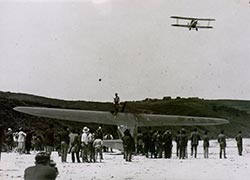
Texto de Ignacio Suárez-Zuloaga e ilustraciones de Ximena Maier.